Building Blocks
Sottocategorie di "Building Blocks"
- Acidi boronici e derivati dell'acido boronico(5.780 prodotti)
- Building Blocks Chirali(1.240 prodotti)
- Building Blocks Idrocarburici(6.100 prodotti)
- Building Blocks organici(61.009 prodotti)
Trovati 205248 prodotti di "Building Blocks"
[1-(2-Methylpropyl)piperidin-2-yl]methanamine
CAS:Versatile small molecule scaffoldFormula:C10H22N2Purezza:Min. 95%Peso molecolare:170.3 g/mol3-(Chloromethyl)-1-methylquinolin-2(1H)-one
CAS:Versatile small molecule scaffold
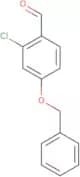
Formula:C11H10ClNOPurezza:Min. 95%Peso molecolare:207.66 g/mol4-(Benzyloxy)-2-chlorobenzaldehyde
CAS:4-(Benzyloxy)-2-chlorobenzaldehyde is an aldehyde that can be used for the synthesis of organic compounds. It is made from 2-chloro-4-hydroxybenzaldehyde, which is synthesized from hydroxybenzaldehyde, oxime, and benzyl alcohol. The product has been shown to react with riboflavin and a second reagent in the presence of palladium to form a chromatographic column. 4-(Benzyloxy)-2-chlorobenzaldehyde reacts with 6-chlorouracil to form an oxirane ring. This reaction can also be used to synthesize tulobuterol, which is a β2-agonist. 4-(Benzyloxy)-2-chlorobenzaldehyde reacts with ribose in the presence of hydroxy to produce glucose and 2-(6'-hydroxypurinomethyl)riboflavin as a byproduct.
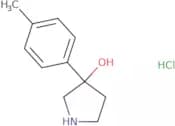
Formula:C14H11ClO2Purezza:Min. 95%Peso molecolare:246.69 g/mol3-p-Tolyl-pyrrolidin-3-ol hydrochloride
CAS:Versatile small molecule scaffoldFormula:C11H16ClNOPurezza:Min. 95%Peso molecolare:213.71 g/mol3-Methyl-2-(2-phenoxyacetamido)butanoic acid
CAS:Versatile small molecule scaffoldFormula:C13H17NO4Purezza:Min. 95%Peso molecolare:251.28 g/molMethyl 3-chloro-5-formylbenzoate
CAS:Versatile small molecule scaffold
Formula:C9H7ClO3Purezza:Min. 95%Peso molecolare:198.6 g/mol6-Chloro-3-methyl-[1,2,4]triazolo[3,4-a]-phthalazine
CAS:Versatile small molecule scaffold
Formula:C10H7ClN4Purezza:Min. 95%Peso molecolare:218.65 g/mol1-Pentadecanol
CAS:1-Pentadecanol is a cyclase inhibitor that was first isolated from copper chloride. It has been shown to be an effective inhibitor of the enzyme cyclase, which catalyzes the conversion of cyclic AMP to cyclic GMP. 1-Pentadecanol can be used as a reference substance for electrochemical impedance spectroscopy. The compound also has odorant binding properties and can be used as a substrate in analytical methods for p-hydroxybenzoic acid and caproic acid. 1-Pentadecanol is found in many types of food, including cheese, chocolate, coffee, and wine.
Formula:C15H32OPurezza:Min. 95%Peso molecolare:228.41 g/mol1-Bromopentadecane-1-13C
CAS:1-Bromopentadecane-1-13C is a 13C labelled derivative of pentadecane that is used as a reactant in organic synthesis. It has been used to investigate the structural analysis of pyridinium, coumarin derivatives and alkynyl groups. This compound also has chain reaction properties and can be used to study the reactions of aromatic hydrocarbons. 1-Bromopentadecane-1-13C reacts with hydrogen chloride to form fatty acids, which are then converted into fatty acid chlorides by atp levels. The formation of these fatty acid chlorides is an important intermediate in the production of polychlorinated biphenyls (PCBs).
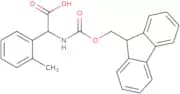
Formula:C15H31BrPurezza:Min. 95%Peso molecolare:292.31 g/molFmoc-DL-(2-methylphenyl)glycine
CAS:Versatile small molecule scaffold
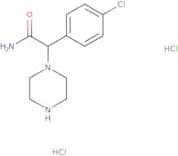
Formula:C24H21NO4Purezza:Min. 95%Peso molecolare:387.44 g/mol2-(4-Chlorophenyl)-2-(piperazin-1-yl)acetamide dihydrochloride
CAS:Versatile small molecule scaffoldFormula:C12H18Cl3N3OPurezza:Min. 95%Peso molecolare:326.6 g/mol1-Benzoylpiperidin-3-ol
CAS:Versatile small molecule scaffold
Formula:C12H15NO2Purezza:Min. 95%Peso molecolare:205.3 g/mol3-(2-Methoxyphenyl)-1H-pyrazole-5-carbohydrazide
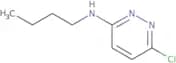
CAS:Versatile small molecule scaffoldFormula:C11H12N4O2Purezza:Min. 95%Peso molecolare:232.24 g/mol3-(Butylamino)-6-chloropyridazine
CAS:Versatile small molecule scaffold
Formula:C8H12ClN3Purezza:Min. 95%Peso molecolare:185.66 g/mol2-Bromo-1-methyl-1H-imidazole
CAS:Please enquire for more information about 2-Bromo-1-methyl-1H-imidazole including the price, delivery time and more detailed product information at the technical inquiry form on this page
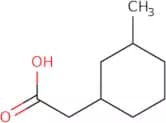
Formula:C4H5BrN2Purezza:Min. 95%Peso molecolare:161 g/mol2-(3-Methylcyclohexyl)acetic acid
CAS:Versatile small molecule scaffold
Formula:C9H16O2Purezza:Min. 95%Peso molecolare:156.22 g/molBenzydamine hydrochloride EP Impurity D
CAS:Prodotto controllatoPlease enquire for more information about Benzydamine hydrochloride EP Impurity D including the price, delivery time and more detailed product information at the technical inquiry form on this page
Formula:C23H32N4OPurezza:Min. 95%Peso molecolare:380.53 g/molRef: 3D-FB183148
Prodotto fuori produzione2-(3-Bromophenyl)-1,3-dioxane
CAS:Versatile small molecule scaffold
Formula:C10H11BrO2Purezza:Min. 95%Peso molecolare:243.1 g/molMethyl 1-cyclopropyl-5-hydroxy-2-methyl-1H-indole-3-carboxylate
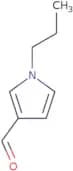
CAS:Prodotto controllatoVersatile small molecule scaffoldFormula:C14H15NO3Purezza:Min. 95%Peso molecolare:245.27 g/mol1-Propyl-1H-pyrrole-3-carbaldehyde
CAS:Versatile small molecule scaffold
Formula:C8H11NOPurezza:Min. 95%Peso molecolare:137.18 g/mol
![[1-(2-Methylpropyl)piperidin-2-yl]methanamine](/_next/image/?url=https%3A%2Fstatic.cymitquimica.com%2Fproducts%2F3D%2Fthumb-webp%2FEKB61104.webp&w=3840&q=75)




![6-Chloro-3-methyl-[1,2,4]triazolo[3,4-a]-phthalazine](/_next/image/?url=https%3A%2Fstatic.cymitquimica.com%2Fproducts%2F3D%2Fthumb-webp%2FSCA45838.webp&w=3840&q=75)