Building Blocks
Sottocategorie di "Building Blocks"
- Acidi boronici e derivati dell'acido boronico(5.781 prodotti)
- Building Blocks Chirali(1.242 prodotti)
- Building Blocks Idrocarburici(6.101 prodotti)
- Building Blocks organici(61.038 prodotti)
Trovati 205338 prodotti di "Building Blocks"
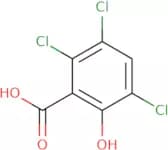
3,5,6-Trichlorosalicylic acid
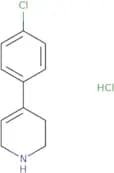
CAS:3,5,6-Trichlorosalicylic acid binds to the active site of bacterial 5-nitrosalicylic acid reductase and inhibits its activity. It is an inhibitor of proton-translocating ATPases. 3,5,6-Trichlorosalicylic acid has been shown to be effective against a variety of bacteria at low concentrations. 3,5,6-Trichlorosalicylic acid has also been shown to inhibit some physiological activities such as the light emission and chemiluminescent reaction of luciferin in fireflies. This chemical reacts with chloride ions to produce light.Formula:C7H3Cl3O3Purezza:Min. 95%Colore e forma:PowderPeso molecolare:241.46 g/mol4-(4-Chlorophenyl)-1,2,3,6-tetrahydropyridine hydrochloride
CAS:4-(4-Chlorophenyl)-1,2,3,6-tetrahydropyridine hydrochloride is a new chemical that belongs to the group of fine chemicals. It is a versatile building block and an intermediate for research chemicals. 4-(4-Chlorophenyl)-1,2,3,6-tetrahydropyridine hydrochloride has been shown to have a high quality level and can be used as a reagent in the synthesis of complex compounds.Formula:C11H13Cl2NPurezza:Min. 95%Colore e forma:PowderPeso molecolare:230.13 g/mol6-(2-Aminoethyl)-1,2-dihydropyridin-2-one dihydrochloride
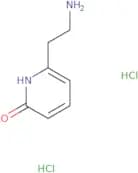
CAS:6-(2-Aminoethyl)-1,2-dihydropyridin-2-one dihydrochloride (CEP) is a versatile building block that is used in the research and development of complex compounds, reagents, and speciality chemicals. It is an intermediate for the production of other compounds that can be used in pharmaceuticals or agrochemicals. CEP has also been shown to be a useful scaffold for the synthesis of new compounds with potential applications as anti-cancer agents.Formula:C7H12Cl2N2OPurezza:Min. 95%Colore e forma:PowderPeso molecolare:211.09 g/mol5-Amino-N,N-dimethyl-1H-pyrazole-4-carboxamide
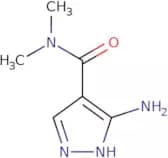
CAS:Versatile small molecule scaffoldFormula:C6H10N4OPurezza:Min. 95%Colore e forma:PowderPeso molecolare:154.17 g/mol7-Methyl-[1,2,4]triazolo[1,5-α]pyridin-6-amine
CAS:7-Methyl-[1,2,4]triazolo[1,5-α]pyridin-6-amine is an organic chemical compound that is a reaction component and useful scaffold. It is also used as a reagent in the synthesis of other compounds, such as pharmaceuticals and agrochemicals. 7-Methyl-[1,2,4]triazolo[1,5-α]pyridin-6-amine has been shown to have high purity and quality. This chemical is a versatile building block for the synthesis of complex compounds.Formula:C7H8N4Purezza:Min. 95%Colore e forma:PowderPeso molecolare:148.17 g/mol4-(Hydroxymethyl)benzamide
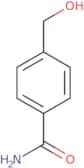
CAS:4-(Hydroxymethyl)benzamide is a heterocyclic compound that is activated with sodium borohydride. It can be used in the synthesis of peptides, which are chains of amino acids. 4-(Hydroxymethyl)benzamide has been shown to have a high efficiency for the synthesis of peptides and has been shown to be an excellent reactant for manual peptide synthesis. Kinetics studies have also shown that this reagent is more effective than other deprotecting agents such as hydrochloric acid. This compound has been found to be useful in the analysis of amino acids and can be used in the ligation reaction during peptide synthesis. The deprotection reactions catalyzed by 4-(Hydroxymethyl)benzamide are typically carried out at room temperature, although solvents such as dichloromethane or chloroform can be used instead if necessary.
Formula:C8H9NO2Purezza:Min. 95%Peso molecolare:151.16 g/mol3-(3-Methyl-1H-pyrazol-5-yl)propanoic acid
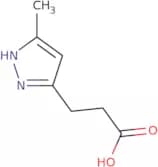
CAS:Versatile small molecule scaffoldFormula:C7H10N2O2Purezza:Min. 95%Colore e forma:PowderPeso molecolare:154.17 g/mol2-(4-Bromophenyl)-1,3-thiazole
CAS:Versatile small molecule scaffoldFormula:C9H6BrNSPurezza:Min. 95%Colore e forma:PowderPeso molecolare:240.12 g/molα-Sulfophenylacetic acid
CAS:Alpha-Sulfophenylacetic acid is a high quality reagent that is useful as an intermediate in the synthesis of complex compounds. It is also a fine chemical that can be used as a building block for the synthesis of speciality chemicals and research chemicals. Alpha-sulfophenylacetic acid is a versatile building block for reactions involving organic synthesis, and can be used as a reaction component to produce dyes, pharmaceuticals, pesticides, and herbicides.Formula:C8H8O5SPurezza:Min. 95.0 Area-%Peso molecolare:216.21 g/molRef: 3D-S-9630
1kgPrezzo su richiesta5kgPrezzo su richiesta10kgPrezzo su richiesta25kgPrezzo su richiesta2500gPrezzo su richiesta-Unit-kgkgPrezzo su richiestaBicyclo[2.1.1]hexane-1-carboxylic acid
CAS:Versatile small molecule scaffoldFormula:C7H10O2Purezza:Min. 95%Peso molecolare:126.15 g/mol3-[5-(Pyridin-2-yl)-1,3,4-oxadiazol-2-yl]propanoic acid
CAS:Versatile small molecule scaffoldFormula:C10H9N3O3Purezza:Min. 95%Colore e forma:PowderPeso molecolare:219.2 g/molCaffeic acid
CAS:Caffeic acid is naturally produced by the metabolism of plants and fungi. Caffeic acid has an antioxidant activity that can be higher than tocopherol in oil-in-water emulsions. Caffeic acid has proven antimicrobial activity against Staphylococcus aureus. In mice, caffeic acid inhibits the enzyme 5-lipoxygenase thus inhibititing the biosynthesis of the inflammatory mediators leukotrienes.Formula:C9H8O4Purezza:Min. 98.0 Area-%Peso molecolare:180.16 g/molRef: 3D-C-1500
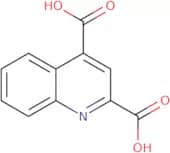
1kgPrezzo su richiesta25gPrezzo su richiesta250gPrezzo su richiesta500gPrezzo su richiesta2500gPrezzo su richiesta-Unit-ggPrezzo su richiestaQuinoline 2,4-dicarboxylic acid
CAS:Quinoline 2,4-dicarboxylic acid (QDA) is a novel cytotoxic agent that targets cervical cancer cells. It inhibits the uptake of glucose and other nutrients by cervical cancer cells, leading to cell death through apoptosis. QDA also inhibits the expression of genes involved in cross-linking reactions, which are important for the structural integrity of proteins. This agent has been shown to inhibit the growth of aniline-induced breast cancer cells and glutamate-stimulated PC12 cells. QDA binds to DNA and forms covalent bonds with nucleotide bases, inhibiting DNA synthesis, as well as interfering with protein synthesis and cell division. The QDA mechanism is similar to that of benzoquinolines and estrone sulfate.
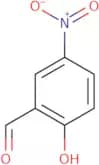
Formula:C11H7NO4Purezza:Min. 95%Colore e forma:White PowderPeso molecolare:217.18 g/mol5-Nitrosalicylaldehyde
CAS:5-Nitrosalicylaldehyde is a powerful inhibitor of bacterial growth. It has been shown to inhibit the growth of gram-positive bacteria such as Staphylococcus aureus and Streptococcus pyogenes, but not gram-negative bacteria such as Escherichia coli. 5-Nitrosalicylaldehyde is an antimicrobial agent that has been shown to bind to the active site of some enzymes, including bacterial DNA gyrase and human liver microsomes. The binding prevents the enzyme from functioning and leads to cell death. 5-Nitrosalicylaldehyde coordinates with sodium ions in the active site, forming strong hydrogen bonding interactions. This interaction stabilizes the transition state for the reaction and prevents it from happening, thereby inhibiting its function.
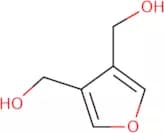
Formula:C7H5NO4Purezza:Min. 95%Colore e forma:Yellow PowderPeso molecolare:167.12 g/mol3,4-Furandimethanol
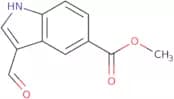
CAS:3,4-Furandimethanol is an antimicrobial agent that is used to treat skin and soft tissue infections. It belongs to the group of compounds called halogens and has a number of natural sources. The fluorescence properties make it a useful tool for biocatalysis, especially in Friedel-Crafts reactions. 3,4-Furandimethanol can be produced from hydrogen chloride, sulfuric acid, and diphenyl ether. This compound is also acetylated by acetic anhydride to produce 3,4-dihydroxymethylfuran (DHMF). 3,4-Furandimethanol has been shown to react with hydrogen sulfate in a polymerization reaction.Formula:C6H8O3Purezza:Min. 95%Colore e forma:Clear LiquidPeso molecolare:128.13 g/molMethyl-3-Formylindole-5-carboxylate
CAS:Please enquire for more information about Methyl-3-Formylindole-5-carboxylate including the price, delivery time and more detailed product information at the technical inquiry form on this pageFormula:C11H9NO3Purezza:Min. 95%Peso molecolare:203.19 g/mol11-Mercaptoundecanoic acid
CAS:11-Mercaptoundecanoic acid (11MUA) is a fluorescence probe that reacts with the amide group of proteins. It has been used to study HIV-1 infection and the early stages of human immunodeficiency virus (HIV) replication. 11MUA can be detected by fluorescence spectrometry and gives a strong, selective signal in human serum. This compound is also used as a model system for studying protease activity and electrochemical impedance spectroscopy. 11MUA is stable in solution and can be detected at very low levels, making it an excellent probe for protein degradation studies. The reaction solution containing 11MUA can be prepared using trifluoroacetic acid (TFA), which facilitates the formation of esters from carboxylic acids, or by adding TFA to an acyl chloride derivative of 11-mercaptoundecanoic acid.Formula:C11H22O2SPurezza:Min. 95%Colore e forma:White PowderPeso molecolare:218.36 g/molMethyl benzenesulfinate
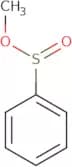
CAS:Methyl benzenesulfinate (MS) is a selenium compound that inhibits the replication of DNA and RNA. MS has been shown to be effective against cancer, HIV infection, and cachexia. It has also been used as an immunosuppressant in patients with autoimmune diseases or nervous system diseases. MS binds to the phosphate group of the nucleotide thymidine monophosphate, preventing formation of ATP and leading to cell death by inhibiting protein synthesis. This drug may cause symptoms such as nausea, vomiting, headache, dizziness, and skin rash. Methyl benzenesulfinate has also been shown to inhibit kinases in women with breast cancer.br>br> Methyl benzenesulfinate belongs to the class of inhibitors that target β-unsaturated ketones. It is used for treatment of various cancers like leukemia because it inhibits polymerase activity and prevents replication in cells. Methyl benzenesulfinate is a structural formula made upFormula:C7H8O2SPurezza:Min. 98%Colore e forma:Clear LiquidPeso molecolare:156.2 g/mol1-Methoxy-2-methyl-2-propanol
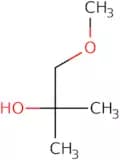
CAS:1-Methoxy-2-methyl-2-propanol is a ligand that is used in coordination chemistry and catalysis. It can be prepared by the metathesis reaction of zirconium dichloride and terminal alkynes at high temperatures. The compound has been shown to have properties as a phase equilibrium catalyst and a mononuclear ligand. 1-Methoxy-2-methyl-2-propanol is soluble in organic solvents, but insoluble in water. It has a melting point of about -20°C and a boiling point of about 190°C, with supercritical fluid properties between these two points. It can be used for reactions at low temperatures or high temperatures, depending on the solvent used.Formula:C5H12O2Purezza:Min. 95%Colore e forma:Colorless Clear LiquidPeso molecolare:104.15 g/mol3-Mercapto-3-methyl-1-butanol
CAS:3-mercapto-3-methyl-1-butanol, also known as MMB, is an organic volatile compound that belongs to the group alkylthiols. It is a secondary metabolite and is a degradation product of felinine, a feline pheromone. Some studies suggest that due to similarities in odor, 3-mercapto-3-methyl-1-butanol and derivatives such as 3-mercapto-3-methyl-1-butyl-1-formate and 3-methyl-3-(methylsulfanyl)butan-1-ol have similar behaviours as felinine. These findings may provide useful and interesting information about signaling and communication related to reproduction and recognition in mammals. 3-mercapto-3-methyl-1-butanol can be also found in some alcoholic beverages and coffee products. It provides a meaty flavor and aroma, and it is used as a flavoring agent in the food industry.Formula:C5H12OSPurezza:Min. 95%Colore e forma:Colorless Clear LiquidPeso molecolare:120.21 g/mol

![7-Methyl-[1,2,4]triazolo[1,5-α]pyridin-6-amine](/_next/image/?url=https%3A%2Fstatic.cymitquimica.com%2Fproducts%2F3D%2Fthumb-webp%2FXLD46650.webp&w=3840&q=75)


![Bicyclo[2.1.1]hexane-1-carboxylic acid](/_next/image/?url=https%3A%2Fstatic.cymitquimica.com%2Fproducts%2F3D%2Fthumb-webp%2FPCA72577.webp&w=3840&q=75)
![3-[5-(Pyridin-2-yl)-1,3,4-oxadiazol-2-yl]propanoic acid](/_next/image/?url=https%3A%2Fstatic.cymitquimica.com%2Fproducts%2F3D%2Fthumb-webp%2FIMB68525.webp&w=3840&q=75)