Building Blocks
Sottocategorie di "Building Blocks"
- Acidi boronici e derivati dell'acido boronico(5.781 prodotti)
- Building Blocks Chirali(1.242 prodotti)
- Building Blocks Idrocarburici(6.101 prodotti)
- Building Blocks organici(61.038 prodotti)
Trovati 205338 prodotti di "Building Blocks"
2-Chloroquinoline
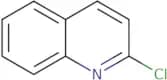
CAS:2-Chloroquinoline is a compound that has antimicrobial properties. It acts by inhibiting bacterial RNA synthesis and protein synthesis. 2-Chloroquinoline has been shown to have toxicological effects in animal studies, including cancer. It also inhibits the activity of the cb2 receptor and the CCR5 receptor, which are involved in tumor growth. The molecular docking analysis for this compound is available, which can be found on PubChem.Formula:C9H6ClNPurezza:Min. 98%Colore e forma:PowderPeso molecolare:163.6 g/mol2-Bromo-N-(2-chloro-6-methylphenyl)acetamide
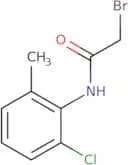
CAS:2-Bromo-N-(2-chloro-6-methylphenyl)acetamide is a fine chemical that can be used as a versatile building block for research and as a reaction component for the synthesis of complex compounds. This compound is also useful for the production of speciality chemicals and other high quality reagents.Formula:C9H9BrClNOPurezza:Min. 95%Colore e forma:PowderPeso molecolare:262.53 g/molN-Fmoc-4-ethynyl-L-phenylalanine
CAS:Versatile small molecule scaffoldFormula:C26H21NO4Purezza:Min. 95%Colore e forma:PowderPeso molecolare:411.45 g/molN-Acetyl-L-tyrosine ethyl ester hydrate
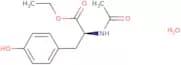
CAS:N-Acetyl-L-tyrosine ethyl ester hydrate is a synthetic compound that has been used in the past as a substrate for protease activity. It is a monoclonal antibody that is used to detect the presence of human serum proteins and to prepare samples for analysis by liquid chromatography. This derivative of L-tyrosine is related to proteolytic activity and redox potential, but it does not have any biological properties. N-Acetyl-L-tyrosine ethyl ester hydrate can be prepared from soybean trypsin and caproic acid.Formula:C13H17NO4·H2OPurezza:Min. 96.0 Area-%Colore e forma:White Off-White PowderPeso molecolare:269.29 g/mol3,5-Dihydroxy-4-methoxybenzoic acid
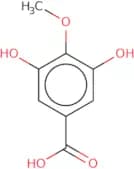
CAS:Inhibitor of redox-based NF-ΚB activationFormula:C8H8O5Purezza:Min. 95%Colore e forma:PowderPeso molecolare:184.15 g/mol1,1-Dimethylethyl (2S)-2-[[[5-(tributylstannyl)-3-pyridinyl]oxy]methyl]-1-azetidinecarboxylate
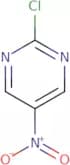
CAS:Prodotto controllatoPlease enquire for more information about 1,1-Dimethylethyl (2S)-2-[[[5-(tributylstannyl)-3-pyridinyl]oxy]methyl]-1-azetidinecarboxylate including the price, delivery time and more detailed product information at the technical inquiry form on this pageFormula:C26H46N2O3SnPurezza:Min. 95%Colore e forma:Clear LiquidPeso molecolare:553.37 g/mol2-Chloro-5-nitropyrimidine
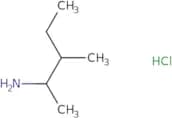
CAS:2-Chloro-5-nitropyrimidine is a molecule that can be used as a model system for studying hydrogen bonds. It has been shown to react with methoxy groups and amines. The reaction mechanism is thought to involve nucleophilic attack by the hydroxyl group of the pyrimidine, which leads to a stepwise reaction. 2-Chloro-5-nitropyrimidine has also been shown to inhibit 5HT2c receptors in vitro, suggesting it may be useful for the treatment of schizophrenia.Formula:C4H2ClN3O2Purezza:Min. 95%Colore e forma:Yellow PowderPeso molecolare:159.53 g/mol3-Methylpentan-2-amine hydrochloride
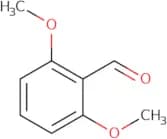
CAS:Versatile small molecule scaffoldFormula:C6H15N•HClPurezza:Min. 95%Colore e forma:PowderPeso molecolare:137.65 g/mol2,6-Dimethoxybenzaldehyde
CAS:Synthetic building block
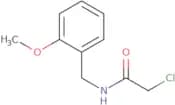
Formula:C9H10O3Purezza:Min. 95%Colore e forma:White PowderPeso molecolare:166.17 g/mol2-Chloro-N-(2-methoxybenzyl)acetamide
CAS:2-Chloro-N-(2-methoxybenzyl)acetamide is a fine chemical that can be used as a versatile building block in the synthesis of many compounds. It is also a research chemical and reagent with potential use in the production of pharmaceuticals, agricultural chemicals, and pesticides. The compound has been shown to have useful properties for use in complex syntheses, such as its reactivity toward amines and alcohols, which makes it a useful intermediate for the synthesis of other compounds. 2-Chloro-N-(2-methoxybenzyl)acetamide is an excellent high quality reagent that can be used for many purposes.
Formula:C10H12ClNO2Purezza:Min. 95%Colore e forma:PowderPeso molecolare:213.66 g/mol2-(4-Bromo-1H-imidazol-1-yl)acetic acid
CAS:2-(4-Bromo-1H-imidazol-1-yl)acetic acid is a fine chemical that can be used as a versatile building block, a reaction component and as a speciality chemical. It is an intermediate in the synthesis of other compounds, such as 2-(4-bromophenylimino)-N-(2-chlorophenyl)acetamide. It has been shown to be useful in the synthesis of complex compounds with high quality, such as 2-[4-(2,6-Dichlorobenzoyloxy)phenylimino]-N-(2,4-dimethoxyphenyl)acetamide.Formula:C5H5BrN2O2Purezza:Min. 95%Colore e forma:PowderPeso molecolare:205.01 g/mol3-(Trifluoromethyl)-1-oxa-2,8-diazaspiro[4.5]dec-2-ene
CAS:Versatile small molecule scaffoldFormula:C8H11F3N2OPurezza:(%) Min. 85%Colore e forma:PowderPeso molecolare:208.18 g/mol2,3-Dihydrofuro[2,3-b]pyridin-3-amine
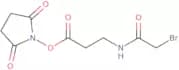
CAS:Versatile small molecule scaffoldFormula:C7H8N2OPurezza:Min. 95%Colore e forma:PowderPeso molecolare:136.15 g/molSuccinimidyl 3-(bromoacetamido)propionate
CAS:Succinimidyl 3-(bromoacetamido)propionate (SBAP) is a reactive chemical that can be used to synthesize a variety of polymers. SBAP is used in the treatment of inflammatory bowel disease, where it acts as an immunosuppressant by suppressing antibody response to the bowel. SBAP has also been shown to increase collagen production and glycoconjugates, which are compounds found on the surface of cells that act as receptors for many types of bacteria and viruses. The polymerase chain reaction (PCR), which is used in DNA analysis, uses SBAP as a way to separate DNA fragments. For this reason, SBAP is often found in wastewater treatment plants. It has been shown that exposure to SBAP can cause infectious diseases in humans, such as tuberculosis and leprosy. This compound has also been studied for its effects on growth factor-β1 and body mass index, which may help with autoimmune diseases such as multiple
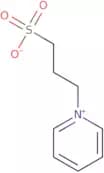
Formula:C9H11N2O5BrPurezza:Min. 98 Area-%Colore e forma:White PowderPeso molecolare:307.1 g/mol1-(3-Sulfopropyl)pyridinium inner salt
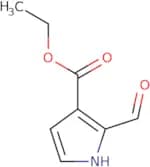
CAS:1-(3-Sulfopropyl)pyridinium inner salt (1SP) is a molecule that has been shown to bind to DNA. It is a potential drug target for the treatment of cancer, as it can cause cell lysis. 1SP binds to dsDNA and prevents the formation of stable base pairs, which leads to the lysis of cells. 1SP also has an effector protein activity that stimulates colony-stimulating factor production and induces apoptosis in human cells. This molecule has been shown to be effective against antimicrobial resistance bacteria such as methicillin resistant Staphylococcus aureus (MRSA). 1SP is capable of lysing bacterial cells in a process identical to that seen with mammalian cells. The mechanism by which this occurs is not yet clear but may involve surface methodology or sample preparation, both factors that have yet to be determined.Formula:C8H11NO3SPurezza:(Hplc) Min. 99%Colore e forma:White Off-White PowderPeso molecolare:201.24 g/molEthyl 2-formyl-1H-pyrrole-3-carboxylate
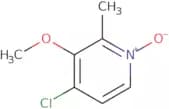
CAS:Ethyl 2-formyl-1H-pyrrole-3-carboxylate is a fine chemical that can be used as a building block in the synthesis of drugs, pesticides, and other organic compounds. It is also a reagent for the synthesis of other compounds. The compound can be easily synthesized by reacting ethyl formate with pyrrole. This process occurs spontaneously at room temperature and does not require any catalysts or solvents. Ethyl 2-formyl-1H-pyrrole-3-carboxylate has been used to synthesize antihistamines, antihypertensives, and anticancer agents. As it is a versatile building block, it can be used as an intermediate for the synthesis of many other compounds. It has also been shown to have useful scaffolding properties in drug design.Formula:C8H9NO3Purezza:Min. 95%Colore e forma:PowderPeso molecolare:167.16 g/mol4-Chloro-3-methoxy-2-methylpyridine N-oxide
CAS:The compound 4-Chloro-3-methoxy-2-methylpyridine N-oxide is an organic compound with a neutral chemical nature. It is a byproduct of the production of methylpyridine, which is achieved through the reaction between phosphorus oxychloride and toluene. The toxicological properties of this substance are unknown.Formula:C7H8ClNO2Purezza:Min. 95%Colore e forma:PowderPeso molecolare:173.6 g/molN-Succinimidyl myristate
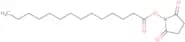
CAS:N-Succinimidyl myristate is a long-chain fatty acid that contains a sulfur atom at its head. It is used in the production of diagnostic products and insulin analogs, as well as in the industrial production of organic solvents. N-Succinimidyl myristate reacts with serum albumin, forming an activated product that can be used in diagnostic tests. This reaction product is also used to bind proteins to fluorine atoms for use in industrial processes.Formula:C18H31NO4Purezza:Min. 95%Colore e forma:PowderPeso molecolare:325.44 g/molN-Succinimidyl iodoacetate
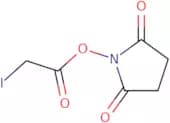
CAS:Amine and sulfhydryl reactive crosslinkerFormula:C6H6INO4Purezza:Min. 95%Colore e forma:Off-White PowderPeso molecolare:283.02 g/molS-acetyl-L-glutathione
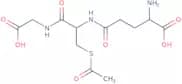
CAS:Acetylcysteine is a drug that inhibits the growth of bacteria and viruses. Acetylcysteine is a precursor to the amino acid cysteine and has been shown to have antiviral properties against herpes simplex virus. It also has protective effects on human liver cells by preventing lipid peroxidation, which may be due to its antioxidant activity. Acetylcysteine can be used as an analytical method for particle size, thermal expansion, and hydrogen chloride content in industrial processes. Its use in metabolic disorders and cancer therapy is limited because it does not cross the blood-brain barrier easily. Acetylcysteine has been shown to inhibit HIV infection by blocking reverse transcriptase activity, but it cannot cure HIV infection.Formula:C12H19N3O7SPurezza:Min. 96 Area-%Colore e forma:White Off-White PowderPeso molecolare:349.36 g/mol

![1,1-Dimethylethyl (2S)-2-[[[5-(tributylstannyl)-3-pyridinyl]oxy]methyl]-1-azetidinecarboxylate](/_next/image/?url=https%3A%2Fstatic.cymitquimica.com%2Fproducts%2F3D%2Fthumb-webp%2FFD183344.webp&w=3840&q=75)

![3-(Trifluoromethyl)-1-oxa-2,8-diazaspiro[4.5]dec-2-ene](/_next/image/?url=https%3A%2Fstatic.cymitquimica.com%2Fproducts%2F3D%2Fthumb-webp%2FRID39800.webp&w=3840&q=75)
![2,3-Dihydrofuro[2,3-b]pyridin-3-amine](/_next/image/?url=https%3A%2Fstatic.cymitquimica.com%2Fproducts%2F3D%2Fthumb-webp%2FVJB06194.webp&w=3840&q=75)