Building Blocks
Sottocategorie di "Building Blocks"
- Acidi boronici e derivati dell'acido boronico(5.781 prodotti)
- Building Blocks Chirali(1.242 prodotti)
- Building Blocks Idrocarburici(6.101 prodotti)
- Building Blocks organici(61.033 prodotti)
Trovati 205320 prodotti di "Building Blocks"
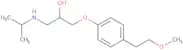
Metoprolol
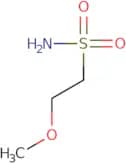
CAS:Prodotto controllatoMetoprolol is a drug that belongs to the group of beta-adrenergic blockers. It is used in the treatment of hypertension, angina pectoris, and heart attack. Metoprolol has been shown to be effective in treating congestive heart failure, high blood pressure and angina pectoris. Metoprolol slows down the heart rate by blocking beta-adrenergic receptors and also decreases the force with which the heart contracts. Metoprolol is not recommended for use in people with liver impairment or severe renal impairment because it can result in hypotension. This drug should not be taken by people who have asthma or suffer from chronic obstructive pulmonary disease (COPD) or who are allergic to metoprolol succinate.Formula:C15H25NO3Purezza:Min. 95%Peso molecolare:267.36 g/mol2-Methoxyethanesulfonamide
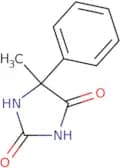
CAS:Versatile small molecule scaffoldFormula:C3H9NO3SPurezza:Min. 95%Colore e forma:Clear LiquidPeso molecolare:139.17 g/mol(5R)-5-Methyl-5-phenylimidazolidine-2,4-dione
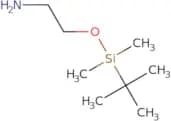
CAS:Versatile small molecule scaffoldFormula:C10H10N2O2Purezza:Min. 95%Colore e forma:PowderPeso molecolare:190.2 g/mol2-(tert-Butyldimethylsilyloxy)ethanamine
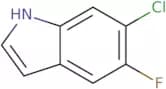
CAS:Versatile small molecule scaffoldFormula:C8H21NOSiPurezza:Min. 95%Peso molecolare:175.35 g/mol6-Chloro-5-fluoroindole
CAS:6-Chloro-5-fluoroindole is a chemical compound that belongs to the class of fine chemicals. It can be used as a versatile building block for the synthesis of complex compounds.Formula:C8H5ClFNPeso molecolare:169.59 g/molRef: 3D-C-3930
5gPrezzo su richiesta10gPrezzo su richiesta25gPrezzo su richiesta50gPrezzo su richiesta2500mgPrezzo su richiesta-Unit-ggPrezzo su richiesta4-Chloroindole
CAS:Please enquire for more information about 4-Chloroindole including the price, delivery time and more detailed product information at the technical inquiry form on this pageFormula:C8H6ClNPurezza:Min. 99.0 Area-%Peso molecolare:151.60 g/molRef: 3D-C-4200
25gPrezzo su richiesta50gPrezzo su richiesta100gPrezzo su richiesta250gPrezzo su richiesta500gPrezzo su richiesta-Unit-ggPrezzo su richiesta6-Chloroindole
CAS:6-Chloroindole is a reagent that is used as a reaction component in the synthesis of organic compounds.Formula:C8H6ClNPeso molecolare:151.60 g/mol2-Chloro-3-nitropyridine
CAS:2-Chloro-3-nitropyridine is a reagent, which is used as a building block for the synthesis of other chemicals. It is a complex compound that can be used to synthesize pharmaceuticals and pesticides. 2-Chloro-3-nitropyridine is also an intermediate that can be used in the synthesis of pesticides, pharmaceuticals, and specialty chemicals. It has been shown to have useful activity as a building block in the synthesis of antibacterial agents and antiviral drugs. This product has been identified by the US Drug Enforcement Administration (DEA) as a chemical of interest.
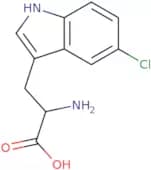
Formula:C5H3ClN2O2Peso molecolare:158.54 g/mol5-Chloro-DL-tryptophan
CAS:5-Chloro-DL-tryptophan is a research chemical that is used as a building block in the synthesis of other chemicals.
Formula:C11H11ClN2O2Peso molecolare:238.68 g/mol3-(Cyclohexylamino)-1-propanesulfonic acid sodium salt
CAS:CAS No. 105140-23-6 is a cyclic sulfonic acid that is used as a reagent, building block, and intermediate in the synthesis of organic compounds. It is soluble in water and has a high melting point, making it useful for research purposes. CAS No. 105140-23-6 is also an excellent scaffold for complex compounds with many functional groups, making it versatile for use in reactions and syntheses.Formula:C9H18NO3SNaPeso molecolare:243.3 g/molRef: 3D-C-9180
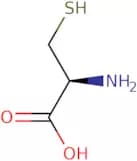
1kgPrezzo su richiesta5kgPrezzo su richiesta250gPrezzo su richiesta500gPrezzo su richiesta2500gPrezzo su richiesta-Unit-ggPrezzo su richiestaD-Cysteine
CAS:D-Cysteine is a versatile building block for the synthesis of complex compounds and peptides.Formula:C3H7NO2SPeso molecolare:121.16 g/molRef: 3D-C-9600
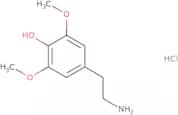
1gPrezzo su richiesta5gPrezzo su richiesta10gPrezzo su richiesta25gPrezzo su richiesta2500mgPrezzo su richiesta-Unit-ggPrezzo su richiesta3,5-Dimethoxy-4-hydroxyphenethylamine hydrochloride
CAS:Prodotto controllato3,5-Dimethoxy-4-hydroxyphenethylamine hydrochloride is a fine chemical that is used as a building block for other compounds and as a reagent in research. It has been shown to be an effective intermediate in the synthesis of many complex compounds, such as 3,4-methylenedioxyamphetamine (MDA) and 3,4-methylenedioxymethamphetamine (MDMA), which are both psychoactive drugs. This building block can also be used to synthesize speciality chemicals such as psychotropic drugs or pharmaceuticals.Formula:C10H16ClNO3Purezza:Min. 95%Colore e forma:PowderPeso molecolare:233.69 g/mol1-(4-Hydroxyphenyl)dodecan-1-one
CAS:Versatile small molecule scaffoldFormula:C18H28O2Purezza:Min. 95%Peso molecolare:276.4 g/molN-(2-Bromophenyl)-2,2,2-trifluoroacetamide
CAS:N-(2-Bromophenyl)-2,2,2-trifluoroacetamide is a functional chemical that has been experimentally validated by computationally optimized geometries and reaction mechanisms. It is a catalytic molecule that can be used in the conversion of alkenes to epoxides or dienes. The catalytic mechanism involves a transition state with two orbitals interacting with each other in an anti-bonding manner. This functional chemical has not yet been found in nature.
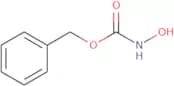
Formula:C8H5BrF3NOPurezza:Min. 95%Colore e forma:PowderPeso molecolare:268.03 g/molN-Benzyloxycarbonylhydroxylamine
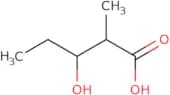
CAS:N-Benzyloxycarbonylhydroxylamine is a synthetic amino acid that is used in the synthesis of hydroxamic acids. It is prepared by the reaction of benzyl groups with sodium periodate and then irradiation with UV light. The resulting triazolopyrimidine can be oxidized to form an N-benzyloxycarbonylhydroxylamine. This product has been shown to be a potent inhibitor of bacterial enzymes, such as β-aminoacylase, which are involved in the synthesis of peptides and proteins. Hydroxamic acids have also been shown to have cationic surfactant properties and are used in synthesizing organocatalysts for organic reactions.Formula:C8H9NO3Purezza:Min. 95%Peso molecolare:167.16 g/mol3-Hydroxy-2-methylpentanoic acid
CAS:2-Hydroxy-3-methylpentanoic acid (HMVA) is an organic acid generated by L-isoleucine metabolism. There are 4 stereoisomers of HMVA (2S,3S-HMVA, 2R,3R-HMVA, 2S,3R-HMVA and 2R,3S-HMVA). HMVA is found in the urine and blood of normal individuals but in very elevated levels in patients with maple syrup urine disease (MSUD). Maple syrup urine disease (MSUD) is an inherited metabolic disease predominantly characterized by neurological dysfunction including psychomotor/delay/mental retardation.Formula:C6H12O3Purezza:Min. 95%Colore e forma:Clear LiquidPeso molecolare:132.16 g/mol4-[(3-Aminopropyl)amino]butanoic acid dihydrochloride
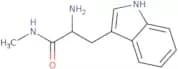
CAS:Versatile small molecule scaffoldFormula:C7H16N2O2•2HClPurezza:Min. 95%Colore e forma:PowderPeso molecolare:233.13 g/mol(2S)-2-Amino-3-(1H-indol-3-yl)-N-methylpropanamide
CAS:Acetaminophen is a non-opioid analgesic and antipyretic drug. It is a common medication used to treat pain, fever, and inflammation. Acetaminophen inhibits matrix metalloproteinase (MMPs) by binding to the active site of the enzyme, thus preventing it from breaking down collagen in the extracellular matrix. This inhibition has been shown to be effective against cancer cells. Acetaminophen also has an antioxidative activity that may be due to its ability to inhibit lipid peroxidation, which is important for cell membrane integrity. Acetaminophen has been shown to reduce ulceration in animal models.Formula:C12H15N3OPurezza:Min. 95%Colore e forma:PowderPeso molecolare:217.27 g/molL-Tryptophan
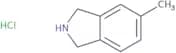
CAS:Tryptophan is a non-essential amino acid that has been shown to have an effect on mood, appetite, and sleep. L-Tryptophan is an essential amino acid. It is involved in the synthesis of serotonin and melatonin. The body breaks down tryptophan into 5-hydroxytryptophan (5HTP) and then into serotonin. Serotonin can be converted into melatonin by the pineal gland. Tryptophan levels are often low in people with depression and anxiety disorders. Tryptophan also has an effect on human gastrointestinal function, as it can stimulate gut motility and secretion of gastric acid and pepsinogen from the stomach lining. Tryptophan may also play a role in the discovery process, as it was found to increase the number of spontaneous oxidations in rat urine samples, which may be indicative of a new chemical reaction or drug discovery process.Formula:C11H12N2O2Purezza:Min. 98 Area-%Colore e forma:White PowderPeso molecolare:204.23 g/mol5-Methyl-2,3-dihydro-1H-isoindole hydrochloride
CAS:5-Methyl-2,3-dihydro-1H-isoindole hydrochloride is a chemical that can be used as a reagent in organic synthesis. It may also be useful in the manufacture of pharmaceuticals, dyes, and other chemicals. 5-Methyl-2,3-dihydro-1H-isoindole hydrochloride is an important building block for making complex compounds and fine chemicals. This chemical has been assigned CAS No. 1204600-16-7, which identifies it as a high quality research chemical.Formula:C9H12ClNPurezza:Min. 95%Colore e forma:PowderPeso molecolare:169.65 g/mol





![4-[(3-Aminopropyl)amino]butanoic acid dihydrochloride](/_next/image/?url=https%3A%2Fstatic.cymitquimica.com%2Fproducts%2F3D%2Fthumb-webp%2FDCA18544.webp&w=3840&q=75)