Building Blocks
Sottocategorie di "Building Blocks"
- Acidi boronici e derivati dell'acido boronico(5.783 prodotti)
- Building Blocks Chirali(1.242 prodotti)
- Building Blocks Idrocarburici(6.105 prodotti)
- Building Blocks organici(61.055 prodotti)
Trovati 205383 prodotti di "Building Blocks"
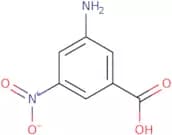
3-Amino-5-nitrobenzoic acid
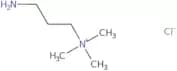
CAS:3-Amino-5-nitrobenzoic acid is a cyclic analog of diazepam. It has been shown to be an acceptor in the reduction of picric acid and nitro groups. 3-Amino-5-nitrobenzoic acid is a molecule which interacts with dopamine to produce pharmaceutical preparations.Formula:C7H6N2O4Purezza:Min. 95%Colore e forma:PowderPeso molecolare:182.13 g/mol(3-Aminopropyl)trimethylazanium chloride
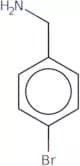
CAS:(3-Aminopropyl)trimethylazanium chloride is a fine chemical that is used as a building block and reagent in the synthesis of various organic compounds. It has been shown to be useful for reactions involving nucleophilic aromatic substitution, radical addition, and cycloaddition reactions. (3-Aminopropyl)trimethylazanium chloride has also been shown to be an effective intermediate in the synthesis of various pharmaceuticals. The CAS number is 19223-69-9.Formula:C6H17ClN2Purezza:Min. 95%Colore e forma:PowderPeso molecolare:152.66 g/mol4-Bromobenzylamine
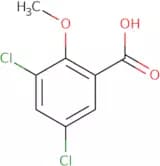
CAS:4-Bromobenzylamine is a chemical compound that has been used to study the process optimization of sephadex g-100. It is also used as a chemotherapeutic treatment for cancer. 4-Bromobenzylamine binds to intracellular targets, such as nitrogen atoms and cell lysis, with physiological levels found in fetal bovine serum. The nitrogen atom is an essential structural component of 4-bromobenzylamine that is necessary for its biological activity and may be involved in binding to DNA polymerase. This drug has been shown to inhibit the growth of metastatic colorectal cancer cells by inhibiting cellular proliferation. Structural analysis has revealed that 4-bromobenzylamine interacts with the polymerase chain reaction (PCR) enzyme and inhibits the ability of DNA polymerases to add nucleotides to the growing strand of DNA.Formula:C7H8BrNPurezza:Min. 95%Colore e forma:PowderPeso molecolare:186.05 g/mol3,5-Dichloro-2-methoxybenzoic acid
CAS:3,5-Dichloro-2-methoxybenzoic acid (3,5-DMB) is a diphenyl ether with a pharmacokinetic half-life of about 3 hours. It has two isomers: the cis and trans forms. The cis isomer is more active than the trans form. The cis isomer has been shown to be effective in treatments for amine oxidase inhibitors and short-chain fatty acids. It also has growth regulator properties that are used in treatments for psoriasis and acne. 3,5-DMB inhibits bacterial growth by binding to the enzyme dioxygenase, which catalyzes the conversion of 4-hydroxybenzoic acid into 4-hydroxyphenylpyruvic acid; this prevents the production of catecholamines and subsequent cell proliferation. This drug binds to apical membranes in the intestine by attaching to sulfhydryl groups on proteins involved in transport processes, preventing uptakeFormula:C8H6Cl2O3Purezza:Min. 95%Colore e forma:White PowderPeso molecolare:221.04 g/molAtranol
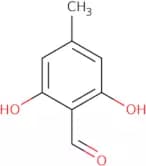
CAS:Atranol is a phenolic compound that is found in plants such as the leaves of the white willow tree. It has been shown to have anti-inflammatory properties and is being researched for its potential use in treatment of inflammatory bowel disease. Atranol has been shown to inhibit the production of inflammatory cytokines such as tumor necrosis factor-α (TNF-α) and interleukin-1β (IL-1β), which are key mediators of inflammation, by inhibiting NFκB activation. The reaction mechanism for atranol's inhibition of IL-1β production involves atranol binding with the cystein residue on IκB kinase β, which prevents phosphorylation and thus activation.
Formula:C8H8O3Purezza:Min. 95%Colore e forma:Brown Yellow PowderPeso molecolare:152.15 g/mol2-Amino-5-methoxybenzoic acid
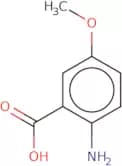
CAS:2-Amino-5-methoxybenzoic acid is a useful chemical that can be used as a building block for the synthesis of more complex compounds. It has been used in the synthesis of novel pharmaceuticals and agrochemicals, as well as research chemicals. 2-Amino-5-methoxybenzoic acid is a high quality reagent that can be used in the production of fine chemicals and other specialty chemicals.Formula:C8H9NO3Purezza:Min. 95%Colore e forma:PowderPeso molecolare:167.16 g/mol1,3-Dibromoadamantane
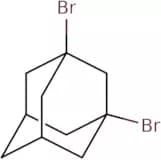
CAS:1,3-Dibromoadamantane is an organic compound that belongs to the group of organobromides. It has a chemical structure with three bromine atoms and one carbon atom, which are bonded to each other in a triangle shape. 1,3-Dibromoadamantane is soluble in solvents such as water and methanol. The reaction yield of 1,3-dibromoadamantane is 100% when it reacts with hydrochloric acid as the catalyst under optimal conditions. The reaction also occurs at a high temperature (100 degrees Celsius) and releases energy efficiently. 1,3-Dibromoadamantane can be used as a substrate molecule for the Suzuki coupling reaction. The coordination chemistry of 1,3-dibromoadamantane involves the formation of a square planar complex with copper ions and ammonia molecules to form copper(I) ammine complexes, which are then able to bindFormula:C10H14Br2Purezza:Min. 95%Colore e forma:PowderPeso molecolare:294.03 g/mol1-tert-Butyl 3-methyl 1,2,5,6-tetrahydropyridine-1,3-dicarboxylate
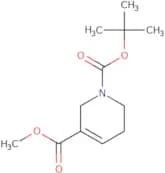
CAS:1-tert-Butyl 3-methyl 1,2,5,6-tetrahydropyridine-1,3-dicarboxylate is a chemical compound that is used as a reagent in organic synthesis. It is also a useful intermediate for the production of other chemicals such as pharmaceuticals and pesticides. This compound has been found to be an effective building block for the preparation of complex compounds. The 1,2,5,6-tetrahydropyridine moiety can be used as a scaffold or building block to produce various compounds with different modifications. This class of compounds has also been found to be versatile in chemical reactions due to their ability to form covalent bonds with many types of functional groups.
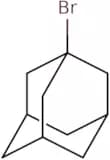
Formula:C12H19NO4Purezza:Min. 90%Colore e forma:Clear Viscous LiquidPeso molecolare:241.28 g/mol1-Bromoadamantane - 90%min
CAS:1-Bromoadamantane is a quinoline derivative that binds to the inflammatory bowel disease molecule. It is used as a pharmaceutical preparation for the treatment of inflammatory bowel disease. 1-Bromoadamantane is synthesized by the palladium-catalyzed coupling reaction of 2,6-dimethoxybenzene and trifluoromethanesulfonic acid. The synthesis method involves the use of hydrochloric acid and hydroxyl group. 1-Bromoadamantane has been shown to have binding constants with ileal and colonic tissue in rats with experimental colitis.Formula:C10H15BrPurezza:Min. 90%Colore e forma:PowderPeso molecolare:215.13 g/moltrans-3-Hydroxy-L-proline
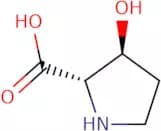
CAS:Please enquire for more information about trans-3-Hydroxy-L-proline including the price, delivery time and more detailed product information at the technical inquiry form on this page
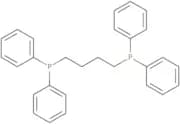
Formula:C5H9NO3Purezza:Min. 95%Colore e forma:White PowderPeso molecolare:131.13 g/mol1,4-Bis-(diphenylphosphino)butane
CAS:1,4-Bis-(diphenylphosphino)butane is a coordination compound that contains a bicyclic heterocycle. The compounds are made up of phosphorus and nitrogen atoms which are arranged in a tetrahedral geometry. It has photochemical properties and can be used to inhibit the growth of myeloid leukemia cells. The complexes bind to amines and form stable complexes with hydroxyl groups, so they are also able to cross mitochondrial membranes. This compound has been shown to bind to copper ions in x-ray crystal structures. 1,4-Bis-(diphenylphosphino)butane binds more strongly to ethylene diamine than it does to aryl halides such as chloroethane or phenylethane. Activation energies for the binding of 1,4-bis-(diphenylphosphino)butane with ethylene diamine have been found by measuring the free energy change for its formation fromFormula:C28H28P2Purezza:Min. 95%Colore e forma:White PowderPeso molecolare:426.47 g/molCetirizine propanediol ester dihydrochloride, mixture of regioisomers
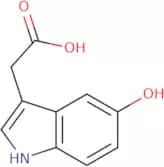
Please enquire for more information about Cetirizine propanediol ester dihydrochloride, mixture of regioisomers including the price, delivery time and more detailed product information at the technical inquiry form on this pageFormula:C24H31ClN2O4•(HCl)2Purezza:Min. 95%Colore e forma:PowderPeso molecolare:519.89 g/mol5-Hydroxyindole-3-acetic acid
CAS:Reduces brain amyloid plaques; induces neprilysin expression
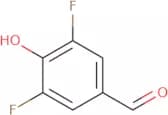
Formula:C10H9NO3Purezza:Min. 95%Colore e forma:Off-White PowderPeso molecolare:191.18 g/mol3,5-Difluoro-4-hydroxybenzaldehyde
CAS:3,5-Difluoro-4-hydroxybenzaldehyde is a biochemical that belongs to the group of anticancer agents. It is activated by hydroxyl radicals and inhibits cancer cells. 3,5-Difluoro-4-hydroxybenzaldehyde inhibits protein synthesis in the cell by binding to messenger RNA and preventing its translation into protein. This compound also has inhibitory properties against DNA polymerase, which prevents DNA replication and transcription. 3,5-Difluoro-4-hydroxybenzaldehyde can be used as a template for oligodeoxynucleotides (ODN) to enhance photochemical properties.
Formula:C7H4F2O2Purezza:Min. 95%Colore e forma:Off-White PowderPeso molecolare:158.1 g/mol2-Bromo-4-iodopyridine
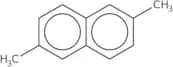
CAS:2-Bromo-4-iodopyridine is a coordination compound that inhibits bacterial enzyme catechol-O-methyltransferase (COMT). It is also an inhibitor of methicillin-resistant Staphylococcus aureus (MRSA) and other bacteria. 2-Bromo-4-iodopyridine binds to the active site of COMT, which is located in the bacterial cell wall, and prevents methylamine from binding to the enzyme. This prevents methylation of the catechol ring, which is required for bacterial growth. 2-Bromo-4-iodopyridine has been shown to have antimicrobial activity against Escherichia coli, Enterococcus faecalis, Bacillus subtilis, and Candida albicans.Formula:C5H3BrINPurezza:Min. 95%Colore e forma:PowderPeso molecolare:283.88 g/molDimethylnaphthalene (mixture of isomers)
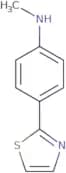
CAS:Dimethylnaphthalene is an aromatic hydrocarbon that is soluble in hydrochloric acid and reacts with zirconium oxide. It has been shown to have specific treatment effects, such as the inhibition of the growth of Staphylococcus aureus and Streptococcus pyogenes. Dimethylnaphthalene is also used to treat acne and psoriasis due to its ability to inhibit bacterial growth on skin. It has been shown to be effective against bacteria that are resistant to erythromycin and tetracycline. The solubility data for dimethylnaphthalene show that it may be more soluble in organic solvents than water. The morphology of dimethylnaphthalene consists of particles or molecules with a range of sizes. Dimethylnaphthalene can exist as either a single isomer or as an isomeric mixture.Formula:C12H12Purezza:Min. 80%Colore e forma:Yellow Clear LiquidPeso molecolare:156.22 g/molN-Methyl-4-(1,3-thiazol-2-yl)aniline
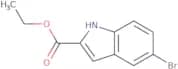
CAS:Versatile small molecule scaffoldFormula:C10H10N2SPurezza:Min. 95%Colore e forma:PowderPeso molecolare:190.27 g/mol5-Bromoindole-2-carboxylic acid ethyl ester
CAS:5-Bromoindole-2-carboxylic acid ethyl ester (5-BIEC) is a carboxamide antibiotic that inhibits the growth of gram-negative bacteria, including pneumoniae. 5-BIEC has been shown to have an inhibitory concentration (IC50) of 0.9 μM against Escherichia coli and other gram negative bacteria. It also has anti-proliferative effects on cancer cells, which may be due to its ability to inhibit DNA replication by binding to the beta subunit of DNA gyrase. 5-BIEC is currently being studied as a potential anticancer drug for the treatment of breast cancer, colon cancer, and leukemia.Formula:C11H10BrNO2Purezza:Min. 98 Area-%Colore e forma:PowderPeso molecolare:268.11 g/mol3,4-Dihydroxybenzylamine hydrobromide
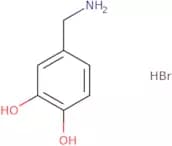
CAS:3,4-Dihydroxybenzylamine hydrobromide is a chemical that reacts with hydrogen peroxide to produce light. It is used as a nutrient for the chemiluminescent reaction in a nutrient solution to detect dopamine, chlorogenic acids, and trifluoroacetic acid. 3,4-Dihydroxybenzylamine hydrobromide can also be used as an analytical method for the measurement of cortisol concentration in plasma and saliva samples. This chemical analogically reacts with monoamine neurotransmitters such as dopamine and gamma-aminobutyric acid (GABA) to form fluorescent probes. 3,4-Dihydroxybenzylamine hydrobromide is not toxic or mutagenic and has been shown to be safe for use in humans.Formula:C7H10BrNO2Purezza:Min. 95%Colore e forma:PowderPeso molecolare:220.06 g/mol(R)-1,1'-Bi-2-Naphthol
CAS:(R)-1,1'-Bi-2-Naphthol is an organic compound that is made from the hydrogenation of 2-naphthol. The sodium salts of this compound are chiral and can be used to synthesize racemic mixtures with a high degree of optical purity. The x-ray crystal structures of (R)-1,1'-Bi-2-Naphthol have been studied in detail and show that this molecule exhibits intermolecular hydrogen bonding interactions. It also has a steric interaction with the amine group which prevents rotation about the C3—C4 bond. Other interesting features include intramolecular hydrogen bonding interactions between the hydroxyl group and the alkanoic acid. This molecule also has a hydrophobic region consisting of three methyl groups that are connected to fatty acids.Formula:C20H14O2Purezza:Min. 98.5 Area-%Colore e forma:White Off-White PowderPeso molecolare:286.32 g/mol