Building Blocks
Sottocategorie di "Building Blocks"
- Acidi boronici e derivati dell'acido boronico(5.783 prodotti)
- Building Blocks Chirali(1.242 prodotti)
- Building Blocks Idrocarburici(6.105 prodotti)
- Building Blocks organici(61.055 prodotti)
Trovati 205383 prodotti di "Building Blocks"
H-Imidazo[1,2-a]pyridin-2-amine
CAS:H-Imidazo[1,2-a]pyridin-2-amine is a synthetic compound that has been shown to bind selectively to the catalytic subunit of protein kinase A (PKA). This binding inhibits PKA's ability to phosphorylate proteins, which plays a key role in regulating physiological functions such as cell growth and proliferation. H-Imidazo[1,2-a]pyridin-2-amine has been shown to inhibit tumor growth and symptoms in mouse models by targeting amine receptors. The compound also inhibits the proliferation of cancer cells by signaling through the kinase pathways that regulate mitosis. H-Imidazo[1,2-a]pyridin-2-amine is scalable and can be produced at high yields from inexpensive starting materials.Formula:C7H7N3Purezza:Min. 95%Peso molecolare:133.15 g/mol2-Bromo-3-methylpyridine
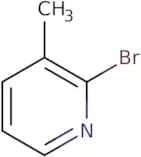
CAS:2-Bromo-3-methylpyridine is a diazido compound with a hydrogen bond. It reacts rapidly with copper chloride to form the coordination complex Cu(diazido)(Cl)2 and an organic product. 2-Bromo-3-methylpyridine can be synthesized from 2,4-dibromopyridine by a cross coupling reaction with copper chloride and calcium carbonate in the presence of sodium potassium bicarbonate. The coordination geometry of the molecule is tetrahedral, with two bromine atoms on opposite sides of the central nitrogen atom and one bromine atom on each side of the pyridine ring. Reaction products are formed as a result of substitution reactions involving halides, such as methyl chloride or ethyl chloride, which act as electrophiles to react with the diazido group. Potential mechanisms include metathesis reactions or cryogenic processes.Formula:C6H6BrNPurezza:Min. 95%Colore e forma:Colorless Clear LiquidPeso molecolare:172.02 g/mol2-Amino-N-[(2-fluorophenyl)methyl]-N-methylbutanamide
CAS:Versatile small molecule scaffoldFormula:C12H17FN2OPurezza:Min. 95%Colore e forma:PowderPeso molecolare:224.27 g/mol6-Mercaptopurine hydrate
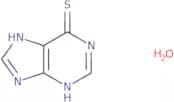
CAS:6-Mercaptopurine is a purine analog that suppresses the production of white blood cells by inhibiting the enzyme thiopurine methyltransferase. It has been used to treat bowel disease and also for long-term suppression of the immune system in patients with autoimmune diseases. 6-Mercaptopurine is metabolized to 6-mercaptopurine, which is then converted to dinucleotide phosphate (dNTP) by group P2 enzymes. This conversion allows 6-mercaptopurine to inhibit dNTP synthesis and cell division. The effects of 6-mercaptopurine are potentiated when given in conjunction with azathioprine, another drug that inhibits purine metabolism. 6-Mercaptopurine is not active against human serum albumin or erythrocytes because it cannot be cleaved into an active form by these proteins. However, it does inhibit enzyme activities such as DNA polymerase, RNA polymerase, and proteinFormula:C5H4N4S•H2OPurezza:Min. 97 Area-%Colore e forma:Yellow PowderPeso molecolare:152.18 g/molBoc-D-Leu-OH
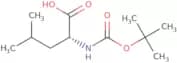
CAS:Boc-D-Leu-OH is a cyclic peptide that has been shown to have antibacterial activity. It is a monomer with a hydroxy group and a cavity. Boc-D-Leu-OH was found to be able to transport hydrophobic compounds across membranes, which may be due to its hydrophobic nature. Boc-D-Leu-OH also induces apoptosis in cells, which can lead to cancer. This compound has been optimized by structural modifications and residue substitutions, which have led to improved properties such as enhanced stability and increased antimicrobial activity.Formula:C11H21NO4Purezza:Min. 95%Colore e forma:PowderPeso molecolare:231.29 g/molIndole-4-carboxaldehyde
CAS:Please enquire for more information about Indole-4-carboxaldehyde including the price, delivery time and more detailed product information at the technical inquiry form on this pageFormula:C9H7NOPeso molecolare:145.16 g/molRef: 3D-I-2202
10gPrezzo su richiesta25gPrezzo su richiesta50gPrezzo su richiesta100gPrezzo su richiesta250gPrezzo su richiesta-Unit-ggPrezzo su richiestaIndole-4-carboxylic acid methyl ester
CAS:Indole-4-carboxylic acid methyl ester is a fine chemical that is used as a building block in the synthesis of complex compounds. It can be used as a reagent, speciality chemical, or intermediate, and it has versatile applications in the synthesis of pharmaceuticals and dyes. Indole-4-carboxylic acid methyl ester has been shown to react with alcohols to form ketones, which are useful scaffolds for organic chemistry. It can also be used as a reaction component for the synthesis of other compounds.Formula:C10H9NO2Peso molecolare:175.19 g/molRef: 3D-I-2510
1kgPrezzo su richiesta50gPrezzo su richiesta100gPrezzo su richiesta250gPrezzo su richiesta500gPrezzo su richiesta-Unit-ggPrezzo su richiesta4-Amino-3-chloro-N-[2-(diethylamino)ethyl]benzamide
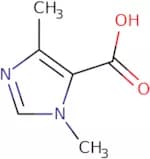
CAS:4-Amino-3-chloro-N-[2-(diethylamino)ethyl]benzamide (4ACB) is a benzoquinone analog that has been shown to inhibit the proliferation of muscle cells. It has also been found to be reactive with reactive functional groups, such as the fatty acids found in the liver and bowel. 4ACB suppresses mitochondrial functions, which may contribute to its anti-inflammatory effects. This drug is also a pharmacological agent that inhibits bowel disease by reducing the secretion of inflammatory substances from cells in the bowel.Formula:C13H20ClN3OPurezza:Min. 95%Colore e forma:PowderPeso molecolare:269.77 g/mol1,4-Dimethyl-1H-imidazole-5-carboxylic acid
CAS:Versatile small molecule scaffoldFormula:C6H8N2O2Purezza:Min. 90%Peso molecolare:140.14 g/mol6-Methoxyindole-2-carboxylic acid methyl ester
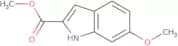
CAS:6-Methoxyindole-2-carboxylic acid methyl ester is a pyrroloquinoline alkaloid with cytotoxic and antiproliferative activities. It inhibits the growth of cancer cells in culture by inducing apoptosis and cell cycle arrest. 6-Methoxyindole-2-carboxylic acid methyl ester has been shown to be effective against breast cancer cell lines in vitro and to inhibit the proliferation of breast cancer cells in vivo. This compound also inhibits the growth of a number of other cancer cell lines such as prostate, colon, lung, liver, stomach, and leukemia. The mechanism of action for this compound is thought to be due to its ability to act as an intramolecular quencher of reactive oxygen species (ROS) or as an inhibitor of DNA synthesis through inhibition of ribonucleotide reductase activity.
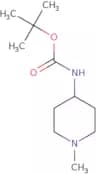
Formula:C11H11NO3Purezza:Min. 95%Colore e forma:PowderPeso molecolare:205.21 g/moltert-Butyl N-(1-methylpiperidin-4-yl)carbamate
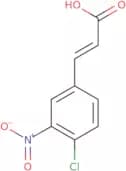
CAS:Versatile small molecule scaffoldFormula:C11H22N2O2Purezza:Min. 95%Colore e forma:PowderPeso molecolare:214.3 g/mol4-Chloro-3-nitrocinnamic acid
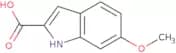
CAS:4-Chloro-3-nitrocinnamic acid is a thionyl chloride derivative of cinnamic acid. It is used as an intermediate in the preparation of pharmaceuticals and dyestuffs. 4-Chloro-3-nitrocinnamic acid inhibits the activity of amides, dimethylformamide, alkaline hydrolysis, xylene, carboxyphenyl, cinnamic, refluxing, nitrophenyl and carboxylic acids. 4-Chloro-3-nitrocinnamic acid reacts with chloride to form the corresponding chloride salt. This compound can also react with formamide to form an amide salt. The ester group of 4-chloro-3-nitrocinnamic acid can be cleaved by nitro compounds to produce nitro derivatives.Formula:C9H6ClNO4Purezza:Min. 95%Colore e forma:Off-White PowderPeso molecolare:227.6 g/mol6-Methoxyindole-2-carboxylic acid
CAS:6-Methoxyindole-2-carboxylic acid (6MI) is a potent inhibitor of the enzyme catechol-O-methyltransferase (COMT). This inhibition prevents the conversion of catecholamines, such as dopamine and norepinephrine, to their corresponding methylated products. COMT inhibitors are used clinically to treat Parkinson's disease and other diseases that result from excessive levels of these neurotransmitters. 6MI is also an effective inhibitor of tyrosinase activity in vitro. It has been shown to inhibit the synthesis of melanin by melanocytes and inhibits the production of eumelanin, which is responsible for black or brown skin pigments. The inhibitory potency of 6MI was found to be greater than that for kojic acid, arbutin, and hydroquinone. Optimization studies showed that 6MI was most potent at a concentration of 1 mM and had an IC50 value of 0.3 mM in
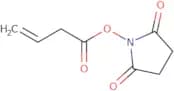
Formula:C10H9NO3Purezza:Min. 95%Colore e forma:PowderPeso molecolare:191.18 g/mol3-Butenoic acid, 2,5-dioxo-1-pyrrolidinyl ester
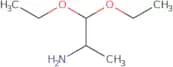
CAS:3-Butenoic acid, 2,5-dioxo-1-pyrrolidinyl ester is a fine chemical that can be used as a scaffold for the synthesis of complex compounds. This chemical is also useful as an intermediate in the synthesis of chemicals and research chemicals. It has CAS number 388091-45-0 and a molecular weight of 220.3 g/mol. 3-Butenoic acid, 2,5-dioxo-1-pyrrolidinyl ester is soluble in organic solvents such as acetone or chloroform and is not toxic to humans at low doses.Formula:C8H9NO4Purezza:Min. 95%Colore e forma:PowderPeso molecolare:183.16 g/mol1,1-Diethoxy-2-propanamine
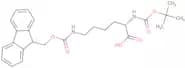
CAS:1,1-Diethoxy-2-propanamine is a primary amine that serves as a versatile building block in various chemical reactions. It is commonly used in research laboratories for the synthesis of new compounds and the development of innovative chemical processes. This high-quality research chemical offers excellent purity and reliability, making it a preferred choice among chemists and scientists. Whether you are conducting experiments or exploring new avenues in chemistry, 1,1-Diethoxy-2-propanamine is an essential component to consider for your research needs.Formula:C7H17NO2Purezza:Min. 95%Colore e forma:Clear LiquidPeso molecolare:147.22 g/molN-α-Boc-N-ε-Fmoc-L-lysine
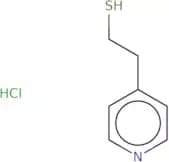
CAS:N-alpha-Boc-N-epsilon-Fmoc-L-lysine is a cyclic peptide that has antimicrobial properties. The peptide is synthesized from the amino acid lysine and contains a sequence of lysine residues. N-alpha-Boc-N-epsilon-Fmoc-L-lysine can be used to treat herpes simplex virus infections and influenza virus infections. It also has the potential to neutralize glycopeptide antibiotics, such as vancomycin, by binding to their cell wall targets and interfering with the function of these molecules. In addition, this peptide can be used to manufacture insulin analogues with improved pharmacokinetic properties and increased stability in blood plasma.Formula:C26H32N2O6Purezza:Min. 95%Colore e forma:White To Off-White SolidPeso molecolare:468.54 g/mol4-Mercaptoethylpyridine HCl
CAS:Used for antibody separation by hydrophobic charge induction chromatography
Formula:C7H9NS·HClPurezza:Min. 97 Area-%Colore e forma:PowderPeso molecolare:175.68 g/mol6-Methoxyindole
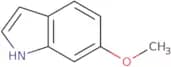
CAS:6-Methoxyindole is an acetate extract of the plant 5-methoxyindole. It has been shown to be a 5-HT1A receptor agonist in animals, and has been shown to have cardiac effects in rats. 6-Methoxyindole is also used as a precursor for the synthesis of diphenylacetylindoles. 6-Methoxyindole is one of the molecules that can be recombined to form a batcho-leimgruber indole (BLI).
Formula:C9H9NOPurezza:Min. 99 Area-%Colore e forma:PowderPeso molecolare:147.17 g/molMaleimide
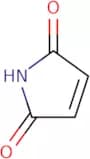
CAS:Maleimide is a chemical compound that can be synthesized from maleic anhydride and hydrogen fluoride. It has been used as a fluorescent probe for the measurement of electrochemical impedance spectroscopy (EIS) in biological systems. Maleimide is also used to study the interaction with mouse monoclonal antibody, which can be used to detect the presence of specific proteins or antigens in blood. Maleimides are covalently linked to proteins and other macromolecules through their thiol groups, forming a stable linkage. Maleimide reacts with hydrogen gas at high temperatures, leading to a decrease in its redox potentials. The reaction solution can be analyzed by plasma mass spectrometry, which determines the concentration of maleimide and its reactants by measuring ions produced by ionization or fragmentation reactions.Formula:C4H3NO2Purezza:Min. 95%Colore e forma:Off-White PowderPeso molecolare:97.07 g/mol6-Methoxy-2-naphthol
CAS:6-Methoxy-2-naphthol is a synthetic compound. It has been shown to be an effective antibacterial agent against Gram-positive bacteria when tested in vitro. 6-Methoxy-2-naphthol also inhibits methyltransferase activity and can be used in the treatment of cancer. The optical properties of 6-Methoxy-2-naphthol have been studied extensively, and it has been found to have strong absorption bands at 350 nm and 575 nm, making it a potential candidate for photodynamic therapy.Formula:C11H10O2Purezza:Min. 95%Colore e forma:Brown PowderPeso molecolare:174.2 g/mol
![H-Imidazo[1,2-a]pyridin-2-amine](/_next/image/?url=https%3A%2Fstatic.cymitquimica.com%2Fproducts%2F3D%2Fthumb-webp%2FPBA58826.webp&w=3840&q=75)

![2-Amino-N-[(2-fluorophenyl)methyl]-N-methylbutanamide](/_next/image/?url=https%3A%2Fstatic.cymitquimica.com%2Fproducts%2F3D%2Fthumb-webp%2FTYB06730.webp&w=3840&q=75)


![4-Amino-3-chloro-N-[2-(diethylamino)ethyl]benzamide](/_next/image/?url=https%3A%2Fstatic.cymitquimica.com%2Fproducts%2F3D%2Fthumb-webp%2FAAA89160.webp&w=3840&q=75)