Building Blocks
Sottocategorie di "Building Blocks"
- Acidi boronici e derivati dell'acido boronico(5.784 prodotti)
- Building Blocks Chirali(1.244 prodotti)
- Building Blocks Idrocarburici(6.105 prodotti)
- Building Blocks organici(61.073 prodotti)
Trovati 205446 prodotti di "Building Blocks"
α-Sulfophenylacetic acid
CAS:Alpha-Sulfophenylacetic acid is a high quality reagent that is useful as an intermediate in the synthesis of complex compounds. It is also a fine chemical that can be used as a building block for the synthesis of speciality chemicals and research chemicals. Alpha-sulfophenylacetic acid is a versatile building block for reactions involving organic synthesis, and can be used as a reaction component to produce dyes, pharmaceuticals, pesticides, and herbicides.Formula:C8H8O5SPurezza:Min. 95.0 Area-%Peso molecolare:216.21 g/molRef: 3D-S-9630
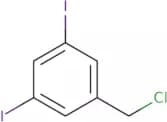
-Unit-kgkgPrezzo su richiesta1kgPrezzo su richiesta5kgPrezzo su richiesta10kgPrezzo su richiesta25kgPrezzo su richiesta2500gPrezzo su richiesta1-(Chloromethyl)-3,5-diiodobenzene
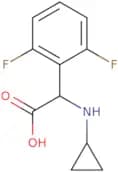
CAS:1-(Chloromethyl)-3,5-diiodobenzene is a versatile and high quality chemical building block that is useful for research purposes. It can be used as a reagent or speciality chemical in the synthesis of other compounds. This compound has been shown to be an intermediate for the synthesis of more complex compounds, such as pharmaceuticals, agrochemicals, and fine chemicals. 1-(Chloromethyl)-3,5-diiodobenzene has many uses in organic chemistry including as a reaction component or scaffold for the construction of complex molecules.Formula:C7H5ClI2Purezza:Min. 95%Colore e forma:PowderPeso molecolare:378.37 g/mol2-(Cyclopropylamino)-2-(2,6-difluorophenyl)acetic acid
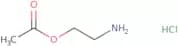
CAS:Versatile small molecule scaffoldFormula:C11H11F2NO2Purezza:Min. 95%Colore e forma:PowderPeso molecolare:227.21 g/mol2-Aminoethyl Acetate Hydrochloride
CAS:Versatile small molecule scaffoldFormula:C4H9NO2·HClPurezza:Min. 95%Colore e forma:PowderPeso molecolare:139.58 g/molMethyl 2-[1-(3-hydroxyphenyl)-N-methylformamido]acetate
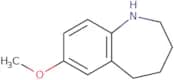
CAS:Versatile small molecule scaffoldFormula:C11H13NO4Purezza:Min. 95%Colore e forma:Clear LiquidPeso molecolare:223.22 g/mol7-Methoxy-2,3,4,5-tetrahydro-1H-1-benzazepine
CAS:7-Methoxy-2,3,4,5-tetrahydro-1H-1-benzazepine is a fine chemical with CAS No. 46180-98-7. It is a versatile building block and useful intermediate for the synthesis of complex compounds with various functions. 7-Methoxy-2,3,4,5-tetrahydro-1H-1-benzazepine is also a reagent that can be used in research chemicals and speciality chemicals. This compound has been shown to have high quality and is an excellent reaction component for reactions producing new synthetic intermediates.Formula:C11H15NOPurezza:Min. 95%Peso molecolare:177.24 g/molPF-04965842
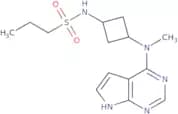
CAS:PF-04965842 is an anti-inflammatory drug that belongs to the class of Jak1 inhibitors. It is used in the treatment of alopecia areata, dermatitis, and bowel disease. PF-04965842 is a selective inhibitor of JAK3 and blocks signaling through this pathway. PF-04965842 has been shown to have long-term efficacy in the treatment of inflammatory skin diseases such as atopic dermatitis and psoriasis. In addition, it has been demonstrated to be effective in reducing symptoms associated with inflammatory bowel disease (IBD) and ulcerative colitis. PF-04965842 also inhibits the production of proinflammatory cytokines by inhibiting the activation of inflammatory cells in the skin or gut.
Formula:C14H21N5O2SPurezza:Min. 95%Colore e forma:PowderPeso molecolare:323.41 g/mol2-Hydroxy-3,4-dihydro-2H-1,4-benzoxazin-3-one
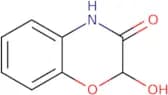
CAS:2-Hydroxy-3,4-dihydro-2H-1,4-benzoxazin-3-one is a versatile compound with various applications. It is commonly used in the production of coatings and as a fatty acid leaching agent. Additionally, it is utilized in the synthesis of research chemicals such as imatinib and sildenafil citrate.Formula:C8H7NO3Purezza:Min. 95%Peso molecolare:165.15 g/mol1-[(2R)-2-(Hydroxymethyl)pyrrolidin-1-yl]ethan-1-one
CAS:Versatile small molecule scaffold
Formula:C7H13NO2Purezza:Min. 95%Peso molecolare:143.18 g/mol2-Ethyl-2-oxazoline
CAS:Please enquire for more information about 2-Ethyl-2-oxazoline including the price, delivery time and more detailed product information at the technical inquiry form on this pageFormula:C6H14ClNO5Peso molecolare:215.63 g/mol2-{1-[(Pyridin-3-yl)methyl]piperidin-2-yl}ethan-1-ol
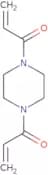
CAS:Versatile small molecule scaffoldFormula:C13H20N2OPurezza:Min. 95%Colore e forma:PowderPeso molecolare:220.31 g/mol1,4-Diacrylylpiperazine
CAS:Used for preparation of acrylamide gelsFormula:C10H14N2O2Purezza:Min. 98 Area-%Colore e forma:White PowderPeso molecolare:194.23 g/mol3-Methyl-4-nitrobenzoic acid
CAS:3-Methyl-4-nitrobenzoic acid is a white solid that can be synthesized by heating 2,4-dichlorobenzoic acid with potassium dichromate in the presence of nitrogen. It has been shown to be effective against Candida glabrata strains and other bacteria. 3-Methyl-4-nitrobenzoic acid is soluble in water and other polar solvents, such as acetic acid or sodium carbonate, but insoluble in nonpolar solvents such as hexane or ether. The reaction mechanism for this compound is not yet known. It has been found to have a phase equilibrium between its solid and liquid forms at room temperature. Solubility data for this compound are available from experimental measurements.
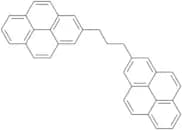
Formula:C8H7NO4Purezza:Min. 95%Colore e forma:PowderPeso molecolare:181.15 g/mol1,3-Di-(2-pyrenyl)propane
CAS:1,3-Di-(2-pyrenyl)propane is a synthetic molecule that has been used as a model for the phosphatidylethanolamine (PE) component of bacterial membranes. 1,3-Di-(2-pyrenyl)propane has been shown to have a phase transition temperature of -7 degrees Celsius. It is hydrophobic and highly soluble in organic solvents like chloroform, ethanol, ether, and benzene. This molecule is kinetically inert and thermodynamically stable. The monomeric form of 1,3-Di-(2-pyrenyl)propane is not sensitive to ionizing radiation. However, in the bilayer form it is highly sensitive to radiation and can lead to the formation of double bonds that can break down into radicals.
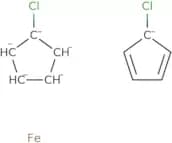
Formula:C35H24Purezza:Min. 95%Colore e forma:White PowderPeso molecolare:444.57 g/mol1,1'-Dichloroferrocene
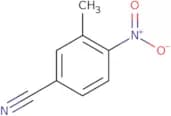
CAS:1,1'-Dichloroferrocene is a molecule that belongs to the group of benzenes and has a gaseous form. It has potential energy and is an optical active compound. 1,1'-Dichloroferrin can be found in synchrotron radiation and it's optical absorption is dipole. The ligand for 1,1'-dichloroferrocene is ferrocene. This molecule transfers energy through radiation and optical excitation. The parameters for bromoferrocene are similar to those of 1,1'-dichloroferrin except that it does not have the same steric properties.Formula:C10H8Cl2FePurezza:Min. 95%Colore e forma:Off-White To Dark Yellow SolidPeso molecolare:254.92 g/mol3-Methyl-4-nitrobenzonitrile
CAS:3-Methyl-4-nitrobenzonitrile is a fluorescing aromatic amine that is synthesized by aliphatic amines. It has been shown to inhibit the growth of cells in culture, which may be due to its ability to bind with and inhibit the insulin-like growth factor receptor-1 (IGF-1R). 3-Methyl-4-nitrobenzonitrile has also been shown to bind with cytochrome P450 enzymes, where it can be oxidized or reduced. The conformation of 3-methyl-4 nitrobenzonitrile is dependent on the solvent molecules present.Formula:C8H6N2O2Purezza:Min. 95%Colore e forma:PowderPeso molecolare:162.15 g/mol5-Methoxyindole
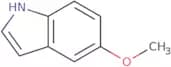
CAS:5-Methoxyindole is a chemical compound that is soluble in water. It has been shown to inhibit tumor growth and induce apoptosis, as well as inhibit the expression of glycogen synthase kinase-3. The structure of 5-methoxyindole was determined by NMR spectroscopy and FT-IR spectroscopy. The compound has been observed to exhibit fluorescence properties at a wavelength of 490 nm when it is excited with UV light. A copper complex of 5-methoxyindole was studied using molecular modeling and FT-IR spectroscopy, which revealed that it can undergo nucleophilic attack by hydrogen bond formation or an acid/base reaction to form a new hydrogen bond. This study also found that 5-methoxyindole is able to form hydrogen bonds with its neighboring molecules, which may contribute to its high solubility in water.Formula:C9H9NOColore e forma:PowderPeso molecolare:147.17 g/mol2-Methylindole
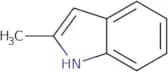
CAS:2-Methylindole is a reactive molecule that can undergo electrophilic substitution at the 2-position. It reacts with a variety of nitrogen nucleophiles, acylating them at the 2-position. These reactions are catalyzed by enzymes such as carbonyl reductase and methyl ketone reductase. The reaction mechanism is not yet fully understood, but it has been proposed that it proceeds through an acylation reaction between two molecules of 2-methylindole to form a linear product. The regiospecificity of this reaction has been demonstrated in vivo using a model system.Formula:C9H9NColore e forma:PowderPeso molecolare:131.17 g/mol4-Methyl-3-nitrobenzoic acid
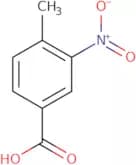
CAS:4-Methyl-3-nitrobenzoic acid is a hydroxide solution that has been shown to be cytotoxic to malignant melanoma cells in vitro. 4-Methyl-3-nitrobenzoic acid also inhibits the growth of normal cells by blocking epidermal growth factor receptor signaling. This molecule is converted to hippuric acid, which may have an anti-cancer effect by inhibiting metal ion uptake and causing DNA damage. There are no known adverse effects or interactions with other drugs.Formula:C8H7NO4Purezza:Min. 95%Colore e forma:PowderPeso molecolare:181.15 g/mol5-Methoxyindole-2-carboxylic acid
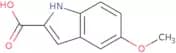
CAS:5-Methoxyindole-2-carboxylic acid is a molecule that belongs to the class of diazonium salts. It is a potent inhibitor of mitochondrial membrane potential and has been shown to have anti-diabetic effects in animal models. 5-Methoxyindole-2-carboxylic acid also inhibits sperm motility, which may be due to its ability to inhibit uv absorption. This compound has been shown to be an effective agent in the treatment of brain infarctions when administered chronically orally. The mechanism of action is not known, but it may involve inhibition of potassium ion uptake or hydrogen bond formation with fatty acids.Formula:C10H9NO3Colore e forma:PowderPeso molecolare:191.18 g/mol


![Methyl 2-[1-(3-hydroxyphenyl)-N-methylformamido]acetate](/_next/image/?url=https%3A%2Fstatic.cymitquimica.com%2Fproducts%2F3D%2Fthumb-webp%2FVQB93340.webp&w=3840&q=75)
![1-[(2R)-2-(Hydroxymethyl)pyrrolidin-1-yl]ethan-1-one](/_next/image/?url=https%3A%2Fstatic.cymitquimica.com%2Fproducts%2F3D%2Fthumb-webp%2FYEA95887.webp&w=3840&q=75)

![2-{1-[(Pyridin-3-yl)methyl]piperidin-2-yl}ethan-1-ol](/_next/image/?url=https%3A%2Fstatic.cymitquimica.com%2Fproducts%2F3D%2Fthumb-webp%2FZZB80618.webp&w=3840&q=75)