Building Blocks
Sottocategorie di "Building Blocks"
- Acidi boronici e derivati dell'acido boronico(5.784 prodotti)
- Building Blocks Chirali(1.244 prodotti)
- Building Blocks Idrocarburici(6.105 prodotti)
- Building Blocks organici(61.070 prodotti)
Trovati 205437 prodotti di "Building Blocks"
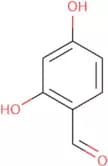
2,4-Dihydroxybenzaldehyde
CAS:2,4-Dihydroxybenzaldehyde (2,4DBA) is a copper complex that has been shown to have biological properties. This compound has been studied in biological studies and is classified as group p2 on the periodic table. It is a redox potential of -0.95 V and can undergo intramolecular hydrogen bonding with itself or with other molecules to form hydrogen bonds. Hydroxyl groups are found on 2,4DBA and can coordinate with the nitrogen atoms found on penicillin-binding proteins or acetylcholinesterase inhibition. The coordination geometry of 2,4DBA is tetrahedral and its methyl ethyl group is also found on this molecule.Formula:C7H6O3Purezza:Min. 98 Area-%Colore e forma:White PowderPeso molecolare:138.12 g/molN6-Trifluoroacetyl-L-lysine N-carboxyanhydride
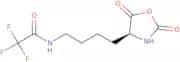
CAS:Trifluoroacetyl-L-lysine N-carboxyanhydride is an N6-trifluoroacetylated lysine derivative that is used in the synthesis of peptides. It is a racemic mixture of L and D forms, which is hydrolyzed to form L-glutamic acid, NH4Cl, and CO2. Trifluoroacetyl-L-lyside N-carboxyanhydride has been shown to be useful in the formation of bonds between amino acids, such as lysine and dipeptides. The compound is also used for the protection of lysine against oxidation during peptide synthesis.Formula:C9H11F3N2O4Purezza:Min. 95%Colore e forma:White PowderPeso molecolare:268.19 g/mol2-Azaspiro[3.3]heptane-1-carboxylic acid hydrochloride
CAS:2-Azaspiro[3.3]heptane-1-carboxylic acid hydrochloride is a versatile building block that can be used in the synthesis of a wide variety of chemical compounds. It is a high quality, useful intermediate that has been shown to be an effective scaffold for synthesis of various complex compounds.
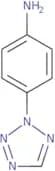
Formula:C7H11NO2•HClPurezza:Min. 95%Peso molecolare:177.63 g/mol4-(2H-1,2,3,4-Tetrazol-2-yl)aniline
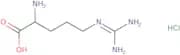
CAS:Versatile small molecule scaffoldFormula:C7H7N5Purezza:Min. 95%Colore e forma:PowderPeso molecolare:161.16 g/molDL-Arginine hydrochloride
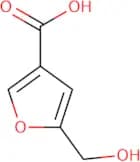
CAS:L-Arginine is a conditionally essential amino acid that is used in the biosynthesis of proteins. It has been shown to inhibit the activity of specific enzymes, such as casein kinase II and phospholipase A2, which are involved in cellular processes. L-Arginine has been found to be beneficial for patients with type 2 diabetes mellitus who have poor glucose homeostasis and renal dysfunction. L-Arginine also enhances uptake of cationic surfactants by cells. L-Arginine HCl is an inorganic acid that may be used for pharmacokinetic studies in humans or animals.Formula:C6H14N4O2•(HCl)xPurezza:Min. 95%Colore e forma:PowderPeso molecolare:174.2 g/mol5-(Hydroxymethyl)furan-3-carboxylic acid
CAS:5-(Hydroxymethyl)furan-3-carboxylic acid (5HFCA) is a diphenyl ether that can be found in nature. 5HFCA has been shown to have significant antifungal activity against flavus, a genus of fungi. The uptake of 5HFCA by the fungus is rapid and it accumulates in the cell. The polyphenol content of plants is also considered to be an important factor for its growth inhibition effect on fungi. There are many active substances in 5HFCA that are responsible for this effect, such as carvacrol and p-cresol. 5HFCA has been shown to have strong oxidative activity and can induce oxidative stress in fungi, leading to cell death.Formula:C6H6O4Purezza:Min. 95%Peso molecolare:142.11 g/molIndole-3-acetic acid
CAS:Plant growth hormone. Regulates cell membrane electron transport and proton flux, plays important roles in a number of plant activities, including: development of the embryo, leafformation, phototropism, gravitropism, apical dominance, fruit development, abscission, root initiation.
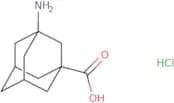
Formula:C10H9NO2Purezza:Min. 99 Area-%Peso molecolare:175.19 g/mol3-Amino-adamantane-1-carboxylic hydrochloride
CAS:3-Amino-adamantane-1-carboxylic hydrochloride is a versatile building block that can be used as a research chemical, reagent, speciality chemical, and useful scaffold in the synthesis of various complex compounds. It is a high quality intermediate and reaction component that can be used in the synthesis of fine chemicals. 3-Amino-adamantane-1-carboxylic hydrochloride has a variety of uses due to its versatility and can be used in the production of pharmaceuticals, agrochemicals, dyes, plastics, perfumes, pesticides, herbicides, explosives, and more.
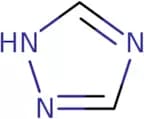
Formula:C11H17NO2•HClPurezza:Min. 95%Colore e forma:PowderPeso molecolare:231.72 g/mol1,2,4-Triazole
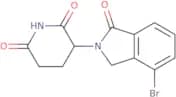
CAS:1,2,4-Triazole is a heterocyclic compound that is used as an intermediate in the synthesis of many other organic compounds. It can be obtained by reacting trifluoroacetic acid with nitrobenzene in the presence of ammonia. This reaction yields a protonated 1,2,4-triazole and ammonium chloride as byproducts. The thermodynamic data for this compound has been determined using an electrochemical impedance spectroscopy method and it was found that the protonation state of 1,2,4-triazole depends on pH. 1,2,4-Triazole has been shown to cause genotoxic effects in carcinoma cell lines. It is also capable of inhibiting the growth of bacteria by binding to nitrogen atoms present on their surface. This leads to a decrease in bacterial activity and may be useful for biological treatment purposes. Nitro groups are able to react with 1,2,4Formula:C2H3N3Purezza:Min. 95%Colore e forma:PowderPeso molecolare:69.07 g/mol3-(4-Bromo-1-oxoisoindolin-2-yl)piperidine-2,6-dione
CAS:Lenalidomide is a small molecule that binds to the CD38 receptor on the surface of cells. This binding leads to a cascade of cellular events that result in inhibition of tumor growth, increased apoptosis and decreased proliferation. The linker is used to attach the ligand to a degradable polymer that can be placed inside cells. Lenalidomide-Br has shown anticancer activity in clinical trials and may be useful as an adjuvant therapy for patients with leukemia.Formula:C13H11BrN2O3Purezza:Min. 95%Colore e forma:PowderPeso molecolare:323.14 g/mol2',4'-Dihydroxyacetophenone
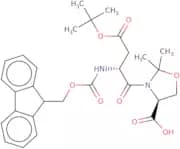
CAS:2',4'-Dihydroxyacetophenone is a compound that can be used in wastewater treatment. It has been shown to have an inhibitory effect on the activity of glucose-injection-hydrochloric acid and electrochemical impedance spectroscopy. 2',4'-Dihydroxyacetophenone also has an inhibitory effect on the diazonium salt, enzyme activities, hydroxyl group, and acetylcholinesterase inhibition. In addition, it has been shown to have cytotoxicity against human osteosarcoma cells, as well as fetal bovine and acetate extracts. The histological analysis of 2',4'-dihydroxyacetophenone showed that it also has anti-inflammatory properties.Formula:C8H8O3Purezza:Min. 95%Colore e forma:Red PowderPeso molecolare:152.15 g/molFmoc-D-Asp(OtBu)-L-Ser(Psi(Me,Me)pro)-OH
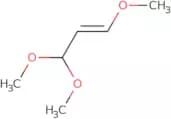
Fmoc-D-Asp(OtBu)-L-Ser(Psi(Me,Me)pro)-OH is a high quality reagent that can be used as an intermediate in the synthesis of complex compounds. It is a useful building block for the synthesis of speciality chemicals and research chemicals. Fmoc-D-Asp(OtBu)-L-Ser(Psi(Me,Me)pro)-OH is also a versatile building block that can be used to synthesize different types of compounds.Formula:C29H34N2O8Purezza:Min. 95%Colore e forma:PowderPeso molecolare:538.59 g/mol1,3,3-Trimethoxypropene
CAS:1,3,3-Trimethoxypropene is a fluorophore that can be used for the labeling of nucleic acids. It has been shown to be photostable and can be used in fluorescence techniques. 1,3,3-Trimethoxypropene has also been used in structural biology research and studies on the physicochemical properties of fluorescent probes. This compound can also be used as a building block for the synthesis of supramolecular structures and conjugates with other molecules that have different properties. 1,3,3-Trimethoxypropene is a fluorophore that emits cyanines in the visible range of light.
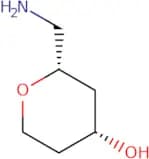
Formula:C6H12O3Purezza:Min. 95%Colore e forma:Clear LiquidPeso molecolare:132.16 g/molrac-(2R,4S)-2-(Aminomethyl)oxan-4-ol
CAS:rac-2R,4S)-2-(Aminomethyl)oxan-4-ol is a chemical building block that can be used as a reaction component in organic synthesis. It can also be used as a reagent to synthesize other compounds and as a starting material for the synthesis of pharmaceuticals. This chemical is an intermediate in the syntheses of many biologically active substances, such as the anti-epileptic drug carbamazepine and the analgesic drug pentazocine. Racemic 2-(aminomethyl)oxan-4-ol has been shown to exhibit antitumor activity against human colon adenocarcinoma cells. Racemic 2-(aminomethyl)oxan-4-ol is an excellent versatile building block for complex compounds with various applications in the chemical industry.
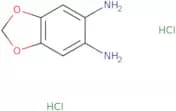
Formula:C6H13NO2Purezza:Min. 95%Colore e forma:PowderPeso molecolare:131.2 g/mol1,2-Diamino-4,5-methylenedioxybenzene dihydrochloride
CAS:1,2-Diamino-4,5-methylenedioxybenzene dihydrochloride, also known as DMB dihydrochloride, is a building block used in organic chemistry. DMB dihydrochloride is the bis HCl salt of a 1,3-benzodioxole ring with amino groups in the 4 and 5 positions.
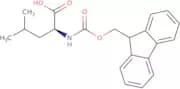
Formula:C7H10Cl2N2O2Purezza:Min. 90 Area-%Colore e forma:Beige PowderPeso molecolare:225.07 g/molFmoc-Leu-OH
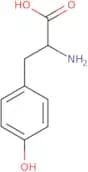
CAS:Fmoc-Leu-OH is a fatty acid that contains a hydroxyl group. It is used in the synthesis of polymer drugs, especially sodium salt polymers. The activity of Fmoc-Leu-OH can be reversed with degarelix acetate, an irreversible inhibitor of ns3 protease. In addition to its use as an antidiabetic agent, Fmoc-Leu-OH has been shown to have immunomodulatory effects and antiinflammatory activity. In tumor treatment, Fmoc-Leu-OH has been shown to inhibit the growth of fat cells without affecting normal cells or causing any toxic side effects.Formula:C21H23NO4Purezza:Min. 98 Area-%Colore e forma:White PowderPeso molecolare:353.41 g/molDL-Tyrosine
CAS:DL-Tyrosine is a non-essential amino acid that can be synthesized in the body from phenylalanine or obtained from food. DL-Tyrosine is a precursor of the neurotransmitter dopamine, which is involved in regulating mood, movement, and cognitive functions. DL-Tyrosine has been shown to inhibit the conversion of tyrosine to 3,4-dihydroxyphenylacetic acid (DOPAC) by dopamine β-hydroxylase. Tyrosine also prevents the formation of reactive oxygen species due to its chemical stability and ability to scavenge free radicals. DL-Tyrosine may have implications for treating Parkinson's disease, ADHD, depression, and chronic fatigue syndrome.
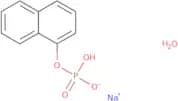
Formula:C9H11NO3Purezza:Min. 95%Colore e forma:PowderPeso molecolare:181.19 g/mol1-Naphthol dihydrogen phosphate monosodium monohydrate
CAS:1-Naphthol dihydrogen phosphate monosodium salt monohydrate is an organic compound that is a useful scaffold for the synthesis of other organic compounds. It is also used as a reagent and building block in organic synthesis. 1-Naphthol dihydrogen phosphate monosodium salt monohydrate has CAS No. 81012-89-7 and can be used as a reaction component, intermediate, or building block in the synthesis of complex compounds. This compound is soluble in water, ethanol, ethers, benzene, chloroform, and acetone. The purity level of 1-naphthol dihydrogen phosphate monosodium salt monohydrate ranges from 99% to 100%.Formula:C10H9O4P•Na•H2OPurezza:Min. 98%Colore e forma:PowderPeso molecolare:265.16 g/molFmoc-Thr(tBu)-OH
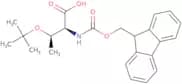
CAS:Fmoc-Thr(tBu)-OH is an ester hydrochloride that is synthesized by reacting the amino acid, Fmoc-Thr(tBu) with trifluoroacetic acid. It has been used to synthesize a cyclic peptide with a protonated amide group, which allows for stereoselective synthesis of the chloride. This product has shown to be resistant to hydrolysis by atosiban and carbonyl oxygens, and also binds to mammalian cell receptors.Formula:C23H27NO5Purezza:Min. 98 Area-%Colore e forma:White PowderPeso molecolare:397.46 g/mol4-Chloroindole-3-acetic acid
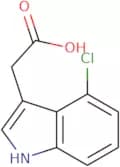
CAS:4-Chloroindole-3-acetic acid is a plant hormone that belongs to the group of auxins. It has been shown to stimulate root formation in plants by increasing the amount of auxin present in the plant's tissues. 4-Chloroindole-3-acetic acid is an intramolecular hydrogen donor and can form hydrogen bonds with other molecules. It also has a receptor binding site and cyclic peptide backbone, which allow it to act as a transcription factor or enzyme inhibitor. This molecule has been shown to be an optimum concentration for root formation in physiology experiments, and can be used as a model system for auxin research.Formula:C10H8ClNO2Purezza:Min. 95%Colore e forma:Off-White PowderPeso molecolare:209.63 g/mol

![2-Azaspiro[3.3]heptane-1-carboxylic acid hydrochloride](/_next/image/?url=https%3A%2Fstatic.cymitquimica.com%2Fproducts%2F3D%2Fthumb-webp%2FJBD30513.webp&w=3840&q=75)