Building Blocks
Sottocategorie di "Building Blocks"
- Acidi boronici e derivati dell'acido boronico(5.782 prodotti)
- Building Blocks Chirali(1.242 prodotti)
- Building Blocks Idrocarburici(6.101 prodotti)
- Building Blocks organici(61.043 prodotti)
Trovati 205351 prodotti di "Building Blocks"
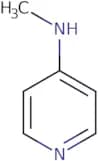
4-(Methylamino)pyridine
CAS:4-(Methylamino)pyridine (4-MAP) is an anticancer drug that belongs to the class of aromatic heterocyclic compounds. It has been shown to have a broad spectrum of anticancer activity with no toxic effects on normal cells. 4-MAP is immobilized on the surface of nanotubes and has demonstrated a high degree of stability in acidic and alkaline solutions. 4-MAP can be used as a carrier for transfection experiments and for the immobilization of enzymes, proteins, or other biomolecules. The most significant limitation with this material is its relatively low solubility in water.Formula:C6H8N2Purezza:Min. 95%Colore e forma:PowderPeso molecolare:108.14 g/molFmoc-Thr(tBu)-OH
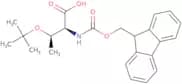
CAS:Fmoc-Thr(tBu)-OH is an ester hydrochloride that is synthesized by reacting the amino acid, Fmoc-Thr(tBu) with trifluoroacetic acid. It has been used to synthesize a cyclic peptide with a protonated amide group, which allows for stereoselective synthesis of the chloride. This product has shown to be resistant to hydrolysis by atosiban and carbonyl oxygens, and also binds to mammalian cell receptors.Formula:C23H27NO5Purezza:Min. 98 Area-%Colore e forma:White PowderPeso molecolare:397.46 g/molMethyl 4-formylbenzoate
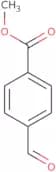
CAS:Methyl 4-formylbenzoate is a trifluoroacetic acid derivative that inhibits the conversion of androgens to estrogens. It has been shown to inhibit aromatase activity in human serum and cell culture, as well as in vitro cultured rat hepatocytes. Methyl 4-formylbenzoate also binds to copper(II) by forming a complex with copper(II) ions, which prevents the formation of an enzyme-substrate complex. The binding of methyl 4-formylbenzoate to copper(II) prevents the production of malonic acid from acetoacetate, which inhibits fatty acid synthesis. This compound also acts as an analytical reagent for the detection of acylation reactions, such as those involving benzimidazole compounds.
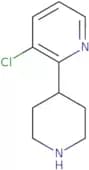
Formula:C9H8O3Purezza:Min. 95%Colore e forma:PowderPeso molecolare:164.16 g/mol3-Chloro-2-(piperidin-4-yl)pyridine
CAS:Versatile small molecule scaffoldFormula:C10H13ClN2Purezza:Min. 95%Colore e forma:PowderPeso molecolare:196.67 g/molMonomethyl triazeno imidazole carboxamide
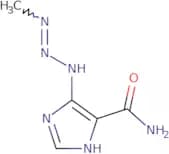
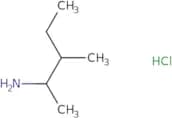
CAS:Monomethyl triazeno imidazole carboxamide (MTIC) is a drug that is used to treat cancer. It has been shown to inhibit the proliferation of tumor cells and induce apoptosis by inhibiting the expression of proteins, such as Bcl-2, which are involved in regulating mitochondrial membrane potential. MTIC has also been shown to inhibit protein synthesis and cell signaling pathways, such as the PI3K/Akt pathway. The use of MTIC for diagnosis purposes can be achieved using electrochemical impedance spectroscopy. A concentration–time curve can be obtained by incubating a biological sample with MTIC and measuring cell response using an impedance spectrophotometer. The clinical properties of MTIC include its ability to be administered orally or intravenously, have low toxicity, and inhibit the growth of tumor cells in vivo and in vitro.Formula:C5H8N6OPurezza:(¹H-Nmr) Min. 95 Area-%Colore e forma:White PowderPeso molecolare:168.16 g/mol3-Methylpentan-2-amine hydrochloride
CAS:Versatile small molecule scaffoldFormula:C6H15N•HClPurezza:Min. 95%Colore e forma:PowderPeso molecolare:137.65 g/mol3,5-Dihydroxyacetophenone
CAS:3,5-Dihydroxyacetophenone is a chemical intermediate that is used as a building block in organic synthesis. It can be used to synthesize other chemicals, such as pharmaceuticals, dyes, and perfumes. 3,5-Dihydroxyacetophenone is also an important reagent for the production of α-hydroxyketones. It can react with nucleophiles such as amines or alcohols to form esters or ethers. 3,5-Dihydroxyacetophenone is a versatile building block that can serve as a reaction component in various reactions. This compound is also used as a useful scaffold for the construction of complex molecules.Formula:C8H8O3Peso molecolare:152.15 g/molRef: 3D-D-3420
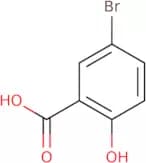
1kgPrezzo su richiesta5kgPrezzo su richiesta250gPrezzo su richiesta500gPrezzo su richiesta2500gPrezzo su richiesta-Unit-kgkgPrezzo su richiesta5-Bromosalicylic acid
CAS:5-Bromosalicylic acid is a derivative of p-hydroxybenzoic acid that is used in wastewater treatment. The reaction of 5-bromosalicylic acid with the 1,3-benzodioxole-5-carboxylic acid leads to the formation of a new compound, which can be used as an intermediate in organic synthesis. 5-Bromosalicylic acid has been shown to inhibit the growth of hepg2 cells and K562 cells by damaging DNA. It also inhibits the suzuki coupling reaction by acting as a hydrogen sink and stabilizing the transition state through intramolecular hydrogen bonding interactions. A possible mechanism for this inhibition is that 5-bromosalicylic acid reacts with hydroxide ions to form bromohydroxylated products, which then react with amine compounds to produce carboxylates that can hydrogen bond with other molecules.Formula:C7H5BrO3Purezza:Min. 95%Colore e forma:White PowderPeso molecolare:217.02 g/molMethyl indole-5-carboxylate
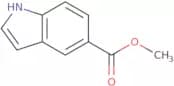
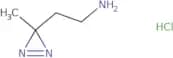
CAS:Methyl indole-5-carboxylate is a hdac inhibitor that has been shown to have anticancer activity. It has been shown to inhibit the growth of hCT116 cells and xenograft tumors in mice. Methyl indole-5-carboxylate is also an active analog for other anticancer agents, such as 5-azacytidine and 5-aza-2'-deoxycytidine. The drug is cytotoxic to L6 cells and increases the expression of p21 protein, which inhibits tumor cell proliferation. This compound is metabolized by cytochrome P450 enzymes into methyl indole carboxylate, which can be further converted into a reactive intermediate that binds DNA.Formula:C10H9NO2Colore e forma:PowderPeso molecolare:175.18 g/mol2-(3-Methyl-3H-diazirin-3-yl)ethan-1-amine hydrochloride
CAS:2-(3-Methyl-3H-diazirin-3-yl)ethan-1-amine hydrochloride is an organic compound with a molecular formula of C8H11N2 and a molecular weight of 181.19 g/mol. It is soluble in water, and insoluble in most organic solvents. 2-(3-Methyl-3H-diazirin-3-yl)ethan-1-amine hydrochloride is a versatile building block that can be used to synthesize many complex compounds. This chemical has been shown to be useful as a reagent, intermediate, or scaffold for research into new drugs and materials. 2-(3Methyl 3H diazirin 3yl)ethan 1amine hydrochloride is also used as a speciality chemical or building block for high quality synthesis of other compounds.Formula:C4H10ClN3Purezza:Min. 95%Colore e forma:PowderPeso molecolare:135.59 g/moltert-Butyl 1H,4H,5H,6H,7H-pyrrolo[3,2-c]pyridine-5-carboxylate
CAS:Tert-Butyl 1H,4H,5H,6H,7H-pyrrolo[3,2-c]pyridine-5-carboxylate is a fine chemical that is a useful scaffold for the synthesis of various organic compounds. It is an intermediate for research chemicals and a reaction component for speciality chemicals. Tert-Butyl 1H,4H,5H,6H,7H-pyrrolo[3,2-c]pyridine-5-carboxylate has been used as a reagent in the synthesis of complex compounds. This compound has high purity and can be used as a building block in synthesis of other compounds.Formula:C12H18N2O2Purezza:Min. 95%Colore e forma:PowderPeso molecolare:222.28 g/mol1-Adamantanol
CAS:1-Adamantanol is a cyclic molecule with a hydroxyl group. It is produced by the oxidation of 2-methyl-2-adamantanol. 1-Adamantanol has been shown to be an effective substrate for bioremediation in wastewater treatment plants and can be used as a precursor to produce trifluoroacetic acid. The reaction mechanism is thought to involve the oxidation of 1-adamantanol by an oxidizing agent, such as hydrogen peroxide or ozone, to form a radical intermediate that spontaneously reacts with oxygen in solution. The reaction solution can be cooled down or heated up to increase the rate of the reaction. 1-Adamantanol also undergoes thermal expansion when heated up, which may be due to its high boiling point.Formula:C10H16OPurezza:Min. 98.5%Colore e forma:White PowderPeso molecolare:152.24 g/mol2-Amino-3-nitropyridine
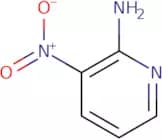
CAS:2-Amino-3-nitropyridine is a synthetic molecule that has the chemical formula C6H7N5O2. It can exist in four different forms, three of which are isomers. These three isomers have different properties, such as melting point and solubility. The synthesis of 2-amino-3-nitropyridine can be achieved through a solid phase synthesis using sodium periodate as the acid catalyst. The reaction mechanism involves nitration of 2-amino pyridine with hydrogen peroxide to produce 3-nitro pyridine followed by hydrolysis to form 2-amino-3 nitropyridine. This reaction produces two dihedral angles in the molecule, one between the nitrogen and oxygen atoms and another between the nitrogen atom and carbon atom bonded to it. The functional groups present on this molecule are an amino group, a nitro group, and an amide group.
Purezza:Min. 98 Area-%Colore e forma:Yellow SolidPeso molecolare:139.11 g/mol2-Bromo-4-cyanobenzaldehyde
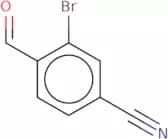
CAS:2-Bromo-4-cyanobenzaldehyde is a potent protease inhibitor and can be used as an antiviral agent. It inhibits the NS3 protease of hepatitis C virus (HCV) with IC50 of 0.2 μM. 2-Bromo-4-cyanobenzaldehyde has been evaluated for its ability to inhibit replicons from HCV genotypes 1, 2, 3, 4 and 5 with varying degrees of potency. In vitro studies have shown that 2-bromo-4-cyanobenzaldehyde is a potent inhibitor of HCV NS3 protease, demonstrating activity against all major HCV genotypes in cell culture. This molecule has also been shown to inhibit the replication of HIV, herpes simplex virus type 1 and human rhinovirus type 2 in cell culture.Formula:C8H4BrNOPurezza:Min. 95%Colore e forma:PowderPeso molecolare:210.03 g/mol1-[(Methylcarbamoyl)amino]-1-oxopropan-2-yl 4-{[(4-methyl-2-oxo-2H-chromen-7-yl)oxy]methyl}benzoate
CAS:1-[(Methylcarbamoyl)amino]-1-oxopropan-2-yl 4-{[(4-methyl-2-oxo-2H-chromen-7-yl)oxy]methyl}benzoate is a versatile, high quality building block that can be used to make a range of compounds with different activities. This compound is an excellent reagent, useful as a research chemical and speciality chemical. It can be used in the synthesis of pharmaceuticals, agricultural chemicals, and other organic compounds. 1-[(Methylcarbamoyl)amino]-1-oxopropan-2-yl 4-[(4 methyl 2 oxo 2H chromen 7 yl)oxy]methyl benzoate is also known by CAS number 937891 - 74 - 2.Formula:C23H22N2O7Purezza:Min. 95%Colore e forma:PowderPeso molecolare:438.4 g/mol3-Amino-2-naphthoic acid
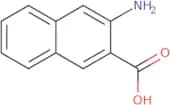
CAS:3-Amino-2-naphthoic acid (3AN) is a metabolite of gabapentin that is excreted in the urine. It has been shown to be present in the urine of patients with chronic kidney disease, and is thought to be involved in the pathogenesis of this disease. 3AN has also been detected in carbon disulphide exposed rats, where it may contribute to renal damage. The biological properties of 3AN are not well understood, but it has been shown to have biochemical properties similar to those of gabapentin. 3AN is active against some bacteria and fungi, but not others. 3AN binds covalently to DNA, forming adducts that inhibit DNA synthesis and transcription. The fluorescence probe methyl anthranilate can be used as a fluorescent dye for detection of 3AN in biological samples.Formula:C11H9NO2Purezza:Min. 95%Colore e forma:Yellow PowderPeso molecolare:187.19 g/mol1-(Carbamoylamino)-1-oxopropan-2-yl 4-{[(4-methyl-2-oxo-2H-chromen-7-yl)oxy]methyl}benzoate
CAS:1-(Carbamoylamino)-1-oxopropan-2-yl 4-[(4-methyl-2-oxo-2H-chromen-7-yl)oxy]methylbenzoate is a fine chemical that can be used as a building block, a research chemical and reagent, or in the synthesis of other complex compounds. It has been shown to be useful in the synthesis of a number of complicated compounds. 1-(Carbamoylamino)-1-oxopropan-2-yl 4-[(4-methyl-2-oxo-2Hchromen 7yl)oxy]methylbenzoate is also versatile as it can be used as an intermediate for other reactions, or as scaffold for the synthesis of new compounds. CAS No. 937874 - 01 - 6
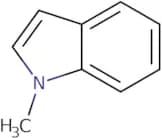
Formula:C22H20N2O7Purezza:Min. 95%Colore e forma:PowderPeso molecolare:424.4 g/mol1-Methylindole
CAS:1-Methylindole is a chemical compound that belongs to the group of pyrimidine compounds. It has been shown to have antibacterial activity against many types of bacteria, including methicillin-resistant Staphylococcus aureus and Clostridium perfringens. 1-Methylindole inhibits bacterial growth by binding to DNA and RNA, preventing the synthesis of proteins necessary for cell division. The high chemical stability and low redox potential make 1-methylindole an excellent candidate for use as an anticancer agent. This drug has been shown to be effective in killing cancer cells in vitro, but more research needs to be done before it can be used in vivo.
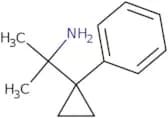
Formula:C9H9NPurezza:Min. 97 Area-%Colore e forma:Colorless Clear LiquidPeso molecolare:131.17 g/mol2-(1-Phenylcyclopropyl)propan-2-amine
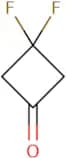
CAS:2-(1-Phenylcyclopropyl)propan-2-amine is a versatile building block with a wide range of applications. It can be used as an intermediate for the synthesis of various chemical compounds, as well as a research chemical in laboratories. 2-(1-Phenylcyclopropyl)propan-2-amine is also known to possess high purity and quality, and is an excellent reagent for use in many reactions.Formula:C12H17NPurezza:Min. 95%Colore e forma:Clear LiquidPeso molecolare:175.27 g/mol3,3-Difluorocyclobutanone
CAS:Versatile small molecule scaffoldFormula:C4H4F2OPurezza:Min. 95%Colore e forma:Clear LiquidPeso molecolare:106.07 g/mol


![tert-Butyl 1H,4H,5H,6H,7H-pyrrolo[3,2-c]pyridine-5-carboxylate](/_next/image/?url=https%3A%2Fstatic.cymitquimica.com%2Fproducts%2F3D%2Fthumb-webp%2FPGC95879.webp&w=3840&q=75)

![1-[(Methylcarbamoyl)amino]-1-oxopropan-2-yl 4-{[(4-methyl-2-oxo-2H-chromen-7-yl)oxy]methyl}benzoate](/_next/image/?url=https%3A%2Fstatic.cymitquimica.com%2Fproducts%2F3D%2Fthumb-webp%2FMMB89174.webp&w=3840&q=75)
![1-(Carbamoylamino)-1-oxopropan-2-yl 4-{[(4-methyl-2-oxo-2H-chromen-7-yl)oxy]methyl}benzoate](/_next/image/?url=https%3A%2Fstatic.cymitquimica.com%2Fproducts%2F3D%2Fthumb-webp%2FMMB87401.webp&w=3840&q=75)