Building Blocks
Sottocategorie di "Building Blocks"
- Acidi boronici e derivati dell'acido boronico(5.781 prodotti)
- Building Blocks Chirali(1.242 prodotti)
- Building Blocks Idrocarburici(6.101 prodotti)
- Building Blocks organici(61.038 prodotti)
Trovati 205338 prodotti di "Building Blocks"
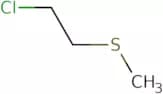
2-Chloroethyl methyl sulfide
CAS:2-Chloroethyl methyl sulfide (2CEMS) is a reactive compound that has been shown to enhance membrane interactions and fatty acid metabolism in experimental models. 2CEMS is a substrate molecule for the reaction mechanism of the enzyme phospholipase A2, which plays an important role in the production of arachidonic acid. 2CEMS has been shown to have cytotoxic effects on 3T3-L1 preadipocytes, with cell death occurring as a result of kinetic energy emissions. The halides in 2CEMS can coordinate with hematopoietic cells, leading to the inhibition of their proliferation and differentiation. 2CEMS is also able to bind with various metals such as copper and zinc, which may be useful for pharmaceutical drug applications.Formula:C3H7ClSPurezza:Min. 96 Area-%Colore e forma:Colorless Yellow Clear LiquidPeso molecolare:110.61 g/mol2-Chloro-6-fluorobenzoic acid
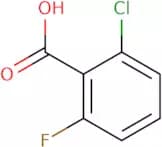
CAS:2-Chloro-6-fluorobenzoic acid is an aromatic compound that is used as a solvent in the production of pharmaceuticals, plastics, and dyes. The 2-chloro-6-fluorobenzoic acid molecule has an electron rich ring structure that can undergo nucleophilic attack by a nucleophile such as hydrogen chloride or hydrochloric acid. It also has a high affinity for water molecules, which may be attributed to its aromatic hydrocarbon structure. This allows 2-chloro-6-fluorobenzoic acid to act as a good solvent for many organic compounds. This chemical is classified as a possible human carcinogen and is toxic to the liver cells.Formula:C7H4ClFO2Purezza:Min. 95%Colore e forma:PowderPeso molecolare:174.56 g/molL-Cysteine ethyl ester hydrochloride
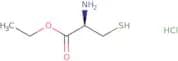
CAS:L-Cysteine ethyl ester HCl is a disulfide bond that is used in the synthesis of proteins. It is also used to prevent hair loss and to treat baldness. L-Cysteine ethyl ester HCl has potent antitumor activity, which may be due to its ability to react with nucleophilic substitutions. In addition, L-Cysteine ethyl ester HCl can induce apoptosis by binding to the apoptosis protein. The reaction mechanism is not well understood but it may involve hydroxide ion and organometallic complexes. L-Cysteine ethyl ester HCl is soluble in water at neutral pH and poorly soluble in ethanol. It hydrolyzes in the presence of acid or base, forming trifluoroacetic acid or sodium hydroxide solution respectively.Formula:C5H11NO2S•HClPurezza:Min. 95%Colore e forma:PowderPeso molecolare:185.67 g/mol4-Chlorophenylacetic acid
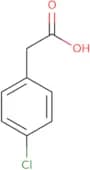
CAS:4-Chlorophenylacetic acid is a fatty acid that reacts with hydroxyl groups to form reaction intermediates. It has been used in antiestrogen therapy as it is able to inhibit the activity of estrogen. It has also been used in polymeric matrices to control the release of silver ions for the treatment of cancer. 4-Chlorophenylacetic acid is synthesized by acylation of phenylacetic acid with chloroacetyl chloride in the presence of hydrochloric acid and sephadex g-100. 4-Chlorophenylacetic acid has been shown to inhibit tumor growth in animal models, which may be due to its ability to induce apoptosis.Formula:C8H7ClO2Purezza:Min. 97.5 Area-%Colore e forma:White PowderPeso molecolare:170.59 g/mol3-Methyl-4-(trifluoromethyl)benzaldehyde
CAS:3-Methyl-4-(trifluoromethyl)benzaldehyde is a high quality research chemical. It is a versatile building block that can be used in the synthesis of complex compounds, such as pharmaceuticals and pesticides. 3-Methyl-4-(trifluoromethyl)benzaldehyde can be used as a reagent to synthesize other chemicals and as a reaction component to produce new organic compounds. 3-Methyl-4-(trifluoromethyl)benzaldehyde has CAS No. 951232-01-2.Formula:C9H7F3OPurezza:Min. 95%Colore e forma:PowderPeso molecolare:188.15 g/mol4-Cyanobenzaldehyde
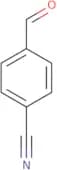
CAS:4-Cyanobenzaldehyde is an acid that inhibits tyrosinase, an enzyme involved in the production of melanin. It has been shown to have a strong inhibitory effect on the activity of this enzyme in a variety of biological studies. 4-Cyanobenzaldehyde is chemically stable and does not react with hydrochloric acid or water at room temperature, making it suitable for use in experiments involving these substances. This chemical also has antiinflammatory properties and can be used as a substitute for phenols in some chemical reactions. 4-Cyanobenzaldehyde is soluble in methanol and reacts with diphenolase, an enzyme involved in the synthesis of lignin, to produce benzophenone and benzoic acid. This reaction may be important for the formation of lignin during wood decomposition.Formula:C8H5NOPurezza:80%Colore e forma:PowderPeso molecolare:131.13 g/mol4-Methoxy-2-oxo-1,2-dihydropyridine-3-carboxylic acid
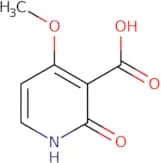
CAS:4-Methoxy-2-oxo-1,2-dihydropyridine-3-carboxylic acid is a versatile building block and useful intermediate in organic synthesis. This compound can be used as a reagent or speciality chemical for research purposes. It has been shown to be an effective reactant in the preparation of diverse complex compounds. 4-Methoxy-2-oxo-1,2-dihydropyridine 3 carboxylic acid has also been shown to be a high quality material with applications in specialty chemicals and pharmaceuticals.Formula:C7H7NO4Purezza:Min. 95 Area-%Colore e forma:PowderPeso molecolare:169.14 g/mol1-Methyl-5-nitro-1H-imidazole-2-methanol 2-carbamate
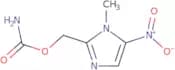
CAS:1-Methyl-5-nitro-1H-imidazole-2-methanol 2-carbamate is an antimicrobial agent that has been shown to be active against a number of bacteria, including Gram negative and Gram positive bacteria. It was shown to have a matrix effect in vivo and its kinetic energy was found to be reactive. The 1NIMC has been shown to inhibit the growth of bacteria by interfering with DNA replication and RNA synthesis. This drug has also been shown to have an analytical method that is linear in calibrations curves, which makes it suitable for quantitative analysis. It also has chemical stability, as it decomposes slowly at room temperature.Formula:C6H8N4O4Purezza:Min. 98.5%Colore e forma:White PowderPeso molecolare:200.15 g/molOctyl isocyanate
CAS:Octyl isocyanate is a non-steroidal anti-inflammatory drug that belongs to the class of isocyanates. The biological activity of octyl isocyanate has been studied extensively, and it has been shown to inhibit the polymerase chain reaction (PCR). Octyl isocyanate also inhibits the growth of bacteria in vitro through metal chelation and polymyxin B., which are antibiotics that bind metal ions and disrupt bacterial cell membranes. Octyl isocyanate has been shown to be reactive in vivo, leading to autophagy and necrosis.Formula:C9H17NOPurezza:Min. 97 Area-%Colore e forma:Clear LiquidPeso molecolare:155.24 g/mol1-[4-(Trifluoromethyl)pyridin-3-yl]ethan-1-one
CAS:1-[4-(Trifluoromethyl)pyridin-3-yl]ethan-1-one is a high quality reagent that can be used as a useful intermediate or speciality chemical. It is a complex compound with CAS No. 955997-27-0 and is an excellent building block for the synthesis of fine chemicals, research chemicals, and other versatile compounds. 1-[4-(Trifluoromethyl)pyridin-3-yl]ethan-1-one has been shown to be useful in reactions involving nucleophilic substitution, electrophilic addition, nucleophilic aromatic substitution, and coupling reactions.Formula:C8H6F3NOPurezza:Min. 95%Colore e forma:PowderPeso molecolare:189.13 g/molN-Methyl-N-[1H-indol-3-yl)methyl]amine
CAS:N-Methyl-N-[1H-indol-3-yl)methyl]amine is a plant alkaloid that is found in many plants. It has been shown to have a high constant and to be able to be extracted from the gramine. N-Methyl-N-[1H-indol-3-yl)methyl]amine has been shown to inhibit nitrification and may have potential use as an herbicide. The reaction products of this compound are unknown, but it has been shown to inhibit biosynthesis in vitro assays. This compound also has properties that make it useful for the study of gender and dry weight expression in plants, as well as its ability to be produced by polyclonal antibodies.Formula:C10H12N2Purezza:Min. 95%Colore e forma:PowderPeso molecolare:160.22 g/mol1,1-Diethoxy-2-propanamine
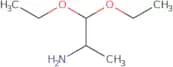
CAS:1,1-Diethoxy-2-propanamine is a primary amine that serves as a versatile building block in various chemical reactions. It is commonly used in research laboratories for the synthesis of new compounds and the development of innovative chemical processes. This high-quality research chemical offers excellent purity and reliability, making it a preferred choice among chemists and scientists. Whether you are conducting experiments or exploring new avenues in chemistry, 1,1-Diethoxy-2-propanamine is an essential component to consider for your research needs.Formula:C7H17NO2Purezza:Min. 95%Colore e forma:Clear LiquidPeso molecolare:147.22 g/mol1-(3-Aminopropyl)-N,N-dimethylpiperidin-4-amine
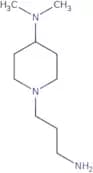
CAS:Versatile small molecule scaffoldFormula:C10H23N3Purezza:Min. 95%Colore e forma:PowderPeso molecolare:185.31 g/mol5-[(4-Chlorophenyl)sulfanyl]furan-2-carboxylic acid
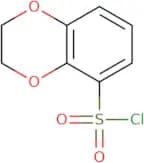
CAS:Versatile small molecule scaffoldFormula:C11H7ClO3SPurezza:Min. 95%Colore e forma:PowderPeso molecolare:254.69 g/mol2,3-Dihydro-1,4-benzodioxine-5-sulfonyl chloride
CAS:Versatile small molecule scaffold
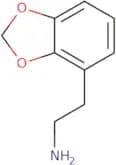
Formula:C8H7ClO4SPurezza:Min. 95%Colore e forma:PowderPeso molecolare:234.65 g/mol2-(1,3-Dioxaindan-4-yl)ethan-1-amine
CAS:Prodotto controllatoVersatile small molecule scaffold
Formula:C9H11NO2Purezza:Min. 95%Colore e forma:Clear LiquidPeso molecolare:165.19 g/molp-Naphtholbenzein
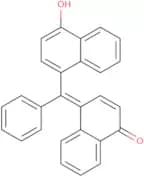
CAS:p-Naphtholbenzein is a fluorescent dye that is used in the diagnosis of human pathogens. It can be used to detect the presence of fatty acids, which are found on the surface of bacteria and in the cell wall. p-Naphtholbenzein elutes from an agar plate at pH 6.0 and can be detected using a spectrophotometer. The fluorescence of p-naphtholbenzein is absorbed by fatty acids, which emit light when excited by ultraviolet light. This makes it useful for detecting fatty acid content in cells, organisms, and surfaces. It is also used as an excipient in subclinical mastitis treatments to help reduce inflammation and improve milk production. In biodiesel reactions, p-naphtholbenzein acts as an optimal reaction catalyst because it stabilizes hydroxybenzoic acid (HBA) with benzalkonium chloride (BZK).
Formula:C27H18O2Colore e forma:PowderPeso molecolare:374.43 g/mol4-Nitrobenzeneethanol
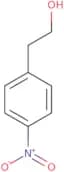
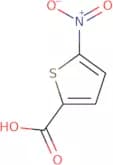
CAS:4-Nitrobenzeneethanol is a primary amine that is synthesized from the amino acid L-glutamic acid and the alcohol 4-nitrobenzyl alcohol. It is activated by reaction with sodium hydroxide solution, which releases hydrogen ions. The conjugates of this compound are isomers. 4-Nitrobenzeneethanol can be used to synthesize compounds that have different functional groups, such as monoclonal antibodies for the treatment of parasitic diseases.Formula:C8H9NO3Purezza:Min. 95%Colore e forma:PowderPeso molecolare:167.16 g/mol5-Nitrothiophene-2-carboxylic acid
CAS:Used for preparation of pentathiophene amide
Formula:C5H3NO4SPurezza:Min. 95%Colore e forma:White PowderPeso molecolare:173.15 g/mol1-Nonanol
CAS:1-Nonanol is a colorless liquid with a pleasant odor. It can be synthesized from methyl pentanoate by the asymmetric addition of an inorganic acid to the ester hydrochloride. This process results in a mixture of 1-nonanol and its isomer 2-nonanol, which can be separated using an analytical method such as gas chromatography. 1-Nonanol has been shown to have high transport properties, making it useful for detergent compositions. It has also been shown to exhibit strong hydrogen bonding abilities that may contribute to its adsorption mechanism.Formula:C9H20OPurezza:Min. 95%Colore e forma:Colorless Clear LiquidPeso molecolare:144.25 g/mol



![1-[4-(Trifluoromethyl)pyridin-3-yl]ethan-1-one](/_next/image/?url=https%3A%2Fstatic.cymitquimica.com%2Fproducts%2F3D%2Fthumb-webp%2FFNB99727.webp&w=3840&q=75)
![N-Methyl-N-[1H-indol-3-yl)methyl]amine](/_next/image/?url=https%3A%2Fstatic.cymitquimica.com%2Fproducts%2F3D%2Fthumb-webp%2FLBA28495.webp&w=3840&q=75)
![5-[(4-Chlorophenyl)sulfanyl]furan-2-carboxylic acid](/_next/image/?url=https%3A%2Fstatic.cymitquimica.com%2Fproducts%2F3D%2Fthumb-webp%2FLCA94222.webp&w=3840&q=75)