Building Blocks
Sottocategorie di "Building Blocks"
- Acidi boronici e derivati dell'acido boronico(5.781 prodotti)
- Building Blocks Chirali(1.242 prodotti)
- Building Blocks Idrocarburici(6.101 prodotti)
- Building Blocks organici(61.033 prodotti)
Trovati 205320 prodotti di "Building Blocks"
2,4-Dihydroxyphenylacetic acid
CAS:2,4-Dihydroxyphenylacetic acid (2,4-DPA) is a norepinephrine (NE) precursor that acts as an anxiolytic drug. It is also a dopamine (DA) precursor and has been shown to inhibit the production of inflammatory cytokines by suppressing the production of tumor necrosis factor-α (TNF-α) in cell culture. 2,4-DPA has been shown to have antiinflammatory activity in animal models and in human cells. This drug enhances the effects of hydrochloric acid on amino acid analysis and may be used as an alternative to hydrochloric acid for preparative high performance liquid chromatography. 2,4-DPA is also capable of irreversible inhibition of bacterial dna gyrase and dna topoisomerase I enzymes. 2,4-DPA has been shown to inhibit the growth of infectious bacteria such as Mycobacterium tuberculosis and MycobacteriumFormula:C8H8O4Purezza:Min. 95%Colore e forma:PowderPeso molecolare:168.15 g/mol2-Chloro-6-fluorobenzoic acid
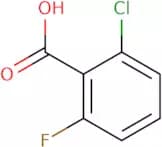
CAS:2-Chloro-6-fluorobenzoic acid is an aromatic compound that is used as a solvent in the production of pharmaceuticals, plastics, and dyes. The 2-chloro-6-fluorobenzoic acid molecule has an electron rich ring structure that can undergo nucleophilic attack by a nucleophile such as hydrogen chloride or hydrochloric acid. It also has a high affinity for water molecules, which may be attributed to its aromatic hydrocarbon structure. This allows 2-chloro-6-fluorobenzoic acid to act as a good solvent for many organic compounds. This chemical is classified as a possible human carcinogen and is toxic to the liver cells.Formula:C7H4ClFO2Purezza:Min. 95%Colore e forma:PowderPeso molecolare:174.56 g/mol4-Methylbenzophenone
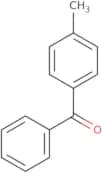
CAS:4-Methylbenzophenone is a molecule that belongs to the group of p2 molecules. It is used as an additive in animal health products, as well as for the synthesis of other organic compounds. The analytical method for 4-methylbenzophenone is thermal expansion, which can be determined using a test sample. The reaction mechanism of this compound is not well understood, but it may involve multi-walled carbon and matrix effect. 4-Methylbenzophenone has been shown to form metastable forms when heated to high temperatures or when exposed to sunlight. This compound also has potential skin cancer risk and should be handled with care.Formula:C14H12OPurezza:Min. 95%Colore e forma:White PowderPeso molecolare:196.24 g/molPoly epsilon L-lysine HCl approx MW 4500Da
CAS:Poly epsilon L-lysine HCl is a water soluble, biodegradable, cationic peptide that can be produced via fermentation by Streptomyces albulus. It shows a wide range of antimicrobial activity against microorganisms such as bacteria, yeasts and molds and is stable at high temperatures and under both acidic and alkaline conditions. This non-toxic poly-L-lysine is commonly used as a supplement or preservative in various food, beverage and cosmetics products. It can also be used for microscopy glass slides coating.Formula:(C6H12N2O•HCl)nPurezza:Min. 95.0 Area-%Colore e forma:Off-White Yellow Powder2-Chloro-4-methylsulfonylbenzoic acid
CAS:2-Chloro-4-methylsulfonylbenzoic acid is a chlorinating agent that can be used to produce triketones from ketones. It is usually used as a hydrogen peroxide scavenger and a chlorinating agent in the food industry. 2-Chloro-4-methylsulfonylbenzoic acid can also be used to produce glyphosate, phosphoric acid solution, and chloride. The chlorinating property of this compound is due to its ability to form hypochlorous acid when it reacts with water. This reaction produces hypochlorite ions that are active against microorganisms by disrupting the cell membrane. 2-Chloro-4-methylsulfonylbenzoic acid can react with organic solvents such as carbon tetrachloride and optimizes the introduction of chlorine into organic compounds.Formula:C8H7ClO4SPurezza:Min. 95%Colore e forma:White PowderPeso molecolare:234.66 g/molPenicillin V
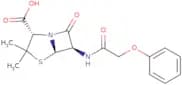
CAS:Penicillin V is an antibiotic that belongs to the class of penicillins. It is used in the treatment of bacterial infections, such as streptococcal pharyngitis and infectious diseases. Penicillin V binds to the penicillin-binding proteins, which are located on the outer surface of the bacterial membrane and prevent cell wall synthesis. This binding inhibits cell wall biosynthesis by preventing transpeptidation and transglycosylation reactions and leads to cell death. Penicillin V also inhibits the production of certain cytokines, including interleukin-1β (IL-1β) and tumor necrosis factor α (TNFα), which may be a result of its ability to inhibit Toll-like receptor 4 (TLR4). The solubility data for penicillin V was obtained from experiments conducted with experimental animals. The oral cephalosporins were shown to have a greater affinity for penicillin-binding proteins than penFormula:C16H18N2O5SPurezza:Min. 95%Peso molecolare:350.39 g/mol(3-Nitrophenyl)acetone
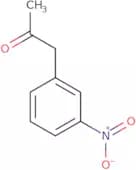
CAS:3-Nitrophenylacetone is a white solid that is soluble in water and polar organic solvents. 3-Nitrophenylacetone can be used as a building block for the synthesis of other compounds, such as pharmaceuticals and dyes. This compound has been researched for its ability to inhibit protein glycosylation. 3-Nitrophenylacetone is also used as an intermediate in the synthesis of polyurethanes and polycarbonates.Formula:C9H9NO3Purezza:Min. 95%Colore e forma:White PowderPeso molecolare:179.17 g/mol5-Ethylindole
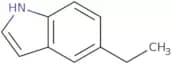
CAS:5-Ethylindole is a granulatimide that is synthesized by the cross-coupling of ethylene and copper chromite in the presence of solvents and magnesium. The chemical reactions are performed at temperatures between room temperature and 50°C, depending on the desired product. 5-Ethylindole is used as an intermediate for other chemicals such as pharmaceuticals, fungicides, dyes, and pesticides. It can be used to produce chloroethanol, which is used in the synthesis of numerous compounds including pharmaceuticals and plastics. Chromatographic techniques are often used to isolate 5-Ethylindole from mixtures with other chemicals.Formula:C10H11NPurezza:Min. 95%Peso molecolare:145.2 g/mol3-Hydroxyphenylacetic acid
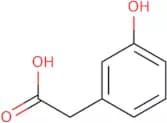
CAS:3-Hydroxyphenylacetic acid is an organic compound with the formula CH(OH)(CH)COOH. It is a quinoid, meaning that it contains a benzene ring with one of the hydrogens replaced by a hydroxyl group. 3-Hydroxybenzoic acid is an important intermediate in the synthesis of several pharmaceuticals, including antipyrine and salicylic acid. It can be synthesized from phenol or benzoic acid. 3-Hydroxybenzoic acid has been shown to have antimicrobial properties against various bacteria and fungi, as well as hypoglycemic effects in rats. This compound was also shown to inhibit 4-hydroxyphenylacetate (4-HPAA) reductase activity and dopamine oxidation, two key enzymes involved in energy metabolism.Formula:C8H8O3Purezza:Min. 95%Colore e forma:PowderPeso molecolare:152.15 g/mol5-Hydroxyindole-3-acetic acid
CAS:5-Hydroxyindole-3-acetic acid is a versatile building block that is useful as a reagent, speciality chemical, and reaction component. It has been used in the synthesis of complex compounds with various applications. The compound can be distilled to produce high-purity 5-hydroxyindole-3-acetic acid for research purposes.Formula:C10H9NO3Purezza:Min. 98.0 Area-%Peso molecolare:191.19 g/mol5-Methylindole
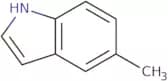
CAS:5-Methylindole is a molecule that has been found to be active against Staphylococcus aureus. This drug interferes with the synthesis of glycogen, which is an important energy storage molecule in animals. 5-Methylindole inhibits glycogen synthase kinase 3 (GSK-3) activity and thereby reduces the production of proinflammatory cytokines. This drug has also been shown to have cardiac effects, such as tachycardia and arrhythmias in mice. The optical properties of 5-methylindole are characterized by fluorescence and absorbance spectra, as well as its chemical reactions. 5-Methylindole is detectable at concentrations of 10 µg/mL and reacts with aminoglycosides by forming an adduct that can be detected using chromatographic methods.Formula:C9H9NPurezza:Min. 95%Colore e forma:PowderPeso molecolare:131.17 g/moltert-Butyl octahydrocyclopenta[c]pyrrol-4-ylcarbamate
CAS:Tert-Butyl octahydrocyclopenta[c]pyrrol-4-ylcarbamate is a versatile building block that is a useful intermediate. It can be used as an additive in the synthesis of pharmaceuticals and other organic compounds. Tert-Butyl octahydrocyclopenta[c]pyrrol-4-ylcarbamate has been shown to possess antiviral activity, which may be due to its ability to inhibit viral DNA polymerase.
Formula:C12H22N2O2Purezza:Min. 95%Colore e forma:PowderPeso molecolare:226.32 g/mol4'-Butylacetophenone
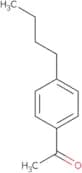
CAS:4'-Butylacetophenone (BA) is a phenolic compound that has been shown to reduce the need for an acceptor in wastewater treatment. It can be used as a substitute for hexane, which is commonly used to extract hydrophobic compounds from water. 4'-Butylacetophenone has also been shown to have anti-inflammatory properties and has been used in the synthesis of nonsteroidal anti-inflammatory drugs such as diclofenac amide.Formula:C12H16OPurezza:Min. 95%Colore e forma:PowderPeso molecolare:176.25 g/molO-Methyl-D-threonine
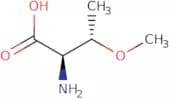
CAS:O-Methyl-D-threonine is an amino acid that is biosynthesized from O-methylserine and D-threonine. It belongs to the class of β-lactam antibiotics and inhibits peptidoglycan synthesis by binding to the catalytic site of the enzyme synthase, which is required for the formation of β-lactam rings in peptidoglycan. The crystal structure of O-methylserine has been determined and analyzed. Mutations in the catalytic tripeptide have been shown to affect its activity, as well as protonation state and carboxylate groups.Formula:C5H11NO3Purezza:Min. 98 Area-%Colore e forma:White Off-White PowderPeso molecolare:133.15 g/mol4-Chloro-2-methyl-5-(propan-2-yl)phenol
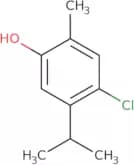
CAS:4-Chloro-2-methyl-5-(propan-2-yl)phenol (4CMPP) is a synthetic compound that belongs to the group of fatty alcohols. It is used in clinical diagnostics for the detection of cancer cells. 4CMPP was detected in the human plasma and erythrocytes using solid phase microextraction (SPME). The homologues of 4CMPP were also identified. The chemical structure of 4CMPP consists of a chain with two methyl groups and a phenolic group at opposite ends. This compound has been shown to be cytotoxic, as well as an inhibitor of translation and protein synthesis.Formula:C10H13ClOPurezza:Min. 95%Colore e forma:PowderPeso molecolare:184.66 g/mol3-Methoxyacetophenone
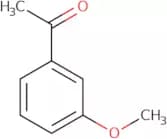
CAS:3-Methoxyacetophenone is a bacterial metabolite that is produced by the metabolism of caproic acid. 3-Methoxyacetophenone has been shown to possess antibacterial activity against gram-positive bacteria and to inhibit protein synthesis in these bacteria. The compound class of 3-methoxyacetophenone includes methyl ketones, which are a type of organic compounds containing a carbonyl group (C=O). This compound can be found in bacterial strains such as Pseudomonas aeruginosa and Streptococcus pneumoniae. These bacteria produce 3-methoxyacetophenone during growth on l-tartaric acid or hydrogen tartrate as the sole carbon sources. The organism’s DNA sequences have been determined by deuterium isotope sequencing and l-tartaric acid as the sole carbon source.
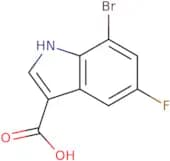
Formula:C9H10O2Purezza:Min. 95%Colore e forma:Colorless Clear LiquidPeso molecolare:150.17 g/mol7-Bromo-5-fluoro-1H-indole-3-carboxylic acid
CAS:Please enquire for more information about 7-Bromo-5-fluoro-1H-indole-3-carboxylic acid including the price, delivery time and more detailed product information at the technical inquiry form on this page
Formula:C9H5BrFNO2Purezza:Min. 95%Colore e forma:PowderPeso molecolare:258.04 g/mol6-Bromo-1-hexanol
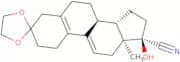
CAS:6-Bromo-1-hexanol is an azobenzene polymer film that is used in the manufacture of a number of pharmaceuticals. The polymer has been shown to have a broad spectrum of activity against bacteria and fungi, including human maltase glucoamylase, which is found in the gut. The polymers are prepared by reacting sodium salts with maleate, hydroxyl group, and x-ray crystal structures. 6-Bromo-1-hexanol has been shown to have good optical properties and can be used as a sample preparation material for x-ray diffraction studies. It also has a high chloride ion content and acts as a halide donor in cell culture experiments. This polymer also fluoresces under UV light.!--Formula:C6H13BrOPurezza:Min. 97 Area-%Colore e forma:Colorless Clear LiquidPeso molecolare:181.07 g/molCyclic-3-(1,2-ethanediylacetal)-17β-cyano-17α-hydroxy-estra-5(10),9(11)-dien-3-one
CAS:Cyclic-3-(1,2-ethanediylacetal)-17beta-cyano-17alpha-hydroxy-estra-5(10),9(11)-dien-3 -one is a chemical compound that is used as a reaction component, reagent, and high quality research chemical. It can be used as a useful scaffold or building block for the synthesis of complex compounds. Cyclic-3-(1,2-ethanediylacetal)-17beta-cyano-17alpha -hydroxyestra-5(10),9(11)-diene 3 one has CAS number 3330019 5.Formula:C21H27NO3Purezza:Min. 95%Colore e forma:White to off-white solid.Peso molecolare:341.44 g/molThiane-3-carbaldehyde
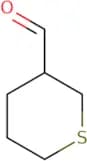
CAS:Thiane-3-carbaldehyde is a fine chemical that is used in research and development as a versatile building block for the synthesis of complex compounds. Thiane-3-carbaldehyde can be used as a reagent, speciality chemical, or useful scaffold for the synthesis of high quality and useful intermediates. This compound has CAS number 61571-06-0.
Formula:C6H10OSPurezza:Min. 95%Peso molecolare:130.21 g/mol




![tert-Butyl octahydrocyclopenta[c]pyrrol-4-ylcarbamate](/_next/image/?url=https%3A%2Fstatic.cymitquimica.com%2Fproducts%2F3D%2Fthumb-webp%2FKHA69312.webp&w=3840&q=75)