Building Blocks
Sottocategorie di "Building Blocks"
- Acidi boronici e derivati dell'acido boronico(5.780 prodotti)
- Building Blocks Chirali(1.241 prodotti)
- Building Blocks Idrocarburici(6.100 prodotti)
- Building Blocks organici(61.029 prodotti)
Trovati 205306 prodotti di "Building Blocks"
4-Methyl-3-nitrobenzoic acid
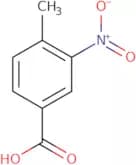
CAS:4-Methyl-3-nitrobenzoic acid is a hydroxide solution that has been shown to be cytotoxic to malignant melanoma cells in vitro. 4-Methyl-3-nitrobenzoic acid also inhibits the growth of normal cells by blocking epidermal growth factor receptor signaling. This molecule is converted to hippuric acid, which may have an anti-cancer effect by inhibiting metal ion uptake and causing DNA damage. There are no known adverse effects or interactions with other drugs.Formula:C8H7NO4Purezza:Min. 95%Colore e forma:PowderPeso molecolare:181.15 g/mol5-Methoxyindole-2-carboxylic acid
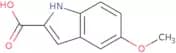
CAS:5-Methoxyindole-2-carboxylic acid is a molecule that belongs to the class of diazonium salts. It is a potent inhibitor of mitochondrial membrane potential and has been shown to have anti-diabetic effects in animal models. 5-Methoxyindole-2-carboxylic acid also inhibits sperm motility, which may be due to its ability to inhibit uv absorption. This compound has been shown to be an effective agent in the treatment of brain infarctions when administered chronically orally. The mechanism of action is not known, but it may involve inhibition of potassium ion uptake or hydrogen bond formation with fatty acids.Formula:C10H9NO3Colore e forma:PowderPeso molecolare:191.18 g/mol4-Methoxyindole
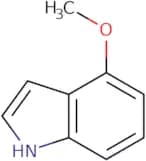
CAS:4-Methoxyindole is a high-performance liquid chromatography (HPLC) solute that has been shown to interact with the fluoroquinolone antibiotic, 4-methoxyindole. The interaction of the two substances may be due to the formation of condensation products. 4-Methoxyindole can also react with monoamine oxidase inhibitors and form fluorescence as a result of chemical reactions. This compound is used in HPLC as a stationary phase for the separation of solutes by column chromatography. The density and bond cleavage properties of this substance make it suitable for use in this application.Formula:C9H9NOColore e forma:PowderPeso molecolare:147.17 g/mol2-Methoxybenzene sulphonamide
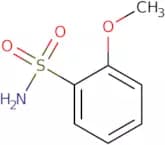
CAS:2-Methoxybenzene sulphonamide is an anti-cancer drug that belongs to the class of hydroxylated aromatic compounds. It has been shown to inhibit the growth of cancer cells in culture and in animals, and to prevent the formation of metastases. 2-Methoxybenzene sulphonamide is also a vasodilator drug used for the treatment of congestive heart failure. This drug binds to dopamine receptors in humans and may inhibit phosphatase activity. It has been shown to act as an antihypertensive by inhibiting angiotensin II mediated hypertrophy of cardiac tissue.Formula:C7H9NO3SPurezza:Min. 95%Colore e forma:White PowderPeso molecolare:187.22 g/mol6-Methoxy-2-naphthol
CAS:6-Methoxy-2-naphthol is a synthetic compound. It has been shown to be an effective antibacterial agent against Gram-positive bacteria when tested in vitro. 6-Methoxy-2-naphthol also inhibits methyltransferase activity and can be used in the treatment of cancer. The optical properties of 6-Methoxy-2-naphthol have been studied extensively, and it has been found to have strong absorption bands at 350 nm and 575 nm, making it a potential candidate for photodynamic therapy.Formula:C11H10O2Purezza:Min. 95%Colore e forma:Brown PowderPeso molecolare:174.2 g/molMaleimide
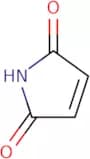
CAS:Maleimide is a chemical compound that can be synthesized from maleic anhydride and hydrogen fluoride. It has been used as a fluorescent probe for the measurement of electrochemical impedance spectroscopy (EIS) in biological systems. Maleimide is also used to study the interaction with mouse monoclonal antibody, which can be used to detect the presence of specific proteins or antigens in blood. Maleimides are covalently linked to proteins and other macromolecules through their thiol groups, forming a stable linkage. Maleimide reacts with hydrogen gas at high temperatures, leading to a decrease in its redox potentials. The reaction solution can be analyzed by plasma mass spectrometry, which determines the concentration of maleimide and its reactants by measuring ions produced by ionization or fragmentation reactions.Formula:C4H3NO2Purezza:Min. 95%Colore e forma:Off-White PowderPeso molecolare:97.07 g/mol6-Methoxyindole
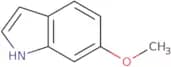
CAS:6-Methoxyindole is an acetate extract of the plant 5-methoxyindole. It has been shown to be a 5-HT1A receptor agonist in animals, and has been shown to have cardiac effects in rats. 6-Methoxyindole is also used as a precursor for the synthesis of diphenylacetylindoles. 6-Methoxyindole is one of the molecules that can be recombined to form a batcho-leimgruber indole (BLI).
Formula:C9H9NOPurezza:Min. 99 Area-%Colore e forma:PowderPeso molecolare:147.17 g/mol4-Mercaptoethylpyridine HCl
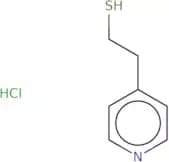
CAS:Used for antibody separation by hydrophobic charge induction chromatography
Formula:C7H9NS·HClPurezza:Min. 97 Area-%Colore e forma:PowderPeso molecolare:175.68 g/mol6-Methoxyindole-2-carboxylic acid
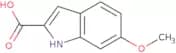
CAS:6-Methoxyindole-2-carboxylic acid (6MI) is a potent inhibitor of the enzyme catechol-O-methyltransferase (COMT). This inhibition prevents the conversion of catecholamines, such as dopamine and norepinephrine, to their corresponding methylated products. COMT inhibitors are used clinically to treat Parkinson's disease and other diseases that result from excessive levels of these neurotransmitters. 6MI is also an effective inhibitor of tyrosinase activity in vitro. It has been shown to inhibit the synthesis of melanin by melanocytes and inhibits the production of eumelanin, which is responsible for black or brown skin pigments. The inhibitory potency of 6MI was found to be greater than that for kojic acid, arbutin, and hydroquinone. Optimization studies showed that 6MI was most potent at a concentration of 1 mM and had an IC50 value of 0.3 mM in
Formula:C10H9NO3Purezza:Min. 95%Colore e forma:PowderPeso molecolare:191.18 g/mol6-Methoxyindole-2-carboxylic acid methyl ester
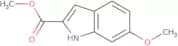
CAS:6-Methoxyindole-2-carboxylic acid methyl ester is a pyrroloquinoline alkaloid with cytotoxic and antiproliferative activities. It inhibits the growth of cancer cells in culture by inducing apoptosis and cell cycle arrest. 6-Methoxyindole-2-carboxylic acid methyl ester has been shown to be effective against breast cancer cell lines in vitro and to inhibit the proliferation of breast cancer cells in vivo. This compound also inhibits the growth of a number of other cancer cell lines such as prostate, colon, lung, liver, stomach, and leukemia. The mechanism of action for this compound is thought to be due to its ability to act as an intramolecular quencher of reactive oxygen species (ROS) or as an inhibitor of DNA synthesis through inhibition of ribonucleotide reductase activity.
Formula:C11H11NO3Purezza:Min. 95%Colore e forma:PowderPeso molecolare:205.21 g/mol6-Mercaptopurine hydrate
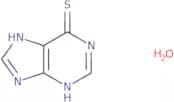
CAS:6-Mercaptopurine is a purine analog that suppresses the production of white blood cells by inhibiting the enzyme thiopurine methyltransferase. It has been used to treat bowel disease and also for long-term suppression of the immune system in patients with autoimmune diseases. 6-Mercaptopurine is metabolized to 6-mercaptopurine, which is then converted to dinucleotide phosphate (dNTP) by group P2 enzymes. This conversion allows 6-mercaptopurine to inhibit dNTP synthesis and cell division. The effects of 6-mercaptopurine are potentiated when given in conjunction with azathioprine, another drug that inhibits purine metabolism. 6-Mercaptopurine is not active against human serum albumin or erythrocytes because it cannot be cleaved into an active form by these proteins. However, it does inhibit enzyme activities such as DNA polymerase, RNA polymerase, and proteinFormula:C5H4N4S•H2OPurezza:Min. 97 Area-%Colore e forma:Yellow PowderPeso molecolare:152.18 g/mol6-Methyluracil
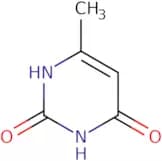
CAS:6-Methyluracil is an antimetabolite that inhibits protein synthesis and is therefore used in the treatment of infectious diseases. 6-Methyluracil has two hydroxyl groups, which are located in adjacent positions on the ring. The optimum concentration for this drug is 3-10 μM, which can be achieved with a malonic acid buffer solution at pH 7.4. 6-Methyluracil reacts with sodium succinate to form an acid complex, which may have antiinflammatory activity. 6-Methyluracil has been shown to inhibit prostaglandin synthesis and exhibits a reaction with radiation to produce photoproducts that can be detected by analytical chemistry.Formula:C5H6N2O2Purezza:Min. 95%Colore e forma:PowderPeso molecolare:126.12 g/mol4-Methyl-4'-carboxy-2,2'-bipyridine
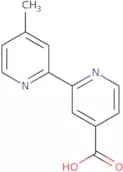
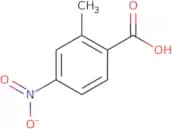
CAS:4-Methyl-4'-carboxy-2,2'-bipyridine is a fluorescent probe that can be used to detect the presence of hydrogen peroxide in cells. It has been shown to bind to mitochondria and liver cells. The binding constants are in the range of 10 M. When exposed to light, 4-methyl-4'-carboxy-2,2'-bipyridine emits an orange fluorescence. This chemical has been used as an oxidation catalyst for amides and as an enhancer for reactive species in kinetic experiments. It also has been shown to have proton uptake properties.Formula:C12H10N2O2Purezza:Min. 95%Colore e forma:Off-White PowderPeso molecolare:214.22 g/mol2-Methyl-4-nitrobenzoic acid
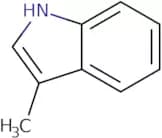
CAS:2-Methyl-4-nitrobenzoic acid is a synthetic drug substance. The crystalline structure of 2-methyl-4-nitrobenzoic acid is polymorphic and it can be obtained in two different forms: anhydrous form and monohydrate form. The reaction yield for this compound is low, which may be due to the presence of additives or deionized water. This drug substance has a high solubility in hydroxide solutions and methylbenzene. It reacts slowly with hydrochloric acid and sodium hydroxide solution to produce 2-methyl-4-nitrobenzoic acid hydrochloride and sodium benzoate, respectively. 2-Methyl-4-nitrobenzoic acid has low bioavailability due to its poor absorption from the gastrointestinal tract into the bloodstream.Formula:C8H7NO4Purezza:Min. 95%Colore e forma:PowderPeso molecolare:181.15 g/mol3-Methylindole
CAS:Also called Skatole. It occurs naturally in the feces of mammals and birds and is the primary contributor to fecal odour.Formula:C9H9NPurezza:Min. 97.5%Colore e forma:White PowderPeso molecolare:131.17 g/molL-5-Methyltetrahydrofolate calcium
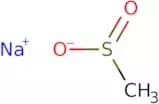
CAS:L-5-Methyltetrahydrofolate calcium is also known as calcium levomefolate; N-[4-[[(2-amino-1,4,5,6,7,8-hexahydro-5-methyl-4-oxo-6-pteridinyl)methyl]amino]benzoyl]-L-glutamic acid, calcium salt; and L-5-MTHF. L-5-Methyltetrahydrofolate calcium is the calcium salt of L-5-methyltetrahydrofolic acid, and a member of the folate group of vitamins (Vitamin B9). It is the coenzymated and most active form of folic acid, which performs many vital cellular functions, including DNA reproduction, cysteine cycle and homocysteine regulation. L-5-Methyltetrahydrofolate calcium is used as in dietary supplements and has been proposed for treatment of cardiovascular disease.Formula:C20H23CaN7O6Purezza:Min. 95 Area-%Colore e forma:White PowderPeso molecolare:497.52 g/molMethanesulfinic acid sodium salt
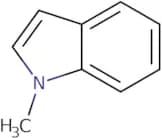
CAS:Methanesulfinic acid sodium salt (MSAS) is a chemical compound that inhibits the growth of bacteria by inhibiting the synthesis of proteins. It is used as an antimicrobial agent in plant physiology and has been shown to be effective against infectious diseases including HIV infection. MSAS inhibits protein synthesis by binding to the hydroxyl group of a substrate molecule, which is required for amino acid formation. This inhibitory effect leads to a decrease in the production of proteins vital for cell division. Inhibiting protein synthesis also prevents the production of enzymes needed for metabolism, leading to metabolic disorders.Formula:CH3O2S·NaPurezza:Min. 95%Colore e forma:PowderPeso molecolare:102.09 g/mol1-Methylindole
CAS:1-Methylindole is a chemical compound that belongs to the group of pyrimidine compounds. It has been shown to have antibacterial activity against many types of bacteria, including methicillin-resistant Staphylococcus aureus and Clostridium perfringens. 1-Methylindole inhibits bacterial growth by binding to DNA and RNA, preventing the synthesis of proteins necessary for cell division. The high chemical stability and low redox potential make 1-methylindole an excellent candidate for use as an anticancer agent. This drug has been shown to be effective in killing cancer cells in vitro, but more research needs to be done before it can be used in vivo.
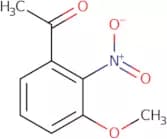
Formula:C9H9NPurezza:Min. 97 Area-%Colore e forma:Colorless Clear LiquidPeso molecolare:131.17 g/mol3-Methoxy-2-nitroacetophenone
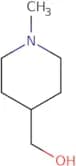
CAS:3-Methoxy-2-nitroacetophenone is a crystalline solid that is soluble in organic solvents. It is catalytic and reductive, forming enamines by reacting with aldehydes or ketones. 3-Methoxy-2-nitroacetophenone can be used to reduce nitro groups to amines and also transfer hydrogen to alkenes. This compound can be also used for cyclization reactions and as a transfer hydrogenation catalyst.Formula:C9H9NO4Purezza:Min. 95%Colore e forma:PowderPeso molecolare:195.17 g/mol(1-Methylpiperidin-4-yl)methanol
CAS:(1-Methylpiperidin-4-yl)methanol is a potent inhibitor of the kinases vegfr-2 and vesicular glutamate transporter 2 (vglut2). It is also active against human tumor xenografts. The inhibitory activity was determined to be due to its ability to bind and covalently modify tyrosine residues in the kinase domain. The inhibitory potency of (1-Methylpiperidin-4-yl)methanol was found to be constant, regardless of oxygenation status. This suggests that the inhibition is not due to the binding of oxygenated metabolites. In vitro experiments showed that it inhibits cellular proliferation by blocking protein synthesis and arresting cells at G1 phase. This drug has potential as an antitumor agent because it inhibits tumor growth without affecting normal tissue or causing significant toxicity in animal models.
Formula:C7H15NOPurezza:Min. 95%Colore e forma:Colourless to yellow liquid.Peso molecolare:129.2 g/mol