Building Blocks
Sottocategorie di "Building Blocks"
- Acidi boronici e derivati dell'acido boronico(5.780 prodotti)
- Building Blocks Chirali(1.241 prodotti)
- Building Blocks Idrocarburici(6.100 prodotti)
- Building Blocks organici(61.029 prodotti)
Trovati 205306 prodotti di "Building Blocks"
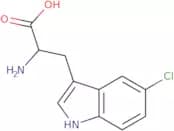
5-Chloro-DL-tryptophan
CAS:5-Chloro-DL-tryptophan is an antibiotic that is synthesized from tryptophan. It is used as a precursor for the synthesis of other antibiotics, including 5-chloro-dl-tryptophan and indole. 5-Chloro-DL-tryptophan has been shown to have a significant effect on the synthesis of protein amino acids, such as d-aspartic acid and α-amino acids. The steric properties of 5-chloro-dl-tryptophan are also important in its ability to block protein synthesis. Ozonization can be used to oxidize α,β unsaturated carbonyl compounds found in 5 - chloro - DL - tryptophan.
Formula:C11H11ClN2O2Purezza:Min. 95%Colore e forma:White PowderPeso molecolare:238.67 g/mol3-Cyanobenzoic acid
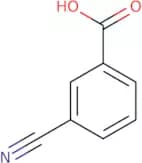
CAS:3-Cyanobenzoic acid is a chemical intermediate that is used to synthesize 3-cyanobenzamide. It is also a byproduct of the synthesis of benzonitrile and can be found in metal surface residues and environmental pollution. The molecule has two functional groups, one electron withdrawing and one electron donating, which are necessary for its stability. This compound can be found in high concentrations when it reacts with metal surfaces or organic solvents. 3-Cyanobenzamide was synthesized from 3-cyanobenzoic acid as an amide, which has been shown to have antimicrobial properties against Gram-positive bacteria such as Staphylococcus aureus, Streptococcus pyogenes and Enterococcus faecalis.Formula:C8H5O2NPurezza:Min. 95%Colore e forma:PowderPeso molecolare:147.13 g/mol2-Chloro-4-methoxybenzoic acid
CAS:2-Chloro-4-methoxybenzoic acid is a model compound for the screening of acridones, which are a class of compounds with anticancer activity. 2-Chloro-4-methoxybenzoic acid has been shown to inhibit potassium t-butoxide efflux in cancer cells and induce multidrug resistance in cancer cells. Furthermore, it has been shown that 2-Chloro-4-methoxybenzoic acid inhibits mitoxantrone efflux in cancer cells, leading to an increase in mitoxantrone cytotoxicity. This compound is also able to induce a phenotype change from cancerous to normal and can be used as a chemotherapeutic agent against cancers.Formula:C8H7ClO3Purezza:Min. 95%Colore e forma:PowderPeso molecolare:186.59 g/mol2-Chloro-4-methoxybenzoic acid methyl ester
CAS:2-Chloro-4-methoxybenzoic acid methyl ester is a reagent that can be used in the preparation of various compounds. It is also a versatile building block for the synthesis of complex compounds, such as pharmaceuticals and agrochemicals. This chemical is often used as an intermediate or building block in the preparation of pharmaceuticals and agrochemicals. 2-Chloro-4-methoxybenzoic acid methyl ester has been shown to be a useful scaffold for the synthesis of drugs with high quality and low cost.Formula:C9H9ClO3Purezza:Min. 95%Colore e forma:PowderPeso molecolare:200.62 g/mol4,4'-Dinitro-2,2'-bipyridine
CAS:4,4'-Dinitro-2,2'-bipyridine is a dihedral molecule that is used in biosensors to detect nitro compounds. It is synthesized by the reaction of osmium tetroxide with pyridine. The transfer of electrons from the pyridine ring to the osmium atom results in an oriented molecule with a positive charge on one end and a negative charge on the other end. This orientation can be reversed by oxidation. 4,4'-Dinitro-2,2'-bipyridine has been shown to react with monoalcohols and nucleophiles such as water to form covalent bonds. It also reacts with radiation, which may account for its use in dosimeters for measuring radiation exposure.Formula:C10H6N4O4Purezza:Min. 95%Colore e forma:Yellow PowderPeso molecolare:246.18 g/mol2,3-Dichloropyridine
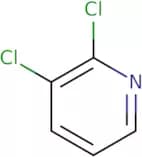
CAS:2,3-Dichloropyridine is an organic compound with the formula P(Cl)Cl. It is a white crystalline solid that reacts violently with water and alcohols. 2,3-Dichloropyridine can be used for the preparation of dichloroacetic acid by reaction with phosphorus pentachloride in the presence of sodium carbonate and water vapor. This compound can also be used to prepare copper chloride by reaction with diazonium salt in hydrochloric acid and chlorine atom in the presence of sodium carbonate at low energy.Formula:C5H3Cl2NPurezza:Min. 95%Colore e forma:PowderPeso molecolare:147.99 g/mol3,4-Diaminobenzoic acid
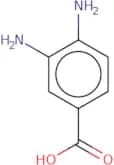
CAS:3,4-Diaminobenzoic acid is a compound that is produced by the condensation of two molecules of hydrochloric acid. 3,4-Diaminobenzoic acid has been used as a reagent in the synthesis of coumarin derivatives. This chemical has been shown to be an effective proton scavenger in an optimum concentration. Benzimidazole compounds are also synthesized from 3,4-diaminobenzoic acid and have been shown to be effective against autoimmune diseases. 3,4-Diaminobenzoic acid can be used for the production of diazonium salts, which are used in the synthesis of anti-inflammatory drugs and other pharmaceuticals. The hydroxyl group on this molecule makes it chemically stable and kinetic data shows that it has high diphenolase activity.Formula:C7H8N2O2Purezza:Min. 96 Area-%Colore e forma:PowderPeso molecolare:152.15 g/molMetosulam
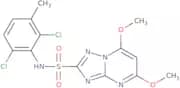
CAS:Metosulam is a triazolopyrimidine herbicide that inhibits the growth of weeds by interfering with plant photosynthesis. Metosulam binds to fatty acids and carbohydrates, which prevents these molecules from binding to the enzyme ATP synthase. This results in a loss of energy production, leading to cell death. Metosulam has been shown to cause chronic cough in mice when given at sublethal doses for long periods of time. The chronic cough was found to be due to an interactive effect between metosulam and polymeric matrix in the lungs that caused inflammation.
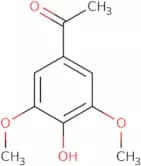
Formula:C14H13Cl2N5O4SPurezza:Min. 90%Colore e forma:Beige PowderPeso molecolare:418.26 g/mol3',5'-Dimethoxy-4'-hydroxyacetophenone
CAS:Inducer of transformation in Agrobacterium tumefaciensFormula:C10H12O4Purezza:Min. 97 Area-%Colore e forma:Brown White PowderPeso molecolare:196.2 g/mol1,2-Dioleoyl-sn-glycerol
CAS:1,2-Dioleoyl-sn-glycerol is a lipid molecule that contains an acyl chain of carbon atoms with two double bonds. It is formed through the union of glycerol and oleic acid. 1,2-Dioleoyl-sn-glycerol has been shown to activate diacylglycerol and fatty acid, which are important for cell signaling. The enzyme activity of 1,2-dioleoyl-sn-glycerol is dependent on its concentration in the body. This molecule also interacts with membranes by hydrogen bonding and can form a hydrophobic region that may be used to stabilize membrane structures.Formula:C39H72O5Purezza:Min. 95%Colore e forma:LiquidPeso molecolare:620.99 g/mol2,6-Diaminotoluene
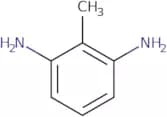
CAS:2,6-Diaminotoluene (2,6-TDA), also known as o-tolidine, is a colorless to yellowish crystalline solid that is soluble in organic solvents. This compound has been shown to be genotoxic and carcinogenic in laboratory animals. 2,6-TDA binds to the receptor molecule of DNA and inhibits the repair of DNA strand breaks, leading to mutations and cancerous cells. 2,6-TDA has been shown to have toxic effects on fetal bovine kidney cells at low doses. The toxicity studies showed that 2,6-TDA inhibits cell growth and induces apoptosis in a dose dependent manner. This study also shows that 2,6-TDA inhibits protein synthesis by binding to ribosomes in the cytoplasm.Formula:C7H10N2Purezza:Min. 95%Colore e forma:PowderPeso molecolare:122.17 g/mol(R,R)-2,8-Diazabicyclo[4.3.0]nonane
CAS:(R,R)-2,8-Diazabicyclo[4.3.0]nonane is an antibacterial agent that is synthesized from piperazine and fluoroquinolone derivatives. It has a high yield of (R,R)-2,8-diazabicyclo[4.3.0]nonane and a low reaction time in the microwave amination reaction. This compound can be used to replace environmentally hazardous chemicals such as mercury(II) chloride in the synthesis of (R,R)-2,8-diazabicyclo[4.3.0]nonane by avoiding the use of toxic mercury compounds and reducing the cost of production by using microwave irradiation.Formula:C7H14N2Purezza:Min. 95%Colore e forma:PowderPeso molecolare:126.2 g/mol1,8-Diazido-3,6-dioxaoctane
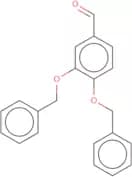
CAS:1,8-Diazido-3,6-dioxaoctane is a synthetic molecule that is used in the synthesis of macrolactones, polymers, and biomolecules. It can be used as a bioconjugate to attach other functional groups to biomaterials and polymers, such as azido groups. This compound has high sensitivity and thermal stability with good solubility in organic solvents. 1,8-Diazido-3,6-dioxaoctane has been shown to be compatible with many functional groups and is an important monomer for use in cross-linked polymers.Formula:C6H12N6O2Purezza:Min. 95%Colore e forma:Colorless PowderPeso molecolare:200.2 g/mol3,4-Dibenzyloxybenzaldehyde
CAS:3,4-Dibenzyloxybenzaldehyde is a chemical compound with the formula ClCH=C(O)CHO. This compound is an intermediate in the synthesis of the cancer drug daunorubicin. 3,4-Dibenzyloxybenzaldehyde has been shown to induce apoptosis in human ovary cells and has been detected in urine samples from patients undergoing chemotherapy for ovarian cancer. 3,4-Dibenzyloxybenzaldehyde also inhibits the production of flavonoids and has been shown to inhibit rat striatal membranes and rat atria.
Formula:C21H18O3Purezza:Min. 95%Colore e forma:PowderPeso molecolare:318.37 g/mol2',4'-Dihydroxyacetophenone
CAS:2',4'-Dihydroxyacetophenone is a compound that can be used in wastewater treatment. It has been shown to have an inhibitory effect on the activity of glucose-injection-hydrochloric acid and electrochemical impedance spectroscopy. 2',4'-Dihydroxyacetophenone also has an inhibitory effect on the diazonium salt, enzyme activities, hydroxyl group, and acetylcholinesterase inhibition. In addition, it has been shown to have cytotoxicity against human osteosarcoma cells, as well as fetal bovine and acetate extracts. The histological analysis of 2',4'-dihydroxyacetophenone showed that it also has anti-inflammatory properties.Formula:C8H8O3Purezza:Min. 95%Colore e forma:Red PowderPeso molecolare:152.15 g/mol2,4-Dihydroxybenzaldehyde
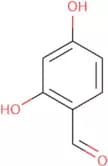
CAS:2,4-Dihydroxybenzaldehyde (2,4DBA) is a copper complex that has been shown to have biological properties. This compound has been studied in biological studies and is classified as group p2 on the periodic table. It is a redox potential of -0.95 V and can undergo intramolecular hydrogen bonding with itself or with other molecules to form hydrogen bonds. Hydroxyl groups are found on 2,4DBA and can coordinate with the nitrogen atoms found on penicillin-binding proteins or acetylcholinesterase inhibition. The coordination geometry of 2,4DBA is tetrahedral and its methyl ethyl group is also found on this molecule.Formula:C7H6O3Purezza:Min. 98 Area-%Colore e forma:White PowderPeso molecolare:138.12 g/mol2,5-Dihydroxybenzaldehyde
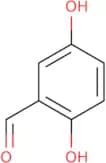
CAS:2,5-Dihydroxybenzaldehyde is a compound that can be used as an antioxidant. It is also a precursor for the synthesis of benzalkonium chloride. 2,5-Dihydroxybenzaldehyde reacts with p-hydroxybenzoic acid to form 2,5-dihydroxyphenylacetic acid and benzoic acid. The reaction mechanism of 2,5-dihydroxybenzaldehyde has been studied in detail using hl-60 cells and has been shown to be significant cytotoxicity. The hydroxyl group in this molecule creates a hydrogen bond with the carbonyl group in p-hydroxybenzoic acid and the two react together to form products. This reaction is catalyzed by Michaelis–Menten kinetics and proceeds via an electrochemical detector. Nitrogen atoms are not present in this molecule but do exist in benzalkonium chloride, which is synthesized from 2
Formula:C7H6O3Purezza:Min. 95%Colore e forma:Yellow PowderPeso molecolare:138.12 g/mol3,4-Dihydroxybenzoic acid
CAS:Dietary polyphenolFormula:C7H6O4Purezza:Min. 95%Colore e forma:PowderPeso molecolare:154.12 g/mol3,5-Dihydroxybenzoic acid
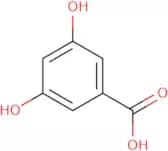
CAS:3,5-Dihydroxybenzoic acid is a phenolic compound that belongs to the class of aromatic compounds. It is an inhibitor of the enzyme 3-hydroxyphenylpyruvate dioxygenase and is used in the treatment of obesity. It has been shown to have a low potency for inhibiting this enzyme, although it does not inhibit other enzymes such as p-hydroxybenzoate hydroxylase. 3,5-Dihydroxybenzoic acid binds to human serum albumin through hydrogen bonding interactions and can inhibit the absorption of dietary phenols by binding to them. This compound also acts as a protocatechuic acid structural analog and has been shown to be hydrated in solution.Formula:C7H6O4Purezza:Min. 95%Colore e forma:White PowderPeso molecolare:154.12 g/mol3,5-Dihydroxybenzoic acid methyl ester
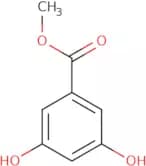
CAS:3,5-Dihydroxybenzoic acid methyl ester is a potent tyrosinase inhibitor that has been shown to be effective in inhibiting the production of melanin. 3,5-Dihydroxybenzoic acid methyl ester is an active ingredient in skin lightening products and has been shown to be more potent than kojic acid, arbutin and ascorbic acid. The reaction mechanism of 3,5-Dihydroxybenzoic acid methyl ester is stepwise with hydroxybenzoic acid (HBA) being the first substrate. HBA reacts with iron oxides to form a ferric hydroxide intermediate that undergoes gelation reactions with chloride ions. This results in a molecule containing three ether linkages, which are responsible for its inhibitory activity on the enzyme tyrosinase.
Formula:C8H8O4Purezza:Min. 95%Colore e forma:PowderPeso molecolare:168.15 g/mol




![(R,R)-2,8-Diazabicyclo[4.3.0]nonane](/_next/image/?url=https%3A%2Fstatic.cymitquimica.com%2Fproducts%2F3D%2Fthumb-webp%2FFD21506.webp&w=3840&q=75)