


Building Blocks
Questa sezione contiene prodotti fondamentali per la sintesi di composti organici e biologici. Building blocks sono i materiali di partenza essenziali utilizzati per costruire molecole complesse attraverso varie reazioni chimiche. Svolgono un ruolo critico nella scoperta di farmaci, nella scienza dei materiali e nella ricerca chimica. Presso CymitQuimica, offriamo una gamma diversificata di building blocks di alta qualità per supportare le tue ricerche innovative e progetti industriali, assicurandoti di avere i componenti essenziali per una sintesi di successo.
Sottocategorie di "Building Blocks"
- Acidi boronici e derivati dell'acido boronico(5.756 prodotti)
- Building Blocks Chirali(1.242 prodotti)
- Building Blocks Idrocarburici(6.095 prodotti)
- Building Blocks organici(61.038 prodotti)
Trovati 196817 prodotti di "Building Blocks"
Ordinare per
Purezza (%)
0
100
|
0
|
50
|
90
|
95
|
100
3-(Trifluoromethyl)-5-fluorophenylboronic acid pinacol ester
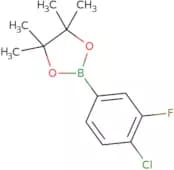
CAS:<p>Versatile small molecule scaffold</p>Formula:C13H15BF4O2Purezza:Min. 95%Peso molecolare:290.06 g/mol2-(4-Chloro-3-fluorophenyl)-4,4,5,5-tetramethyl-1,3,2-dioxaborolane
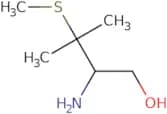
CAS:<p>Versatile small molecule scaffold</p>Formula:C12H15BClFO2Purezza:Min. 95%Peso molecolare:256.51 g/mol(2S)-2-Amino-3-methyl-3-(methylsulfanyl)butan-1-ol
CAS:<p>Versatile small molecule scaffold</p>Formula:C6H15NOSPurezza:Min. 95%Peso molecolare:149.3 g/mol(6-Aminohexyl)(methyl)amine
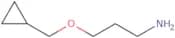
CAS:<p>Versatile small molecule scaffold</p>Formula:C7H18N2Purezza:Min. 95%Peso molecolare:130.23 g/mol3-(Cyclopropylmethoxy)propan-1-amine
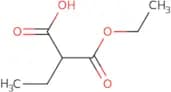
CAS:<p>Versatile small molecule scaffold</p>Formula:C7H15NOPurezza:Min. 95%Peso molecolare:129.2 g/mol2-(Ethoxycarbonyl)butanoic acid
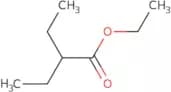
CAS:<p>2-(Ethoxycarbonyl)butanoic acid is a solvate of ethoxycarbonyl butanoic acid. It is a weak antibiotic that inhibits bacterial growth by binding to the 50S ribosomal subunit. This active form is metabolized through a number of metabolic transformations, including hydrolysis by esterases or glucuronidases, oxidation by cytochrome P450 enzymes, reduction by glutathione reductase, or conjugation with glucuronic acid. 2-(Ethoxycarbonyl)butanoic acid has been shown to be effective in the treatment of tuberculosis and other mycobacterial infections. It is also used as an antifungal agent against Candida albicans and Cryptococcus neoformans. 2-(Ethoxycarbonyl)butanoic acid binds to DNA-dependent RNA polymerase and prevents transcription and replication, which leads to cell death in susceptible bacteria.</p>Formula:C7H12O4Purezza:Min. 95%Peso molecolare:160.17 g/molEthyl 2-Ethylbutyrate
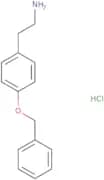
CAS:<p>Ethyl 2-ethylbutyrate is a fatty acid ester that is synthesized from butyric acid and ethanol. It has been shown to have anti-inflammatory properties, which may be due to its ability to suppress pro-inflammatory cytokines such as IL-6 and TNF-α. This compound also suppresses the production of IL-10, an anti-inflammatory cytokine. The activity index of this product is 1.5.</p>Formula:C8H16O2Purezza:Min. 95%Peso molecolare:144.21 g/mol4-Benzyloxy-Phenethylamine hydrochloride
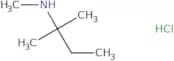
CAS:<p>Versatile small molecule scaffold</p>Formula:C15H18ClNOPurezza:Min. 95%Peso molecolare:263.77 g/molMethyl(2-methylbutan-2-yl)amine hydrochloride
CAS:<p>Versatile small molecule scaffold</p>Formula:C6H16ClNPurezza:Min. 95%Peso molecolare:137.65 g/mol2,2-Dimethylpent-4-enenitrile
CAS:<p>2,2-Dimethylpent-4-enenitrile is an organic compound that can be synthesized by the reaction of bromomethyl cyclopropane with a Grignard reagent. It is a useful synthetic intermediate for the synthesis of imines and carbonitriles. Grignard reagents are nucleophilic and react with alkenes to form addition products called imines. 2,2-Dimethylpent-4-enenitrile is a cyclic molecule that reacts with nucleophiles such as Grignard reagents in a nucleophilic substitution reaction. The addition product formed is known as an imine.</p>Formula:C7H11NPurezza:Min. 95%Peso molecolare:109.17 g/mol2,2-Dimethyl-3,4-dihydronaphthalen-1-one
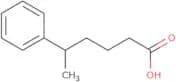
CAS:<p>Versatile small molecule scaffold</p>Formula:C12H14OPurezza:Min. 95%Peso molecolare:174.24 g/mol5-Phenylhexanoic acid
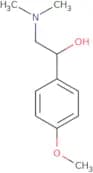
CAS:<p>5-Phenylhexanoic acid is an organic compound that belongs to the group of alcohols. It can be synthesised by a two-step process, which involves oxidation of benzylic alcohols and fission of the resulting aldehydes. The kinetic analysis of this reaction has shown that it proceeds with a rate law that follows first order kinetics. The analyses have also shown that 5-phenylhexanoic acid is oxidised in the presence of cobaltic perchlorate, which leads to the formation of cyanide as well as alkyl bromides and hydrocarbons.</p>Formula:C12H16O2Purezza:Min. 95%Peso molecolare:192.25 g/mol2-(Dimethylamino)-1-(4-methoxyphenyl)ethanol
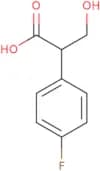
CAS:<p>Versatile small molecule scaffold</p>Formula:C11H17NO2Purezza:Min. 95%Peso molecolare:195.26 g/mol2-(4-Fluorophenyl)-3-hydroxypropanoic acid
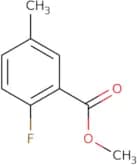
CAS:<p>Versatile small molecule scaffold</p>Formula:C9H9FO3Purezza:Min. 95%Peso molecolare:184.16 g/molMethyl 2-Fluoro-5-methylbenzoate
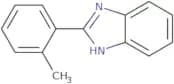
CAS:<p>Versatile small molecule scaffold</p>Formula:C9H9FO2Purezza:Min. 95%Peso molecolare:168.17 g/mol2-(2-Methylphenyl)-1H-1,3-benzodiazole
CAS:<p>Versatile small molecule scaffold</p>Formula:C14H12N2Purezza:Min. 95%Peso molecolare:208.26 g/mol2-Phenylglutaric anhydride
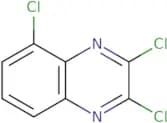
CAS:<p>2-Phenylglutaric anhydride is a chemical compound that is used in organic chemistry as a phase-transfer reagent, because of its ability to exchange between the organic and aqueous phases. It has been shown to be a useful modifier for preparative high performance liquid chromatography (prep HPLC) due to its low solubility in water and non-volatility. 2-Phenylglutaric anhydride can be used as a sample preparation technique for the separation of carboxylic acid derivatives by preparative HPLC. The use of this chemical has allowed for advances in the field of preparative chromatography, including the development of new strategies and techniques.<br>2-Phenylglutaric anhydride is also known to have thermodynamic properties that are favorable for column chromatography. This compound has been shown to be stable at higher temperatures, which allows for optimization of column packing materials with supercritical fluids.</p>Formula:C11H10O3Purezza:Min. 95%Peso molecolare:190.19 g/mol2,3,5-Trichloroquinoxaline
CAS:<p>Versatile small molecule scaffold</p>Formula:C8H3Cl3N2Purezza:Min. 95%Peso molecolare:233.5 g/mol3-Oxatricyclo[3.3.1.0,1,5]nonane-2,4-dione
CAS:<p>Versatile small molecule scaffold</p>Formula:C8H8O3Purezza:Min. 95%Peso molecolare:152.15 g/molBicyclo[3.1.0]hexane-1,5-dicarboxylic acid
CAS:<p>Versatile small molecule scaffold</p>Formula:C8H10O4Purezza:Min. 95%Peso molecolare:170.2 g/mol




![3-Oxatricyclo[3.3.1.0,1,5]nonane-2,4-dione](/_next/image/?url=https%3A%2Fstatic.cymitquimica.com%2Fproducts%2F3D%2Fthumb-webp%2FCAA95867.webp&w=3840&q=75)
![Bicyclo[3.1.0]hexane-1,5-dicarboxylic acid](/_next/image/?url=https%3A%2Fstatic.cymitquimica.com%2Fproducts%2F3D%2Fthumb-webp%2FCAA95866.webp&w=3840&q=75)