Alcoli
Sottocategorie di "Alcoli"
Trovati 5817 prodotti di "Alcoli"
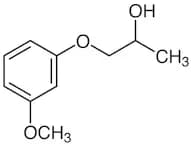
1-(3-Methoxyphenoxy)-2-propanol
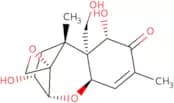
CAS:Formula:C10H14O3Purezza:>90.0%(GC)Colore e forma:Colorless to Light yellow to Light orange clear liquidPeso molecolare:182.22Deoxynivalenol
CAS:Deoxynivalenol is a mycotoxin that is produced by the fungi Fusarium graminearum and F. culmorum. It produces toxic effects in humans and animals, including human immunoglobulin E (IgE) production, acute toxicities, and cytotoxic effects on cultured human leukocytes. The analytical method for deoxynivalenol detection includes a variety of in vitro methods such as enzyme-linked immunosorbent assays (ELISA), competitive ELISA, fluorescent antibody staining assay, fluorescence polarization immunoassay (FPIA), competitive FPIA, and high performance liquid chromatography (HPLC). Deoxynivalenol binds to dna with high affinity and has been shown to have fusarial activity. The toxicity of deoxynivalenol can be confirmed by the mitochondrial membrane potential assay or by the assessment of vomitoxin levels. Colloidal gold can be used for identification of deox
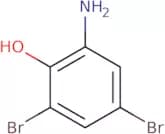
Formula:C15H20O6Purezza:Min. 95%Colore e forma:White PowderPeso molecolare:296.32 g/mol2-Amino-4,6-dibromophenol
CAS:2-Amino-4,6-dibromophenol is an organic compound that is used in research for the synthesis of benzoxazoles and related compounds. It is a lactam analog that can be synthesized from commercially available starting materials. 2-Amino-4,6-dibromophenol has been shown to have pharmacological activity against tumor cells. This compound has also been used to synthesize regiospecific skeletal analogs of natural products.Formula:C6H5Br2NOPurezza:Min. 95 Area-%Colore e forma:Off-White PowderPeso molecolare:266.92 g/molQuinoline-5-carboxylic acid
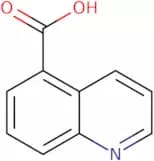
CAS:Quinoline-5-carboxylic acid is a peroxide that is produced by the oxidation of quinoline derivatives. Quinoline-5-carboxylic acid has been shown to have antibacterial activity, and it also has affinity values for chloride ions. The chemical isomers of quinoline-5-carboxylic acid are called quninolines, which are produced by the hydrolysis of quinoline-5-carboxylic acid. Quinolines can be obtained by the oxidation of aniline. Quinolines have been shown to catalyze reactions with carbonyl groups in organic molecules, such as the reaction between an alkoxycarbonyl group and a hydroxyl group to form an aldehyde or ketone. Kinetic data for this reaction was obtained using titration calorimetry.
Formula:C10H7NO2Purezza:Min. 95%Colore e forma:White To Beige To Light Brown To Grey SolidPeso molecolare:173.17 g/mol2-Amino-9-fluorenol
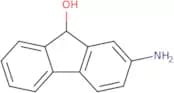
CAS:2-Amino-9-fluorenol is a hydrophobic compound that binds to RNA. 2-Amino-9-fluorenol has been shown to have a binding constant of 1.2 x 10, which is much higher than the binding constant for curculigoside (5.2 x 10). This substance has shown to be an effective inhibitor of RNA synthesis in HL60 cells and various bacterial strains by binding to the ribose moiety of RNA and preventing transcription. The metabolic pathway for 2-amino-9-fluorenol consists of two steps: one involving a reactive intermediate, potassium ion, and another with methylamine as the reactant. These reactions are catalyzed by enzymes such as acetaldehyde dehydrogenase and amino transferases, respectively.Formula:C13H11NOPurezza:Min. 95%Colore e forma:Yellow solid.Peso molecolare:197.23 g/mol5-Hydroxy-3,4-dihydro-2(1H)-quinolinone
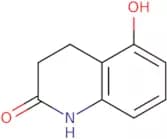
CAS:5-Hydroxy-3,4-dihydro-2(1H)-quinolinone is a high quality reagent with a CAS number of 30389-33-4. It has been shown to be a useful intermediate in the synthesis of complex compounds. This compound can also be used as an important building block for the synthesis of speciality chemicals and research chemicals. 5-Hydroxy-3,4-dihydro-2(1H)-quinolinone is versatile and can be used as a reaction component in many reactions that require the introduction of oxygen into molecules.Formula:C9H9NO2Purezza:Min. 95%Colore e forma:White PowderPeso molecolare:163.17 g/molFrench maritime pine bark extract ™
CAS:Pycnogenol is a nonsteroidal anti-inflammatory drug that is derived from the bark of the French maritime pine tree. It has been shown to reduce bowel disease activity in animal models and has been found to be as effective as ibuprofen in human studies. Pycnogenol also inhibits the expression of toll-like receptor 4, which reduces inflammation in cells. Pycnogenol has also been shown to have an anti-inflammatory effect on human polymorphonuclear leukocytes and may be useful for treating various diseases such as cancer, cardiovascular diseases, or asthma. This compound also has natural antioxidant properties that are thought to protect against oxidative damage and help regulate blood pressure by inhibiting vascular smooth muscle proliferation.
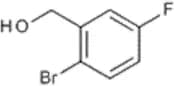
Purezza:Min 95%Colore e forma:Powder2-Bromo-5-fluorobenzyl alcohol
CAS:2-Bromo-5-fluorobenzyl alcohol is a synthetic organoboron compound that can be used in the synthesis of other compounds. It has been shown to have a thermal expansion coefficient of 0.038 x 10^-6 K, which is an intermediate value for organic materials. The two polymorphic forms are monoclinic (space group P2/c) and hexagonal (P63). When 2-bromo-5-fluorobenzyl alcohol is irradiated with microwaves and magnetic fields, it undergoes anisotropic expansion, which suggests that intermolecular interactions are important in this phenomenon. This material has been shown to exhibit antifungal properties.
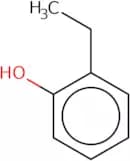
Formula:C7H6BrFOPurezza:Min. 95%Colore e forma:PowderPeso molecolare:205.02 g/mol2-Ethylphenol
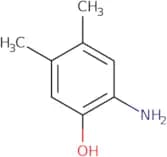
CAS:2-Ethylphenol is a phenolic acid, which is a type of organic compound that contains an hydroxyl group (-OH) bonded directly to an aromatic hydrocarbon ring. 2-Ethylphenol is used in the production of polymers, such as polyurethane and polyester, as well as in the manufacture of other chemicals. It can also be found in some food products, such as coffee beans and cocoa beans. 2-Ethylphenol has been shown to have P450 activity by increasing the rate at which rat liver microsomes metabolize testosterone into estradiol. The kinetic constants for this reaction were determined using solid phase microextraction (SPME). A multi-walled carbon nanotube (MWCNT) was used to extract 2-ethylphenol from a water sample. The sample preparation was done with anhydrous sodium sulfate, which acted as a desiccant and was then heated to remove any remaining water vaporFormula:C8H10OPurezza:Min. 97 Area-%Colore e forma:Colorless Clear LiquidPeso molecolare:122.16 g/mol2-Amino-4,5-dimethylphenol
CAS:2-Amino-4,5-dimethylphenol is a compound that exhibits anticancer activity. It is an arylimine that has been shown to inhibit the proliferation of cancer cells in vitro and in vivo. The mechanism of action is not fully understood, but it is believed that 2-amino-4,5-dimethylphenol may act as a nucleophile in reverse Michael addition reactions with electrophiles. This compound also has been shown to be potent against some cancer cell lines and to induce apoptosis through caspase activation. 2-Amino-4,5-dimethylphenol interacts with aminophenols in vitro, forming supramolecular complexes that are cytotoxic to cancer cells.
Formula:C8H11NOPurezza:Min. 95%Colore e forma:Brown SolidPeso molecolare:137.18 g/mol3-Methoxyphenylmethylcarbinol
CAS:3-Methoxyphenylmethylcarbinol is a hydrogen tartrate that can be used as an intermediate in the Friedel-Crafts reaction. It is also an imine, which is formed when a nitrogen atom of an amine reacts with a carbon atom of formaldehyde. 3-Methoxyphenylmethylcarbinol has been shown to have stereoselective properties in the Friedel-Crafts reaction, which means that only one product is produced from two reactants. In this case, the hydrogen tartrate and phosphorus oxychloride are reacted to produce oxone and chloride compounds. The selectivity of 3-methoxyphenylmethylcarbinol can be increased by adding triphosgene or dimethylamine to the reaction mixture. This compound dissociates easily into its component parts and can be regenerated by adding ethyl formate or ferrocene.Formula:C9H12O2Purezza:Min. 95%Colore e forma:PowderPeso molecolare:152.19 g/mol(3-Phenyl-1,2,4-oxadiazol-5-yl)methanol
CAS:3-Phenyl-1,2,4-oxadiazol-5-yl)methanol is a versatile building block that has been used in the synthesis of complex compounds and research chemicals. It is also a reagent that can be used in the laboratory to synthesize other fine chemicals. 3-Phenyl-1,2,4-oxadiazol-5-yl)methanol is an intermediate that can be used to create high quality and useful building blocks for chemical reactions. This compound has many uses as a scaffold in organic synthesis and it can be used to make valuable products such as pharmaceuticals and pesticides. 3-(3'-phenyl)-1,2,4-oxadiazole 5'-amine is listed on the Chemical Abstracts Service (CAS) database with number 5543-33-9.
Formula:C9H8N2O2Purezza:Min. 95%Colore e forma:PowderPeso molecolare:176.17 g/mol2-(2-Bromophenyl)ethanol
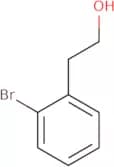
CAS:2-(2-Bromophenyl)ethanol is a functional group that contains a bromine atom and an ethoxy group. This compound is used to synthesize condensation products, such as the crystal x-ray diffraction of crystallized palladium complexes with acetaldehyde. The 2-(2-bromophenyl)ethanol analog was synthesized in order to study the synthesis and reactivity of a chelate ring. The hydroxyl group on this compound is useful for forming a magnesium salt or for using it as a synthetic reagent.
Formula:C8H9BrOPurezza:Min. 95%Colore e forma:Colorless Clear LiquidPeso molecolare:201.06 g/mol2-Bromo-3-fluorophenol
CAS:2-Bromo-3-fluorophenol is a bifunctional chemical that reacts with glycols, such as ethylene glycol, to form epoxy ethers. It is also used as a stabilizer for polyurethane plastics and rubbers. 2-Bromo-3-fluorophenol is used in the production of dibenzoyl peroxide and phenolic resins. This compound has been shown to be stable when exposed to both heat and light.Formula:C6H4BrFOPurezza:Min. 95%Colore e forma:PowderPeso molecolare:191 g/mol6-Hydroxy-3,4-dihydro-1H-quinoline-2-one
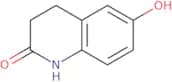
CAS:This is a quinoline derivative that has been shown to have inotropic and cardioprotective effects. It has been shown to increase the duration of action potentials and contractions in isolated heart muscle, as well as to improve the function of the heart by reducing the rate of myocardial oxygen consumption. 6-Hydroxy-3,4-dihydro-1H-quinoline-2-one has been shown to have anti-inflammatory properties and may be useful for treating respiratory diseases such as asthma. This compound is also used as a precursor for some pharmaceutical drugs, including chloroquine, mefloquine, amodiaquine, and primaquine. The compound is metabolized into conjugates that are recycled back into the body or excreted in human urine; this process is regulated by the balance between conjugation reactions and hydrolysis reactions.Formula:C9H9NO2Purezza:Min. 95%Peso molecolare:163.17 g/mol6-(4,4,5,5-Tetramethyl-[1,3,2]dioxaborolan-2-yl)-isoquinoline
CAS:6-(4,4,5,5-Tetramethyl-[1,3,2]dioxaborolan-2-yl)-isoquinoline is a versatile building block for the synthesis of complex compounds. This product is a reagent that can be used in organic synthesis as a reaction component or as a reagent to form new compounds. 6-(4,4,5,5-Tetramethyl-[1,3,2]dioxaborolan-2-yl)-isoquinoline has shown high quality in research and is useful for the synthesis of fine chemicals and speciality chemicals.Formula:C15H18BNO2Purezza:Min. 95%Colore e forma:White To Beige SolidPeso molecolare:255.12 g/mol3-(1,1,2,2-Tetrafluoroethoxy)phenol
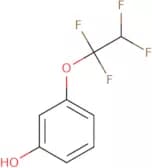
CAS:3-(1,1,2,2-Tetrafluoroethoxy)phenol is a versatile building block that can be used in the synthesis of complex compounds. It is also a reagent and speciality chemical and has CAS No. 53997-99-2. 3-(1,1,2,2-Tetrafluoroethoxy)phenol is a useful building block for organic synthesis and has been used as a reaction component or scaffold.
Formula:C8H6F4O2Purezza:Min. 95%Peso molecolare:210.13 g/mol2-[(3-Phenoxyphenyl)methylene]-2H-1,4-benzothiazin-3(4H)-one
CAS:Please enquire for more information about 2-[(3-Phenoxyphenyl)methylene]-2H-1,4-benzothiazin-3(4H)-one including the price, delivery time and more detailed product information at the technical inquiry form on this pageFormula:C21H15NO2SPurezza:Min. 95%Colore e forma:PowderEthyl 4-oxo-7-(benzyloxy)hydroquinoline-3-carboxylate
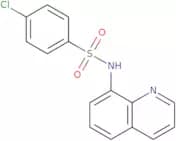
CAS:Please enquire for more information about Ethyl 4-oxo-7-(benzyloxy)hydroquinoline-3-carboxylate including the price, delivery time and more detailed product information at the technical inquiry form on this pagePurezza:Min. 95%((4-Chlorophenyl)sulfonyl)-8-quinolylamine
CAS:Please enquire for more information about ((4-Chlorophenyl)sulfonyl)-8-quinolylamine including the price, delivery time and more detailed product information at the technical inquiry form on this pageFormula:C15H11ClN2O2SPurezza:Min. 95%Colore e forma:PowderPeso molecolare:318.78 g/mol





![6-(4,4,5,5-Tetramethyl-[1,3,2]dioxaborolan-2-yl)-isoquinoline](/_next/image/?url=https%3A%2Fstatic.cymitquimica.com%2Fproducts%2F3D%2Fthumb-webp%2FFT76191.webp&w=3840&q=75)
![2-[(3-Phenoxyphenyl)methylene]-2H-1,4-benzothiazin-3(4H)-one](/_next/image/?url=https%3A%2Fstatic.cymitquimica.com%2Fproducts%2F3D%2Fthumb-webp%2FFP169832.webp&w=3840&q=75)