Alcoli
Sottocategorie di "Alcoli"
Trovati 5817 prodotti di "Alcoli"
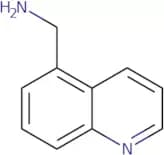
Quinolin-5-yl-methylamine
CAS:Quinolin-5-yl-methylamine is a fine chemical that is used as a research chemical. It can be used as a reagent and as a speciality chemical. This compound has a high quality and is versatile in its use. Quinolin-5-yl-methylamine can be used in the synthesis of complex compounds, such as pharmaceuticals, agrochemicals, and polymers. It is also an intermediate that can be used to create other useful compounds, such as building blocks or scaffolds. The CAS number for this compound is 58123-57-2.Formula:C10H10N2Purezza:Min. 95%Colore e forma:SolidPeso molecolare:158.2 g/molQuinoline-5-carboxylic acid
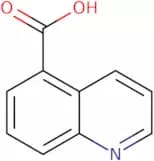
CAS:Quinoline-5-carboxylic acid is a peroxide that is produced by the oxidation of quinoline derivatives. Quinoline-5-carboxylic acid has been shown to have antibacterial activity, and it also has affinity values for chloride ions. The chemical isomers of quinoline-5-carboxylic acid are called quninolines, which are produced by the hydrolysis of quinoline-5-carboxylic acid. Quinolines can be obtained by the oxidation of aniline. Quinolines have been shown to catalyze reactions with carbonyl groups in organic molecules, such as the reaction between an alkoxycarbonyl group and a hydroxyl group to form an aldehyde or ketone. Kinetic data for this reaction was obtained using titration calorimetry.
Formula:C10H7NO2Purezza:Min. 95%Colore e forma:White To Beige To Light Brown To Grey SolidPeso molecolare:173.17 g/mol4-Fluoro-3-methylphenol
CAS:4-Fluoro-3-methylphenol is a low molecular weight compound that has been shown to have antibacterial activity. It inhibits the growth of Mycobacterium tuberculosis, and this inhibition may be due to a transfer mechanism. 4-Fluoro-3-methylphenol also inhibits the enzyme activities of esterases and glutathione reductase, which may contribute to its antitubercular activity. This molecule has been shown to have vibrational and optical properties. It has been used in microscopy experiments for the detection of mineralization in bone tissue.Formula:C7H7FOPurezza:Min. 95%Peso molecolare:126.13 g/mol3,4-Dimethyl-1-pentyn-3-ol
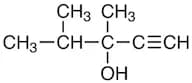
CAS:Formula:C7H12OPurezza:>96.0%(GC)Colore e forma:Colorless to Light orange to Yellow clear liquidPeso molecolare:112.17Bithionol sulfoxide
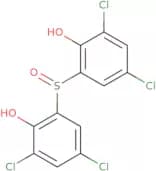
CAS:Bithionol sulfoxide is a glycol ether that has been used in the treatment of endoparasites. It is a toxic chemical that is metabolized to bithionol sulfoxide glucuronide conjugate (BSG). BSG has been shown to have pharmacological effects on animals, and as such it has been used in clinical treatments. BSG has also been shown to be effective against parasites and worms, with no significant side effects. BSG is an oily liquid at room temperature that can be soluble in alcohols, fatty acids and glycol esters. Bithionol sulfoxide can be dissolved in chloroform and ethyl acetate for use as a chromatographic solvent.Formula:C12H6Cl4O3SPurezza:Min. 95%Colore e forma:Off-White PowderPeso molecolare:372.05 g/mol2-(4-Bromophenyl)ethanol
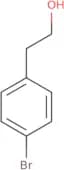
CAS:2-(4-Bromophenyl)ethanol is an analog of histone lysine and histone H3. It is a synthetic substrate for the acylation reaction on the carboxyl group of fatty acids. 2-(4-Bromophenyl)ethanol has been shown to have optical properties similar to those of natural fatty acids and has been used as a polymer film for cell line A549.Formula:C8H9BrOPurezza:Min. 95%Colore e forma:Slightly Yellow Clear LiquidPeso molecolare:201.06 g/mol2,6-Dimethylthiophenol
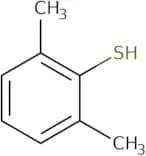
CAS:2,6-Dimethylthiophenol is a structural analog of the natural product sumatrana. It has been shown to be an effective catalyst for the cleavage of carbon-carbon bonds in organic molecules and fatty acids. 2,6-Dimethylthiophenol is unique because it contains two sulfur atoms that are part of a thiolate group, which can easily be oxidized to a sulfoxide or sulfone. This property makes 2,6-dimethylthiophenol an excellent reductant in reactions that require a metallacycle intermediate. The reactivity of this molecule is also influenced by its redox potential and the presence of nitrogen atoms. 2,6-Dimethylthiophenol was synthesized and studied using model compounds, yielding reaction yields as high as 98%.
Formula:C8H10SPurezza:Min. 95 Area-%Colore e forma:Clear LiquidPeso molecolare:138.23 g/mol3-(Trifluoromethoxy)phenol
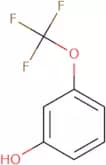
CAS:3-(Trifluoromethoxy)phenol is a drug that has been shown to function as an amide and a biomolecular. It has also been used in the development of drugs for depression, but it is not known whether it is effective in humans. 3-(Trifluoromethoxy)phenol binds to the cation channel of the NMDA receptor, which may be related to its antidepressant properties. The compound has been shown to have a radiotracer effect on positron emission tomography (PET). 3-(Trifluoromethoxy)phenol yields positrons when it undergoes deamination. This reaction is catalyzed by enzymes such as acetylcholine esterase, choline oxidase, and monoamine oxidases.
Formula:C7H5F3O2Purezza:Min. 95%Colore e forma:Clear LiquidPeso molecolare:178.11 g/mol2,4-Dimethoxy-5-methylbenzyl alcohol
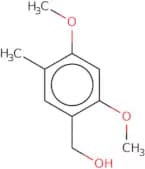
CAS:2,4-Dimethoxy-5-methylbenzyl alcohol is a high quality chemical that is used as an intermediate for the synthesis of complex compounds. It has been used as a reagent and as a building block for the synthesis of other chemicals. This compound can be used to produce fine chemicals and research chemicals. 2,4-Dimethoxy-5-methylbenzyl alcohol has been shown to be useful in the production of versatile building blocks and reaction components.
Formula:C10H14O3Purezza:Min. 95%Peso molecolare:182.22 g/mol4-(Hydroxymethyl)cyclohexanol
CAS:4-(Hydroxymethyl)cyclohexanol is a versatile building block that can be used in the synthesis of complex compounds. This chemical has been shown to have a high degree of purity and is a useful intermediate or reaction component for many different reactions. It is also an excellent scaffold for synthesizing other organic molecules.Formula:C7H14O2Purezza:Min. 95%Colore e forma:Clear To White To Off-White SolidPeso molecolare:130.18 g/mol2-Bromo-4-methylphenol
CAS:2-Bromo-4-methylphenol is an organic compound that has interactive effects with hydrochloric acid, molybdenum, and trifluoromethanesulfonic acid. It is soluble in water vapor, but insoluble in polyvinyl. 2-Bromo-4-methylphenol reacts with sodium hydroxide solution to form a hydroxide solution and sodium carbonate. The reaction product of 2-bromo-4-methylphenol with triterpenoid saponin produces fatty acids. This reaction occurs because the hydroxide ion from the sodium hydroxide solution attacks the ester group of the saponin, forming an alcohol group on one end and a carboxylic acid group on the other end. The benzyl groups are removed by hydrogenation to produce phenol.
Formula:C7H7BrOPurezza:Min. 95%Peso molecolare:187.03 g/mol(1S)-3,3'-Bis(1,1-dimethylethyl)-5,5',6,6'-tetramethyl-[1,1'-biphenyl]-2,2'-diol
CAS:(1S)-3,3'-Bis(1,1-dimethylethyl)-5,5',6,6'-tetramethyl-[1,1'-biphenyl]-2,2'-diol is a reaction component that is used in the synthesis of complex compounds. It has been shown to be useful as a reagent and as a scaffold for high quality research chemicals. This compound is also used in the synthesis of versatile building blocks and fine chemicals.Formula:C24H34O2Purezza:Min. 95%Colore e forma:White PowderPeso molecolare:354.53 g/mol7-Methyloctanol
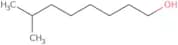
CAS:7-Methyloctanol is a polycarboxylic acid that is structurally similar to hydrochloric acid. It has been shown to have specific treatment effects on skin cells and light exposure, as well as an anti-inflammatory effect. 7-Methyloctanol is able to produce fatty acids by the hydroxylation of unsaturated alkyl chains, which are often used as plasticizers. The hydrophobic effect of 7-methyloctanol has also been shown to increase the permeability of liposomes.Formula:C9H20OPurezza:Min. 95%Colore e forma:Colorless Clear LiquidPeso molecolare:144.25 g/mol1-Methyl-1H-indol-4-ol
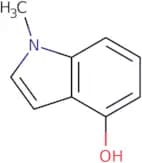
CAS:1-Methyl-1H-indol-4-ol is a sulfur containing natural product that has been shown to have antimicrobial activity. The compound is structurally similar to karanjin, an alkaloid found in the plant genus Camellia. In vitro studies with 1-methyl-1H-indol-4-ol have demonstrated antimicrobial activity against Gram positive bacteria such as Bacillus subtilis and Staphylococcus aureus, as well as anti fungal effects against Candida albicans and Cryptococcus neoformans. Furanoflavonoids are compounds that contain a furan ring and flavonoid group. 1-Methyl-1H-indol-4-ol is one of these compounds and has been shown to inhibit the growth of fungi by inhibiting the synthesis of proteins necessary for cell division.Formula:C9H9NOPurezza:Min. 95%Colore e forma:PowderPeso molecolare:147.17 g/mol(5Z,8Z,11Z)-5,8,11-Eicosatrienoic acid
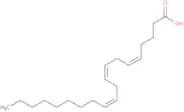
CAS:(5Z,8Z,11Z)-5,8,11-Icosatrienoic acid is a fatty acid that has anti-angiogenic effects. This compound is synthesized from arachidonic acid by the enzyme delta-5-desaturase and inhibits the formation of new blood vessels by promoting the death of endothelial cells. The synthesis of (5Z,8Z,11Z)-5,8,11-Icosatrienoic acid in liver cells is stimulated by an increase in body mass index and a decrease in fatty acids. This molecule has been shown to have physiological effects on brain function and to have anti-inflammatory properties. It also binds to the CB2 receptor.Formula:C20H34O2Purezza:Min. 95%Peso molecolare:306.48 g/mol2-Bromoquinoline
CAS:2-Bromoquinoline is an antimicrobial agent that binds to bacterial receptors. It is a bifunctional molecule with two reactive groups: a hydroxyl group and a nitrogen atom. 2-Bromoquinoline has been shown to inhibit the growth of various bacteria, including Mycobacterium tuberculosis, Staphylococcus epidermidis and Streptococcus pyogenes, by preventing the formation of a proton gradient across the bacterial membrane. 2-Bromoquinoline also inhibits hyperproliferative diseases such as amyloidosis in mice by binding to amyloid fibrils. This drug has been shown to cause DNA damage in mammalian cells, which may be due to its ability to form hydrogen bonds with methyl ethyl groups on DNA bases.Formula:C9H6BrNPurezza:Min. 95%Colore e forma:White To Yellow To Pink SolidPeso molecolare:208.05 g/molPiperonyl alcohol
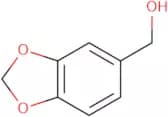
CAS:Prodotto controllatoPiperonyl alcohol is an enzyme inhibitor that blocks the oxidation of piperonal, a chemical found in many plants and fruits. It has been used as a pharmaceutical preparation to treat skin conditions such as acne and psoriasis. Piperonyl alcohol can be used in food composition as a preservative and antioxidant. This compound is also used in the production of polymers for paints, plastics, and rubber. Piperonyl alcohol inhibits melanogenesis by inhibiting tyrosinase activity and interrupting the synthesis of melanin. The use of this compound to inhibit melanin synthesis has been approved for cosmetic use in Europe. Piperonyl alcohol was first synthesized by Ludwig Knorr in 1885 from piperonal, an aromatic organic compound found in many plants and fruits. The reaction solution obtained from the hydrolysis of piperonyl acetate with hydrochloric acid is reacted with cationic polymerization using sodium carbonate (NaCO) as a catalyst to produceFormula:C8H8O3Purezza:Min. 95%Colore e forma:PowderPeso molecolare:152.15 g/mol2-Hydroxyquinoline
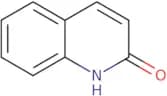
CAS:2-Hydroxyquinoline is a coumarin derivative that has inhibitory properties against a variety of human pathogens, including the causative agent of malaria. It binds to the active site of the enzyme xanthine oxidase, which catalyzes the oxidation of hypoxanthine to xanthine and then to uric acid. 2-Hydroxyquinoline inhibits this reaction, preventing the accumulation of uric acid in the blood and urine. This compound also has potential anticancer activity due to its ability to inhibit tumor cell proliferation in human prostate cancer cells. 2-Hydroxyquinoline is metabolized by cytochrome P450 enzymes and has pharmacokinetic properties that include an inhibitory dose (ID50) of 1mg/kg.Formula:C9H7NOPurezza:Min. 95%Colore e forma:White To Light (Or Pale) Yellow To Light (Or Pale) Green To Purple Brown SolidPeso molecolare:145.16 g/mol2-Nitrophenol
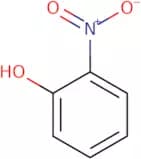
CAS:2-Nitrophenol has been used as an antimicrobial agent. 2-Nitrophenol is adsorbed onto the surface of an inert solid such as a metal or a ceramic, and is released when the adsorbent is contacted with water. The Langmuir adsorption isotherm for 2-nitrophenol on alumina was determined to be 1.4x10⁻³ mol/cm2. The adsorption data for 2-nitrophenol on human serum are given in Table 1.Formula:O2NC6H4OHPurezza:Min. 95%Colore e forma:PowderPeso molecolare:139.11 g/mol3-Methoxyphenylmethylcarbinol
CAS:3-Methoxyphenylmethylcarbinol is a hydrogen tartrate that can be used as an intermediate in the Friedel-Crafts reaction. It is also an imine, which is formed when a nitrogen atom of an amine reacts with a carbon atom of formaldehyde. 3-Methoxyphenylmethylcarbinol has been shown to have stereoselective properties in the Friedel-Crafts reaction, which means that only one product is produced from two reactants. In this case, the hydrogen tartrate and phosphorus oxychloride are reacted to produce oxone and chloride compounds. The selectivity of 3-methoxyphenylmethylcarbinol can be increased by adding triphosgene or dimethylamine to the reaction mixture. This compound dissociates easily into its component parts and can be regenerated by adding ethyl formate or ferrocene.Formula:C9H12O2Purezza:Min. 95%Colore e forma:PowderPeso molecolare:152.19 g/mol





![(1S)-3,3'-Bis(1,1-dimethylethyl)-5,5',6,6'-tetramethyl-[1,1'-biphenyl]-2,2'-diol](/_next/image/?url=https%3A%2Fstatic.cymitquimica.com%2Fproducts%2F3D%2Fthumb-webp%2FFB167175.webp&w=3840&q=75)