Alcoli
Sottocategorie di "Alcoli"
Trovati 5817 prodotti di "Alcoli"
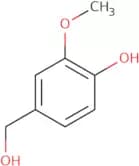
Vanillyl alcohol
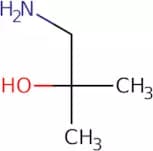
CAS:Vanillyl alcohol is a vanillin derivative that exhibits strong antibacterial activity. It can be used in the food industry as a natural preservative, and it has synergic effects with eugenol. Vanillyl alcohol shows antimicrobial properties against Gram-positive and Gram-negative bacteria, including Staphylococcus aureus, Pseudomonas aeruginosa, Escherichia coli, and Enterococcus faecalis. Vanillyl alcohol exhibits synergic effects with eugenol. In vivo models show that vanillyl alcohol is not toxic to humans, but it may be toxic to wild-type strains of bacteria.Formula:C8H10O3Purezza:Min. 98 Area-%Colore e forma:White PowderPeso molecolare:154.16 g/mol1-Amino-2-methyl-propan-2-ol
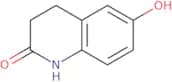
CAS:1-Amino-2-methyl-propan-2-ol is a cytotoxic molecule that has been shown to inhibit the growth of cancer cells. It is synthesized by converting 1,4-benzenediamine and cyclopentanol into the corresponding amines. The amines are then condensed with an alkanolamine in a kinetic reaction to form 1-amino-2-methylpropan-2-ol. This product's anticancer activity may be due to its ability to induce nucleophilic attack on DNA, leading to DNA strand breakage. 1AMPP has also been shown to have antiviral properties against HIV infection.Formula:C4H11NOPurezza:Min. 95%Colore e forma:Colorless Clear LiquidPeso molecolare:89.14 g/mol6-Hydroxy-3,4-dihydro-1H-quinoline-2-one
CAS:This is a quinoline derivative that has been shown to have inotropic and cardioprotective effects. It has been shown to increase the duration of action potentials and contractions in isolated heart muscle, as well as to improve the function of the heart by reducing the rate of myocardial oxygen consumption. 6-Hydroxy-3,4-dihydro-1H-quinoline-2-one has been shown to have anti-inflammatory properties and may be useful for treating respiratory diseases such as asthma. This compound is also used as a precursor for some pharmaceutical drugs, including chloroquine, mefloquine, amodiaquine, and primaquine. The compound is metabolized into conjugates that are recycled back into the body or excreted in human urine; this process is regulated by the balance between conjugation reactions and hydrolysis reactions.Formula:C9H9NO2Purezza:Min. 95%Peso molecolare:163.17 g/mol2-(2,2-Diethoxyethyl)-1,3-propanediol
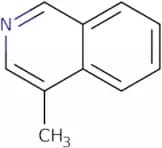
CAS:Formula:C9H20O4Purezza:>88.0%(GC)Colore e forma:Colorless to Light yellow clear liquidPeso molecolare:192.264-Methylisoquinoline
CAS:Isomeric 4-methylisoquinoline is a molecule that is structurally similar to protopine and berberine chloride. It has been shown to be an effective photosensitizer for the production of reactive oxygen species (ROS) in cells, which can lead to DNA damage and cell death. The functional groups on this molecule are the chloro group, which is a halogen, and the isoquinoline ring system with two methyl groups. The chemistry of this compound involves alkylation, yielding a new compound with one less methyl group than the original molecule. This process is called enamine formation.Formula:C10H9NPurezza:Min. 95%Colore e forma:Yellow PowderPeso molecolare:143.19 g/mol4-Ethynylbenzyl alcohol
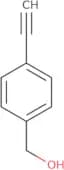
CAS:4-Ethynylbenzyl alcohol is an organic compound that has a molecular weight of 170.4 g/mol and a density of 1.1 g/cm3. It is synthesized by reacting acetophenone with sodium metal in the presence of ethanol and sodium ethoxide. The terminal alkyne groups are responsible for its high reactivity, which can be seen through its fluorescence properties. 4-Ethynylbenzyl alcohol has been shown to inhibit the growth of human liver cancer cells in vitro, making it a potential palliative treatment for liver cancer. This compound has also been shown to have reactive sites on its surface, which make it useful for surface modification techniques such as kinetic or imaging techniques. 4-Ethynylbenzyl alcohol has helical structure with hydrogen bonding interactions between adjacent molecules that stabilize the molecule's 3D structure.Formula:C9H8OPurezza:Min. 95%Colore e forma:White To Yellow To Brown SolidPeso molecolare:132.16 g/mol(5Z,8Z,11Z)-5,8,11-Eicosatrienoic acid
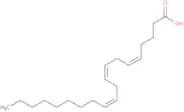
CAS:(5Z,8Z,11Z)-5,8,11-Icosatrienoic acid is a fatty acid that has anti-angiogenic effects. This compound is synthesized from arachidonic acid by the enzyme delta-5-desaturase and inhibits the formation of new blood vessels by promoting the death of endothelial cells. The synthesis of (5Z,8Z,11Z)-5,8,11-Icosatrienoic acid in liver cells is stimulated by an increase in body mass index and a decrease in fatty acids. This molecule has been shown to have physiological effects on brain function and to have anti-inflammatory properties. It also binds to the CB2 receptor.Formula:C20H34O2Purezza:Min. 95%Peso molecolare:306.48 g/mol3-Methoxyphenylmethylcarbinol
CAS:3-Methoxyphenylmethylcarbinol is a hydrogen tartrate that can be used as an intermediate in the Friedel-Crafts reaction. It is also an imine, which is formed when a nitrogen atom of an amine reacts with a carbon atom of formaldehyde. 3-Methoxyphenylmethylcarbinol has been shown to have stereoselective properties in the Friedel-Crafts reaction, which means that only one product is produced from two reactants. In this case, the hydrogen tartrate and phosphorus oxychloride are reacted to produce oxone and chloride compounds. The selectivity of 3-methoxyphenylmethylcarbinol can be increased by adding triphosgene or dimethylamine to the reaction mixture. This compound dissociates easily into its component parts and can be regenerated by adding ethyl formate or ferrocene.Formula:C9H12O2Purezza:Min. 95%Colore e forma:PowderPeso molecolare:152.19 g/mol8-Hydroxy-5-nitroquinoline-2-carbaldehyde
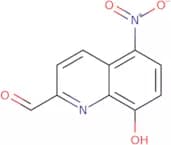
CAS:8-Hydroxy-5-nitroquinoline-2-carbaldehyde is a high quality, versatile building block that can be used as a reaction intermediate or to synthesize heterocycles. It is also a useful scaffold for the synthesis of complex compounds. The CAS number of this chemical is 884497-63-6.Formula:C10H6N2O4Purezza:Min. 95%Colore e forma:PowderPeso molecolare:218.17 g/mol2,4-Hexadien-1-ol
CAS:2,4-Hexadien-1-ol is an organic compound that belongs to the group of aliphatic alcohols. It is a colorless liquid with a pleasant odor and high boiling point. 2,4-Hexadien-1-ol has been shown to be a potent inhibitor of tyrosinase in vitro. This inhibition may be due to its ability to form hydrogen bonds with zirconium oxide or the hydroxyl group on its structure. 2,4-Hexadien-1-ol also has been shown to inhibit enzymes that are involved in the metabolic pathways for xenobiotics such as sodium citrate. 2,4-Hexadien-1-ol is used in wastewater treatment because it can decompose organic matter and reduce sludge volume by increasing the solubility of oils and fats.
Formula:C6H10OPurezza:Min. 95%Colore e forma:White PowderPeso molecolare:98.14 g/mol1H,1H,2H,2H-Tridecafluoro-1-n-octanol
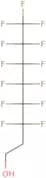
CAS:1H,1H,2H,2H-Tridecafluoro-1-n-octanol is a potent and selective halogenated hydrocarbon. It binds to DNA at the dinucleotide phosphate site, which is an important site for polymerase chain reaction (PCR) activation. 1HFN has been shown to be more effective than other halogenated hydrocarbons in vitro assays on rat liver microsomes. It has been used as an additive in wastewater treatment to remove organic contaminants and metal ions. In vivo studies have been carried out in CD-1 mice to determine the effects of 1HFN on the liver and kidneys; these studies showed no toxicological effects on these organs. 1HFN also has been shown to inhibit enzymes such as cytochrome P450 and monoamine oxidase B that are involved in drug metabolism and may lead to adverse reactions with drugs metabolized by these enzymes.Formula:C8H5F13OPurezza:Min. 95%Peso molecolare:364.1 g/mol4-Cyano-3,5-difluorophenol
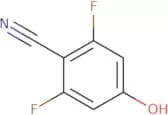
CAS:4-Cyano-3,5-difluorophenol (4CF) is a mesomorphic compound that has a number of reactions with chloride. 4CF is synthesized from 3,5-difluoroaniline and the reaction product is then heated with chlorine to produce 4CF. The optimal reaction temperature is between 100°C and 120°C. When exposed to light, 4CF will react with chloride ions in the presence of heat to form a hydrophobic chlorinated product. This product reacts with proton donors such as NaOH or KOH to produce hydrogen gas. At room temperature, 4CF can be used as a gas sensor.Formula:C7H3F2NOPurezza:Min. 95 Area-%Peso molecolare:155.1 g/mol2-(Dimethylamino)phenol
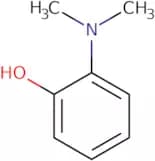
CAS:2-(Dimethylamino)phenol (DMP) is a neutral organic compound that is used as an analytical reagent. It reacts with hydrochloric acid to form phenols, which are then analyzed by fluorescence probe. DMP can also be used in the synthesis of aminophenols, which are used in the manufacture of dyes, pharmaceuticals, and other chemical products. It has been shown to inhibit mitochondrial functions and fatty acid synthesis. DMP binds to receptors on the surface of cells and can block the binding of drugs that target these receptors. DMP may also act as a hydrogen bond donor or acceptor depending on its environment.
Formula:C8H11NOPurezza:Min. 95 Area-%Colore e forma:White PowderPeso molecolare:137.18 g/mol[3-Methyl-4-(2,2,2-trifluoro-ethoxy)-pyridin-2-yl]-methanol
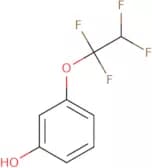
CAS:[3-Methyl-4-(2,2,2-trifluoro-ethoxy)-pyridin-2-yl]-methanol is a synthetic organic compound that is used in the synthesis of other organic compounds. It can be purified by filtration or gasification and recrystallization.Purezza:Min. 95%Colore e forma:Powder3-(1,1,2,2-Tetrafluoroethoxy)phenol
CAS:3-(1,1,2,2-Tetrafluoroethoxy)phenol is a versatile building block that can be used in the synthesis of complex compounds. It is also a reagent and speciality chemical and has CAS No. 53997-99-2. 3-(1,1,2,2-Tetrafluoroethoxy)phenol is a useful building block for organic synthesis and has been used as a reaction component or scaffold.
Formula:C8H6F4O2Purezza:Min. 95%Peso molecolare:210.13 g/mol3-Aminoquinoline
CAS:3-Aminoquinoline is a chemical compound that inhibits the activity of the epidermal growth factor receptor (EGFR). It is a potent inhibitor of cell proliferation and has been shown to have antitumour activity. 3-Aminoquinoline has been shown to inhibit the proliferation of carcinoma cell lines. This drug binds to the EGFR receptor, preventing it from activating downstream signalling pathways that control cell growth. 3-Aminoquinoline also has biological properties, including matrix-assisted laser desorption/ionization time-of-flight mass spectrometry, analytical chemistry, sample preparation, and Suzuki coupling reaction. The molecule is structurally analyzed using chemical structures and structural analysis techniques such as thermodynamic data or proton NMR spectroscopy. 3-Aminoquinoline also interacts with sugars through hydrogen bonding and oligosaccharides. These interactions are found to be high in value in some cases.
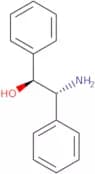
Formula:C9H8N2Purezza:Min. 95%Colore e forma:White PowderPeso molecolare:144.17 g/mol(1S,2R)-(+)-2-Amino-1,2-diphenylethanol
CAS:Prodotto controllato(1S,2R)-(+)-2-Amino-1,2-diphenylethanol is an enantiopure amine that has been used as a ligand in supramolecular chemistry. It can be prepared by reacting 2-chloropropane with thionyl chloride and primary alcohols. The chloride group facilitates the reaction rate and can be replaced by nitro groups to immobilize the product on a solid substrate. (1S,2R)-(+)-2-Amino-1,2-diphenylethanol has optical properties that are dependent on its environment. It can be used to label cells for studies of cell differentiation or cell migration. This compound also reacts with cyclohexane rings to form cyclic products with different optical properties than those of the reactants. The reaction yield is high in this process.Formula:C14H15NOPurezza:Min. 95%Colore e forma:White To Beige SolidPeso molecolare:213.28 g/mol2-Bromoquinoline
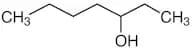
CAS:2-Bromoquinoline is an antimicrobial agent that binds to bacterial receptors. It is a bifunctional molecule with two reactive groups: a hydroxyl group and a nitrogen atom. 2-Bromoquinoline has been shown to inhibit the growth of various bacteria, including Mycobacterium tuberculosis, Staphylococcus epidermidis and Streptococcus pyogenes, by preventing the formation of a proton gradient across the bacterial membrane. 2-Bromoquinoline also inhibits hyperproliferative diseases such as amyloidosis in mice by binding to amyloid fibrils. This drug has been shown to cause DNA damage in mammalian cells, which may be due to its ability to form hydrogen bonds with methyl ethyl groups on DNA bases.Formula:C9H6BrNPurezza:Min. 95%Colore e forma:White To Yellow To Pink SolidPeso molecolare:208.05 g/mol3-Heptanol
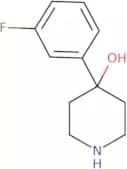
CAS:Formula:C7H16OPurezza:>98.0%(GC)Colore e forma:Colorless to Almost colorless clear liquidPeso molecolare:116.204-(3-Fluorophenyl)-4-piperidinol
CAS:4-(3-Fluorophenyl)-4-piperidinol is a useful chemical intermediate that can be used as a versatile building block in organic synthesis. It can be used as a reaction component and can serve as a speciality chemical, complex compound, or reagent. 4-(3-Fluorophenyl)-4-piperidinol has been identified by the Chemical Abstracts Service (CAS) number 80119-54-6. This product is of high quality and is not harmful to humans.Formula:C11H14FNOPurezza:Min. 95%Colore e forma:Orange PowderPeso molecolare:195.23 g/mol





![[3-Methyl-4-(2,2,2-trifluoro-ethoxy)-pyridin-2-yl]-methanol](/_next/image/?url=https%3A%2Fstatic.cymitquimica.com%2Fproducts%2F3D%2Fthumb-webp%2FFM38829.webp&w=3840&q=75)