Alcoli
Gli alcoli sono una vasta gamma di molecole organiche derivate dagli idrocarburi che contengono uno o più gruppi idrossilici (gruppo OH). Questi composti sono essenziali in varie reazioni chimiche e sono ampiamente utilizzati in laboratorio per la sintesi, come solventi e in chimica analitica. Da CymitQuimica, offriamo alcoli di alta qualità preparati per l'uso in laboratorio, supportando le tue ricerche e applicazioni industriali con prodotti affidabili ed efficaci. La nostra selezione garantisce che tu abbia gli alcoli giusti per le tue esigenze specifiche, sia per il lavoro di laboratorio di routine che per progetti di ricerca specializzati.
Sottocategorie di "Alcoli"
Trovati 5814 prodotti di "Alcoli"
Ordinare per
Purezza (%)
0
100
|
0
|
50
|
90
|
95
|
100
1,2-Hexadecanediol
CAS:1,2-Hexadecanediol is a compound that reacts with diphenyl ether and organic solvents at a temperature of 100 degrees Celsius. The reaction time is 5 hours. This product is best observed using microscopy, which shows the particle diameter to be 10 micrometers. 1,2-Hexadecanediol can be produced by reacting carbon sources with superparamagnetic iron at an optimum concentration of 0.5 Molar (M). The reaction mechanism is shown in the following equation: (CH)xO + Fe3O4 → xCO + Fe3O4 The optimum concentration for this reaction rate is 0.5 Molar (M), while the growth rate is 0.1 M/s. 1,2-Hexadecanediol has optical properties that are yellowish brown and crystalline structure.Formula:C16H34O2Purezza:Min. 95%Peso molecolare:258.44 g/molCyclopent-2-en-1-ol
CAS:Cyclopent-2-en-1-ol is a reactive monomer that can react with chloride and hydroxyl groups. It can also undergo reaction with sodium carbonate to form a cyclic ester. Cyclopent-2-en-1-ol can be converted to an epoxide by the use of acid catalyst. This compound also has the ability to polymerize, forming polymers that are used in rayon production.Formula:C5H8OPurezza:Min. 95%Colore e forma:Clear LiquidPeso molecolare:84.12 g/mol3,4-Dichlorothiophenol
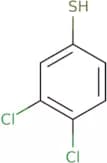
CAS:3,4-Dichlorothiophenol is a chemical compound that belongs to the group of reactive compounds. It can be used as a chemical intermediate for the synthesis of other organic compounds. 3,4-Dichlorothiophenol is an inhibitor of methylating enzymes such as glyoxalase I and II and glyceraldehyde-3-phosphate dehydrogenase. This inhibition leads to the accumulation of methylglyoxal and 3-deoxyglucosone in cells, which are potent inhibitors of protein glycosylation. 3,4-Dichlorothiophenol also inhibits nucleophilic attack on DNA by epoxide hydrolases such as epoxide hydrolase 1 and 2. This inhibition results in the accumulation of reactive metabolites that are covalently adducted with DNA bases.Formula:C6H4Cl2SPurezza:Min. 95%Peso molecolare:179.07 g/mol3-(Aminomethyl)phenol
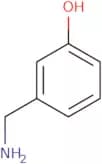
CAS:3-(Aminomethyl)phenol is a potent inhibitor of growth factor receptor kinase (GRK) and protein kinase C. It has been shown to have inhibitory effects on cellular proliferation in mammalian cells and is being investigated as an adjuvant therapy for cancer treatment. 3-(Aminomethyl)phenol has also been shown to inhibit the enzyme cyclooxygenase-2, which is involved in the synthesis of prostaglandins. DISCUSSION: The carbonyl group of 3-(aminomethyl)phenol makes it a potent inhibitor of GRKs and protein kinases C. Kinases are enzymes that catalyze the addition of phosphate groups onto proteins, which affects their activity. As such, 3-(aminomethyl)phenol inhibits the activity of GRKs and protein kinases C by binding to the ATP-binding site, preventing ATP from binding and phosphorylating the enzyme's target proteinsFormula:C7H9NOPurezza:Min. 95%Peso molecolare:123.15 g/mol6,6-Dimethyl-1-heptene-4-yn-3-ol
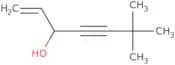
CAS:<p>6,6-Dimethyl-1-heptene-4-yn-3-ol is a chlorinating agent that is used in the production of epidermophyton. It also has antifungal properties and can be used as an antimycotic. 6,6-Dimethyl-1-heptene-4-yn-3-ol can be added to hydrochloric acid or magnesium chloride to form an acetylide. This agent has been shown to have selective chlorination activity at temperatures below 10°C. It is also capable of minimizing organometallic chloride catalysts and has been shown to reduce microsporum gypseum and microsporum titinium at pH 2.5.</p>Formula:C9H14OPurezza:Min. 95%Colore e forma:Colourless To Yellow LiquidPeso molecolare:138.21 g/molTetrabromophenol blue sodium salt
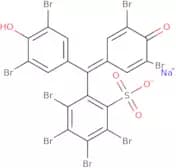
CAS:<p>Tetrabromophenol blue sodium salt is a dye that is used as an additive in the production of vinyl alcohol polymer films. Tetrabromophenol blue sodium salt can be used to measure albumin concentration and postexposure by adding phenyl groups to the molecule. The color of tetrabromophenol blue sodium salt changes upon exposure to radiation, which makes it useful for diagnostic purposes. It also has a hydrocarbon group that transforms into an insoluble form when exposed to evaporation, making it useful for titration methods. Tetrabromophenol blue sodium salt is relatively stable and labile in nature, making it susceptible to techniques such as pyrolysis, oxidation, or reduction.</p>Formula:C19H5Br8NaO5SPurezza:Min. 95%Peso molecolare:1,007.53 g/mol3-Nitropropanol
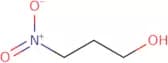
CAS:<p>3-Nitropropanol is an inhibitor of the enzyme nitrite reductase, which is involved in the conversion of nitrite to nitric oxide. 3-Nitropropanol is a dietary supplement that has been shown to have a significant inhibitory effect on the growth of cancer cells and microbial metabolism. Nitrite levels were found to be reduced by 25% in mice treated with this substance. The analytical method for measuring 3-nitropropanol was developed using a type strain and fatty acid standards.</p>Formula:C3H7NO3Purezza:Min. 95%Peso molecolare:105.09 g/molTrichloroethanol
CAS:<p>Trichloroethanol is an alkanoic acid that is used as a solvent and a laboratory reagent. It is also a potential bioactive compound. Trichloroethanol has been shown to have neurotoxic effects in rats, causing histological changes in the trigeminal nerve, which may be due to its inhibition of mitochondrial energy metabolism. Trichloroethanol has been shown to inhibit the activity of matrix metalloproteinase-9 (MMP-9) in human serum and the α1 subunit of Toll-like receptor (TLR) 4 in human monocytes. This compound has also been shown to be toxic to rat liver microsomes at high concentrations.</p>Formula:C2H3Cl3OPurezza:Min. 98.5%Colore e forma:Clear LiquidPeso molecolare:149.4 g/molN-Boc-3-Azetidinol
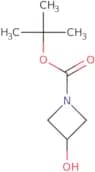
CAS:This linker is chemically stable and not cleavable under standard intracellular or extracellular conditions. N-Boc-3-Azetidinol is also a versatile organic intermediate used primarily in the pharmaceutical industry for synthesizing a wide range of drugs, including antibacterials, immunosuppressants, and cancer therapies.Formula:C8H15NO3Purezza:Min. 95%Peso molecolare:173.21 g/mol2-Bromo-6-chlorophenol
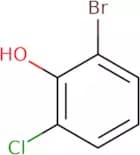
CAS:2-Bromo-6-chlorophenol is a reactive, thiourea-containing compound that undergoes catalytic reactions. 2-Bromo-6-chlorophenol reacts with sulfate in water to form chlorine radicals, which react with other organic compounds to produce chlorinated organic compounds. This reaction can be used for the oxidation of phenols and alcohols to yield chlorinated products. The yields of this process depend on the concentration of acetonitrile used in the reaction. Acetonitrile is also required for the conversion of dichlorinated benzenes to brominated products.Formula:C6H4BrClOPurezza:Min. 95%Peso molecolare:207.45 g/mol4-Chloro-6,7-dimethoxyquinoline
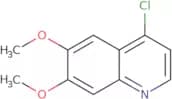
CAS:4-Chloro-6,7-dimethoxyquinoline (4C6DMQ) is a potent inhibitor of the growth of prostate cancer cells. 4C6DMQ is an analog of chloropropyl chloride, which inhibits the growth of epidermal growth factor receptor (EGFR). The binding site for 4C6DMQ on EGFR is the same as that for chloropropyl chloride. 4C6DMQ inhibits EGFR by preventing the activation of downstream signaling cascades, leading to a decrease in cell proliferation and tumor size. The IC50 values for 4C6DMQ are approximately 10 times higher than those for chloropropyl chloride. This drug has been shown to be more potent than other inhibitors of EGFR such as erlotinib and gefitinib.Formula:C11H10ClNO2Purezza:Min. 95%Colore e forma:White PowderPeso molecolare:223.66 g/molDimethyl benzyl carbinol acetate
CAS:<p>Dimethyl benzyl carbinol acetate is a polymer that forms a film on the skin and prevents water loss. It has been shown to have enzyme-inhibiting properties, which may be due to its ability to prevent geranyl production. Dimethyl benzyl carbinol acetate has also been used as a sealant in microcapsules, which are then broken down by enzymes in order to release the contents of the capsule. Dimethyl benzyl carbinol acetate can also be used as an antimicrobial agent, where it inhibits bacterial cell growth by interfering with fatty acid synthesis.</p>Purezza:Min. 95%2,2,6,6-Tetramethyl-4-piperidinol 1-oxyl, free radical
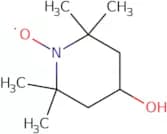
CAS:2,2,6,6-Tetramethyl-4-piperidinol 1-oxyl (TEMPO) is a reactive oxygen species that belongs to the group of nitroxide radicals. It can be used as a radical scavenger and has been shown to inhibit the production of pro-apoptotic proteins in human macrophages. TEMPO has also been shown to bind to DNA and prevent the binding of HIV viral protein gp120. TEMPO can be used as an inhibitor for glycol ethers in laboratory experiments. The most common use is as a water vapor scavenger during polymerization reactions in organic chemistry.Formula:C9H18NO2Purezza:Min. 98 Area-%Colore e forma:Orange SolidPeso molecolare:172.24 g/mol5-Bromoquinolin-6-amine
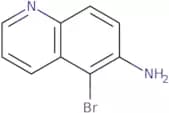
CAS:<p>Please enquire for more information about 5-Bromoquinolin-6-amine including the price, delivery time and more detailed product information at the technical inquiry form on this page</p>Formula:C9H7BrN2Purezza:Min. 95%Peso molecolare:223.07 g/mol4-Fluoromethyl-alpha-methylbenzyl alcohol
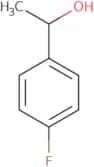
CAS:<p>4-Fluoromethyl-alpha-methylbenzyl alcohol is a nonclassical molecule that has been synthesized. This molecule has been modeled computationally and the results indicate that it exhibits a planar geometry with a diastereomeric ratio of 1:1. The theoretical calculations show that the reaction of 4-fluoromethyl-alpha-methylbenzyl alcohol with water is exothermic, which would result in the formation of an intermediate hydroxide ion. Kinetic studies have shown that this molecule can undergo transfer reactions and dehydrogenation reactions, both of which are possible mechanisms for its reactivity.</p>Formula:C8H9FOPurezza:Min. 95%Peso molecolare:140.15 g/molBis[α,α-bis(trifluoromethyl)benzenemethanolato]diphenylsulfur
CAS:A dehydration agent. Also called Martin Sulfurane Dehydrating agentFormula:C30H20F12O2SPurezza:Min. 95%Peso molecolare:672.53 g/mol2-Propyl-1-heptanol
CAS:<p>2-Propyl-1-heptanol (2PH) is a phenolic compound that has been used as a sealant for wounds. 2PH forms a chemical bond with chloride ions, which is the reaction mechanism for its effectiveness. 2PH has been shown to be effective in human data, but the carcinogenic potential of this chemical is unknown. This chemical may also have pharmaceutical uses, such as being an ingredient in pharmaceutical preparations. 2PH is toxic to cells and can cause cell death by interfering with fatty acid and protein synthesis. The toxicity of 2PH varies depending on the type of cell it comes into contact with and other factors, such as its concentration or duration of exposure.</p>Formula:C10H22OPurezza:Min. 95%Colore e forma:Clear Colourless LiquidPeso molecolare:158.28 g/molIsoprenaline sulphate dihydrate
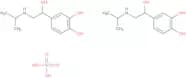
CAS:<p>4-[1-Hydroxy-2-[(1-methylethyl)amino]ethyl]-1,2-benzenediol sulfate dihydrate (benserazide) is a cholinergic agent that has been shown to increase the release of acetylcholine by acting as an agonist at nicotinic receptors. It increases the amount of acetylcholine released in the brain and can be used for the treatment of Alzheimer's disease. Benserazide has also been shown to have a depressant effect on the respiratory system, which can be beneficial for lung diseases. This drug also has anti-inflammatory properties and can inhibit growth factor synthesis.</p>Formula:C22H34N2O6·H2SO4·2H2OPurezza:Min. 95%Colore e forma:PowderPeso molecolare:520.59 g/mol2-Chloro-5-nitrobenzyl alcohol
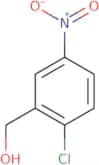
CAS:<p>2-Chloro-5-nitrobenzyl alcohol is a vibrational spectroscopy technique that can be used to study the interactions between molecules. The technique can be used to measure the population of molecules in a system and to determine the thermodynamic properties of systems. It has been shown that 2-chloro-5-nitrobenzyl alcohol is an inhibitor for macrocyclic compounds with electron withdrawing groups, such as carbonyl groups. This molecule has been studied using statistical strategies, which have been shown to be effective in predicting the binding affinity of 2-chloro-5-nitrobenzyl alcohol and other inhibitors for macrocyclic compounds.</p>Formula:C7H6ClNO3Purezza:Min. 95%Colore e forma:PowderPeso molecolare:187.58 g/mol





![Bis[α,α-bis(trifluoromethyl)benzenemethanolato]diphenylsulfur](/_next/image/?url=https%3A%2Fstatic.cymitquimica.com%2Fproducts%2F3D%2Fthumb-webp%2FFB98713.webp&w=3840&q=75)