Alcoli
Gli alcoli sono una vasta gamma di molecole organiche derivate dagli idrocarburi che contengono uno o più gruppi idrossilici (gruppo OH). Questi composti sono essenziali in varie reazioni chimiche e sono ampiamente utilizzati in laboratorio per la sintesi, come solventi e in chimica analitica. Da CymitQuimica, offriamo alcoli di alta qualità preparati per l'uso in laboratorio, supportando le tue ricerche e applicazioni industriali con prodotti affidabili ed efficaci. La nostra selezione garantisce che tu abbia gli alcoli giusti per le tue esigenze specifiche, sia per il lavoro di laboratorio di routine che per progetti di ricerca specializzati.
Sottocategorie di "Alcoli"
Trovati 5814 prodotti di "Alcoli"
Ordinare per
Purezza (%)
0
100
|
0
|
50
|
90
|
95
|
100
Cloprostenol sodium
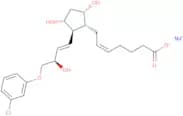
CAS:Cloprostenol sodium is a prostaglandin analogue that is used in veterinary medicine. It is administered intravenously to induce ovulation, improve estrus and fertility, or control luteal function in cows. Cloprostenol sodium has been shown to have a positive effect on the ovulatory process by stimulating the release of endogenous progesterone and estradiol benzoate from the follicle cells. This drug also increases luteal activity by increasing the production of progesterone and inhibiting its metabolism. Cloprostenol sodium has been shown to be effective in inducing ovulation in pregnant women who do not respond to clomiphene citrate (CC) alone. Cloprostenol sodium can also be used for induction of labour in pregnant women with an uncomplicated pregnancy at term, where it is given intravenously or intramuscularly, but intravaginally or orally are not recommended.Formula:C22H28ClNaO6Purezza:Min. 95%Colore e forma:White PowderPeso molecolare:446.9 g/mol3-Piperidin-1-ylpropan-1-ol
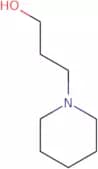
CAS:3-Piperidin-1-ylpropan-1-ol is a substance that is structurally related to biperiden and has affinity for the H3 receptor. It has been shown to have a high affinity for the H3 receptor, which is found in high concentration in the rat brain. 3-Piperidin-1-ylpropan-1-ol has been shown to have antagonistic activity against neuropathic pain in rats, by inhibiting the release of norepinephrine from nerve endings. This substance also has antihistaminic properties, which may be due to its ability to inhibit histamine release. 3-Piperidin-1-ylpropan-1-ol is an enantiomer of piperidine, with a slightly higher affinity for the H3 receptor than its mirror image. The racemic mixture isomeric form (i.e., both enantiomers) inhibits the H3 receptor with an equal potency,Formula:C8H17NOPurezza:Min. 95%Colore e forma:Colorless Clear LiquidPeso molecolare:143.23 g/molXylenol orange
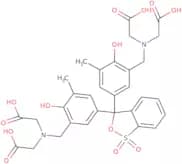
CAS:Xylenol orange is a dye used as a pH indicator. It is typically present as the monosodium salt of xylenol and has an optimum concentration of 0.2-0.5 mg/L. Xylenol orange is highly soluble in water and can be used in aqueous solutions, but it should not be used with strong acids or alkalis, as they will cause the dye to precipitate out of solution. Xylenol orange reacts with acidic substances and changes colour from orange to yellow at pH 7.0 or higher. The mechanism behind this reaction involves the deprotonation of xylenol by acid, followed by protonation of the conjugate base, which then undergoes electrophilic substitution by hydroxide ions (OH−). This reaction is shown below: XO+H+→XO−+H+ XO−+OH−→HO−+X The LangmuirFormula:C31H32N2O13SPurezza:Min. 95%Peso molecolare:672.66 g/mol6,7-Dihydro-5H-quinolin-8-one
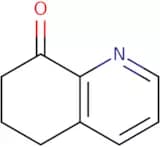
CAS:<p>6,7-Dihydro-5H-quinolin-8-one is a quinoline derivative that can be used to treat cancer. It is an inhibitor of topoisomerase II, which is an enzyme that catalyzes the formation of single stranded breaks in DNA and then reseals them. The inhibition of topoisomerase II leads to the accumulation of single strand breaks, which causes cell death. 6,7-Dihydro-5H-quinolin-8-one has been shown to have inhibitory activity against cancer cells in laboratory tests and also inhibits the growth of breast cancer cells in mice. This compound also has a number of other biological effects including being a ligand for some receptors and amine oxidases as well as having antihistamine properties.</p>Formula:C9H9NOPurezza:Min. 95%Colore e forma:White PowderPeso molecolare:147.17 g/molcis-4-Cyclopentene-1,3-diol
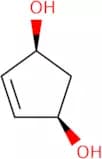
CAS:<p>cis-4-Cyclopentene-1,3-diol is a useful chemical intermediate that can be converted to diacetate, acetylation, or chloroacetate. It has a reactive functional group that can be used for synthesizing polymers and other compounds. cis-4-Cyclopentene-1,3-diol is also an excellent substrate for lipase reactions and it reacts with hydrogen fluoride to give desired products. This section has conformational properties that make it suitable for hydrogen bonding and can act as a ligand in coordination chemistry. cis-4-Cyclopentene-1,3-diol is also able to undergo substitution at the carbonyl carbon atom by various reagents such as fluorine.</p>Formula:C5H8O2Purezza:Min. 95%Colore e forma:PowderPeso molecolare:100.12 g/mol1,6-Hexanediol
CAS:<p>1,6-Hexanediol is a diol that can be used as a control agent for radiation-sensitive polymeric matrices. It has been shown to bind to the hydroxyl groups of polymers and form hydrogen bonds with other molecules. 1,6-Hexanediol also reacts with trifluoroacetic acid in an electrochemical impedance spectroscopy study to produce low energy electrons. The kinetic data show that the optimum concentration of 1,6-hexanediol is between 0.1 and 0.2 M and the activation energies are in the range of 4.0 - 7.0 kcal/mol.</p>Formula:C6H14O2Purezza:Min. 95%Colore e forma:PowderPeso molecolare:118.17 g/mol(D-Ala2,N-Me-Phe4,methionin(O)-ol5)-Enkephalin trifluoroacetate salt
CAS:<p>D-Ala2,N-Me-Phe4,methionin(O)-ol5)-Enkephalin trifluoroacetate salt H-Tyr-D-Ala-Gly-N-Me-Phe-methionin(O)-ol trifluoroacetate salt is an analog of the endocannabinoid neurotransmitter, anandamide. It has been shown to be effective in the treatment of autoimmune diseases such as multiple sclerosis and inflammatory bowel disease. D-(3R)-3-[(1S,2R,3R,5R) -3-[2-(2,6 dichlorophenyl)ethenyl] -1H -indole]-1 -butanamine trifluoroacetate salt has been shown to inhibit the replication of a number of viruses including human immunodeficiency virus type 1 (HIV). This drug also inhibits the growth of organisms that are resistant</p>Formula:C29H41N5O7SPurezza:Min. 95%Peso molecolare:603.73 g/mol2,2'-Azanediylbis(propan-1-ol)
CAS:Please enquire for more information about 2,2'-Azanediylbis(propan-1-ol) including the price, delivery time and more detailed product information at the technical inquiry form on this pageFormula:C6H15NO2Purezza:Min. 95%Peso molecolare:133.19 g/mol6-Bromoisoquinoline
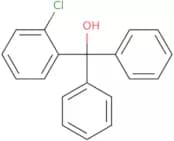
CAS:<p>6-Bromoisoquinoline is a tetradentate ligand that can be used as a molecular model to study the binding of metal ions and organic molecules. 6-Bromoisoquinoline has been shown to bind covalently and noncovalently with phosphate groups on the surface of Caco-2 cells and to induce surface-enhanced Raman spectroscopy. This ligand has a high nucleophilicity and reacts readily with chloride, which is an acidic functional group. The reaction products are hydrochloric acid, trifluoroacetic acid, or both. 6-Bromoisoquinoline can also act as an allosteric modulator in some enzymes, such as phosphofructokinase in glycolysis.</p>Formula:C9H6BrNPurezza:Min. 95%Peso molecolare:208.05 g/mol(2-Chlorophenyl)diphenylmethanol
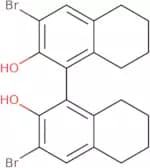
CAS:<p>2-Chlorophenyl)diphenylmethanol is an antifungal drug that blocks the function of a calcium ionophore in fungal cells. It has been shown to be effective against a variety of filamentous fungi, including Aspergillus fumigatus, Candida albicans, and Trichosporon cutaneum. This drug is used as a topical antifungal agent for treatment of skin infections caused by these fungi. 2-Chlorophenyl)diphenylmethanol has been shown to have anti-inflammatory properties in animal models of kidney fibrosis and cell binding. Clinical data suggests that it can be used for the prevention or treatment of stem cell transplantation complications such as graft versus host disease and leukemia.</p>Formula:C19H15ClOPurezza:Min. 95%Colore e forma:PowderPeso molecolare:294.77 g/mol(S)-3,3'-Dibromo-5,5',6,6',7,7',8,8'-octahydro-1,1'-binaphthalene-2,2'-diol
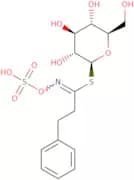
CAS:<p>(S)-3,3'-Dibromo-5,5',6,6',7,7',8,8'-octahydro-1,1'-binaphthalene-2,2'-diol is a synthetic compound that has been prepared by a Diels-Alder reaction. It is used as an asymmetric synthesis catalyst for the production of optically active compounds. The ligands are catalysts for the reaction and can be easily replaced with different ligands to produce different products. This compound has been researched for its potential use in the production of pharmaceuticals and other chemicals.</p>Formula:C20H20Br2O2Purezza:Min. 95%Colore e forma:White To Yellow SolidPeso molecolare:452.18 g/molPhenethyl glucosinolate potassium salt
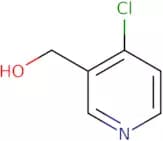
CAS:Phenethyl glucosinolate potassium salt is a compound found in plants belonging to the Brassicaceae family. It has been shown to be highly toxic to larvae of the cabbage butterfly and other insects that feed on brassica plants. Phenethyl glucosinolate potassium salt has been shown to inhibit the development of these insects, probably by inhibiting protein synthesis in the insect's gut. The major sulfur-containing compound in this product is gluconasturtiin, which has been shown to inhibit growth of pekinensis at high temperatures. This compound also inhibits radiation-induced DNA damage and does not show significant effects on nonsignificant organisms such as yeast and mold.Formula:C15H20NO9S2KPurezza:Min. 95%Colore e forma:PowderPeso molecolare:461.55 g/mol2-Chloro-5-pyridylcarbinol
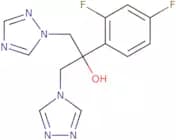
CAS:2-Chloro-5-pyridylcarbinol is an alkene that features a five-membered ring. It is a conformationally rigid molecule, which means it has no rotational or vibrational barriers. The molecule can be classified as a tricyclic heterocycle because the carbon atoms are arranged in three rings. The analogues of this compound feature six-membered carbocycles and intramolecular cycloadditions. 2-Chloro-5-pyridylcarbinol also constitutes one of the azomethine adducts of nicotine, which is a type of tricyclic heterocycle.Formula:C6H6ClNOPurezza:Min. 95%Peso molecolare:143.57 g/mol2-(2,4-Difluorophenyl)-1-(1H-1,2,4-triazol-1-yl)-3-(4H-1,2,4-triazol-4-yl)propan-2-ol
CAS:<p>Please enquire for more information about 2-(2,4-Difluorophenyl)-1-(1H-1,2,4-triazol-1-yl)-3-(4H-1,2,4-triazol-4-yl)propan-2-ol including the price, delivery time and more detailed product information at the technical inquiry form on this page</p>Formula:C13H12F2N6OPurezza:Min. 95%Peso molecolare:306.27 g/mol2-[3-(S)-[3-(2-(7-Chloro-2-quinolinyl)ethenyl)phenyl]-3-hydroxypropyl]benzoic acid methyl ester
CAS:<p>2-[3-(S)-[3-(2-(7-Chloro-2-quinolinyl)ethenyl)phenyl]-3-hydroxypropyl]benzoic acid methyl ester is a synthetic compound that can be used as a reagent in the synthesis of polynucleotides and polypeptides. It can also be used as an inhibitor of ketoreductase, which is an enzyme involved in the synthesis of fatty acids and ketones. 2-[3-(S)-[3-(2-(7-Chloro-2-quinolinyl)ethenyl)phenyl]-3-hydroxypropyl]benzoic acid methyl ester has been shown to inhibit the growth of wild type and mutant strains of E. coli. The molecular weight of this compound is 439.</p>Formula:C28H24ClNO3Purezza:Min. 95%Peso molecolare:457.95 g/molPhenyl ethyl alcohol
CAS:Prodotto controllato<p>Phenyl ethyl alcohol is a chemical compound that is used as an antiseptic. It is also known for its ability to reduce the surface tension of water, which makes it useful for cleaning and degreasing. Phenyl ethyl alcohol has been shown to be up-regulated in genes that are responsible for transcriptional regulation, as well as in genes that encode proteins involved in cellular metabolism. This compound has been used as a model system to study hydrogen bonds and biological samples. The structural biology of phenyl ethyl alcohol has been studied using detergent compositions and fatty acid models.</p>Formula:C8H10OPurezza:Min. 80%Colore e forma:Clear LiquidPeso molecolare:122.16 g/mol2-(Difluoromethoxy)Phenol
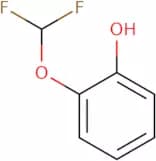
CAS:<p>2-(Difluoromethoxy)Phenol is a purine derivative and pyrimidine derivative. It has been shown to inhibit the growth of cancer cells in vitro and in vivo. 2-(Difluoromethoxy)phenol inhibits multidrug resistance by inhibiting the transport of drugs into cells and thereby preventing their accumulation. As a result, it suppresses inflammatory diseases and autoimmune diseases. The hydroxyl group in this compound can be replaced with fluorine or nitro groups to generate new derivatives with different properties. Piperidine can also be added to this molecule to create an analogue that is more potent than 2-(difluoromethoxy)phenol and has a longer duration of action.</p>Formula:C7H6F2O2Purezza:Min. 95%Peso molecolare:160.12 g/molZ-D-Alaninol
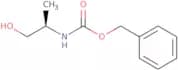
CAS:<p>Please enquire for more information about Z-D-Alaninol including the price, delivery time and more detailed product information at the technical inquiry form on this page</p>Formula:C11H15NO3Purezza:Min. 95%Peso molecolare:209.24 g/molOctreotide trifluoroacetate salt (Dimer, Parallel) (
<p>Please enquire for more information about Octreotide trifluoroacetate salt (Dimer, Parallel) ( including the price, delivery time and more detailed product information at the technical inquiry form on this page</p>Formula:C98H132N20O20S4Purezza:Min. 95%Peso molecolare:2,038.48 g/mol



![2-[3-(S)-[3-(2-(7-Chloro-2-quinolinyl)ethenyl)phenyl]-3-hydroxypropyl]benzoic acid methyl ester](/_next/image/?url=https%3A%2Fstatic.cymitquimica.com%2Fproducts%2F3D%2Fthumb-webp%2FFC20038.webp&w=3840&q=75)