Alcoli
Gli alcoli sono una vasta gamma di molecole organiche derivate dagli idrocarburi che contengono uno o più gruppi idrossilici (gruppo OH). Questi composti sono essenziali in varie reazioni chimiche e sono ampiamente utilizzati in laboratorio per la sintesi, come solventi e in chimica analitica. Da CymitQuimica, offriamo alcoli di alta qualità preparati per l'uso in laboratorio, supportando le tue ricerche e applicazioni industriali con prodotti affidabili ed efficaci. La nostra selezione garantisce che tu abbia gli alcoli giusti per le tue esigenze specifiche, sia per il lavoro di laboratorio di routine che per progetti di ricerca specializzati.
Sottocategorie di "Alcoli"
Trovati 5814 prodotti di "Alcoli"
Ordinare per
Purezza (%)
0
100
|
0
|
50
|
90
|
95
|
100
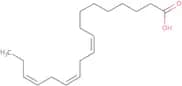
Linolenic acid - 85%
CAS:Linolenic acid is a polyunsaturated fatty acid that is found in plants, animals, and human cells. Linolenic acid has been shown to suppress the growth of cancer cells by inhibiting the production of linoleic acid, which can stimulate the growth of cancer cells. Linolenic acid has also been shown to cause skin reactions such as erythema and pruritus when applied topically or taken orally. Linolenic acid may be used for the treatment of ovarian follicles. In addition, linolenic acid has been shown to have an allergic response in humans when it is injected into the vein. It is important to note that linolenic acid can inhibit T-cell proliferation and cytokine production in a dose-dependent manner. Furthermore, linolenic acid inhibits lipopolysaccharide-induced acute lung injury in mice by reducing inflammatory cell infiltration and neutrophil activation.Formula:C18H30O2Purezza:Min. 95%Peso molecolare:278.43 g/mol5,5'-(1-Methylethylidene)-bis-[1,1'-(bisphenyl)-2-ol]
CAS:<p>5,5'-(1-Methylethylidene)-bis-[1,1'-(bisphenyl)-2-ol] (BPE) is an organic compound that is used in coatings. BPE has a high thermal expansion coefficient and can be used as a plasticizer to make polymers more flexible. BPE hydrolyzes under acidic conditions to produce mercaptoacetic acid, which is corrosive and toxic. It also reacts with proteins, like albumin, at pH 7.4. In wastewater treatment systems, BPE can react with chlorine at a rate of 3% per day to form chlorobenzene, which is known to cause cancer in humans. The use of BPE in the bioreactor process leads to the release of reactive functional groups that are not easily degraded by microbes. In addition, it has been shown that this chemical binds to nuclear hormone receptors and has estrogenic effects on animals.</p>Formula:C27H24O2Purezza:Min. 98 Area-%Colore e forma:PowderPeso molecolare:380.48 g/mol7-[(2S,3R)-3-Amino-2-methyl-azetidin-1-yl]-1-(2,4-difluorophenyl)-6-fluoro-4-oxo-quinoline-3-carboxylic acid
CAS:<p>7-[(2S,3R)-3-Amino-2-methyl-azetidin-1-yl]-1-(2,4-difluorophenyl)-6-fluoro-4-oxo-quinoline-3-carboxylic acid (ABT) is a drug that binds to bacterial enzymes and inhibits their ability to synthesize proteins. ABT is a conjugate of fluoroquinolone and an amino acid. As the drug is degradable by hydrolysis, it has been shown to be less toxic in Sprague Dawley rats than other fluoroquinolones. This drug has been used in diagnostic tests as a ligand for affinity ligands, but has not been approved for human use. The drug also possesses functional groups that are important for binding to reconstituted enzymes.br>br>ABT's ester linkages are degradable by hydrolysis and can be</p>Formula:C20H16F3N3O3Purezza:Min. 95%Peso molecolare:403.35 g/mol10-Fluorodecan-1-Ol
CAS:Please enquire for more information about 10-Fluorodecan-1-Ol including the price, delivery time and more detailed product information at the technical inquiry form on this pageFormula:C10H21FOPurezza:Min. 95%Peso molecolare:176.27 g/mol1-Oleoyl-2-docosahexaenoyl phosphatidylcholine
CAS:1-Oleoyl-2-docosahexaenoyl phosphatidylcholine is a fatty acid derived from the biogenesis of phosphatidylcholine, which is an important component of all cell membranes.Formula:C48H82NO8PPurezza:Min. 95%Peso molecolare:832.14 g/mol2-[(Ethylamino)methyl]-4-aminophenol dihydrochloride
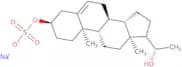
CAS:<p>Please enquire for more information about 2-[(Ethylamino)methyl]-4-aminophenol dihydrochloride including the price, delivery time and more detailed product information at the technical inquiry form on this page</p>Formula:C9H14N2O•(HCl)2Purezza:Min. 95%Colore e forma:PowderPeso molecolare:239.14 g/mol20a-Dihydro pregnenolone 3-sulfate sodium salt
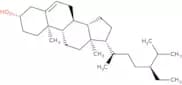
CAS:<p>Please enquire for more information about 20a-Dihydro pregnenolone 3-sulfate sodium salt including the price, delivery time and more detailed product information at the technical inquiry form on this page</p>Formula:C21H33NaO5SPurezza:Min. 95%Peso molecolare:420.54 g/mol(3b,24S)-Stigmast-5-En-3-Ol
CAS:Prodotto controllato<p>(3b,24S)-Stigmast-5-En-3-Ol is a natural compound that belongs to the group of beta-sitosterols. It is used in cosmetics, as well as in water vapor treatments for skin tumors. This compound has antiinflammatory activity and cholesterol lowering effects. It also has a protective effect on the liver against hepatotoxicity induced by p-hydroxybenzoic acid and other compounds. (3b,24S)-Stigmast-5-En-3-Ol can be found in wastewater treatment plants where it binds with heavy metals such as lead and zinc. The toxicity of this compound has been studied extensively and it is not toxic to cells at concentrations below 1mM.</p>Formula:C29H50OPurezza:Min. 95%Colore e forma:PowderPeso molecolare:414.71 g/mol2-Hydroxyamino-3-methyl-3H-imidazo[4,5-f]quinoline
CAS:2-Hydroxyamino-3-methyl-3H-imidazo[4,5-f]quinoline (2HAIQ) is a reactive compound that binds to DNA. It has been shown to be a potent inhibitor of the enzyme cytosolic protein kinase C, which plays an important role in regulating cellular metabolism. 2HAIQ also inhibits the activity of enzymes such as hydroxylases and polymerases. The binding of 2HAIQ to DNA is thought to inhibit transcription by preventing RNA polymerase from transcribing DNA. 2HAIQ may also inhibit replication by binding to the dinucleotide phosphate molecule, which is essential for DNA synthesis.Formula:C11H10N4OPurezza:Min. 95%Peso molecolare:214.22 g/mol2,2-Dimethyl-1-propanol
CAS:Formula:C5H12OPurezza:>98.0%(GC)Colore e forma:White to Almost white powder to lumpPeso molecolare:88.154-Amino-2-methyl-1-butanol
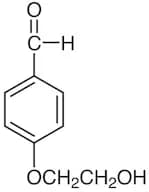
CAS:Formula:C5H13NOPurezza:>98.0%(GC)(T)Colore e forma:Colorless to Almost colorless clear liquidPeso molecolare:103.174-(2-Hydroxyethoxy)benzaldehyde
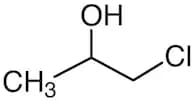
CAS:Formula:C9H10O3Purezza:>98.0%(GC)Colore e forma:White to Light yellow to Light orange powder to crystalPeso molecolare:166.181-Chloro-2-propanol (contains ca. 25% 2-Chloro-1-propanol)
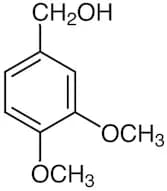
CAS:Formula:C3H7ClOPurezza:>70.0%(GC)Colore e forma:Colorless to Light yellow clear liquidPeso molecolare:94.54Veratryl Alcohol
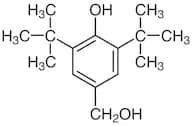
CAS:Formula:C9H12O3Purezza:>98.0%(GC)Colore e forma:Colorless to Light yellow clear liquidPeso molecolare:168.192,6-Di-tert-butyl-4-hydroxymethylphenol
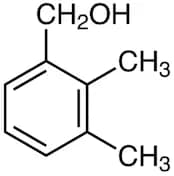
CAS:Formula:C15H24O2Purezza:>97.0%(GC)Colore e forma:White to Yellow to Orange powder to crystalPeso molecolare:236.362,3-Dimethylbenzyl Alcohol
CAS:Formula:C9H12OPurezza:>98.0%(GC)Colore e forma:White to Orange to Green powder to crystalPeso molecolare:136.19

![5,5'-(1-Methylethylidene)-bis-[1,1'-(bisphenyl)-2-ol]](/_next/image/?url=https%3A%2Fstatic.cymitquimica.com%2Fproducts%2F3D%2Fthumb-webp%2FFM29711.webp&w=3840&q=75)
![7-[(2S,3R)-3-Amino-2-methyl-azetidin-1-yl]-1-(2,4-difluorophenyl)-6-fluoro-4-oxo-quinoline-3-carbo…](/_next/image/?url=https%3A%2Fstatic.cymitquimica.com%2Fproducts%2F3D%2Fthumb-webp%2FFA30404.webp&w=3840&q=75)


![2-[(Ethylamino)methyl]-4-aminophenol dihydrochloride](/_next/image/?url=https%3A%2Fstatic.cymitquimica.com%2Fproducts%2F3D%2Fthumb-webp%2FFE23131.webp&w=3840&q=75)
![2-Hydroxyamino-3-methyl-3H-imidazo[4,5-f]quinoline](/_next/image/?url=https%3A%2Fstatic.cymitquimica.com%2Fproducts%2F3D%2Fthumb-webp%2FFH24305.webp&w=3840&q=75)