Eteri
Gli eteri sono composti organici contenenti un gruppo funzionale etere, caratterizzati da un atomo di ossigeno legato a due radicali idrocarburici. Questi composti sono preziosi nella sintesi e servono come solventi in varie reazioni chimiche. Da CymitQuimica, offriamo una selezione di eteri di alta qualità per supportare le vostre applicazioni di ricerca e industriali, garantendo risultati affidabili ed efficaci. La nostra gamma di eteri soddisfa diverse esigenze di laboratorio, dagli esperimenti di routine alla ricerca avanzata.
Trovati 40902 prodotti di "Eteri"
Ordinare per
Purezza (%)
0
100
|
0
|
50
|
90
|
95
|
100
4,4',4''-Trimethoxytrityl chloride
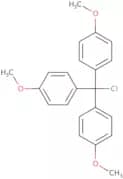
CAS:4,4',4''-Trimethoxytrityl chloride is a carbonyl compound that reacts with alkenyloxy groups to form alkaloids. It also reacts with halogen atoms to form halogenated products. 4,4',4''-Trimethoxytrityl chloride is used in the synthesis of ecteinascidins and acyl group compounds. This chemical can be used in the synthesis of alkaloids and alkenyloxy compounds. It has a reactive carbon atom that can be substituted by other organic groups.Formula:C22H21ClO3Purezza:Min. 95%Colore e forma:Off-White PowderPeso molecolare:368.85 g/mol2-(1-Ethoxyethoxy)ethyl)benzene
CAS:<p>2-(1-Ethoxyethoxy)ethyl)benzene is a versatile building block that is used in the synthesis of many organic compounds. It can be used as a reagent, speciality chemical, and research chemical for making new substances. 2-(1-Ethoxyethoxy)ethyl)benzene is also useful as an intermediate for other reactions or as a scaffold for complex molecules. It is soluble in most solvents and has a high purity level.</p>Formula:C12H18O2Purezza:Min. 95%Colore e forma:Colorless PowderPeso molecolare:194.27 g/mol2,4-Dimethoxy-5-methylbenzyl alcohol
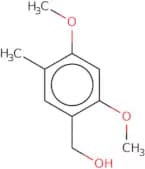
CAS:<p>2,4-Dimethoxy-5-methylbenzyl alcohol is a high quality chemical that is used as an intermediate for the synthesis of complex compounds. It has been used as a reagent and as a building block for the synthesis of other chemicals. This compound can be used to produce fine chemicals and research chemicals. 2,4-Dimethoxy-5-methylbenzyl alcohol has been shown to be useful in the production of versatile building blocks and reaction components.</p>Formula:C10H14O3Purezza:Min. 95%Peso molecolare:182.22 g/molEthoxydiphenylphosphine
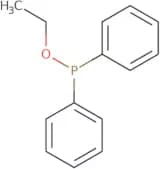
CAS:<p>Ethoxydiphenylphosphine is a synthetic compound that belongs to the group of phosphite compounds. It has been synthesized by reacting phenyl groups with trifluoroacetic acid, which gives unstable and reactive intermediate phosphonium salts. The more stable phenoxyethylphosphine can be obtained by reacting the hydroxyl group in the phosphonium salt with phosphorus pentoxide. Ethoxydiphenylphosphine has been used as a ligand for metal ions, such as copper and nickel. It also reacts with chloride to form a chelate ring, which makes it an excellent nucleophile.</p>Formula:C14H15OPPurezza:Min. 95%Colore e forma:Colorless PowderPeso molecolare:230.24 g/mol2',4-Dihydroxy-3-methoxychalcone
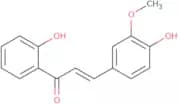
CAS:<p>2',4-Dihydroxy-3-methoxychalcone is a chalcone that has been shown to have reactive properties. The compound was found to be cytotoxic to cancer cells in the presence of neutrophils, and it has been shown to inhibit the growth of t47d cells in culture. There is also evidence that 2',4-Dihydroxy-3-methoxychalcone may help regulate the microflora in the gut, which may help prevent obesity and diabetes. In epidemiological studies, 2',4-Dihydroxy-3-methoxychalcone was found to be protective against cancer, but more research is required.</p>Formula:C16H14O4Purezza:Min. 95%Colore e forma:PowderPeso molecolare:270.28 g/mol3-(1,1,2,2-Tetrafluoroethoxy)phenol
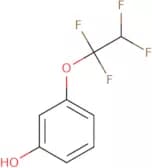
CAS:<p>3-(1,1,2,2-Tetrafluoroethoxy)phenol is a versatile building block that can be used in the synthesis of complex compounds. It is also a reagent and speciality chemical and has CAS No. 53997-99-2. 3-(1,1,2,2-Tetrafluoroethoxy)phenol is a useful building block for organic synthesis and has been used as a reaction component or scaffold.</p>Formula:C8H6F4O2Purezza:Min. 95%Peso molecolare:210.13 g/mol4,6-Dimethoxypyrimidin-2-amine
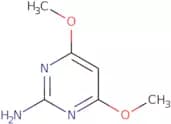
CAS:<p>4,6-Dimethoxypyrimidin-2-amine is a pyrimidine compound with the molecular formula C5H4N4O2. It can be prepared from the reaction of 2,4,6-trichloropyrimidine with formaldehyde and sodium cyanide in an organic solution. The properties of 4,6-Dimethoxypyrimidin-2-amine were studied on bacterial strain and human urine samples. This molecule is soluble in water and reacts with carboxylic acid to form a hydrogen bond. The nitrogen atoms show some reactivity towards copper chloride and hydrogen chloride.</p>Formula:C6H9N3O2Purezza:Min. 95%Colore e forma:White PowderPeso molecolare:155.15 g/mol3-Methoxy-4-(difluoromethoxy)benzaldehyde
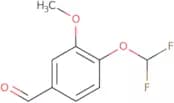
CAS:<p>3-Methoxy-4-(difluoromethoxy)benzaldehyde is a chemical compound that has been found to have anti-tumor properties. It inhibits tumor cells by inducing cell apoptosis. 3-Methoxy-4-(difluoromethoxy)benzaldehyde induces apoptosis in human carcinoma cells, with optimal activity at doses of 10 micromolar and higher. This chemical can be used as an anti-tumor agent because it shows no genotoxic effects, and has high yield with a low toxicity profile. When this compound is exposed to UV radiation, the formation of reactive oxygen species (ROS) increases the rate of cell death. 3-Methoxy-4-(difluoromethoxy)benzaldehyde also has anti-inflammatory properties, which may be due to its ability to inhibit prostaglandin synthesis.</p>Formula:C9H8F2O3Purezza:Min. 95%Colore e forma:Colourless To Pale Yellow LiquidPeso molecolare:202.15 g/mol1-(3-(Trifluoromethoxy)phenyl)-2-nitroethene
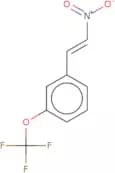
CAS:<p>1-(3-Trifluoromethoxy)phenyl)-2-nitroethene is a fluorinated aromatic compound that can be used as a building block for synthesis of pharmaceuticals, research chemicals, and other specialty chemicals. It is an intermediate that can be used in the production of other compounds. This compound may be used in pharmaceuticals to treat bacterial infections and inflammatory diseases. 1-(3-Trifluoromethoxy)phenyl)-2-nitroethene may also be utilized as a reaction component for synthesizing other organic compounds. It is soluble in solvents such as benzene, ether, chloroform, and acetone.</p>Formula:C9H6F3NO3Purezza:Min. 95%Peso molecolare:233.14 g/mol2-Fluoro-4-trifluoromethoxyphenyl boronic acid
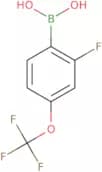
CAS:<p>2-Fluoro-4-trifluoromethoxyphenyl boronic acid is a fine chemical that has been used as a building block in organic synthesis. It is also a versatile intermediate, which can be used for the preparation of complex compounds. The compound is soluble in methanol, ethanol, and THF. It has a CAS number of 503309-10-2 and was first synthesized in 1960.</p>Formula:C7H5BF4O3Purezza:Min. 95%Colore e forma:White PowderPeso molecolare:223.92 g/molDiphenyliodanium 9,10-dimethoxyanthracene-2-sulfonate
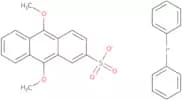
CAS:Diphenyliodanium 9,10-dimethoxyanthracene-2-sulfonate is an organic compound that belongs to the class of vinyl ethers. It can be used as a photosensitive material in photolithography. The mechanism of the photoinduced crosslinking reaction has been studied by mechanistic study and shown to proceed through a Friedel-Crafts type reaction followed by a transfer mechanism. This compound can also be prepared by irradiating an ammonium formate solution with ultraviolet light. Diphenyliodanium 9,10-dimethoxyanthracene-2-sulfonate is soluble in hydroxide solution and reacts with uv irradiation to produce radicals at the carbonyl group.Formula:C28H23IO5SPurezza:Min. 95%Peso molecolare:598.45 g/mol2-Difluoromethoxyphenylboronic acid pinacol ester
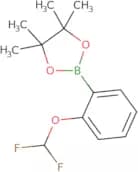
CAS:<p>2-Difluoromethoxyphenylboronic acid pinacol ester is a high quality reagent that can be used as a useful intermediate, fine chemical, or speciality chemical in reactions. This compound is an important building block for synthesizing other chemicals and can also be used to make novel compounds with pharmaceutical properties. 2-Difluoromethoxyphenylboronic acid pinacol ester is versatile and can be used in many different reactions. It has been reported to react with various other molecules to form new scaffolds and building blocks for use in organic synthesis.</p>Formula:C13H17BF2O3Purezza:Min. 95%Colore e forma:PowderPeso molecolare:270.08 g/mol3,3-Dimethoxy-2-butanone
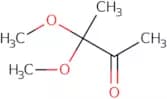
CAS:<p>3,3-Dimethoxy-2-butanone is a synthetic compound that is used as a biodiesel. It can be synthesized by the following synthetic scheme:</p>Formula:C6H12O3Purezza:Min. 95%Colore e forma:Clear LiquidPeso molecolare:132.16 g/mol4',6'-Dimethoxy-2'-hydroxy-3-methylacetophenone
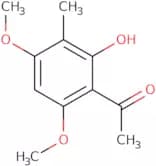
CAS:<p>4,6-Dimethoxy-2-hydroxy-3-methylacetophenone belongs to the group of natural products. It is a phenolic compound that has been isolated from the leaves of plants in the genus Eucalyptus. 4,6-Dimethoxy-2-hydroxy-3-methylacetophenone has shown cytotoxic activity against cancer cells in an animal bioassay and inhibits tumor growth by inhibiting protein synthesis. This compound also exhibits chemosystematic properties and may be useful for research on natural products.</p>Formula:C11H14O4Purezza:Min. 95%Colore e forma:White PowderPeso molecolare:210.23 g/mol2,3,4-Trimethoxybenzylamine
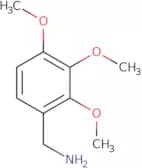
CAS:<p>2,3,4-Trimethoxybenzylamine is a versatile chemical that can be used as a building block for complex compounds. It has been shown to react with methanol and ammonia to produce 2,3,4-trimethoxyaniline. This chemical can also be used as a reagent or speciality chemical in research and synthesis.</p>Formula:C10H15NO3Purezza:Min. 95%Peso molecolare:197.23 g/mol2-Chloro-5-(4-chloro-5-difluoromethoxy-1-methylpyrazol-3-yl)-4-fluorophenoxyacetic acid monohydrate
CAS:<p>2-Chloro-5-(4-chloro-5-difluoromethoxy-1-methylpyrazol-3-yl)-4-fluorophenoxyacetic acid monohydrate (2,4,5P) is a phenoxy herbicide that has been shown to be an effective broadleaf and grass weed control agent. 2,4,5P is a granule formulation that can be applied by helicopter or ground equipment. It has synergistic effects with glyphosate when applied together to soybean plants and can be used in combination with other herbicides for more effective weed control.</p>Formula:C13H9Cl2F3N2O·H2OPurezza:Min. 95%Colore e forma:White PowderPeso molecolare:355.14 g/mol1-(3-(Trifluoromethoxy)phenyl)hydrazine hydrochloride
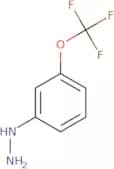
CAS:<p>1-(3-(Trifluoromethoxy)phenyl)hydrazine hydrochloride is a reagent that can be used as a reaction component in organic synthesis. It is also a useful scaffold for the preparation of high-quality research chemicals and other versatile building blocks. 1-(3-(Trifluoromethoxy)phenyl)hydrazine hydrochloride is an intermediate in the synthesis of complex compounds, such as fine chemicals.</p>Formula:C7H7F3N2OPurezza:Min. 95%Peso molecolare:192.14 g/mol4,4'-Bis(ethoxycarbonyl)-2,2'-bipyridine
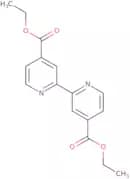
CAS:4,4'-Bis(ethoxycarbonyl)-2,2'-bipyridine (BEBCP) is a dithiolate chromophore. BEBCP has a redox potential of 1.3 volts and the electronic interaction of the carbonyl groups with the electron cloud of the bipyridine nucleus is responsible for this property. The photochemical properties of BEBCP can be systematically studied by using electrochemical data such as voltammetry and cyclic voltammetry. These methods are useful in determining the nature and constant of BEBCP as well as its interaction with ligands.Formula:C16H16N2O4Purezza:Min. 95%Colore e forma:PowderPeso molecolare:300.31 g/mol1-(3-Hydroxy-4-methoxyphenyl)-2-nitroethane
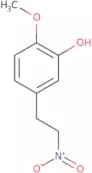
CAS:1-(3-Hydroxy-4-methoxyphenyl)-2-nitroethane is a chemical intermediate that can be used in the synthesis of other compounds. It is a fine chemical with many potential uses, as well as being a versatile building block for organic synthesis. As an example, 1-(3-Hydroxy-4-methoxyphenyl)-2-nitroethane can be used to synthesize the drug erythromycin. This chemical has been shown to have antihistamine and antiinflammatory properties.Formula:C9H11NO4Purezza:Min. 95%Peso molecolare:197.19 g/mol2-Methoxy-4-amino-5-ethylsulfonyl benzoic acid
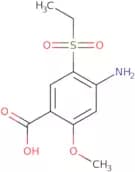
CAS:2-Methoxy-4-amino-5-ethylsulfonyl benzoic acid is a synthetic chemical that is used in wastewater treatment. It is also used as a precursor for the production of other chemicals, such as thiocyanates, peroxides, and bromoethanes. 2-Methoxy-4-amino-5-ethylsulfonyl benzoic acid can be produced by the reaction of hydrochloric acid with thionyl chloride. It reacts with aluminium to produce an acylation reaction that produces 2,2'-dithiodiethanol (DTE). The DTE can be reacted with an organic compound to produce a variety of products, including salicylic acid or bromoethanes.Formula:C10H13NO5SPurezza:Min. 95%Colore e forma:PowderPeso molecolare:259.28 g/mol