Amidi
Le amidi sono una vasta gamma di composti chimici che contengono almeno un anello eterociclico, che possiede atomi di almeno due elementi diversi nella struttura dell'anello, e almeno un gruppo ammidico (-CONH2). Questi composti sono cruciali nella sintesi di prodotti farmaceutici, polimeri e agrochimici. Le amidi presentano proprietà e reattività uniche, che le rendono intermedi preziosi nella sintesi organica. Presso CymitQuimica, offriamo una selezione completa di amidi di alta qualità per supportare le vostre esigenze di ricerca e industriali.
Trovati 16485 prodotti di "Amidi"
Ordinare per
Purezza (%)
0
100
|
0
|
50
|
90
|
95
|
100
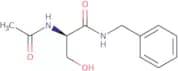
Desmethyl lacosamide
CAS:<p>Lacosamide is an antiepileptic drug that has been shown to be bioequivalent to the reference product, Gabapentin. Lacosamide binds to voltage-gated sodium channels and is thought to have a similar clinical profile as Gabapentin. It is used in the treatment of partial seizures (with or without secondary generalization) and adjunctive therapy for generalized seizures in adults and children aged 2 years or older. Lacosamide can interact with other drugs, such as gabapentin, by increasing their serum concentrations. This interaction may lead to adverse effects such as dizziness and confusion. Lacosamide plasma concentrations are measured using LC-MS/MS methods after a two-way crossover study in healthy human volunteers. This study also showed that lacosamide is excreted unchanged in urine samples at a rate of about 50% over 24 hours, indicating that it does not undergo extensive metabolism in humans.</p>Formula:C12H16N2O3Purezza:Min. 95%Colore e forma:White Off-White PowderPeso molecolare:236.27 g/molN-[2-[4-(Aminosulfonyl)-phenyl]-ethyl]-5-methyl-2-pyrazinecarboxamide
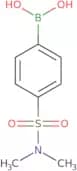
CAS:<p>Fluoxetine is a potent inhibitor of the enzyme cytochrome P450 (CYP) 2C19. The inhibition of CYP2C19 by fluoxetine may lead to an increase in the plasma concentration of other drugs that are metabolized by this enzyme, such as glipizide and hydroxycyclohexyl. Fluoxetine inhibits human uric acid secretion and increases plasma concentrations of uric acid. This drug also inhibits human erythrocyte dihydropyrimidine dehydrogenase, leading to increased blood levels of pyrimidines, especially cytotoxic ones like 6-fluoro-3-indoxyl-beta-D-galactopyranoside. Fluoxetine has been shown to have a protective effect against acetaminophen toxicity in rats because it enhances the conversion of acetaminophen to its less toxic metabolite N-acetylcysteine.</p>Formula:C14H16N4O3SPurezza:Min. 95%Colore e forma:White To Off-White SolidPeso molecolare:320.37 g/molN,N-Dimethyl 4-boronobenzenesulfonamide
CAS:<p>Please enquire for more information about N,N-Dimethyl 4-boronobenzenesulfonamide including the price, delivery time and more detailed product information at the technical inquiry form on this page</p>Formula:C8H12BNO4SPurezza:Min. 95%Peso molecolare:229.06 g/molN-(4-Bromonaphthalene-1-yl)-acetamide
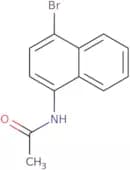
CAS:The N-(4-bromonaphthalene-1-yl)-acetamide is a high quality chemical that is used as a reaction component in the synthesis of pharmaceuticals and other speciality chemicals. It can also be used as a building block for creating more complex compounds. This compound is a versatile building block that can be used to synthesise many different types of products.Formula:C12H10BrNOPurezza:Min. 95%Peso molecolare:264.12 g/molBenzenesulphonamide
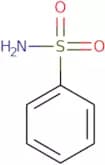
CAS:<p>Benzenesulphonamide is a biologically active compound that has been shown to bind to an integrin receptor, which mediates the attachment of leukocytes to the endothelium. It also binds to a basic protein found in human immunoglobulin. Benzenesulphonamide has been shown to have cytotoxic effects on synchronous fluorescence cells and can be used for the treatment of bowel disease. This drug has also been shown to be toxic in vitro and in vivo, with a moderate acute oral toxicity and low chronic oral toxicity. Benzenesulphonamide has been shown to act as a surfactant by binding with sodium dodecyl sulfate (SDS), which is commonly used in detergents, disinfectants, shampoos, soaps, and other household products. The biological properties of benzenesulphonamide are not well-known due to its low solubility in water.</p>Formula:C6H7NO2SPurezza:Min. 95%Peso molecolare:157.19 g/molN-(2-Aminoethyl)-4-(1,1-dimethylethyl)-2,6-dimethylbenzeneacetamide
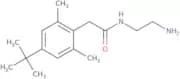
CAS:Please enquire for more information about N-(2-Aminoethyl)-4-(1,1-dimethylethyl)-2,6-dimethylbenzeneacetamide including the price, delivery time and more detailed product information at the technical inquiry form on this pageFormula:C16H26N2OPurezza:Min. 95%Colore e forma:PowderPeso molecolare:262.39 g/mol2-[(Diphenylmethyl)sulfinyl]-N-hydroxyacetamide
CAS:Prodotto controllato<p>Adrafinil is a prodrug. It is primarily metabolized in vivo to modafinil, resulting in very similar pharmacological effects.</p>Formula:C15H15NO3SPurezza:Min. 98 Area-%Peso molecolare:289.35 g/molRef: 3D-W-104904
1gPrezzo su richiesta5gPrezzo su richiesta10gPrezzo su richiesta500mgPrezzo su richiesta2500mgPrezzo su richiesta4-(2,3-Epoxypropoxy)phenylacetamide
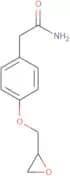
CAS:<p>Please enquire for more information about 4-(2,3-Epoxypropoxy)phenylacetamide including the price, delivery time and more detailed product information at the technical inquiry form on this page</p>Formula:C11H13NO3Purezza:Min. 95%Peso molecolare:207.23 g/molAcetohexamide
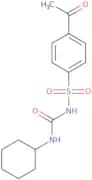
CAS:<p>Acetohexamide is a hypoglycemic drug that binds to the sulfonylurea receptor on pancreatic beta-cells and stimulates insulin release. It has been shown to have an oral hypoglycemic effect in humans, as well as in rats. Acetohexamide has been shown to inhibit the action of nonsteroidal anti-inflammatory drugs, such as indomethacin, through competitive inhibition. Acetohexamide also inhibits the enzyme activity of estradiol benzoate and acetohexamide hydrolase. This drug is not active against bacteria or fungi, but has been shown to be effective against some viruses. Acetohexamide is absorbed by the gastrointestinal tract and excreted unchanged in urine and feces. The drug does not bind to proteins and does not cross the blood-brain barrier.</p>Formula:C15H20N2O4SPurezza:Min. 95%Colore e forma:PowderPeso molecolare:324.4 g/molC8-Ceramide
CAS:<p>C8-Ceramide is a glucosylceramide that is involved in the production of C8-ceramides. It has shown to have potent apoptosis activity and inhibit p21, an inhibitor of cell cycle progression. C8-Ceramide also has been shown to be an inhibitor of tumor necrosis factor alpha (TNF-α) induced inflammation and apoptosis in mouse tumor cells. In addition, it can induce apoptosis by inhibiting the epidermal growth factor receptor (EGFR) pathway. This polymerase chain reaction (PCR) product was found to bind to DNA in a model system using calf thymus DNA as well as bacterial DNA gyrase and topoisomerase IV enzymes.</p>Formula:C26H51NO3Purezza:Min. 95%Peso molecolare:425.69 g/mol(S)-(+)-2-Phenylglycine amide
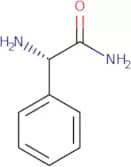
CAS:<p>(S)-(+)-2-Phenylglycine amide is a racemic mixture of the (R) and (S) enantiomers. It is an inhibitor of the enzyme, racemase, which converts one type of amino acid to another. This inhibition prevents allergic reactions that can be caused by acylation reactions or ph profiles in the body. The amino acid composition of this drug is unique because it contains an ester hydrochloride group, which does not exist in other drugs. The kinetic and thermodynamic properties of (S)-(+)-2-phenylglycine amide have been studied extensively, but there are no reports on its ability to inhibit inflammatory diseases. However, it has been shown that the β-amino acid in this drug can inhibit amide hydroxamic acids and stereoselective hydroxamic acids.</p>Formula:C8H10N2OPurezza:Min. 95%Peso molecolare:150.18 g/molN-(p-Hydroxyphenethyl)-N-(3-hydroxy-4-methoxybenzyl)formamide
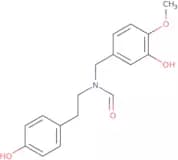
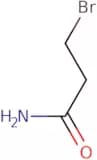
CAS:Prodotto controllato<p>Please enquire for more information about N-(p-Hydroxyphenethyl)-N-(3-hydroxy-4-methoxybenzyl)formamide including the price, delivery time and more detailed product information at the technical inquiry form on this page</p>Formula:C17H19NO4Purezza:Min. 95%Peso molecolare:301.34 g/mol3-Bromopropionamide
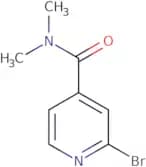
CAS:<p>3-Bromopropionamide is an antibacterial agent that inhibits bacterial growth by blocking the synthesis of proteins. It is a synthetic amide with significant antibacterial activity against S. aureus. 3-Bromopropionamide has been shown to be effective against drug-resistant bacteria, including those that are resistant to metalloid salts or alkylene compounds. This substance also has psychomimetic effects and may be useful for studying the kinetics of protein synthesis in cells. 3-Bromopropionamide can be used as a linker to attach other molecules to proteins, which could allow them to penetrate cell membranes more easily.</p>Formula:C3H6ONBrPurezza:Min. 95%Colore e forma:PowderPeso molecolare:151.99 g/mol2-Bromo-N,N-dimethylisonicotinamide
CAS:Please enquire for more information about 2-Bromo-N,N-dimethylisonicotinamide including the price, delivery time and more detailed product information at the technical inquiry form on this pageFormula:C8H9BrN2OPurezza:Min. 95%Peso molecolare:229.07 g/molbeta-Alanine amide HCl
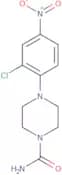
CAS:<p>Beta-alanine amide HCl is a research chemical that belongs to the class of beta-amino acid derivatives. Beta-alanine amide HCl is an activator of nucleophiles and can be used in analytical chemistry as an indicator for chloride ions. It has been shown to react with asparagine, yielding beta-alanine and ammonia. The reaction system can be analysed by measuring the elimination of a hydrogen chloride ion from the beta-alanine amide HCl molecule and the subsequent increase in pH. The analytical method has also been used to measure concentrations of deamination reactions and redox potentials at high concentrations.</p>Formula:C3H8N2O·HClPurezza:Min. 95%Colore e forma:White PowderPeso molecolare:124.57 g/mol4-(2-Chloro-4-nitrophenyl)piperazine-1-carboxamide
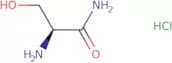
CAS:<p>Please enquire for more information about 4-(2-Chloro-4-nitrophenyl)piperazine-1-carboxamide including the price, delivery time and more detailed product information at the technical inquiry form on this page</p>Formula:C11H13ClN4O3Purezza:Min. 95%Peso molecolare:284.7 g/molL-Serine amide hydrochloride
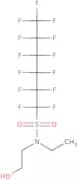
CAS:<p>L-Serine amide hydrochloride is a synthetic, anti-HIV drug that is used as an antiviral agent. It inhibits the viral life cycle by inhibiting the activity of acyclic nucleoside phosphonates, which are vital to viral DNA synthesis. L-Serine amide hydrochloride binds to the cyclopentane ring of guanosine and prevents its interaction with the enzyme ribonucleotide reductase. This binding prevents the conversion of guanosine into GTP, thereby preventing HIV from using this molecule in their life cycle. L-Serine amide hydrochloride is not active against cellular proteins or prostaglandins.</p>Formula:C3H8N2O2·HClPurezza:Min. 95%Peso molecolare:140.57 g/molN-Ethyl-1,1,2,2,3,3,4,4,5,5,6,6,6-tridecafluoro-N-(2-hydroxyethyl)Hexane-1-sulfonamide
CAS:Please enquire for more information about N-Ethyl-1,1,2,2,3,3,4,4,5,5,6,6,6-tridecafluoro-N-(2-hydroxyethyl)Hexane-1-sulfonamide including the price, delivery time and more detailed product information at the technical inquiry form on this pageFormula:C10H10F13NO3SPurezza:Min. 95%Colore e forma:PowderPeso molecolare:471.24 g/molN,N-Dimethyformamide diethy acetal
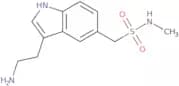
CAS:<p>N,N-Dimethyformamide diethy acetal is a compound with a pyrazole ring and an ethyl formate substituent. It is an amide that can be synthesized by the reaction of dimethylformamide with ethyl formate. This compound has been found to inhibit the production of inflammatory cytokines such as chemokines in bowel disease patients. N,N-Dimethyformamide diethy acetal's amine group can also bind to adenosine receptors with high affinity. The hybridized nitrogen atoms in this molecule are more soluble than other amines and can be used as a supercritical fluid extraction solvent for solubility data.</p>Formula:C7H17NO2Purezza:Min. 95%Colore e forma:Clear LiquidPeso molecolare:147.22 g/mol3-(2-Aminoethyl)-N-methyl-1H-indole-5-methanesulfonamide
CAS:<p>3-(2-Aminoethyl)-N-methyl-1H-indole-5-methanesulfonamide (AMIS) is an intermediate in the preparation of medicaments. It is a stable process and can be used as an intermediate for other compounds. AMIS is prepared by reacting methanesulfonic acid with methanol and ammonium carbonate, which produces methanesulfonamide, succinic acid and ammonium hydroxide. The reaction liquid is then heated to produce a crystalline solid. The crystals are then recrystallized to yield AMIS as a white solid.</p>Formula:C12H17N3O2SPurezza:Min. 95%Colore e forma:Off-White To Beige To Light Brown SolidPeso molecolare:267.35 g/mol

![N-[2-[4-(Aminosulfonyl)-phenyl]-ethyl]-5-methyl-2-pyrazinecarboxamide](/_next/image/?url=https%3A%2Fstatic.cymitquimica.com%2Fproducts%2F3D%2Fthumb-webp%2FFA150607.webp&w=3840&q=75)
![2-[(Diphenylmethyl)sulfinyl]-N-hydroxyacetamide](/_next/image/?url=https%3A%2Fstatic.cymitquimica.com%2Fproducts%2F3D%2Fthumb-webp%2FW-104904.webp&w=3840&q=75)