Acidi carbossilici
Trovati 12457 prodotti di "Acidi carbossilici"
1-(2-Chlorophenyl)-5-phenyl-1-H-pyrazole-3-carboxylic acid
CAS:Prodotto controllato1-(2-Chlorophenyl)-5-phenyl-1H-pyrazole-3-carboxylic acid is a high quality, reagent, complex compound that has been shown to be useful as an intermediate in the synthesis of a number of different compounds. It has been shown to be useful as a speciality chemical and research chemicals with versatile building blocks that can be used for the synthesis of other compounds. The CAS number for 1-(2-chlorophenyl)-5-phenyl-1H-pyrazole-3-carboxylic acid is 116572-69-1.
Formula:C16H11ClN2O2Purezza:Min. 95%Peso molecolare:298.72 g/molRef: 3D-FC66208
Prodotto fuori produzione6-Fluoroindole-3-acetic acid
CAS:6-Fluoroindole-3-acetic acid is a molecule that has been synthesized by the reaction of 6-fluoroindole with acetic anhydride. When mixed with acetonitrile, the fluorescence of 6-fluoroindole-3-acetic acid can be seen in the solution. The fluorescence intensity is proportional to the concentration of this molecule. 6-Fluoroindole-3-acetic acid is used as a template molecule for fluorescence labeling experiments. It interacts with hormones and can be used to identify their conformations and interactions. This compound has been shown to have anticancer properties in mice, and it may also be effective against cancer cells in humans. It has also been shown to inhibit the growth of pisum sativum (pea).
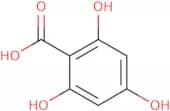
Formula:C10H8FNO2Purezza:Min. 95%Colore e forma:PowderPeso molecolare:193.17 g/mol2,4,6-Trihydroxybenzoic acid
CAS:2,4,6-Trihydroxybenzoic acid is the sodium salt of 2,4,6-trihydroxybenzoic acid. It is a white to off-white crystalline powder with a molecular weight of 198.2 and a melting point of 197°C. The chemical formula for this compound is C7H5O5Na. This product has been shown to exhibit antimicrobial activity against Gram-positive and Gram-negative bacteria, including methicillin resistant Staphylococcus aureus (MRSA). In addition, 2,4,6-trihydroxybenzoic acid has been shown to inhibit the production of proteins that are necessary for bacterial growth.
Formula:C7H6O5Purezza:Min. 95%Colore e forma:PowderPeso molecolare:170.12 g/molRef: 3D-FT71833
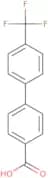
Prodotto fuori produzione4'-Trifluoromethyl-biphenyl-4-carboxylic acid
CAS:4'-Trifluoromethyl-biphenyl-4-carboxylic acid is a versatile building block that is used in the synthesis of complex compounds. It is also a useful reagent, intermediate, and scaffold for organic reactions. The chemical's CAS number is 195457-71-7. This product has a high quality and can be used as a research chemical or speciality chemical.
Formula:C14H9F3O2Purezza:Min. 95%Colore e forma:PowderPeso molecolare:266.22 g/molRef: 3D-FT33145
Prodotto fuori produzione(1R,4R)-tert-Butyl 2,5-diazabicyclo[2.2.1]heptane-2-carboxylate hydrochloride
CAS:Tert-Butyl 2,5-diazabicyclo[2.2.1]heptane-2-carboxylate hydrochloride (TBDAHC) is a fine chemical that is an intermediate for the synthesis of other compounds. TBDAHC is a versatile building block that can be used in research chemicals, reaction components, and specialty chemicals. It is also a useful scaffold for making complex compounds and useful building blocks. The compound has high quality and can be used as a reagent in organic chemistry.
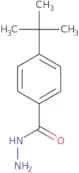
Formula:C10H18N2O2·HClPurezza:Min. 95%Colore e forma:White PowderPeso molecolare:234.72 g/mol4-tert-Butylbenzoic acid hydrazide
CAS:4-tert-Butylbenzoic acid hydrazide is a compound that can be used in the treatment of cancer. It has been shown to inhibit anhydrase in the presence of organic solvents, such as methanol. 4-tert-Butylbenzoic acid hydrazide has also been shown to have anticancer activity and can be used as a chemotherapeutic agent. This drug inhibits DNA synthesis by forming covalent bonds with the nucleotide bases through displacement of the enzyme histidine kinase and inhibition of the enzyme carbonic anhydrase II. 4-tert-Butylbenzoic acid hydrazide is also capable of inhibiting xanthine oxidase and aconitase in vitro, which are enzymes involved in cellular respiration. 4-tert-Butylbenzoic acid hydrazide has been found to be more potent than phenacetin and acetaminophen, drugs that are commonly used
Formula:C11H16N2OPurezza:Min. 95%Colore e forma:PowderPeso molecolare:192.26 g/molRef: 3D-FB70860
Prodotto fuori produzione2-Chloro-5-(4-chloro-5-difluoromethoxy-1-methylpyrazol-3-yl)-4-fluorophenoxyacetic acid monohydrate
CAS:2-Chloro-5-(4-chloro-5-difluoromethoxy-1-methylpyrazol-3-yl)-4-fluorophenoxyacetic acid monohydrate (2,4,5P) is a phenoxy herbicide that has been shown to be an effective broadleaf and grass weed control agent. 2,4,5P is a granule formulation that can be applied by helicopter or ground equipment. It has synergistic effects with glyphosate when applied together to soybean plants and can be used in combination with other herbicides for more effective weed control.
Formula:C13H9Cl2F3N2O·H2OPurezza:Min. 95%Colore e forma:White PowderPeso molecolare:355.14 g/molRef: 3D-FC156954
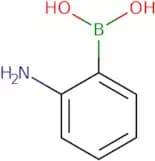
Prodotto fuori produzione2-Aminophenylboronic acid
CAS:2-Aminophenylboronic acid is an organic compound that can be used as a cross-coupling agent in the Suzuki coupling reaction. It has been used to synthesize amides and β-unsaturated ketones. It has also been used to prepare fluorescent molecules for use in clinical diagnostics. The phase transition temperature of 2-aminophenylboronic acid is approximately -6°C, which makes it useful for the synthesis of amides and β-unsaturated ketones at low temperatures. This compound is not reactive towards nucleophiles due to its acidic character, but it can undergo a nucleophilic attack when protonated. Its fluorescence assay can be used to detect the presence of low concentrations of hydrogen sulfide gas in natural gas pipelines.
Formula:C6H8BNO2Purezza:Min. 95%Colore e forma:PowderPeso molecolare:136.94 g/molRef: 3D-FA10483
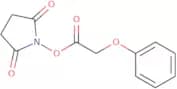
Prodotto fuori produzionePhenoxyacetic acid N-hydroxysuccinimide ester
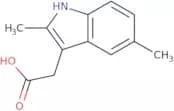
CAS:Phenoxyacetic acid N-hydroxysuccinimide ester is a nucleic acid research reagent. It is an uncharged molecule that can be used to inhibit the activity of ribonucleic acid or transfer RNA. Phenoxyacetic acid N-hydroxysuccinimide ester has been shown to have antibacterial activity against gram-positive bacteria and gram-negative bacteria, including methicillin resistant Staphylococcus aureus. This compound has also been shown to bind to the anticodon stem region of tRNA molecules and inhibit protein synthesis by preventing the binding of aminoacyl tRNA synthetases to their cognate mRNA codons.Formula:C12H11NO5Purezza:Min. 95%Colore e forma:PowderPeso molecolare:249.22 g/mol(2,5-Dimethyl-1H-indol-3-yl)acetic acid
CAS:(2,5-Dimethyl-1H-indol-3-yl)acetic acid is a fine chemical that is used as a building block in research chemicals and as a reagent in the synthesis of more complex compounds. It has been used as a versatile building block for the synthesis of numerous biologically active compounds and has also been shown to have antiviral activity. This compound is also useful as an intermediate or scaffold in the synthesis of pharmaceuticals. (2,5-Dimethyl-1H-indol-3-yl)acetic acid has CAS number 5435-40-5 and can be found on PubChem CID 6078.
Formula:C12H13NO2Purezza:Min. 95%Colore e forma:Red PowderPeso molecolare:203.24 g/molTAPS
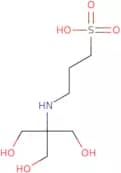
CAS:TAPS, also known as 3-[(Tris(hydroxymethyl)methyl)amino]-1-propanesulfonic acid, is a buffering agent that can be used in capillary electrophoresis with DNA and can form metal complexes. It has an optimal pH range of 7.7-9.1 and a pKa of 8.4.
Formula:C7H17NO6SPurezza:Min. 95%Colore e forma:SolidPeso molecolare:243.28 g/molRef: 3D-FT39128
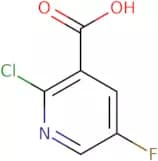
Prodotto fuori produzione2-Chloro-5-fluoropyridine-3-carboxylic acid
CAS:2-Chloro-5-fluoropyridine-3-carboxylic acid is an intermediate in the synthesis of fluorine compounds used in the industrial process. It can be synthesized by chlorinating 5-fluoropyridine with chlorine gas and a catalyst such as platinum, or by hydrogenating 2-chloro-5-pyridinecarboxylic acid. This chemical is used to manufacture other chemicals such as ethylene oxide, tetrafluoroethylene, and hexafluoroethane.
Formula:C6H3ClFNO2Purezza:Min. 95%Peso molecolare:175.54 g/molRef: 3D-FC57301
Prodotto fuori produzione2-[2-[4-[Bis(4-fluorophenyl)methyl]piperazin-1-yl]ethoxy]acetic acid HCl
CAS:2-[2-[4-[Bis(4-fluorophenyl)methyl]piperazin-1-yl]ethoxy]acetic acid HCl (BAY-85788) is a drug which acts as a histamine receptor antagonist. It has been shown to be effective in the treatment of idiopathic urticaria. BAY-85788 has also been found to have less potential for drug interactions than other histamine receptor antagonists, and does not cause an increase in blood pressure, unlike other compounds with this activity. This compound is metabolized by cytochrome P450 enzymes and does not contain nitrogen atoms or heterocyclic rings. Experimental studies have shown that orally administered BAY-85788 is absorbed from the GI tract and eliminated unchanged in urine. Studies have also shown that BAY-85788 is active against inflammatory diseases such as atopic dermatitis, asthma, and chronic obstructive pulmonary disease (COPDFormula:C21H24F2N2O3·xHClPurezza:Min. 95%Colore e forma:PowderPeso molecolare:390.42 g/molRef: 3D-FB98570
Prodotto fuori produzione2-Aminothiazole-5-carboxylic acid
CAS:2-Aminothiazole-5-carboxylic acid is a synthetic compound that is currently being investigated as a potential anticancer agent. 2-Aminothiazole-5-carboxylic acid has shown anticancer activity in clinical studies, with an increase in the number of cancer cells killed and a decrease in the number of cancer cells surviving after treatment. The mechanism of action for this drug is not well understood, but it may be due to its ability to inhibit cellular processes such as DNA synthesis and protein synthesis.
2-Aminothiazole-5-carboxylic acid does not show significant toxicity at therapeutic doses, although it can cause some side effects including nausea, vomiting, constipation, diarrhea, headaches, and fever.Formula:C4H4N2O2SPurezza:Min. 95%Colore e forma:PowderPeso molecolare:144.15 g/molRef: 3D-FA36283
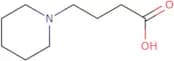
Prodotto fuori produzione4-Piperidinobutyric acid
CAS:The aim of this study is to assess the effect of 4-Piperidinobutyric acid (4-PABA) on the efficiency of rats in a dietary model. The experimental design included two treatments with different levels of 4-PABA, and a control group with no supplementation. The experiment was conducted by feeding rats a diet with low protein content (6% casein), and measuring their weight gain, feed intake, and food conversion ratio (FCR). The results indicated that 4-PABA had no statistically significant effects on weight gain or feed intake. However, FCR was significantly higher for the high 4-PABA treatment group. These findings support the hypothesis that dietary protein is an important determinant in rat energy metabolism.
Formula:C9H17NO2Purezza:Min. 95%Peso molecolare:171.24 g/molRef: 3D-FP57479
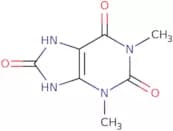
Prodotto fuori produzione1,3-Dimethyluric acid
CAS:Prodotto controllato1,3-Dimethyluric acid is a metabolite of caffeine. It is formed by the oxidative deamination of 1,3-dimethylxanthine in the liver. The concentrations of 1,3-dimethyluric acid are elevated in patients with chronic renal failure and those who are taking theophylline. The concentration–time curve for 1,3-dimethyluric acid was found to be linear and predictable after intravenous administration of caffeine at a dose of 10 mg/kg body weight in rats. This suggests that it is possible to estimate the rate of elimination from plasma after intravenous dosing with caffeine based on measurements of plasma concentrations and time. The metabolism of caffeine involves two pathways: oxidative deamination (1,3-dimethyluric acid) and demethylation (paraxanthine). It has been shown that the metabolites 1,3-dimethyluric acid and paraxanthine are formed by different metabolic pathways. The
Formula:C7H8N4O3Purezza:Min. 98 Area-%Colore e forma:White PowderPeso molecolare:196.16 g/molHeptadecanoic acid
CAS:Heptadecanoic acid is a fatty acid that is a major component of the human sebum. It has been shown to be an oxidation catalyst for polyunsaturated fatty acids and can be used in the production of caproic acid and alkanoic acid from their corresponding glycol esters. It has also been shown to have enzyme activities, such as oxidizing phospholipids and hydrolyzing triglycerides. Heptadecanoic acid is a normal constituent of human serum, but its concentration varies among individuals. It can be used as a control analysis to determine if another fatty acid is present in the sample, or it can be used as a biological sample to study energy metabolism or epidermal growth factor.
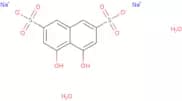
Formula:C17H34O2Purezza:Min. 95%Colore e forma:PowderPeso molecolare:270.45 g/molChromotropic acid disodium salt dihydrate - ACS reagent
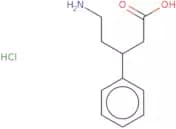
CAS:Chromotropic acid is a reactive compound that has been shown to be adsorbed on the surface of activated carbon. The adsorption mechanism and the kinetic constants for this reaction have been studied in detail. Chromotropic acid decomposes at high temperatures, releasing hydrogen chloride gas and water vapor. This chemical is also used in pharmaceutical preparations as an additive to inhibit oxidation reactions. It may also serve as a photoreceptor, reacting with tyramine hydrochloride and other compounds to produce a color change.Formula:C10H6O8S2Na2·2H2OColore e forma:PowderPeso molecolare:400.29 g/mol4-(Aminomethyl)-3-phenylbutyric acid hydrochloride
CAS:4-(Aminomethyl)-3-phenylbutyric acid hydrochloride is a reagent that can be used as a building block in synthesizing new chemical compounds. It is also an intermediate for the synthesis of 4-(aminomethyl)benzoic acid, which is useful for producing pharmaceuticals, pesticides, and other agrochemicals. 4-(Aminomethyl)-3-phenylbutyric acid hydrochloride has a CAS number of 860252-34-2 and can be used in reactions with a variety of reagents to produce fine chemicals, research chemicals, and speciality chemicals.
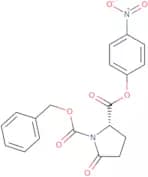
Formula:C11H16ClNO2Purezza:Min. 95%Peso molecolare:229.7 g/molZ-L-pyroglutamic acid 4-nitrophenyl ester
CAS:Please enquire for more information about Z-L-pyroglutamic acid 4-nitrophenyl ester including the price, delivery time and more detailed product information at the technical inquiry form on this pageFormula:C19H16N2O7Purezza:Min. 95%Peso molecolare:384.34 g/molRef: 3D-FP47311
Prodotto fuori produzione


![(1R,4R)-tert-Butyl 2,5-diazabicyclo[2.2.1]heptane-2-carboxylate hydrochloride](/_next/image/?url=https%3A%2Fstatic.cymitquimica.com%2Fproducts%2F3D%2Fthumb-webp%2FFB15223.webp&w=3840&q=75)

![2-[2-[4-[Bis(4-fluorophenyl)methyl]piperazin-1-yl]ethoxy]acetic acid HCl](/_next/image/?url=https%3A%2Fstatic.cymitquimica.com%2Fproducts%2F3D%2Fthumb-webp%2FFB98570.webp&w=3840&q=75)