Acidi carbossilici
Trovati 12457 prodotti di "Acidi carbossilici"
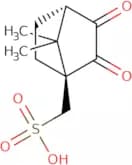
Camphorquinone-10-sulfonic acid hydrate
CAS:Camphorquinone-10-sulfonic acid hydrate is a soybean trypsin inhibitor that is used as a preparative agent in organic synthesis. It reacts with histidine, lysine residues, and other molecules to form a light-chain kinase that inhibits the action of the enzyme trypsin. Camphorquinone-10-sulfonic acid hydrate has been shown to be resistant to proteolysis by gastrointestinal enzymes. This agent also has diabetogenic properties by inhibiting the activity of membrane potential and chloride channels in pancreatic β cells. Camphorquinone-10-sulfonic acid hydrate forms an ion pair with choline, which can inhibit the enzyme acetylcholinesterase, leading to accumulation of acetylcholine at nerve endings.
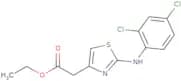
Formula:C10H16O6SPurezza:Min. 95 Area-%Colore e forma:Yellow PowderPeso molecolare:264.3 g/molEthyl 2-(4-(2,4-dichlorophenylamino)-3,5-thiazolyl)acetate
CAS:Please enquire for more information about Ethyl 2-(4-(2,4-dichlorophenylamino)-3,5-thiazolyl)acetate including the price, delivery time and more detailed product information at the technical inquiry form on this page
Purezza:Min. 95%Ref: 3D-FE169285
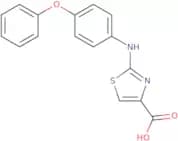
Prodotto fuori produzione2-((4-Phenoxyphenyl)amino)-1,3-thiazole-4-carboxylic acid
CAS:Please enquire for more information about 2-((4-Phenoxyphenyl)amino)-1,3-thiazole-4-carboxylic acid including the price, delivery time and more detailed product information at the technical inquiry form on this pageFormula:C16H12N2O3SPurezza:Min. 95%Colore e forma:PowderPeso molecolare:312.34 g/molRef: 3D-FP169355
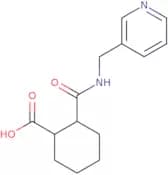
Prodotto fuori produzione2-(N-(3-Pyridylmethyl)carbamoyl)cyclohexanecarboxylic acid
CAS:Please enquire for more information about 2-(N-(3-Pyridylmethyl)carbamoyl)cyclohexanecarboxylic acid including the price, delivery time and more detailed product information at the technical inquiry form on this pageFormula:C14H18N2O3Purezza:Min. 95%Colore e forma:PowderPeso molecolare:262.31 g/molRef: 3D-FP168972
Prodotto fuori produzioneMetazachlor 3-Mercaptolactic Acid Conjugate Sulfoxide
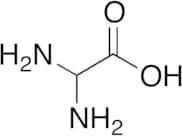
CAS:Prodotto controllatoFormula:C17H21N3O5SColore e forma:Off-WhitePeso molecolare:379.432,2-Diaminoacetic Acid
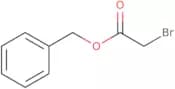
CAS:Prodotto controllatoFormula:C2H6N2O2Colore e forma:NeatPeso molecolare:90.081Benzyl bromoacetate
CAS:Benzyl bromoacetate is a bicyclic heterocycle that is metabolized by the enzyme benzyl alcohol dehydrogenase. The resulting metabolites are then converted to methyl benzoate and benzyl alcohol. It has been shown to inhibit prostate cancer cells and basic fibroblasts, which may be due to its ability to inhibit enzymes involved in fatty acid synthesis. Benzyl bromoacetate also has therapeutic effects on autoimmune diseases such as bowel disease, which may be due to its ability to reduce inflammation and suppress the immune system.
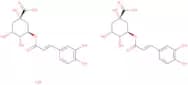
Formula:C9H9BrO2Purezza:Min. 95%Colore e forma:Clear Colourless To Light (Or Pale) Yellow LiquidPeso molecolare:229.07 g/molChlorogenic acid hemihydrate
CAS:Chlorogenic acid hemihydrate is a natural phenolic compound that belongs to the family of flavonol glycosides. The molecule has two caffeoylquinic acids and one chlorogenic acid functional groups, which are responsible for its antioxidant properties. Chlorogenic acid hemihydrate is soluble in water and can be used as a solid dispersion. This compound has been shown to have significant interactions with other drugs, including polymeric matrix, protocatechuic acid, and α-amyrin acetate. It also has been shown to have cell culture and in vivo model evidence of efficacy against cancer cells.
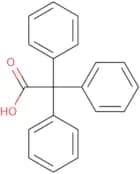
Purezza:Min. 95%Triphenyl acetic acid
CAS:Intermediate in the synthesis of vilanterol
Formula:C20H16O2Purezza:Min. 95%Peso molecolare:288.34 g/mol(5-Chloropyridin-3-yl)boronic acid
CAS:Please enquire for more information about (5-Chloropyridin-3-yl)boronic acid including the price, delivery time and more detailed product information at the technical inquiry form on this page
Formula:C5H5BClNO2Purezza:Min. 95%Peso molecolare:157.36 g/molRef: 3D-FC160837
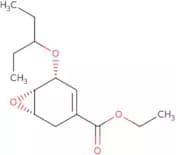
Prodotto fuori produzioneEthyl (3R,4S,5S)-4,5-epoxy-3-(1-ethylpropoxy)cyclohex-1-ene-1-carboxylate
CAS:Please enquire for more information about Ethyl (3R,4S,5S)-4,5-epoxy-3-(1-ethylpropoxy)cyclohex-1-ene-1-carboxylate including the price, delivery time and more detailed product information at the technical inquiry form on this page
Formula:C14H22O4Purezza:Min. 95%Peso molecolare:254.32 g/molRef: 3D-FE22924
Prodotto fuori produzione3-Thienylmalonic acid
CAS:3-Thienylmalonic acid is a template molecule that is used in kinetic studies of receptor binding reactions. It is a white solid with a molecular weight of 170.07 g/mol and an empirical formula of CHOS. 3-Thienylmalonic acid has been shown to be effective for corrosion inhibition, as it reacts with chloride ions to form a complex that does not allow the metal surface to corrode. This process can be done in a pH range from 1 to 14 and the reaction solution is colorless, odorless, and stable at room temperature. 3-Thienylmalonic acid also has photocatalytic activity, which allows it to degrade organic molecules such as malonic acid or human serum proteins. The compound can also be used as an electrochemical impedance spectroscopy (EIS) probe for wastewater treatment or chloride solutions.
Purezza:Min. 95%Ref: 3D-FT03095
Prodotto fuori produzioneNomegestrol acetate
CAS:Prodotto controllatoNomegestrol acetate is a nonsteroidal anti-inflammatory drug that binds to the response element of the gene, which leads to an increase in transcription. It is used in women to treat conditions such as endometriosis, menstrual disorders and breast cancer. The apoptosis pathway is activated by nomegestrol acetate by binding to the bcl-2 protein. This then causes a decrease in caspase activity, leading to cell death. Nomegestrol acetate also has been shown to have effects on ovarian activity and may be used as an analytical tool for determining the rate constant of polymerase chain reaction (PCR).
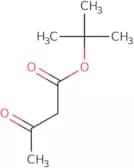
Formula:C23H30O4Purezza:Min. 95%Peso molecolare:370.48 g/moltert-Butyl acetoacetate
CAS:tert-Butyl acetoacetate is an organic molecule that contains nitrogen atoms. The structure of tert-butyl acetoacetate can be described as a planar molecule with two hydrogen atoms and two carbon atoms. One of the hydrogen atoms is bonded to the carbon atom in the middle, and the other hydrogen atom is bonded to one of the carbons on the outside. The compound has a coordination geometry with a sodium ion in its center, and it can also exist as an anion or as a cation. Tert-butyl acetoacetate was synthesized by reacting sodium carbonate with tert-butyl alcohol. This reaction is exothermic and produces tert-butyl acetoacetate along with water and sodium hydroxide. In addition, tert-butyl acetoacetate is toxicologically studied, which has shown that it does not have any carcinogenic effects or adverse effects on reproduction in rats at doses up to 2000 mg/kg/day
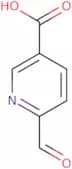
Formula:C8H14O3Purezza:Min. 95%Peso molecolare:158.19 g/mol6-Formylpyridine-3-carboxylic acid
CAS:Please enquire for more information about 6-Formylpyridine-3-carboxylic acid including the price, delivery time and more detailed product information at the technical inquiry form on this page
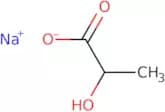
Formula:C7H5NO3Purezza:Min. 95%Peso molecolare:151.12 g/molDL-Lactic acid sodium salt, 60% w/w syrup
CAS:Lactic acid is a natural product that has been used for many years as an antimicrobial agent in wastewater treatment. It is also used in the food industry to prevent the growth of bacteria and fungi, and as a preservative. Lactic acid has been shown to have a physiological effect on locomotor activity, which may be due to its ability to convert pyruvate into lactate. Lactic acid also inhibits the growth of some bacterial strains by increasing the disulfide bond formation between two cysteine residues. The sodium salt form of lactic acid is more soluble than the acid form and can be used as an experimental model for studying sodium-lactate interactions. Sodium lactate is used in maternal blood transfusions to increase blood pH levels during labor, and is also added to water vapor for humidification purposes.
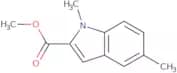
Formula:C3H5O3NaColore e forma:Colorless Clear LiquidPeso molecolare:112.06 g/molMethyl 1,5-dimethyl-1H-indole-2-carboxylate
CAS:Prodotto controllatoPlease enquire for more information about Methyl 1,5-dimethyl-1H-indole-2-carboxylate including the price, delivery time and more detailed product information at the technical inquiry form on this pageFormula:C12H13NO2Purezza:Min. 95%Peso molecolare:203.24 g/molRef: 3D-FM118276
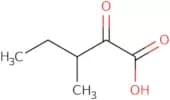
Prodotto fuori produzione(±)-3-Methyl-2-oxovaleric acid
CAS:(±)-3-Methyl-2-oxovaleric acid is a fatty acid that is found in the mitochondria of liver cells and other tissues. It is an intermediate in the citric acid cycle and can be converted into acetyl-CoA, which is used for energy production. (±)-3-Methyl-2-oxovaleric acid has been shown to cause necrotic cell death when it binds to the mitochondrial membrane potential and causes a loss of ATP production. This results in a lack of energy for the cell, leading to cell death. (±)-3-Methyl-2-oxovaleric acid has also been shown to inhibit protein synthesis by decreasing uptake and increasing creatine kinase activity. This inhibition leads to decreased body formation and tissue culture growth in vitro. In vivo, (±)-3-Methyl-2-oxovaleric acid causes primary sclerosing cholangitis, a disease characterized by inflammation of bile ducts that
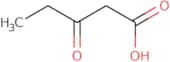
Formula:C6H10O3Purezza:Min. 95%Colore e forma:White PowderPeso molecolare:130.14 g/mol3-Oxopentanoic acid
CAS:3-Oxopentanoic acid is a fatty acid that is produced by the subunits of the liver. It is metabolized to propionyl CoA and then converted to 3-hydroxybutyrate or acetoacetate in the mitochondria. The conversion of propionyl CoA to 3-oxopentanoic acid is catalyzed by an amide synthetase, while the conversion of 3-oxopentanoic acid to acetoacetate is catalyzed by a β-ketothiolase. This fatty acid has been shown to be useful for the treatment of diabetes because it suppresses insulin secretion from pancreatic β cells and improves glucose uptake in muscle cells. It has also been speculated that this compound may have anti-inflammatory properties due to its inhibition of prostaglandin synthesis.
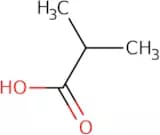
Formula:C5H8O3Purezza:Min. 95%Colore e forma:PowderPeso molecolare:116.12 g/molIsobutyric acid
CAS:Isobutyric acid is a short-chain carboxylic acid that has been shown to be a potent inhibitor of congestive heart failure. Isobutyric acid binds to the dinucleotide phosphate and is then hydrolyzed by glycol ethers to release isobutyric acid, which can induce vasodilation. The surface methodology used in this study revealed that Isobutyric acid inhibits the polymerase chain reaction activity of human DNA. This inhibition may be due to its structural similarity with mycobacterial sesquiterpene lactones, which have been shown to inhibit protein synthesis in human cells. Isobutyric acid also has antibacterial properties, and has been shown to have an activity index of 0.5 against methicillin-resistant Staphylococcus aureus (MRSA) isolates and erythromycin-resistant Mycobacterium avium complex isolates.
Formula:C4H8O2Purezza:Min. 95%Colore e forma:Colorless Clear LiquidPeso molecolare:88.11 g/mol