Aldeidi
Gli aldeidi sono composti organici che contengono un gruppo carbonilico (C=O) legato ad almeno un atomo di idrogeno. Questi composti versatili sono fondamentali in varie reazioni chimiche, tra cui ossidazione, riduzione e addizione nucleofila. Gli aldeidi sono building blocks essenziali nella sintesi di prodotti farmaceutici, fragranze e polimeri. Presso CymitQuimica, offriamo una vasta selezione di aldeidi di alta qualità per supportare le vostre applicazioni di ricerca e industriali.
Trovati 8573 prodotti di "Aldeidi"
Ordinare per
Purezza (%)
0
100
|
0
|
50
|
90
|
95
|
100
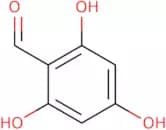
2,4,6-Trihydroxybenzaldehyde
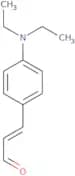
CAS:<p>2,4,6-Trihydroxybenzaldehyde is a polymerase chain inhibitor that blocks the synthesis of DNA and RNA. It has been shown to have significant cytotoxicity in vitro and has been used as an antimicrobial agent to inhibit the growth of bacteria. 2,4,6-Trihydroxybenzaldehyde also inhibits tetracycline resistance in Mycobacterium tuberculosis (Mtb) by inhibiting the production of proteins vital for bacterial cell division. This compound is structurally related to naturally occurring compounds such as anthocyanins and it has been shown to have inhibitory properties on mitochondrial membrane potential, which may be due to its ability to inhibit protein synthesis and induce apoptosis. The analytical methods used for this compound are thin layer chromatography and high performance liquid chromatography.</p>Formula:C7H6O4Purezza:Min. 98 Area-%Colore e forma:PowderPeso molecolare:154.12 g/moltrans-4-(Diethylamino)cinnamaldehyde
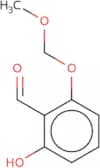
CAS:Trans-4-(Diethylamino)cinnamaldehyde is a molecule that has been systematically studied with several techniques, such as x-ray crystallography. It has been shown to be a fluorophore and can be used as a fluorescent probe. Trans-4-(Diethylamino)cinnamaldehyde can be used in the fluorescence method in which it reacts with other molecules and emits light. This reaction scheme is based on the principle of irradiation by UV light or visible light to produce an excited state. Fluorescence is detected at various wavelengths depending on the dye used. Trans-4-(Diethylamino)cinnamaldehyde also emits fluorescence when irradiated with ultraviolet light, which is often referred to as "violet" fluorescence. The wavelength of this emission is 365 nm and it can be detected using high yield techniques, such as fluorometers.Formula:C13H17NOPurezza:Min. 95%Colore e forma:PowderPeso molecolare:203.28 g/mol2-Hydroxy-6-(methoxymethoxy)benzaldehyde
CAS:<p>2-Hydroxy-6-(methoxymethoxy)benzaldehyde is a chemical intermediate that can be used in the synthesis of a wide range of compounds. It is an aromatic compound which has two hydroxyl groups on the benzene ring. This product is a versatile building block, and is useful in the synthesis of complex compounds with high purity. 2-Hydroxy-6-(methoxymethoxy)benzaldehyde can be obtained as a white solid with a melting point of 57°C.</p>Formula:C9H10O4Purezza:Min. 95%Colore e forma:Clear LiquidPeso molecolare:182.17 g/mol2-Ethoxy-4-methoxybenzaldehyde
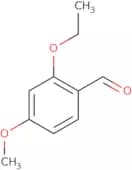
CAS:<p>2-Ethoxy-4-methoxybenzaldehyde is a volatile compound that has been shown to have medicinal properties. It is used to analyze the presence of alcohols and aldehydes in various products. The sensitivity of this compound was optimized by using an analytical method that involved solid phase microextraction (SPME) followed by gas chromatography (GC). The carcinogenicity of this compound was determined by exposing it to rats in a 2 year study, which showed no evidence of carcinogenicity. This compound can also be used as a phenolic or microextraction reagent for the headspace analysis of volatile compounds.</p>Formula:C10H12O3Purezza:Min. 95%Colore e forma:PowderPeso molecolare:180.2 g/molAdipaldehyde - 1M solution in water
CAS:Succinaldehyde is a white crystalline solid that is soluble in water and alcohol. Succinaldehyde has been shown to be an effective catalyst for the polymerization of polyvinyl chloride, which is used in the production of plastics. It also functions as a cross-linking agent for insoluble polymers, such as collagen. Succinaldehyde has been shown to inhibit t-cell leukemia in mice by inducing apoptosis. This reaction mechanism involves the formation of aldehyde groups on lysine residues within the protein structure, which then react with hydroxyl groups on other lysines or peptides. This reaction leads to covalent bonding between adjacent amino acids and the formation of a stable cross-linked network that results in apoptosis. The function of succinaldehyde as a solid catalyst for this reaction can be attributed to its low volatility and high boiling point.Formula:C6H10O2Colore e forma:Brown PowderPeso molecolare:114.14 g/mol2,6-Dichloro-3-nitrobenzaldehyde
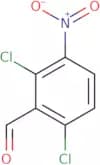
CAS:<p>2,6-Dichloro-3-nitrobenzaldehyde (DCNB) is an electrophilic bidentate ligand that reacts with chlorine to form chloroform. It is also a good ligand for many metal ions, such as copper and nickel. DCNB can catalyze the epoxidation of alkenes to form epoxides. DCNB has been used in the industrial production of chlorinated solvents and hydrocarbons. It is a very efficient reagent for formylation, which can be used to convert alcohols and amines into formyl groups or carboxylic acids. The DCN group is also an excellent leaving group, which makes it useful as a solvent in organic syntheses. Finally, DCNB reacts with chlorine atoms to produce chloride ions that are soluble in water and organic solvents.</p>Formula:C7H3Cl2NO3Purezza:Min. 95%Peso molecolare:220.01 g/mol2-Benzyloxybenzaldehyde
CAS:2-Benzyloxybenzaldehyde is an analog of benzaldehyde and can be used as a precursor for the synthesis of other molecules. It has been shown to inhibit the growth of HL-60 cells and xenograft tumor in mice. This compound also inhibits the production of cyclase, which is required to produce prostaglandin E2, a key regulator of inflammation in the body. This inhibition leads to an increase in mitochondrial membrane potential, leading to cell death by apoptosis. 2-Benzyloxybenzaldehyde also inhibits DNA binding activity and has been shown to induce fetal bovine serum levels and colony stimulating factor (CSF) levels in leukemic mice.Formula:C14H12O2Purezza:Min. 95%Colore e forma:PowderPeso molecolare:212.24 g/mol2-Benzyloxy-3-methoxybenzaldehyde
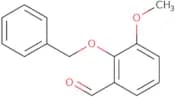
CAS:<p>2-Benzyloxy-3-methoxybenzaldehyde is an enantiopure compound that has been shown to have antiproliferative effects on cancer cells. It was also found to have a strong binding affinity for DNA and protein. The antiproliferative effects of 2-Benzyloxy-3-methoxybenzaldehyde were found to be due to its ability to bind to dna and inhibit the enzyme activity of pyrazine-2-carboxylic acid, leading to a decrease in the production of proteins vital for cell division. 2-Benzyloxy-3-methoxybenzaldehyde has been shown to have anticancer activity against colorectal cancer cells and may serve as a lead compound for future drug development.</p>Formula:C15H14O3Purezza:Min. 95%Peso molecolare:242.27 g/mol2,4-Difluoro-3-methylbenzaldehyde
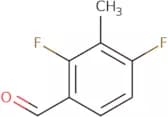
CAS:2,4-Difluoro-3-methylbenzaldehyde is a chemical compound that is used as a building block for the synthesis of other chemicals. It can be used as a research chemical or intermediate due to its versatility. 2,4-Difluoro-3-methylbenzaldehyde has a CAS number of 847502-88-9 and is classified as a speciality chemical with high quality. This compound may be useful in the synthesis of polymers and pharmaceuticals due to its ability to form covalent bonds with other molecules.Formula:C8H6F2OPurezza:Min. 95%Colore e forma:Clear LiquidPeso molecolare:156.13 g/mol2-Hydroxy-4-methoxybenzaldehyde
CAS:2-Hydroxy-4-methoxybenzaldehyde is an organic chemical that is used as a versatile building block for complex compounds, research chemicals, and reagents. It is also used as a speciality chemical and as a useful intermediate in the synthesis of other chemicals. 2-Hydroxy-4-methoxybenzaldehyde has CAS No. 673-22-3 and can be used to make many different types of compounds. This compound is a useful scaffold for the synthesis of diverse compounds with biological activity such as pharmaceuticals, agrochemicals, dyes, perfumes, fragrances, flavors and fragrances.Formula:C8H8O3Purezza:Min. 99.0 Area-%Peso molecolare:152.15 g/mol2-Fluoro-6-nitrobenzaldehyde
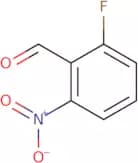
CAS:<p>2-Fluoro-6-nitrobenzaldehyde is an electron donor that reduces a range of electron acceptors including piperazine. This compound has been shown to have antitumor effects. 2-Fluoro-6-nitrobenzaldehyde has also been shown to inhibit the growth of cancer cells in vitro and in vivo. The mechanism of action is not yet known, but it is thought that 2-fluoro-6-nitrobenzaldehyde may be a potential chemotherapeutic agent for pancreatic cancer therapy.</p>Formula:C7H4FNO3Purezza:Min. 95%Colore e forma:PowderPeso molecolare:169.11 g/mol4-(Phenylethynyl)benzaldehyde
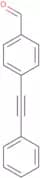
CAS:<p>4-(Phenylethynyl)benzaldehyde is a synthetic compound that belongs to the class of aldehydes. It is soluble in acetonitrile and can be synthesized by a cross-coupling reaction between two different organometallic reagents, such as N-phenyltrifluoroacetamide or N-phenylmaleimide. 4-(Phenylethynyl)benzaldehyde has been shown to have cytotoxic effects on cancer cells and can be used for the treatment of leukemia and Hodgkin's lymphoma. This chemical has fluorescence properties, which are enhanced by surface-enhanced Raman spectroscopy. 4-(Phenylethynyl)benzaldehyde also shows photophysical properties, such as an imine and fluorescent character, making it possible to use it in chemiluminescence reactions.</p>Formula:C15H10OPurezza:Min. 95 Area-%Colore e forma:Clear LiquidPeso molecolare:206.24 g/mol3,4-Dihydroxy-5-methoxybenzaldehyde
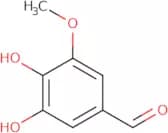
CAS:<p>3,4-Dihydroxy-5-methoxybenzaldehyde is a synthetic compound that has shown to have inhibitory effects on the replication of DNA and RNA. It also inhibits the growth of bacteria in culture by binding to the nucleic acid. The chemical structure of 3,4-Dihydroxy-5-methoxybenzaldehyde is similar to that of bisbenzylisoquinoline alkaloids, which are found in plants such as opium poppy. This similarity may explain its ability to inhibit bacterial growth. 3,4-Dihydroxy-5-methoxybenzaldehyde may be used as a drug candidate for treating bacterial infections.</p>Formula:C8H8O4Purezza:Min. 95%Colore e forma:PowderPeso molecolare:168.15 g/molPolydialdehyde starch (Polymeric dialdehyde)
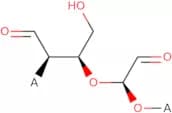
CAS:<p>Polydialdehyde starch is a cross-linking agent that is used to form hydrophobic polymers, which are prodrugs. It is a polymer of dialdehydes and can be used as an additive for restenosis prevention. Polydialdehyde starch has been shown to reduce platelet adhesion and aggregation in vitro and in vivo. The mechanism of action may be related to the ability of polydialdehyde starch to bind collagen and promote its degradation by hydrolysis. This also results in an increase in the rate of dilation of blood vessels, which may contribute to the antiplatelet effect. Polydialdehyde starch has been shown to be biodegradable, with a half-life of about two weeks in vivo after injection into rats.</p>Colore e forma:White PowderPeso molecolare:347.66Chamigrenal
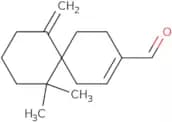
CAS:<p>Chamigrenal is a complex enzyme that is extracted from the fruit of the chamomile plant, which has been used for centuries in Ayurvedic medicine. Chamigrenal has been shown to have anti-inflammatory and anti-allergic activities. It also binds to G-protein coupled receptors, which may be due to its eluting property. Chamigrenal contains many chemical structures, including phenolic acids, flavonoids, terpenoids, and coumarins. The molecule has been shown to inhibit the growth of human cervical carcinoma cells by binding to a receptor called factor receptor.<br>DEFINITION: Chamigrenal is an extract from the fruit of the chamomile plant that has been used for centuries in Ayurvedic medicine as a treatment for inflammation and allergies. It has also been shown to bind to G-protein coupled receptors and inhibit human cervical carcinoma cells by binding to a receptor called factor receptor.</p>Formula:C15H22OPurezza:Min. 98 Area-%Colore e forma:PowderPeso molecolare:218.33 g/molDL-Glyceraldehyde
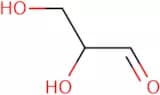
CAS:Glyceraldehyde is a monosaccharide that is an important intermediate in the glycolytic pathway. It is also classified as a hydroxyl group donor and has been shown to have cytotoxic effects on mammalian cells. Glyceraldehyde has been implicated in many biological processes, including fatty acid synthesis and dinucleotide phosphate synthesis. This molecule has been shown to bind to proteins through its hydroxyl groups, which are found on its carbonyl carbon atoms. The enzyme cytosolic protein kinase (PK) has been shown to phosphorylate glyceraldehyde, which may be involved in transcriptional regulation. In addition, glyceraldehyde may be involved in human serum glucose levels and plant metabolism.Formula:C3H6O3Purezza:90%MinColore e forma:PowderPeso molecolare:90.08 g/molUreaformaldehyde
CAS:<p>Ureaformaldehyde is a synthetic slow-release fertilizer that contains urea and formaldehyde. It has been shown to be highly active as a slow-release fertilizer in Langmuir adsorption isotherm studies. Ureaformaldehyde also has the ability to mineralize chloride and hydrogen bond to soil particles, increasing the availability of these ions for plant uptake. Ureaformaldehyde is also used in analytical methods such as chromatographic determination of fatty acids, which are an important component of animal and vegetable oils. !--</p>Formula:(CH4N2O•CH2O)xPurezza:Min. 95%Colore e forma:Clear LiquidPeso molecolare:90.08 g/molGallaldehyde hemihydrate
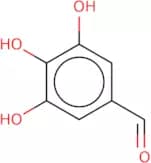
CAS:<p>Gallaldehyde hemihydrate is a bioactive phenolic compound that inhibits the tyrosine kinase domain of the epidermal growth factor receptor (EGFR). It has been shown to inhibit tumor cell growth and induce apoptosis in cancer tissues. Gallaldehyde hemihydrate has also been found in lentils, which might be used as a potential biomarker for this compound. The optimum pH for gallaldehyde hemihydrate is between 2.0-4.0, and it can bind to cation channels and act as a potential biomarker for skin cancer cells.</p>Formula:C7H6O4Purezza:Min. 95%Colore e forma:PowderPeso molecolare:154.12 g/mol3-[(Dimethylamino)methyl]benzaldehyde
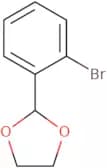
CAS:<p>3-[(Dimethylamino)methyl]benzaldehyde is a fine chemical that is used as a versatile building block in the synthesis of pharmaceuticals. It is also a useful intermediate in the synthesis of complex compounds and research chemicals. This product has been shown to be high quality and can be used as a reagent for many reactions.</p>Formula:C10H13NOPurezza:Min. 95%Peso molecolare:163.22 g/mol2-Bromobenzaldehyde ethylene acetal
CAS:2-Bromobenzaldehyde ethylene acetal is a reactive intermediate that can be used to form allyl ethers. It is prepared by the Grignard reaction of 2-bromobenzaldehyde with an ethylene acetal. This molecule may be useful for the synthesis of dioxolanes and amines, as well as for other applications such as supramolecular chemistry and emulsions.Formula:C9H9BrO2Purezza:Min. 95%Peso molecolare:229.07 g/mol




![3-[(Dimethylamino)methyl]benzaldehyde](/_next/image/?url=https%3A%2Fstatic.cymitquimica.com%2Fproducts%2F3D%2Fthumb-webp%2FFD124097.webp&w=3840&q=75)