Aldeidi
Gli aldeidi sono composti organici che contengono un gruppo carbonilico (C=O) legato ad almeno un atomo di idrogeno. Questi composti versatili sono fondamentali in varie reazioni chimiche, tra cui ossidazione, riduzione e addizione nucleofila. Gli aldeidi sono building blocks essenziali nella sintesi di prodotti farmaceutici, fragranze e polimeri. Presso CymitQuimica, offriamo una vasta selezione di aldeidi di alta qualità per supportare le vostre applicazioni di ricerca e industriali.
Trovati 8551 prodotti di "Aldeidi"
Ordinare per
Purezza (%)
0
100
|
0
|
50
|
90
|
95
|
100
2,4-Dihydroxy-6-methylbenzaldehyde
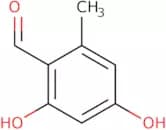
CAS:<p>2,4-Dihydroxy-6-methylbenzaldehyde is a chemical that is found naturally in a variety of plants. It has been shown to have immunomodulatory and anti-inflammatory effects in vitro and in vivo. 2,4-Dihydroxy-6-methylbenzaldehyde has been shown to reduce the production of inflammatory molecules such as tumor necrosis factor alpha (TNFα) and interleukin 12 (IL-12) by inhibiting the activation of microglia cells. This compound also inhibits LPS induced inflammatory response in human carcinoma cells. 2,4-Dihydroxy-6 methylbenzaldehyde is currently undergoing clinical trials for its potential use in regenerative medicine.</p>Formula:C8H8O3Purezza:Min. 95%Peso molecolare:152.15 g/molTacrolimus methyl acryl aldehyde
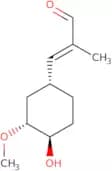
CAS:Please enquire for more information about Tacrolimus methyl acryl aldehyde including the price, delivery time and more detailed product information at the technical inquiry form on this pageFormula:C11H18O3Purezza:Min. 95%Peso molecolare:198.26 g/mol1-Allyl-1H-benzimidazole-2-carbaldehyde
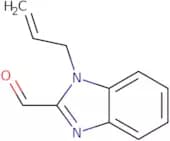
CAS:<p>1-Allyl-1H-benzimidazole-2-carbaldehyde is a dipolar compound that can be synthesized from the reaction of 1,3-diphenylazomethine and allyl bromide. It is an orange solid that has been shown to form cycloadducts with alkenes. The selectivity of this reaction depends on the substituents on both reactants, with electron withdrawing groups increasing the rate of substitution. Dipolar cycloaddition theory predicts that 1-allyl-1H-benzimidazole-2-carbaldehyde undergoes intramolecular cycloaddition to form a six membered ring in which one carbon atom is shared between two adjacent atoms.</p>Formula:C11H10N2OPurezza:Min. 95%Colore e forma:SolidPeso molecolare:186.21 g/molButyraldehyde
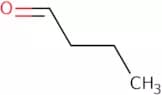
CAS:<p>Butyraldehyde is a colorless to yellowish liquid with a strong, pungent odor. It is soluble in water and has an acidic pH of 2.6-3.0. Butyraldehyde is used as a chemical intermediate for the production of polyvinyl acetate and can be made by reacting acetic acid with butanol or butyl acetate. This chemical reacts with human serum albumin at low concentrations and may have biological properties such as catalyzing the conversion of picolinic acid to nicotinic acid, which aids in the prevention against infectious diseases. Butyraldehyde also has synergistic effects when used with picolinic acid, increasing its effectiveness in combating infection.</p>Formula:C4H8OPurezza:Min. 95%Colore e forma:Clear LiquidPeso molecolare:72.11 g/mol5-(4-Methoxyphenyl)isoxazole-3-carboxaldehyde
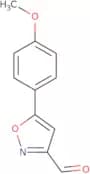
CAS:<p>5-(4-Methoxyphenyl)isoxazole-3-carboxaldehyde (5MI) is a broad-spectrum antimicrobial agent that exhibits activity against bacteria and fungi. It has been shown to be active against gram-positive bacteria, including Staphylococcus aureus, as well as Candida albicans and other pathogenic fungi. 5MI is active in the presence of ethanol, but not in the absence of alcohol. In vitro studies show that 5MI inhibits the growth of gram-negative bacteria such as Escherichia coli and Salmonella enterica serovar Typhimurium. 5MI also exhibits antifungal activity against Aspergillus niger and Saccharomyces cerevisiae.</p>Formula:C11H9NO3Purezza:Min. 95%Peso molecolare:203.19 g/mol2-Hydroxy-1-naphthaldehyde
CAS:<p>2-Hydroxy-1-naphthaldehyde is a redox potential chemical that has been shown to have anticancer activity in vitro and in vivo. It inhibits the growth of cells by binding to iron, which is important for many biological processes including DNA synthesis. 2-Hydroxy-1-naphthaldehyde has also been shown to have metal carbonyl reactivity and fluorescence properties that may be useful as a fluorescent probe. 2-Hydroxy-1-naphthaldehyde binds to iron ions through hydrogen bonding interactions, forming an octahedral complex with six ligands. The compound also has coordination geometry that can be described as either trigonal bipyramidal or square planar, depending on the solvent used. This data was obtained by x-ray diffraction studies of crystalline solids. The compound's Langmuir adsorption isotherm was found to be linear at low concentrations and shifted to nonlinear behavior at higher concentrations. The</p>Formula:C11H8O2Purezza:Min. 95%Colore e forma:SolidPeso molecolare:172.18 g/mol5,6,7,8-Tetrahydronaphthalene-1-carbaldehyde
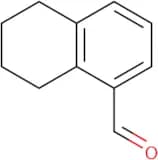
CAS:<p>Please enquire for more information about 5,6,7,8-Tetrahydronaphthalene-1-carbaldehyde including the price, delivery time and more detailed product information at the technical inquiry form on this page</p>Formula:C11H12OPurezza:Min. 95%Colore e forma:Clear LiquidPeso molecolare:160.21 g/molFormaldehyde-d2 solution, 20 wt. % in D2O
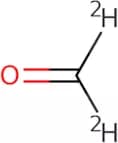
CAS:Prodotto controllato<p>Formaldehyde-d2 solution is a formaldehyde solution that contains deuterium, which has the same chemical properties as hydrogen but has an additional neutron in its nucleus. Formaldehyde-d2 solution is used to prepare samples for NMR and ESI-MS experiments. The reaction mechanism of formaldehyde is believed to be an acid-catalyzed hydrolysis of the hydrogen bond between formaldehyde and methanol. Deuterium isotopes are generally considered to be non-radioactive and have little or no effect on biological systems. Formaldehyde-d2 solution can inhibit fatty acids from binding to the surface of potatoes, which may make it useful in treating autoimmune diseases.</p>Formula:CD2OPurezza:Min. 95%Colore e forma:Clear LiquidPeso molecolare:32.04 g/mol1-Phenyl-1H-pyrazole-4-carbaldehyde
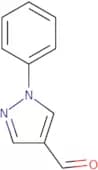
CAS:<p>1-Phenyl-1H-pyrazole-4-carbaldehyde is an antibacterial agent that has been shown to have bactericidal activity against bacteria. It inhibits the growth of bacteria by binding to the pyrazole ring in the bacterial cell wall and blocking the formation of a hydrogen bond. 1-Phenyl-1H-pyrazole-4-carbaldehyde has been shown to be effective against methicillin resistant Staphylococcus aureus (MRSA) and Ciprofloxacin resistant Pseudomonas aeruginosa isolates, but not against Mycobacterium tuberculosis or Mycobacterium avium complex.</p>Formula:C10H8N2OPurezza:Min. 95%Peso molecolare:172.18 g/molHeptaldehyde
CAS:<p>Heptaldehyde is a colorless liquid with a pleasant, sweet odor. It is used in the production of polyvinyl chloride and other chemicals. In addition, it can be an important biomarker in environmental studies. Heptaldehyde is produced by the reaction of ethyl decanoate with water vapor or methyl ethyl ketone. It is also an inhibitor of acetylcholinesterase, which may be due to its hydroxyl group and acetyl group. Furthermore, heptaldehyde has been shown to react with p-nitrophenyl phosphate to form p-nitrophenol. The following table outlines the chemical properties of heptaldehyde: Molecular formula: C7H8O Molecular weight: 112.14 g/mol Boiling point (°C): 212 °C Melting point (°C): -78 °C Density (g/cm3): 1.096</p>Formula:C7H14OPurezza:Min. 95%Colore e forma:Clear LiquidPeso molecolare:114.19 g/mol5-Bromopyridine-2-carbaldehyde
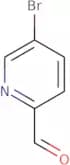
CAS:<p>5-Bromopyridine-2-carbaldehyde is a water soluble organic molecule that has been shown to inhibit the mitochondrial respiratory chain. It is a structural analog of the natural substrate for mitochondrial cytochrome c oxidase, 5-aminolevulinic acid. This compound has been shown to be selective against cancer cells and has anti-viral properties. The photophysical properties of 5-bromopyridine-2-carbaldehyde have been studied extensively. The fluorescence quantum yield of this molecule in aqueous solution is 0.06%.</p>Formula:C6H4BrNOPurezza:Min. 95%Colore e forma:White PowderPeso molecolare:186.01 g/mol4-Nitro lenalidomide
CAS:<p>4-Nitro lenalidomide is an organic compound that is a derivative of the drug lenalidomide. It is synthesized by reacting 2-nitrobenzaldehyde with amines, yielding 4-nitro-N-(2-chloroethyl)-N-(2,3-dihydroxypropyl)benzamide or 4-nitrolenalidomide. This reaction occurs in tetrahydrofuran (THF) as a solvent and in the presence of sodium borohydride (NaBH4). The four nitro groups are used to control the enantiomeric purity of the product. The chemical formula for 4-nitro lenalidomide is C12H14ClNO2.</p>Formula:C13H11N3O5Purezza:Min. 95%Peso molecolare:289.24 g/mol2-(1H-Pyrazol-1-yl)benzaldehyde
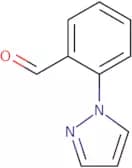
CAS:<p>2-(1H-Pyrazol-1-yl)benzaldehyde is a synthetic chemical compound that is used in the preparation of coupling reactions. It has been shown to be an efficient reagent for the synthesis of 2-bromobenzaldehyde and pyrazole. The molecule has a hydrazone attack, which can be coupled with 2-bromobenzaldehyde, with or without the use of an additional base such as sodium methoxide. This reaction can be carried out at room temperature and does not require any harsh conditions. 2-(1H-Pyrazol-1-yl)benzaldehyde also belongs to the family of aldehydes, which are molecules containing a carbon group that is connected to two hydrogen groups (i.e., RCH=O). Hydrogenation of this type of molecule gives rise to alcohols (RCHOH).</p>Formula:C10H8N2OPurezza:Min. 95%Peso molecolare:172.18 g/mol3-(Chloromethyl)-4-methoxybenzaldehyde
CAS:<p>3-(Chloromethyl)-4-methoxybenzaldehyde is a natural product that can be extracted from the rhizomes of the plant. It has been shown to have antibacterial activity in laboratory experiments and has been used in traditional medicine for the treatment of fungus infections. 3-(Chloromethyl)-4-methoxybenzaldehyde is an imidazolylmethyl derivative with a hexane structure. It reacts with hydrochloric acid to form a molecule called chloromethylation, which is also known as an esterification reaction. Piperazine acts as a catalyst in this reaction, increasing its scalability and making it suitable for large-scale production. The compound exhibits radical scavenging activity, which may be due to its ability to donate electrons or hydrogen atoms to free radicals.</p>Formula:C9H9CIO2Purezza:Min. 95%Peso molecolare:288.08 g/molSuccinicsemialdehyde
CAS:<p>Succinicsemialdehyde is a semialdehyde that is formed by the oxidative degradation of succinic acid. Succinicsemialdehyde has been shown to have high affinity for 5-HT3 receptors, which are found in the gastrointestinal tract and are involved in intestinal motility and bowel disease. The 5-HT3 receptor has been shown to be an important target for the treatment of irritable bowel syndrome. This semialdehyde also inhibits polymerase chain reaction (PCR) activity, which may be due to its ability to inhibit DNA synthesis. Succinicsemialdehyde has been shown to inhibit enzymes involved in energy metabolism, such as glutamate dehydrogenase and pyruvate formate lyase. The structural analysis of this molecule shows a keto group at C2, which indicates that it is a keto acid.</p>Formula:C4H6O3Purezza:Min. 95%Colore e forma:PowderPeso molecolare:102.09 g/mol1-Benzyl-5-ethoxy-1H-indole-3-carbaldehyde
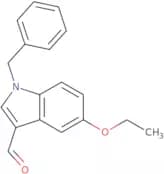
CAS:Prodotto controllato<p>Please enquire for more information about 1-Benzyl-5-ethoxy-1H-indole-3-carbaldehyde including the price, delivery time and more detailed product information at the technical inquiry form on this page</p>Formula:C18H17NO2Purezza:Min. 95%Peso molecolare:279.33 g/mol3,4-Dichlorobenzaldehyde
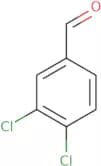
CAS:<p>3,4-Dichlorobenzaldehyde is a monosubstituted aromatic organic compound with inhibitory effects. 3,4-Dichlorobenzaldehyde has shown significant antifungal activity against Candida albicans and Saccharomyces cerevisiae. It also inhibits the growth of certain cancer cells in cell culture studies. 3,4-Dichlorobenzaldehyde has been found to have anti-inflammatory properties and would be effective in treating inflammatory diseases such as asthma or arthritis. This compound has been shown to have significant effects on energy metabolism and fatty acid synthesis by inhibiting enzymes that are involved in these processes. 3,4-Dichlorobenzaldehyde can also be used to treat metabolic disorders such as diabetes mellitus type II and hyperlipidemia by inhibiting enzymes that are involved in these processes.</p>Formula:C7H4Cl2OPurezza:Min. 95%Colore e forma:White To Off-White SolidPeso molecolare:175.01 g/molTrans-2-nonenal
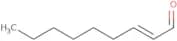
CAS:<p>Trans-2-nonenal is a monoclonal antibody that recognizes the physiological function of cardiac and rat liver microsomes. It has been shown to inhibit enzyme activities in both cell lines. Trans-2-nonenal has also been shown to protect against ischemia/reperfusion injury in rats by reducing the release of intracellular Ca2+ and ATP levels. Trans-2-nonenal is genotoxic and induces oxidative injury, which may be due to its ability to react with caproic acid to form reactive oxygen species.</p>Formula:C9H16OPurezza:Min. 95%Peso molecolare:140.22 g/mol5-Bromo-3-methoxybenzaldehyde
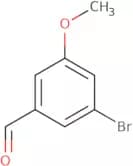
CAS:<p>5-Bromo-3-methoxybenzaldehyde is a type of growth factor that is synthesized by cancer cells. It has been shown to have anticancer activity when used in conjunction with other drugs. 5-Bromo-3-methoxybenzaldehyde has been shown to inhibit tumor growth in mice, which may be due to its ability to prevent the activation of PD-L1. This compound interacts with a tetranuclear ligand and can be activated by light.</p>Formula:C8H7BrO2Purezza:Min. 95%Colore e forma:PowderPeso molecolare:215.04 g/mol2-O-Tolyl-thiazole-4-carbaldehyde
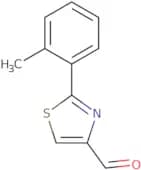
CAS:<p>Please enquire for more information about 2-O-Tolyl-thiazole-4-carbaldehyde including the price, delivery time and more detailed product information at the technical inquiry form on this page</p>Formula:C11H9NOSPurezza:Min. 95%Peso molecolare:203.26 g/mol