Aldeidi
Gli aldeidi sono composti organici che contengono un gruppo carbonilico (C=O) legato ad almeno un atomo di idrogeno. Questi composti versatili sono fondamentali in varie reazioni chimiche, tra cui ossidazione, riduzione e addizione nucleofila. Gli aldeidi sono building blocks essenziali nella sintesi di prodotti farmaceutici, fragranze e polimeri. Presso CymitQuimica, offriamo una vasta selezione di aldeidi di alta qualità per supportare le vostre applicazioni di ricerca e industriali.
Trovati 8540 prodotti di "Aldeidi"
Ordinare per
Purezza (%)
0
100
|
0
|
50
|
90
|
95
|
100
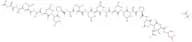
Cell-permeable Caspase-3 Inhibitor I trifluoroacetate salt
CAS:<p>Please enquire for more information about Cell-permeable Caspase-3 Inhibitor I trifluoroacetate salt including the price, delivery time and more detailed product information at the technical inquiry form on this page</p>Formula:C94H158N20O27Purezza:Min. 95%Peso molecolare:2,000.38 g/mol4-tert-Butoxybenzaldehyde
CAS:<p>4-tert-Butoxybenzaldehyde is a colorless liquid that has a viscosity of 0.3 mm2/s at 25 °C. It can be synthesized by reacting pyridine with hydrochloric acid in the presence of a Grignard reagent. 4-tert-Butoxybenzaldehyde reacts with phenolic antioxidants to form an ester, which can be used as an industrial solvent. The crystal x-ray diffraction pattern of 4-tert-Butoxybenzaldehyde exhibits peaks at 2θ = 8.0, 11.5, and 18.5° corresponding to the (100), (200), and (220) planes, respectively. This chemical can also undergo reactions that lead to termination or transfer reactions, including diethyl ketomalonate formation with diethyl malonate in the presence of water as a solvent and potassium hydroxide as a catalyst for transfer reactions.END></p>Formula:C11H14O2Purezza:Min. 95%Colore e forma:PowderPeso molecolare:178.23 g/molMethoxyacetaldehyde diethyl acetal
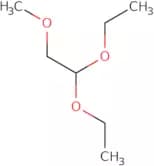
CAS:<p>Methoxyacetaldehyde diethyl acetal is a viscous liquid with a low vapor pressure. This substance is stable at high temperatures and has a high resistance to chemical interactions. It is also hydrophobic in nature. Methoxyacetaldehyde diethyl acetal has been shown to interact with the aminoglycoside antibiotics, erythromycin, streptomycin, and neomycin. The interaction of this substance with these antibiotics may be due to the fact that it has proton resonances similar to those of amino acids, as well as its ability to form hydrogen bonds with the antibiotic molecules. Methoxyacetaldehyde diethyl acetal also interacts with triethyl orthoformate, which can lead to the formation of an ester bond between them.</p>Formula:C7H16O3Purezza:Min. 95%Colore e forma:Colorless Clear LiquidPeso molecolare:148.2 g/mol4-Acetoxybenzaldehyde
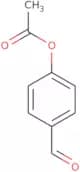
CAS:<p>4-Acetoxybenzaldehyde is a compound with an acetyl group attached to the benzene ring. It is potentially toxic to cells and has been shown to produce reactive oxygen species (ROS) in v79 cells, which can lead to cell death. The biological properties of 4-acetoxybenzaldehyde are not well understood, but it has been shown to have antioxidant properties in other studies. This compound also reacts with amines, forming acetamides and amides. 4-Acetoxybenzaldehyde is found in environmental pollution as a result of its presence in the atmosphere and its use as a solvent. It was first synthesized by the reaction of coumaric acid and acetyl chloride with formaldehyde at reflux temperature. The compound can be purified by chromatographic methods or mass spectrometric analysis.</p>Formula:C9H8O3Purezza:Min. 95%Colore e forma:LiquidPeso molecolare:164.16 g/molZ-Leu-Leu-4,5-dehydro-Leu-aldehyde
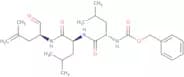
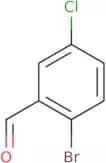
CAS:<p>Please enquire for more information about Z-Leu-Leu-4,5-dehydro-Leu-aldehyde including the price, delivery time and more detailed product information at the technical inquiry form on this page</p>Formula:C26H39N3O5Purezza:Min. 95%Peso molecolare:473.61 g/mol2-Bromo-5-chlorobenzaldehyde
CAS:<p>2-Bromo-5-chlorobenzaldehyde is an industrial chemical that is used as a precursor for the production of other chemicals. It can be synthesized by reacting 3-chlorobenzaldehyde with sodium bromide in the presence of a catalyst. 2-Bromo-5-chlorobenzaldehyde has been shown to have high reactivity, and can be used as a catalyst to produce large amounts of organic compounds. This chemical can also be produced in large quantities by neutralizing alkalis with acid, which is an effective way to dispose of these hazardous substances.</p>Formula:C7H4BrClOPurezza:Min. 95%Peso molecolare:219.46 g/mol2-Fluoropyridine-5-carboxaldehyde
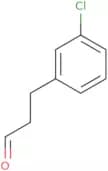
CAS:<p>2-Fluoropyridine-5-carboxaldehyde is a reactive chemical that can be used as an acceptor in organic synthesis. It has been shown to have antibacterial properties, and is also a synthon for the production of prosthetic groups. 2-Fluoropyridine-5-carboxaldehyde reacts with dopamine to form diphenyl ethers, which are used as labels for immunoassays. This chemical can be catalysed and has been shown to be resistant to catalysis. 2-Fluoropyridine-5-carboxaldehyde can also be used in the synthesis of cycloalkanes.</p>Formula:C6H4FNOPurezza:Min. 95%Peso molecolare:125.1 g/mol3-(3-Chlorophenyl)propionaldehyde
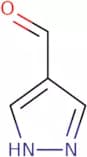
CAS:<p>Please enquire for more information about 3-(3-Chlorophenyl)propionaldehyde including the price, delivery time and more detailed product information at the technical inquiry form on this page</p>Formula:C9H9ClOPurezza:Min. 95%Peso molecolare:168.62 g/mol1H-Pyrazole-4-carbaldehyde
CAS:<p>1H-Pyrazole-4-carbaldehyde is a chemical compound that inhibits the growth of bacteria by binding to the enzyme ribonucleotide reductase. It has been shown to have significant antifungal activity against Candida albicans and Saccharomyces cerevisiae, as well as in vitro antifungal activity against other fungi. The 1H-pyrazole-4-carbaldehyde has also been found to inhibit xanthine oxidase and nitric oxide synthase (NOS) in vitro and in vivo, which may be due to its ability to reduce oxidative stress. This chemical compound is a coumarin derivative and contains a pyrazole ring.</p>Formula:C4H4N2OPurezza:Min. 95%Colore e forma:White PowderPeso molecolare:96.09 g/mol2-Thiophenecarboxaldehyde
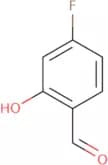
CAS:<p>2-Thiophenecarboxaldehyde is a synthetic compound that has been shown to have in vitro antifungal activity. It has also been shown to inhibit the growth of bacteria and fungi, such as Candida albicans. The antimicrobial activity of 2-thiophenecarboxaldehyde has been demonstrated by in vitro studies using human serum, metal carbonyl complexes, and sodium salts. In addition, this compound inhibits the synthesis of proteins in animal cells infected with viruses or bacteria. It also has amoebicidal activity against Entamoeba histolytica and Leishmania donovani. This compound is used for the treatment of autoimmune diseases such as rheumatoid arthritis and multiple sclerosis.</p>Formula:C5H4OSPurezza:Min. 95%Colore e forma:Clear LiquidPeso molecolare:112.15 g/mol2-Hydroxy-4-fluorobenzaldehyde
CAS:<p>2-Hydroxy-4-fluorobenzaldehyde is a chemical used as a diagnosis agent to detect radiation exposure. It reacts with magnesium and water molecules to form an amination reaction that produces hydrogen fluoride gas. 2-Hydoxy-4-fluorobenzaldehyde has been shown to have the ability to penetrate into mitochondria, which may be related to its use in the treatment of hepatitis. The chemical structure of this compound is similar to salicylaldehyde, which is used as a reagent for formylation reactions and optical properties. It has also been shown that 2-hydroxy-4-fluorobenzaldehyde can act as a fluorescence probe for the detection of hydrophobic regions on proteins.</p>Formula:C7H5FO2Purezza:Min. 95%Colore e forma:PowderPeso molecolare:140.11 g/mol4-Chloro-3-fluorobenzaldehyde
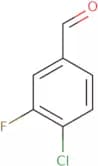
CAS:<p>4-Chloro-3-fluorobenzaldehyde is an atypical molecule that has a deuterium atom. It is classified as a group p2 functional theory reuptake inhibitor, which blocks the reuptake of noradrenaline at the synapse. The vibrational and spectroscopic properties of this molecule are similar to those of other molecules in its class. 4-Chloro-3-fluorobenzaldehyde was shown to inhibit the production of noradrenaline in rat brain tissue and is used as a model for studying genetic polymorphism. Techniques such as nuclear magnetic resonance spectroscopy, infrared spectroscopy, and X-ray crystallography have been used to investigate the structure and reactivity of 4-chloro-3-fluorobenzaldehyde.</p>Formula:C7H4ClFOPurezza:Min. 95%Peso molecolare:158.56 g/molcis-3-Hexenal - stabilised: 50% in triacetin
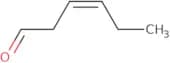
CAS:<p>Cis-3-hexenal is a fatty acid that is found in various foods, including soybean and corn oils. It can be used as a chemical substrate to measure the activity of lipoxygenases, enzymes that catalyze the formation of hydroperoxides from polyunsaturated fatty acids. Cis-3-hexenal is also an insect attractant and has been shown to have antifungal properties against plant pathogens such as Phytophthora infestans. This chemical compound has also been shown to inhibit protein synthesis in cells and to be able to react with DNA. Cis-3-hexenal - stabilised: 50% in triacetin</p>Formula:C6H10OPurezza:Min. 95%Colore e forma:PowderPeso molecolare:98.14 g/molN-Ethylcarbazole-3-carboxaldehyde
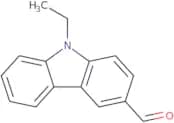
CAS:<p>N-Ethylcarbazole-3-carboxaldehyde is an organic compound that has been shown to have anti-cancer properties. It activates the enzyme dioxygenase, which in turn generates reactive oxygen species (ROS) that induce DNA damage and apoptosis in mammalian cells. The photophysical and fluorescence spectrometry of N-ethylcarbazole-3-carboxaldehyde were studied as a function of pH and found to be sensitive to acidic environments. N-Ethylcarbazole-3-carboxaldehyde is also able to form covalent bonds with DNA bases, leading to irreversible oxidation.</p>Formula:C15H13NOPurezza:Min. 95%Peso molecolare:223.27 g/mol4,6-Dimethoxysalicylaldehyde
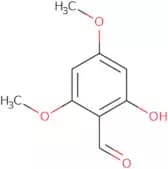
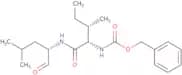
CAS:<p>4,6-Dimethoxysalicylaldehyde is a protonated molecule with a cyclohexane ring and 4 hydroxyl groups. Its chemical formula is C6H8O3. The compound has low bioavailability due to the presence of an intramolecular hydrogen bond that causes high redox potential. There are two amines on the aromatic ring which can coordinate with metal ions to form a complex. This compound's structural analysis has been conducted using X-ray crystallography, NMR spectroscopy, and IR spectroscopy. The structure of 4,6-dimethoxysalicylaldehyde is unsymmetrical due to the presence of two asymmetric carbon atoms in the molecule. It forms hydrogen bonds with other molecules due to its hydroxyl group and intramolecular hydrogen bond. Hydrogen bonding interactions occur between this compound and other molecules including water, alcohols, ammonia, amines, and carboxylic acids.</p>Formula:C9H10O4Purezza:Min. 95%Colore e forma:Off-White PowderPeso molecolare:182.17 g/molZ-Ile-Leu-aldehyde
CAS:<p>Please enquire for more information about Z-Ile-Leu-aldehyde including the price, delivery time and more detailed product information at the technical inquiry form on this page</p>Formula:C20H30N2O4Purezza:Min. 95%Peso molecolare:362.46 g/mol4-Fluorobenzaldehyde oxime
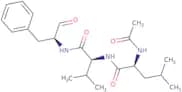
CAS:<p>4-Fluorobenzaldehyde oxime is a phenylhydrazine derivative that reacts with an aromatic amine to form a ternary complex. The reaction time for this process is short, and the yield of the product is high. 4-Fluorobenzaldehyde oxime also reacts with an aromatic amine to form an ion-pair. It can react with acidic hydrogen donors such as peracids and it also has high hydrogen bonding interactions. 4-Fluorobenzaldehyde oxime is used in pharmacological agents as well as other chemical reactions, including halogenation.</p>Formula:C7H6FNOPurezza:Min. 95%Colore e forma:White PowderPeso molecolare:139.13 g/molAc-Leu-Val-Phe-aldehyde
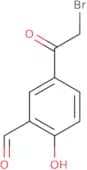
CAS:<p>Ac-Leu-Val-Phe-aldehyde is a synthetic compound that inhibits the catalytic activity of carboxyl enzymes. It binds to the catalytic site of the enzyme via a noncovalent interaction with residues on the polypeptide chain, thereby preventing the formation of an active complex with other cofactors such as metal ions, amino acids, and ATP. Ac-Leu-Val-Phe-aldehyde can be used in analytical chemistry for determination of carboxyl groups in organic compounds or for determining protein content in biological samples. Ac-Leu-Val-Phe-aldehyde has also been shown to bind to antibodies which are specific for carboxyl groups.</p>Formula:C22H33N3O4Purezza:Min. 95%Peso molecolare:403.52 g/mol5-(2-Bromo-acetyl)-2-hydroxy-benzaldehyde
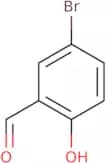
CAS:<p>5-Bromo-2-hydroxybenzaldehyde is an organic compound with a chemical formula of CHBrO. It is a white solid that is soluble in water, ethanol, and acetone. The synthesis of 5-bromo-2-hydroxybenzaldehyde has been achieved by the acylation reaction of benzaldehyde with bromide ion. The selectivity for this reaction can be increased by using sodium borohydride as a reducing agent instead of lithium aluminum hydride. This method can be applied to the synthesis of salmeterol, which is used as a medicine in the treatment of asthma.</p>Formula:C9H7BrO3Purezza:Min. 95%Peso molecolare:243.05 g/mol5-Bromo-2-hydroxybenzaldehyde
CAS:<p>5-Bromo-2-hydroxybenzaldehyde (5BHB) is an organic compound that has been shown to have a coordination geometry of group p2. This compound binds to DNA and RNA, inhibiting the transcription process. 5BHB also has the ability to form a copper complex with malonic acid. This redox potential is reduced by one electron when copper is added in order to form the copper complex, which allows for the reactivity of 5BHB to be increased. 5BHB binds to nucleic acids through hydrogen bonding interactions with nitrogen atoms and lone pairs on oxygen atoms. The reaction mechanism for 5BHB involves intramolecular hydrogen transfer from one molecule of 5BHB to another, forming an intermediate that then reacts with nucleic acid.</p>Formula:C7H5BrO2Purezza:Min. 95%Colore e forma:White PowderPeso molecolare:201.02 g/mol