Aldeidi
Gli aldeidi sono composti organici che contengono un gruppo carbonilico (C=O) legato ad almeno un atomo di idrogeno. Questi composti versatili sono fondamentali in varie reazioni chimiche, tra cui ossidazione, riduzione e addizione nucleofila. Gli aldeidi sono building blocks essenziali nella sintesi di prodotti farmaceutici, fragranze e polimeri. Presso CymitQuimica, offriamo una vasta selezione di aldeidi di alta qualità per supportare le vostre applicazioni di ricerca e industriali.
Trovati 8540 prodotti di "Aldeidi"
Ordinare per
Purezza (%)
0
100
|
0
|
50
|
90
|
95
|
100
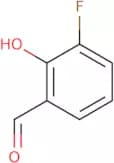
3-Fluoro-2-hydroxybenzaldehyde
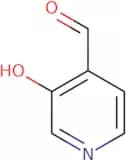
CAS:<p>3-Fluoro-2-hydroxybenzaldehyde is a colorless liquid with a sweet, aromatic odor. It has been shown to be an antibacterial agent against Gram positive bacteria and may have potential as a drug for the treatment of MRSA. 3-Fluoro-2-hydroxybenzaldehyde is used in the production of cellulose acetate and sodium sulfide. It is also used in the chemical reactions that form amines, hydroxyl groups, and chloride ions. It has been shown to inhibit mitochondrial respiration by chelating ring complexes in the respiratory chain. It also inhibits biological processes such as DNA synthesis, protein synthesis, and hydrogen bond formation.</p>Formula:C7H5FO2Purezza:Min. 95%Colore e forma:PowderPeso molecolare:140.11 g/mol3-Hydroxyisonicotinaldehyde
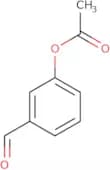
CAS:<p>3-Hydroxyisonicotinaldehyde is a disulfide bond that plays an important role in enzyme catalysis. The active site of the enzyme, which contains a nucleophilic attack on the electrophilic carbon atom, is composed of two cysteine residues with their sulfhydryl group (-SH) bonded to each other through a disulfide bond. This bond can be broken by either an acidic environment or protonation. In the absence of these conditions, the -SH groups are coordinated to metal ions and form a complex. The hydroxyl group (-OH) on one cysteine residue can coordinate to the nitrogen atom on the other cysteine residue and form tautomers. These tautomers correspond to two different configurations of the molecule: one where both sulfur atoms are in a trans configuration (tautomer A), and one where they are in a cis configuration (tautomer B). The biological properties of 3-hydroxyison</p>Formula:C6H5NO2Purezza:Min. 95%Peso molecolare:123.11 g/mol3-Acetoxybenzaldehyde
CAS:<p>3-Acetoxybenzaldehyde is a chemical compound that has been used as a photosensitiser for the production of hydrogen peroxide. When irradiated with light, it undergoes a series of reactions, including the removal of an electron from the molecule and the formation of a reactive oxygen species (ROS). This ROS then reacts with chloride ions to form chlorine radicals. These chlorine radicals can react with acetyl groups to form 3-acetoxybenzoic acid. 3-Acetoxybenzaldehyde is also used in organic synthesis to produce ketones and aldehydes. The functional groups on this compound are an acetyl group and a carbonyl group. 3-Acetoxybenzaldehyde is produced by the dehydrogenation of trimethyl acetate, which is catalyzed by palladium on charcoal or platinum oxide.</p>Formula:C9H8O3Purezza:Min. 95%Colore e forma:Clear LiquidPeso molecolare:164.16 g/mol1H-Pyrazole-4-carbaldehyde
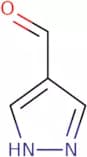
CAS:<p>1H-Pyrazole-4-carbaldehyde is a chemical compound that inhibits the growth of bacteria by binding to the enzyme ribonucleotide reductase. It has been shown to have significant antifungal activity against Candida albicans and Saccharomyces cerevisiae, as well as in vitro antifungal activity against other fungi. The 1H-pyrazole-4-carbaldehyde has also been found to inhibit xanthine oxidase and nitric oxide synthase (NOS) in vitro and in vivo, which may be due to its ability to reduce oxidative stress. This chemical compound is a coumarin derivative and contains a pyrazole ring.</p>Formula:C4H4N2OPurezza:Min. 95%Colore e forma:White PowderPeso molecolare:96.09 g/mol2-Amino-4-fluorobenzaldehyde
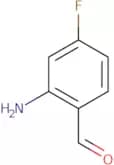
CAS:<p>2-Amino-4-fluorobenzaldehyde is a plant growth regulator that has been shown to be effective at increasing the yield of flowers and fruit crops. It is used as an intermediate in the synthesis of agrochemicals, such as 2-aminobenzaldehyde and anthranilic acid. The biosynthesis of 2-amino-4-fluorobenzaldehyde starts from methanol and intermediates such as anthranilic acid, aminoaldehydes, or alcohols. It can also be produced by oxidative coupling of 2-aminobenzaldehyde with phenylacetone in the presence of sodium hydroxide. 2-Amino-4-fluorobenzaldehyde has been shown to be more efficient than other plant growth regulators such as robinia or aminocyclopentane carboxylic acid (ACC).</p>Formula:C7H6FNOPurezza:Min. 95%Colore e forma:SolidPeso molecolare:139.13 g/mol2-(Dimethylamino)acetaldehyde sulfite
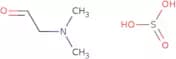
CAS:<p>2-(Dimethylamino)acetaldehyde sulfite is a white crystalline solid with a melting point of around 100°C. It is soluble in water and slightly soluble in organic solvents. 2-(Dimethylamino)acetaldehyde sulfite can be used as a reagent to prepare alkali solutions and acid hydrochlorides. It can also be used as an intermediate for the synthesis of methacrylic acid, methyl acetate, and other organic compounds. 2-(Dimethylamino)acetaldehyde sulfite can be synthesized using a high-yield synthetic method involving lithium, acidification, and an organic solvent.</p>Purezza:Min. 95%Ac-Glu-Ser-Met-Asp-aldehyde (pseudo acid)
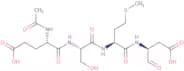
CAS:<p>Ac-Glu-Ser-Met-Asp-aldehyde is a molecule that is naturally produced by the human body. It has been shown to be an endogenous caspase activator, which may lead to apoptosis. Ac-Glu-Ser-Met-Asp-aldehyde can also bind to cholesterol and influence its synthesis, thus affecting the production of other proteins. This molecule has a protease activity and can cleave peptides at specific sites. The sequences of this molecule have been determined and it has been found that these sequences are similar to those found in other proteases such as serine proteases.</p>Formula:C19H30N4O10SPurezza:Min. 95%Peso molecolare:506.53 g/mol3-Bromobenzaldehyde
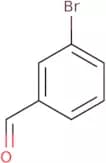
CAS:<p>3-Bromobenzaldehyde is an organic compound with the formula CHBrCHO. It is a colorless liquid that is soluble in many organic solvents. 3-Bromobenzaldehyde can be synthesized by the reaction of ethyl acetoacetate and anhydrous sodium in methanol, and can be purified by distillation or recrystallization from ethanol. This compound has been used as a solvent for analytical methods, such as GC-MS analysis, due to its high boiling point and low volatility. 3-Bromobenzaldehyde also reacts with hydrogen chloride to form benzoyl chloride, which can then be reacted with alcohols to produce esters. 3-Bromobenzaldehyde has been shown to react with chalcones to form optical active compounds, such as curcumin analogues. These reactions are typically carried out in solution using acetic acid or sulfuric acid as a catalyst.br>br></p>Formula:C7H5BrOPurezza:Min. 95%Peso molecolare:185.02 g/molZ-Leu-Leu-Tyr-a-keto aldehyde
CAS:<p>Please enquire for more information about Z-Leu-Leu-Tyr-a-keto aldehyde including the price, delivery time and more detailed product information at the technical inquiry form on this page</p>Formula:C30H39N3O7Purezza:Min. 95%Peso molecolare:553.65 g/molN-Boc-(3S)-3-phenyl-3-aminopropionaldehyde
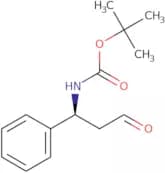
CAS:<p>N-Boc-(3S)-3-phenyl-3-aminopropionaldehyde is a synthetic chiral ligand that can be used as a building block in the synthesis of other compounds. It has been used to optimize the synthetic process, and it can be used in buffers, ammonium formate, metal chelate, and other additives to synthesize new compounds. N-Boc-(3S)-3-phenyl-3-aminopropionaldehyde is an optical isomer that can be used for supercritical fluid chromatography (SCFC) or liquid chromatography (LC). This compound has been shown to have a high affinity for ligands with a phenol group.</p>Formula:C14H19NO3Purezza:Min. 95%Peso molecolare:249.31 g/molPhenylpropargylaldehyde
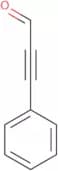
CAS:<p>Phenylpropargylaldehyde is an organic compound that is a chiral molecule, which means it has two enantiomers. It was first synthesized in 1964 by R.B. Woodward and T.W. Rittenberg at the University of Chicago, and is used as a chemical intermediate in the synthesis of other compounds with biological activity such as matrix metalloproteinase inhibitors, for example marimastat. Phenylpropargylaldehyde can be prepared from malonic acid and phenylboronic acid in a reaction mechanism that involves nucleophilic substitutions, carbonyl group activation and hydrogen bonding to lysine residues on proteins. The asymmetric synthesis of this compound has been shown to suppress genes associated with metabolic disorders such as diabetes mellitus type 2, fatty acid metabolism disorders and endocrine disorders (e.g., thyroid). It also has adjuvant therapeutic properties in cancer treatment, especially when combined with synthetic fatty acids such as oleic acid or ar</p>Purezza:Min. 95%2-Thiophenecarboxaldehyde
CAS:<p>2-Thiophenecarboxaldehyde is a synthetic compound that has been shown to have in vitro antifungal activity. It has also been shown to inhibit the growth of bacteria and fungi, such as Candida albicans. The antimicrobial activity of 2-thiophenecarboxaldehyde has been demonstrated by in vitro studies using human serum, metal carbonyl complexes, and sodium salts. In addition, this compound inhibits the synthesis of proteins in animal cells infected with viruses or bacteria. It also has amoebicidal activity against Entamoeba histolytica and Leishmania donovani. This compound is used for the treatment of autoimmune diseases such as rheumatoid arthritis and multiple sclerosis.</p>Formula:C5H4OSPurezza:Min. 95%Colore e forma:Clear LiquidPeso molecolare:112.15 g/mol6-Chloroindole-3-carboxaldehyde
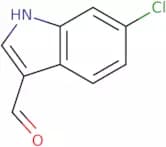
CAS:<p>6-Chloroindole-3-carboxaldehyde is a natural compound with the molecular formula C8H6ClNO2. It has been shown to have anticancer activity against lung cancer cells and has been found to inhibit the growth of metastatic lung cancer cells in mice. 6-Chloroindole-3-carboxaldehyde inhibits the proliferation of human lung cancer cells by arresting cells in the G1 phase of the cell cycle, which may be due to its ability to bind to deoxyhexose and form a complex. This compound also has antimicrobial activity against bacterial strains such as Streptococcus pneumoniae and Mycoplasma pneumoniae.</p>Formula:C9H6ClNOPurezza:Min. 95%Peso molecolare:179.6 g/mol1-H-Pyrazole-3-carboxaldehyde
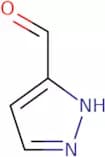
CAS:<p>1-H-Pyrazole-3-carboxaldehyde (1HP) is a β-unsaturated ketone that has been shown to inhibit the growth of chronic pulmonary fungal infections, such as histoplasmosis, coccidioidomycosis, and blastomycosis. It has also been shown to have anticancer activity in vitro and in vivo. 1HP inhibits cellular proliferation by inducing cell cycle arrest at the G(2)/M checkpoint. The molecular mechanism of this inhibition is due to an increase in the expression of p21 protein and p27 protein, which are tumor suppressor proteins that regulate progression through the cell cycle. 1HP also inhibits HIV infection by inhibiting reverse transcriptase and proteases, which are enzymes involved in viral replication. This compound binds to active methylene groups on the enzyme's surface, blocking its ability to perform chemical reactions with other molecules. 1HP also has strong inhibitory effects on cancer cells because it causes structural</p>Formula:C4H4N2OPurezza:Min. 95%Peso molecolare:96.09 g/molN-Ethylcarbazole-3-carboxaldehyde
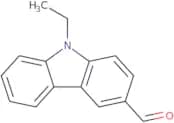
CAS:<p>N-Ethylcarbazole-3-carboxaldehyde is an organic compound that has been shown to have anti-cancer properties. It activates the enzyme dioxygenase, which in turn generates reactive oxygen species (ROS) that induce DNA damage and apoptosis in mammalian cells. The photophysical and fluorescence spectrometry of N-ethylcarbazole-3-carboxaldehyde were studied as a function of pH and found to be sensitive to acidic environments. N-Ethylcarbazole-3-carboxaldehyde is also able to form covalent bonds with DNA bases, leading to irreversible oxidation.</p>Formula:C15H13NOPurezza:Min. 95%Peso molecolare:223.27 g/molPoly[(phenyl glycidyl ether)-co-formaldehyde] - Average MW 570
CAS:<p>Please enquire for more information about Poly[(phenyl glycidyl ether)-co-formaldehyde] - Average MW 570 including the price, delivery time and more detailed product information at the technical inquiry form on this page</p>Formula:(C6H6O•CH2O)xPurezza:Min. 95%Colore e forma:Clear Liquidtrans,cis-2,6-Nonadienal
CAS:<p>Trans,cis-2,6-Nonadienal is a fatty acid derivative with an unsaturated 2,6-nonadiene structure. It is an inhibitor of the enzyme fatty acid synthase, which catalyzes the formation of long-chain polyunsaturated fatty acids. Trans,cis-2,6-Nonadienal has been shown to inhibit v79 cells and ester compounds that are used in analytical methods for measuring fatty acids. It is also able to inhibit lysine residues and it can be used as a reactive antioxidant system in mammalian cells. Trans,cis-2,6-Nonadienal has shown a profile of activities that includes inhibition at multiple endpoints involving noncompetitive inhibition as well as antioxidant activity.</p>Formula:C9H14OPurezza:Min. 95%Colore e forma:Clear LiquidPeso molecolare:138.21 g/mol2,3,5-Trichlorobenzaldehyde
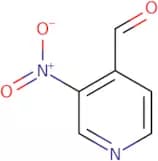
CAS:<p>2,3,5-Trichlorobenzaldehyde is a chemical compound that has been shown to have anticancer and apoptotic effects. It inhibits the growth of bacteria by chelating iron ions and inhibiting bacterial dna synthesis. 2,3,5-Trichlorobenzaldehyde has also been shown to inhibit the growth of cancer cells in culture in an experimental study. This chemical has been used as a substrate for nmr spectroscopy to study its functional groups and radical scavenging activities. 2,3,5-Trichlorobenzaldehyde can be synthesized from phenacyl chloride and benzaldehyde in the presence of hydrogen chloride gas. The carbonyl group in 2,3,5-trichlorobenzaldehyde may cause metabolic disorders such as diabetes mellitus or hyperglycemia.</p>Formula:C7H3Cl3OPurezza:Min. 95%Colore e forma:PowderPeso molecolare:209.46 g/mol3-Nitroisonicotinaldehyde
CAS:<p>3-Nitroisonicotinaldehyde is a kinase inhibitor that binds to the ATP binding site of receptor tyrosine kinases. It inhibits the activation of these receptors and prevents the phosphorylation of tyrosine residues on the receptor. 3-Nitroisonicotinaldehyde has been shown to inhibit VEGFR-2, ABCG2, and efflux in human cancer cells. This drug has been shown to inhibit tumor growth in mice by inhibiting angiogenesis, which is a process that involves the formation of new blood vessels from pre-existing ones. 3-Nitroisonicotinaldehyde also inhibits tumor growth by blocking the production of vascular endothelial growth factor (VEGF) from angiogenic cells.</p>Formula:C6H4N2O3Purezza:Min. 95%Peso molecolare:152.11 g/mol



![Poly[(phenyl glycidyl ether)-co-formaldehyde] - Average MW 570](/_next/image/?url=https%3A%2Fstatic.cymitquimica.com%2Fproducts%2F3D%2Fthumb-webp%2FFP158268.webp&w=3840&q=75)