Alcoli benzilici
Gli alcoli benzilici sono alcoli aromatici caratterizzati da un anello benzenico attaccato a un gruppo idrossimetilico (-CH2OH). Questi composti sono utilizzati come solventi, conservanti e intermedi nella sintesi di prodotti farmaceutici, fragranze e resine. Gli alcoli benzilici sono noti per le loro proprietà antimicrobiche e la loro versatilità in varie reazioni chimiche. Presso CymitQuimica, offriamo un'ampia selezione di alcoli benzilici di alta qualità per supportare le vostre ricerche e applicazioni industriali.
Trovati 1458 prodotti di "Alcoli benzilici"
Ordinare per
Purezza (%)
0
100
|
0
|
50
|
90
|
95
|
100
2-Aminobenzyl alcohol
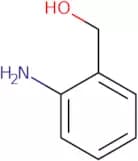
CAS:2-Aminobenzyl alcohol is a chaperone that binds to the polypeptide chain of proteins and prevents them from denaturation. It also has been shown to form hydrogen bonds with other molecules, such as chaperones, and to bind to copper ions. 2-Aminobenzyl alcohol can react with sodium carbonate in an alkaline solution to form 2-aminobenzaldehyde and sodium bicarbonate. The reaction mechanism is thought to involve the formation of a copper complex with x-ray diffraction data showing a new set of peaks at d = 1.81 Å corresponding to the Cu(II) ion coordinated by two amine groups on the benzyl alcohol ring. This compound also reacts with quinoline derivatives in the presence of hydrochloric acid or hydroxyl group in an aprotic solvent such as dimethylformamide (DMF) or acetonitrile (ACN) to produce mianserin hydroFormula:C7H9NOPurezza:Min. 97.5%Colore e forma:Off-White PowderPeso molecolare:123.15 g/mol2-Fluoro-4-nitrophenol
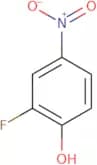
CAS:<p>2-Fluoro-4-nitrophenol is an amide that has potent antitumor activity. It is a selective inhibitor of the protein kinase Raf (Akt), leading to inhibition of the growth of cancer cells in vitro. 2-Fluoro-4-nitrophenol also inhibits the proliferation of prostate cancer cells, which may be due to its ability to inhibit the production of growth factors and cytokines such as mcf-7 and nitrous oxide. The 2-fluoro-4-nitrophenol is cytotoxic because it inhibits DNA synthesis and prevents mitosis. The chemical structure consists of a nitro group (-NO2) on C6, a phenolic hydroxyl group (-OH) on C2, and a methylene group (-CH2-) on C3. This molecule binds covalently to proteins through its amino acid side chain at C6 and forms stable complexes with x-ray crystallography structures. It</p>Formula:C6H4FNO3Purezza:Min. 95%Colore e forma:PowderPeso molecolare:157.1 g/mol3-Ethoxyphenol
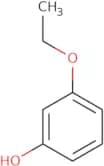
CAS:3-Ethoxyphenol is an organic compound that has a phenolic hydroxyl group attached to the 3-position of an ethyl alcohol. The ethoxy groups on the molecule allow it to bind to receptors in the central nervous system, including the dopamine receptor and the d4 receptor. This binding process is thermodynamically and kinetically favorable, which leads to a high metabolic rate. 3-Ethoxyphenol has been shown to have strong antiviral properties, particularly against chromobacterium violaceum, and can be used as a specific ligand for metal surfaces. The coumarin derivatives of 3-ethoxyphenol have also been shown to inhibit the growth of propionate and covid-19 pandemic.Formula:C8H10O2Purezza:Min. 95%Colore e forma:PowderPeso molecolare:138.16 g/mol4-Hydroxybenzyl alcohol
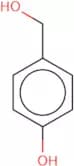
CAS:4-Hydroxybenzyl alcohol is a chemical compound that is found in the rhizoma gastrodiae. It has been shown to have angiogenic properties and may be used as an anti-angiogenic agent. 4-Hydroxybenzyl alcohol is also an inhibitor of matrix metalloproteinases, which are enzymes that degrade the extracellular matrix. This inhibition leads to apoptosis and neuronal death.Formula:C7H8O2Purezza:Min. 80%Colore e forma:PowderPeso molecolare:124.14 g/mol3-Formylbenzyl alcohol
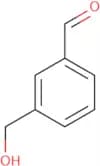
CAS:<p>3-Formylbenzyl alcohol is a fatty acid that has been shown to inhibit the growth of bacteria by binding to the hydroxyl group of the bacterial cell membrane. 3-Formylbenzyl alcohol's antimicrobial activity is due to its ability to inhibit the production of fatty acids in the cell membrane, preventing the formation of an outer layer that protects bacteria from attack. The antibacterial agent also inhibits protein synthesis and prevents DNA replication, resulting in cell death. 3-Formylbenzyl alcohol binds to bacteria through hydrogen bonding and has been shown to be effective against Staphylococcus aureus, Bacillus subtilis, Escherichia coli, and Pseudomonas aeruginosa. The mechanism for this action is not clear but may involve an intramolecular hydrogen bond or nucleophilic attack by one of its carbonyl groups on a nitrogen atom in the bacterial molecule.</p>Formula:C8H8O2Purezza:Min. 95%Colore e forma:Off-White PowderPeso molecolare:136.15 g/mol1,2,4-Benzenetriol technical grade
CAS:1,2,4-Benzenetriol (BNT) is a reactive molecule that has been shown to have hydrogen bonding interactions with copper chloride. It has been proposed as an inhibitor of methyltransferase, which is involved in the synthesis of methionine. Studies have shown that BNT can also inhibit iron homeostasis and transfer reactions. The x-ray diffraction data for this compound shows that it forms a complex with the hydroxyl group. This complex is stabilized by hydrogen bonding interactions with the hydroxylic proton of the 1,2,4-benzenetriol molecule. BNT has been shown to be toxic to HL-60 cells and K562 cells at concentrations greater than 5 mM. It has also been found to be effective against chlorogenic acids and other compounds in energy metabolism studies at concentrations between 0.5 and 2 mM.Formula:C6H6O3Purezza:Min. 95%Colore e forma:PowderPeso molecolare:126.11 g/mol3-Hydroxybenzyl alcohol
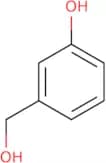
CAS:<p>3-Hydroxybenzyl alcohol is a fatty acid with a hydroxyl group. The clinical relevance of 3-hydroxybenzyl alcohol remains unclear. It has been used in acetate extract and ph optimum tests, as well as to study reaction solutions and nmr spectroscopic data. Hydrogen bonds have been observed between the molecule's hydroxyl group and the oxygen atoms in water molecules, which may explain its antifungal properties. 3-hydroxybenzyl alcohol also has an inhibitory effect on cyclic peptide synthesis, rotarod test performance, and analytical methods. It is a broad-spectrum antimicrobial that can be used against bacteria, fungi, protozoa and viruses. 3-hydroxybenzyl alcohol has an acidic character because it reacts with copper ions to form a copper complex.</p>Formula:C7H8O2Purezza:Min. 95%Colore e forma:White PowderPeso molecolare:124.14 g/mol4-Methylbenzyl alcohol
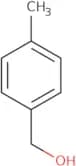
CAS:4-Methylbenzyl alcohol is a reactive molecule that has been shown to form an acid in water. The formation of this acid can be attributed to the loss of a proton from the methyl group. This acid is generated by a reaction mechanism that involves the nucleophilic attack of hydrogen fluoride on the methyl group, leading to its conversion into a carbocation. 4-Methylbenzyl alcohol can also react with β-amino acids and hydrogen fluoride in organic solvents at high pH values, through similar mechanisms.Formula:C8H10OPurezza:Min. 95%Colore e forma:PowderPeso molecolare:122.16 g/molo-Iodobenzyl alcohol
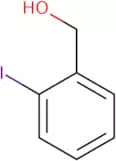
CAS:O-iodobenzyl alcohol (OIB) is a nucleophile that reacts with an electron-deficient, electrophilic carbon atom to form a covalent bond. It has been shown to have the ability to reduce carbonyl groups and can be used as a bioconjugate for binding with biomolecules. OIB has also been shown to be effective in the reduction of functional groups such as hydroxyl, nitro, and amino groups. This chemical is also used in nucleophilic substitution reactions and may be used in asymmetric synthesis. The NMR spectra of OIB are characterized by the presence of two doublets at 6.6 ppm and 7.2 ppm, which correspond to the two different stereoisomers of this compound. These two isomers are distinguished by their optical rotation constants: alpha = -0.1468 (c = 1, H2O) and beta = +0.1140 (c = 1, H2Formula:C7H7IOPurezza:Min. 98%Colore e forma:PowderPeso molecolare:234.03 g/mol4-Chloro-2-methoxyphenol
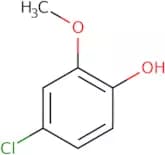
CAS:4-Chloro-2-methoxyphenol (4CMP) is a type of chemical compound that belongs to the aryl halide class. It is used in wastewater treatment as an inhibitor of bacterial growth. 4CMP inhibits bacterial growth by reacting with fatty acids at the surface of the bacteria, forming a coating that prevents bacterial attachment to solid surfaces and mineralization. This process has been shown to be effective in both batch and flow systems, with copper chloride being the best catalyst for this reaction. Kinetic studies have shown that 4CMP has an inhibitory effect on the reaction rate of activated sludge microorganisms, which can be used to optimize process conditions.Formula:C7H7ClO2Purezza:Min. 95%Colore e forma:Clear LiquidPeso molecolare:158.58 g/mol4-Allyl-2-methoxyphenol acetate
CAS:4-Allyl-2-methoxyphenol acetate is a natural compound that has been shown to have inhibitory properties against Candida glabrata. It also has a synergistic effect with benzoate and eugenol, which are compounds that are found in the essential oils of plants. 4-Allyl-2-methoxyphenol acetate is toxic to aquatic organisms at high concentrations. The water solubility of this compound is low and it has a vapor pressure of 0.0045 mm Hg at 25°C, indicating that it will not evaporate into the atmosphere very quickly.Formula:C12H14O3Purezza:Min. 95%Colore e forma:Colorless Clear LiquidPeso molecolare:206.24 g/mol2-Chloro-4-nitrophenol
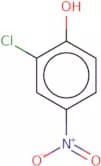
CAS:<p>2-Chloro-4-nitrophenol (2CP) is a chemical that has been found to be an optical sensor for nitrite ion. It reacts with nitrite ion at a pH of 5 and changes its color from yellow or orange to red. 2CP is also an antimicrobial agent and has shown biological properties against bacteria, including the ability to inhibit bacterial growth and reduce the number of bacteria in human serum. The optimum concentration for the inhibition of bacterial growth was found to be 0.5 mg/mL, which is much lower than the concentration used in other studies. The genus, bacterial strain, and pH were all found to influence the activity of 2CP against bacteria. Process optimization trials have shown that 4-hydroxycinnamic acid can be used as an alternative substrate for 2CP's reaction with nitrite ion. Monoclonal antibodies were also developed that are specific for transfer reactions with nitrate ion and can be used as a detection system for nit</p>Formula:C6H4ClNO3Purezza:Min. 95%Colore e forma:PowderPeso molecolare:173.55 g/mol3,4-Dinitrobenzyl alcohol
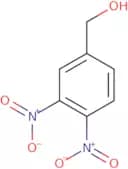
CAS:<p>3,4-Dinitrobenzyl alcohol is a synthetic chemical that is used as an intermediate for the synthesis of other chemicals. It is a dipole with a molecular weight of 188.2 g/mol and has two substituents. 3,4-Dinitrobenzyl alcohol is produced by the oxidation of 3,4-dichlorobenzyl alcohol with nitric acid and sulfuric acid. This process occurs in industrial settings to produce dyes, perfumes, and medicines. 3,4-Dinitrobenzyl alcohol is used as a starting material for the production of other compounds that are used in the textile industry or as insecticides.</p>Formula:C7H6N2O5Purezza:Min. 95%Colore e forma:Yellow PowderPeso molecolare:198.13 g/mol2,4-Dimethylbenzyl alcohol
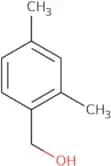
CAS:2,4-Dimethylbenzyl alcohol is a primary alcohol that is found in many natural products. It is a functional group that can be used as a chemical intermediate or an intermediate for the production of other compounds. 2,4-Dimethylbenzyl alcohol has been shown to have genotoxic activity and can cause DNA damage. This compound has been found in adipose tissue and functions by inhibiting the uptake of pyrethroid insecticides by adipose cells. This compound has also been shown to be oxidized into several different oxidation products that are all isomeric with each other, including 2,6-, 3,5-, and 4,6-dimethylbenzaldehyde. These oxidation products may be esterified with conjugates such as glucuronic acid or sulfate which may aid in its absorption through the gut wall into the bloodstream.Formula:C9H12OPurezza:Min. 95%Colore e forma:Colorless PowderPeso molecolare:136.19 g/mol2-Methoxybenzyl alcohol
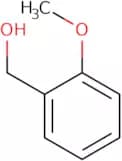
CAS:<p>2-Methoxybenzyl alcohol is a reactive compound that contains two methoxy (CH3O-) groups. It can be used for the synthesis of chiral molecules because it forms an asymmetric hydrogen bond. The reaction of 2-methoxybenzyl alcohol with oxygenated substances, such as formaldehyde and acetaldehyde, leads to oxidation products, including hydroxybenzaldehyde, which can be isolated and converted to benzalacetone. This product has been shown to have photocatalytic activity in the presence of ultraviolet light.</p>Formula:C8H10O2Purezza:Min. 95%Colore e forma:Colorless Clear LiquidPeso molecolare:138.16 g/mol2-Cyanophenol
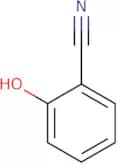
CAS:2-Cyanophenol is a phenolic compound that is used as an intermediate in the synthesis of pharmaceuticals and agrochemicals. It is also a disinfectant used for wastewater treatment and to remove salicylaldoxime from contaminated water. 2-Cyanophenol can be synthesized by reacting phenol with hydrogen peroxide in the presence of sephadex g-100, which provides a high yield of product. It has been shown to have antimicrobial properties against Gram-positive bacteria, such as Staphylococcus aureus, and Gram-negative bacteria, such as Escherichia coli and Pseudomonas aeruginosa. 2-Cyanophenol has been shown to react with metal hydroxides such as ferric chloride or zinc chloride to form precipitates. This reaction can be detected using a UV/VIS spectrophotometer at wavelengths between 200–350 nm.Formula:C7H5NOPurezza:Min. 95%Colore e forma:Off-White PowderPeso molecolare:119.12 g/molBisphenol F diglycidyl ether - mixture of isomers
CAS:Component of polymer coatings in food cans; toxic contaminantFormula:C19H20O4Purezza:Min. 88.0 Area-%Colore e forma:Colorless Clear LiquidPeso molecolare:312.36 g/mol2,3-Difluoro-6-nitrophenol
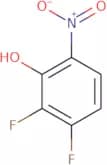
CAS:2,3-Difluoro-6-nitrophenol is a fluorinated phenolic compound that is used in biochemical research as a competitive inhibitor of bacterial growth. It is synthesized by the reaction of 2,3-difluorophenol with nitric acid. The chemical structure can be determined through infrared, NMR, and mass spectrometry techniques. 2,3-Difluoro-6-nitrophenol has been shown to inhibit bacterial growth by binding to the enzyme cytochrome c oxidase. This inhibition prevents electron transport from occurring, resulting in an accumulation of reactive oxygen species and cell death.Formula:C6H3F2NO3Purezza:Min. 95%Colore e forma:PowderPeso molecolare:175.09 g/molp-Nitrophenol acetate
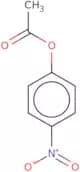
CAS:<p>Substrate for acetyl esterase</p>Formula:C8H7NO4Purezza:Min. 97 Area-%Colore e forma:PowderPeso molecolare:181.15 g/mol4-Cyano-3-fluorophenol
CAS:<p>4-Cyano-3-fluorophenol is a chemical compound that has two phenoxy groups and one fluorine atom. 4-Cyano-3-fluorophenol has been shown to be an effective antagonist of GABA A receptors, which may be due to its ability to interact with the chloride ion site on the receptor, or its hydrogen bonding effects with the receptor. 4-Cyano-3-fluorophenol has been shown to have potent effects in a number of other biological systems. These include inhibition of suzuki coupling reactions (a type of nucleophilic substitution reaction), as well as acylation reactions in which an acid reacts with an alcohol to form an ester, and pharmacokinetic properties. 4-Cyano-3-fluorophenol also has been shown to bind selectively to proteins, including those involved in protein–protein interactions.</p>Formula:C7H4FNOPurezza:Min. 95%Colore e forma:White PowderPeso molecolare:137.11 g/mol