Standard farmaceutici
Gli standard farmaceutici sono un insieme completo di materiali di riferimento essenziali per garantire la sicurezza, l'efficacia e la qualità dei prodotti farmaceutici. Questa categoria include standard per ingredienti farmaceutici attivi (API), che sono i componenti principali responsabili degli effetti terapeutici. Inoltre, copre composti e metaboliti rilevanti sia per l'industria farmaceutica che veterinaria, fornendo punti di riferimento per la misurazione e l'analisi precisa di queste sostanze. Gli standard di controllo delle nitrosammine sono cruciali per rilevare e mitigare le nitrosammine potenzialmente dannose nelle formulazioni di farmaci. Gli standard di tossicologia aiutano a valutare la sicurezza e i potenziali effetti avversi dei composti farmaceutici. Inoltre, gli standard per attivatori e inibitori enzimatici sono vitali per la ricerca e lo sviluppo, consentendo studi precisi delle vie biochimiche e dei meccanismi d'azione dei farmaci. Questi standard farmaceutici sono strumenti indispensabili per la conformità normativa, il controllo di qualità e la ricerca, garantendo che i prodotti farmaceutici soddisfino rigorosi criteri di sicurezza ed efficacia.
Sottocategorie di "Standard farmaceutici"
- APIs per la ricerca e le impurità(274.914 prodotti)
- Attivatori e inibitori enzimatici(2.827 prodotti)
- Nitrosamine(2.605 prodotti)
- Composti e metaboliti farmaceutici e veterinari(2.871 prodotti)
- Tossicologia(13.652 prodotti)
Trovati 7836 prodotti di "Standard farmaceutici"
Ordinare per
Purezza (%)
0
100
|
0
|
50
|
90
|
95
|
100
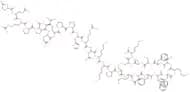
Cortistatin-29 (rat) trifluoroacetate salt
CAS:<p>Please enquire for more information about Cortistatin-29 (rat) trifluoroacetate salt including the price, delivery time and more detailed product information at the technical inquiry form on this page</p>Formula:C161H240N46O41S2Purezza:Min. 95%Peso molecolare:3,540.05 g/molAcetyl-(D-Lys2, Sar 3)-Melanotropin-Potentiating Factor acetate salt
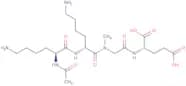
CAS:Acetyl-(D-Lys2, Sar 3)-Melanotropin-Potentiating Factor acetate salt Ac-Lys-D-Lys-Sar-Glu-OH acetate salt is synthesized from a tetrapeptide. It has been shown to be neurotrophic and to stimulate the uptake of dopamine. Acetyl-(D-Lys2, Sar 3)-Melanotropin-Potentiating Factor acetate salt Ac-Lys-D-Lys-Sar-Glu-OH acetate salt has also been shown to be an analog of the growth factor nerve growth factor (NGF) and have similar effects on muscle tissue.Formula:C22H40N6O8Purezza:Min. 95%Peso molecolare:516.59 g/molN-Stearoyl phytosphingosine
CAS:<p>N-Stearoyl phytosphingosine is a molecule with an ester linkage that is used in the study of physiological function. It has been shown to mimic the effect of tebuconazole, a chemical fungicide, on mitochondrial membrane potential and ATP levels. This compound can be synthesized from fatty acids and hydroxyl groups. The molecule has also been shown to have skin nourishing properties when applied topically to skin cells in vivo.</p>Formula:C36H73NO4Purezza:Min. 95%Colore e forma:White To Off-White SolidPeso molecolare:583.97 g/molPancreastatin (33-48) (human) trifluoroacetate salt
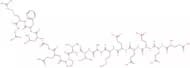
CAS:<p>Pancreastatin (33-48) is a synthetic, acidic, sulfated peptide that has been shown to have high activity against pancreatic cancer cells. Pancreastatin (33-48) has been synthesized by reacting an oligopeptide with glutamic acid and aspartic acid. The N-terminal of this peptide is amidated and contains a sulfate group. This molecule has been purified by SDS-polyacrylamide gel electrophoresis and the sulfate fractionation method. Pancreastatin (33-48) is able to inhibit the proliferation of pancreatic tumor cells in vitro, but it does not appear to be cytotoxic to normal pancreatic cells. In addition, pancreastatin (33-48) has also been shown to decrease tumor growth in vivo in mice bearing a transplanted human pancreatic tumor.</p>Formula:C78H123N21O27SPurezza:Min. 95%Peso molecolare:1,819 g/mol4-Methylvaleryl chloride
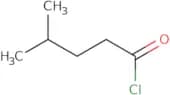
CAS:4-Methylvaleryl chloride (4MVC) is a thionyl chloride that reacts with 2-pentenoic acid to produce 4-methylvaleric acid. It has been used as a pharmaceutical intermediate and as a potent inhibitor of side-chain cleavage reactions. The reaction time required for the formation of 4MVC depends on the reaction temperature. At room temperature, it takes approximately one hour to form; at 60 degrees Celsius, it takes approximately five minutes to form.Formula:C6H11ClOPurezza:Min. 95%Colore e forma:Colorless Clear LiquidPeso molecolare:134.6 g/molOctreotide trifluoroacetate salt (Dimer, Parallel) (
<p>Please enquire for more information about Octreotide trifluoroacetate salt (Dimer, Parallel) ( including the price, delivery time and more detailed product information at the technical inquiry form on this page</p>Formula:C98H132N20O20S4Purezza:Min. 95%Peso molecolare:2,038.48 g/mol(Leu8,D-Trp22,Tyr25)-Somatostatin-28
CAS:Please enquire for more information about (Leu8,D-Trp22,Tyr25)-Somatostatin-28 including the price, delivery time and more detailed product information at the technical inquiry form on this pageFormula:C138H209N41O40S2Purezza:Min. 95%Peso molecolare:3,146.52 g/mol3,5-di-tert-Butyl-4-hydroxyphenylpropionic acid methyl ester
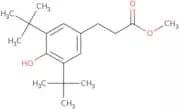
CAS:<p>3,5-di-tert-butyl-4-hydroxyphenylpropionic acid methyl ester is a compound that has been used as an analytical reagent and as a precursor to other chemicals. It is a white solid with a melting point of about 40°C. 3,5-di-tert-butyl-4-hydroxyphenylpropionic acid methyl ester is soluble in hexane, benzene, and diethylether. It also reacts with fatty acids to produce polymers. 3,5-di-tert-butyl-4-hydroxyphenylpropionic acid methyl ester has been shown to be an effective antibacterial agent against Gram negative bacteria such as Escherichia coli and Pseudomonas aeruginosa.</p>Formula:C18H28O3Purezza:90%Colore e forma:Off-White PowderPeso molecolare:292.41 g/mol3,5-Dibromobenzoic acid methyl ester
CAS:<p>3,5-Dibromobenzoic acid methyl ester is an organic compound that has isomers. It is a synthetic substance with the chemical formula CHBrO. This substance can be obtained by reacting benzoic acid with bromine in the presence of aluminium chloride. The nature of this substance is not known due to its multifold structure. 3,5-Dibromobenzoic acid methyl ester has been shown to absorb light and transfer it to another molecule. This molecule can then emit light of a different wavelength or energy level. The dipole moment of the substance interacts with other molecules in close proximity, leading to the transfer of electrons and photons from one molecule to another.</p>Formula:C8H6Br2O2Purezza:Min. 95%Colore e forma:PowderPeso molecolare:293.94 g/mol4-[(4-Nitrophenyl)-azo]-phenol
CAS:<p>4-[(4-Nitrophenyl)-azo]-phenol is a molecular compound that has a nitro group, an azo group, and a phenolic hydroxyl group. It's also known as nitrophenyl diazonium salt. 4-[(4-Nitrophenyl)-azo]-phenol is used in the synthesis of other compounds such as dyes and pharmaceuticals. The magnetic resonance spectroscopy and optical microscope techniques were used to study the chemical structure of 4-[(4-Nitrophenyl)-azo]-phenol. The titration method was used to determine the purity of this compound. 4-[(4-Nitrophenyl)-azo]-phenol has been shown to have mesomorphic properties, which are exhibited by its ability to be either solid or liquid at room temperature (25°C). This property may be due to its functional groups that stabilize it in both states.</p>Purezza:Min. 95%7-Methoxy-4-(trifluoromethyl)coumarin
CAS:7-Methoxy-4-(trifluoromethyl)coumarin is a potent and selective aromatase inhibitor. It inhibits the activity of the enzyme, which converts testosterone to estradiol. The inhibition of this enzyme may be beneficial in the treatment of breast cancer. This compound has also been shown to inhibit the activity of P450 enzymes and coumarin derivatives, which are involved in drug metabolism and detoxification.Formula:C11H7F3O3Purezza:Min. 95%Peso molecolare:244.17 g/molBoc-L-methionine - Solid
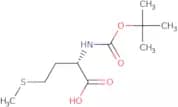
CAS:<p>Boc-L-methionine is a chemical compound that contains the amino acid methionine. It is used in solid-phase synthesis to produce cyclic peptides and proteins. Boc-L-methionine is activated by treatment with trifluoroacetic acid and then reacts with a protected amino acid to form the corresponding amide or ester, respectively. The activated carboxylic acid group of Boc-L-methionine reacts with an unprotected amino group of the amino acid to form an amide or ester linkage, respectively. The reaction products are cleaved from the resin support by hydrogen fluoride for purification.</p>Formula:C10H19NO4SPurezza:Min. 95%Peso molecolare:249.33 g/molBiotinyl-(Gln1)-Gastrin I (human) Biotinyl-Gln-Gly-Pro-Trp-Leu-Glu-Glu-Glu-Glu-Glu-Ala-Tyr-Gly-Trp-Met-Asp-Phe-NH2
CAS:<p>Please enquire for more information about Biotinyl-(Gln1)-Gastrin I (human) Biotinyl-Gln-Gly-Pro-Trp-Leu-Glu-Glu-Glu-Glu-Glu-Ala-Tyr-Gly-Trp-Met-Asp-Phe-NH2 including the price, delivery time and more detailed product information at the technical inquiry form on this page</p>Formula:C107H141N23O33S2Purezza:Min. 95%Peso molecolare:2,341.53 g/molTetrabromophenyl-porphyrin
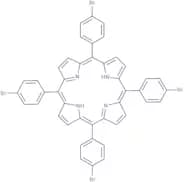
CAS:<p>Tetrabromophenyl-porphyrin (TBP) is a synthetic molecule that interacts with aldehydes in the presence of light. This interaction results in the formation of a phenyl radical and an excited state, which leads to the production of carbon dioxide and water. TBP is used as a catalyst for these reactions because it is more stable than other molecules that are typically used. The catalytic effect of TBP can be studied by means of spectroscopies and microscopy techniques. The crystal x-ray diffraction technique was used to analyze the molecular structure of TBP by determining the distances between atoms in its molecules. It was discovered that TBP has two phenyl groups and four bromine atoms per porphyrin ring. Diffraction techniques were also used to study how light interacts with TBP molecules, showing that they have strong optical properties when adsorbed on surfaces.</p>Formula:C44H26N4Br4Purezza:Min. 95%Peso molecolare:930.32 g/molN-Benzoyl-L-leucine-β-naphthylamide
CAS:N-Benzoyl-L-leucine-beta-naphthylamide is a chromogenic substrate for transpeptidase. It is hydrolyzed to L-phenylalanine and 2-naphthylamine, which react with the chromogen to produce a color change. The reaction occurs in both spermatozoa and epithelial cells, but can be inhibited by aminopeptidase and peptidase. This substrate is used as a marker for spermatozoa in semen analysis.Formula:C23H24N2O2Purezza:Min. 95%Colore e forma:PowderPeso molecolare:360.45 g/molIsobutylurea
CAS:Isobutylurea is a chemical compound with a hydroxyl group and a phosphodiesterase inhibitor. It is used in the treatment of inflammatory diseases, infectious diseases, and autoimmune diseases. Isobutylurea has been found to denature proteins by reacting with the carbonyl group of amino acids. The reaction intermediates formed are then hydrolyzed by phosphodiesterase activity. Isobutylurea was also shown to have an inhibitory effect on cyclic nucleotide phosphodiesterase activity in the calf-thymus DNA system.Formula:C5H12N2OPurezza:Min. 95%Peso molecolare:116.16 g/molCamphor
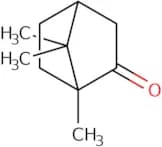
CAS:<p>Camphor is a natural compound that has been shown to be an effective antimicrobial agent. Camphor has been shown to inhibit the growth of bacteria by binding to the bacterial membrane, inhibiting electron transport and leading to a decrease in mitochondrial membrane potential. Camphor also inhibits the growth of cancer cells in experimental models. Camphor can be used as an antimicrobial in wastewater treatment and as an insect repellent for skin protection. Camphor is also used in x-ray crystallography to determine structures of proteins and other organic molecules with high electron density such as benzalkonium chloride.</p>Formula:C10H16OPurezza:Min. 95%Colore e forma:Colorless Clear LiquidPeso molecolare:152.23 g/molp-Sulfophenylazochromotropic acid trisodium salt
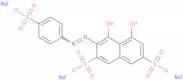
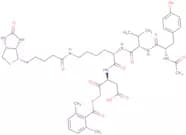
CAS:p-Sulfophenylazochromotropic acid trisodium salt is a chemical that can be used as a building block for the synthesis of various organic compounds. It is an intermediate for the synthesis of other chemicals and can be used as a research chemical in laboratories. This compound has been shown to be useful in the production of pharmaceuticals, agrochemicals, and dyes. CAS No. 23647-14-5.Formula:C16H9N2Na3O11S3Purezza:Min. 95 Area-%Colore e forma:Yellow PowderPeso molecolare:570.42 g/molAc-Tyr-Val-Lys(biotinyl)-Asp-2,6-dimethylbenzoyloxymethylketone
CAS:Ac-Tyr-Val-Lys(biotinyl)-Asp-2,6-dimethylbenzoyloxymethylketone belongs to a group of active compounds and is a cleavage product of the caspase family. It has been shown to induce apoptosis in kidney cells by cleaving the polymeric form of the protein caspase 3, which is induced by viral infection or bacterial infection. This compound is used for coinfection with HIV and HCV. Ac-Tyr-Val-Lys(biotinyl)-Asp-2,6-dimethylbenzoyloxymethylketone can also be used for detecting apoptosis in other types of cells such as erythrocytes and neutrophils.Formula:C46H63N7O12SPurezza:Min. 95%Peso molecolare:938.1 g/mol3,3'-Diiodo-L-thyronine
CAS:<p>3,3'-Diiodo-L-thyronine (T2) is a thyroid hormone that binds to the DNA response element in the promoter region of its target genes. It has been shown to decrease the transcription of genes encoding for proteins involved in energy metabolism and thus may play a role in weight loss. T2 also inhibits the production of hydrochloric acid by human gastric cells, which may lead to a reduction of stomach acidity. T2 is detectable in serum within 3 hours following ingestion and can be quantified using high performance liquid chromatography with electrochemical detection. The matrix effect is a phenomenon that occurs when samples are analyzed using different analytical methods and this must be taken into account when interpreting results. T2 has been shown to have pharmacological effects on experimental animals, including the stimulation of liver cell growth and an increase in metabolic rate.</p>Formula:C15H13I2NO4Purezza:Min. 95%Colore e forma:PowderPeso molecolare:525.08 g/mol





![4-[(4-Nitrophenyl)-azo]-phenol](/_next/image/?url=https%3A%2Fstatic.cymitquimica.com%2Fproducts%2F3D%2Fthumb-webp%2FFN31052.webp&w=3840&q=75)