Standard farmaceutici
Sottocategorie di "Standard farmaceutici"
- APIs per la ricerca e le impurità(277.230 prodotti)
- Attivatori e inibitori enzimatici(2.829 prodotti)
- Nitrosamine(2.648 prodotti)
- Composti e metaboliti farmaceutici e veterinari(2.894 prodotti)
- Tossicologia(13.378 prodotti)
Trovati 8108 prodotti di "Standard farmaceutici"
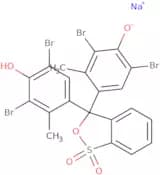
Bromocresol green, sodium salt
CAS:Bromocresol green is a dye that is used in biological assays to measure the kinetics of fluorescence. It is a type of tryptophan-releasing compound that releases a yellowish-green light when it absorbs light at wavelengths between 350 and 450 nm. Bromocresol green has been quantified by measuring the intensity of the fluorescence emission as a function of time. This can be done visually or using an instrument called a fluorometer, which detects changes in light intensity over time. Bromocresol green can be used to detect the presence of amino acid residues in proteins through protonation reactions with their tryptophan residues and subsequent quenching with acetonitrile. The bromocresol green dye is also used in lithographic printing, where it serves as an acceptor for electrons from an arene (aromatic hydrocarbon). This process generates energy for lithography and also provides contrast between regions with different electron densities.
Formula:C21H14Br4O5SNaColore e forma:PowderPeso molecolare:721 g/molRef: 3D-FB01465
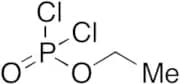
Prodotto fuori produzioneEthyl Dichlorophosphate
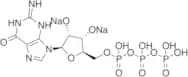
CAS:Prodotto controllatoFormula:C2H5Cl2O2PColore e forma:White to Off-White SolidPeso molecolare:162.94Guanosine-5'-triphosphate Disodium Salt (~85%)
CAS:Prodotto controllatoApplications Guanosine-5'-triphosphate disodium salt (CAS# 56001-37-7) is a nucleotide used in the preparation of photoreactive GTP affinity probes, and in inhibitors of eukaryotic initiation factor eIF-4E.
References George Cisar, E. A.; J. Am. Chem. Soc., 135, 4676 (2013); Ghosh, P.; et al.: Bioorg. Med. Chem. Lett., 16, 750 (2006).Formula:C10H14N5O14P3Na2Purezza:~85%Colore e forma:NeatPeso molecolare:567.14Ref: TR-G838608
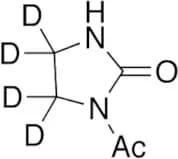
Prodotto fuori produzioneN-Acetylethylene Urea-d4
CAS:Prodotto controllatoApplications N-Acetylethylene Urea-d4 (cas# 1189701-94-7) is a compound useful in organic synthesis.
Formula:C5H4H4N2O2Colore e forma:NeatPeso molecolare:132.156-Methyl-4-hydroxycoumarin
CAS:6-Methyl-4-hydroxycoumarin is a coumarin derivative that has been shown to have potent inhibitory activity against both Gram-positive and Gram-negative bacteria. It also inhibits the growth of leukemia cells and shows anti-inflammatory properties. The photophysical studies of this molecule show that it has absorption bands in the visible region, which may be attributed to its hydroxyl group. 6-Methyl-4-hydroxycoumarin has also been shown to be an effective inhibitor of LPS (lipopolysaccharide)-stimulated RAW 264.7 cells, as well as benzofuran derivatives that have been shown to have inflammatory propertys.
Formula:C10H8O3Purezza:Min. 95%Colore e forma:PowderPeso molecolare:176.17 g/molRef: 3D-FM12567
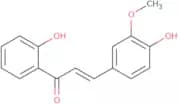
Prodotto fuori produzione2',4-Dihydroxy-3-methoxychalcone
CAS:2',4-Dihydroxy-3-methoxychalcone is a chalcone that has been shown to have reactive properties. The compound was found to be cytotoxic to cancer cells in the presence of neutrophils, and it has been shown to inhibit the growth of t47d cells in culture. There is also evidence that 2',4-Dihydroxy-3-methoxychalcone may help regulate the microflora in the gut, which may help prevent obesity and diabetes. In epidemiological studies, 2',4-Dihydroxy-3-methoxychalcone was found to be protective against cancer, but more research is required.
Formula:C16H14O4Purezza:Min. 95%Colore e forma:PowderPeso molecolare:270.28 g/mol3,5-Dinitrosalicylic acid sodium
CAS:3,5-Dinitrosalicylic acid sodium is an inorganic compound that is used as a biochemical reagent. It can be used to measure the phosphatase activity of muscle and liver samples, as well as to determine the level of autophagy in cells. 3,5-Dinitrosalicylic acid sodium has been shown to inhibit the activity of a number of enzymes, including acid phosphatase and thiourea. When combined with chloroplast or mitochondria, it can be used to determine the rate of electron transport chain. 3,5-Dinitrosalicylic acid sodium binds to sulfhydryl groups on proteins and prevents them from being used for other purposes. This process optimization leads to engulfment followed by lysosomal degradation.
Formula:C7H3N2NaO7Purezza:Min. 95%Colore e forma:PowderPeso molecolare:250.1 g/molRef: 3D-FD70879
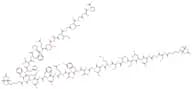
Prodotto fuori produzioneBiotinyl-(Cys1,Lys(biotinyl)18)-Calcitonin (human) trifluoroacetate salt
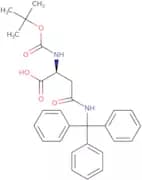
CAS:Please enquire for more information about Biotinyl-(Cys1,Lys(biotinyl)18)-Calcitonin (human) trifluoroacetate salt including the price, delivery time and more detailed product information at the technical inquiry form on this pageFormula:C171H254N44O49S5Purezza:Min. 95%Peso molecolare:3,870.44 g/molN-a-t-Boc-N-g-trityl-L-asparagine
CAS:N-a-t-Boc-N-g-trityl-L-asparagine is a recombinant human protein that has been synthesized in E. coli. It is a peptide with 17β-estradiol at its C terminus, and it binds to the oestrogen receptor α (ERα) via hydrogen bonding interactions. The linker between the asparagine and estradiol is a Boc group that can be removed by protease activity, revealing the active form of 17β-estradiol. ERα ligates to N-a-t-Boc-N-g-trityl L asparagine with high affinity, and this interaction is reversible. The linker also contains a functional group for surface attachment, which may be used to attach this peptide to a solid support or tissue culture substrate for use in cell cultures.
br>Formula:C28H30N2O5Purezza:Min. 95%Colore e forma:White PowderPeso molecolare:474.55 g/molRef: 3D-FB39381
Prodotto fuori produzione5-Amino-o-cresol
CAS:5-Amino-o-cresol is a chemical compound that is used in analytical chemistry as an aminophenol. It reacts with ethylene diamine to form a red dye called 5-aminonaphthalene-2,7-disulphonic acid (5ANDS). The reaction solution can be used to identify the presence of bacterial DNA. 5-Amino-o-cresol has been shown to have genotoxic effects, which may lead to skin cancer or skin damage. This chemical also has toxicological properties and can cause skin irritation at high concentrations.
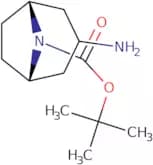
Formula:C7H9NOPurezza:Min. 95%Colore e forma:PowderPeso molecolare:123.15 g/molN-Boc-endo-3-aminotropane
CAS:N-Boc-endo-3-aminotropane is a useful building block for the synthesis of a variety of chemical compounds. It is a versatile intermediate for the synthesis of diverse chemical compounds and is also used in research as a reagent. N-Boc-endo-3-aminotropane has been shown to be highly reactive and to undergo many reactions, including nucleophilic substitution and addition reactions. The compound can be reacted with alkyl halides to form amines, or with nitroalkanes to form oximes. N-Boc-endo-3-aminotropane can also react with anhydrides or acid chlorides to form carboxylic acids, or with sulfonyl chlorides to form sulfonamides. This compound also reacts with thiols or alcohols to form thioethers and ethers respectively.
Formula:C12H22N2O2Purezza:Min. 95%Colore e forma:White PowderPeso molecolare:226.32 g/molRef: 3D-FB71481
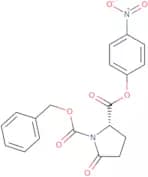
Prodotto fuori produzioneZ-L-pyroglutamic acid 4-nitrophenyl ester
CAS:Please enquire for more information about Z-L-pyroglutamic acid 4-nitrophenyl ester including the price, delivery time and more detailed product information at the technical inquiry form on this pageFormula:C19H16N2O7Purezza:Min. 95%Peso molecolare:384.34 g/molRef: 3D-FP47311
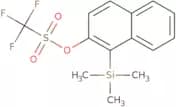
Prodotto fuori produzione1-(Trimethylsilyl)-2-naphthyl Trifluoromethanesulfonate
CAS:1-(Trimethylsilyl)-2-naphthyl Trifluoromethanesulfonate is a solvent that has been used for the synthesis of oxygen heterocycles. It is also used as a reagent to cleave bonds in organic molecules, such as alkene, solvents, aldehydes and activated esters. This compound is an unsymmetrical nucleophile that reacts with electron-poor alkenes to generate an unsaturated bond between two carbons. Mechanistic studies have shown that the reaction proceeds through a concerted mechanism involving the formation of a covalent phosphine intermediate.
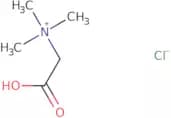
Formula:C14H15F3O3SSiPurezza:Min. 95%Colore e forma:PowderPeso molecolare:348.41 g/molBetaine hydrochloride
CAS:Betaine hydrochloride is a betaine prodrug that is metabolized by the body to form glycine and choline. Betaine hydrochloride has been shown to have anti-inflammatory properties, which may be due to its ability to inhibit surfactant sodium dodecyl (SDS) from activating enzymes such as polymerase chain reaction (PCR). Betaine hydrochloride also has been shown to improve disease activity in bowel disease patients and can be used as a dietary supplement for individuals with low levels of choline.
Formula:C5H11NO2·HClPurezza:Min. 95%Colore e forma:PowderPeso molecolare:153.61 g/molRef: 3D-FB73779
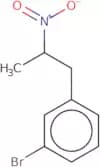
Prodotto fuori produzione1-(3-Bromophenyl)-2-nitropropane
CAS:1-(3-Bromophenyl)-2-nitropropane is a fine chemical that is used as a building block in the synthesis of complex organic compounds. It can be used as a reagent and speciality chemical with high quality. 1-(3-Bromophenyl)-2-nitropropane is versatile for use in reactions, such as coupling reactions, because it can be used as an intermediate or scaffold to create many different compounds. CAS No.: 155988-18-4
Formula:C9H10BrNO2Purezza:Min. 95%Peso molecolare:244.09 g/molSodium sarcosinate - ca. 40% in water
CAS:Sodium sarcosine is a salt of sarcosine with sodium. It has an average molecular weight of 255 and is soluble in water. Sodium sarcosine is used as a biological sample for non-steroidal anti-inflammatory drugs (NSAIDs) in the study of their inhibitory properties against mammalian DNA polymerase. NSAIDs are also used to treat inflammation, pain, and fever by inhibiting prostaglandin synthesis. The rate constant for the reaction between NSAIDs and DNA polymerase was found to be 1.6x10^-4 M^-1s^-1 at 25°C, which is close to the Km value for the reaction. This finding indicates that NSAIDs may be competitive inhibitors of the enzyme, although further experiments are needed to confirm this hypothesis. Using electrochemical impedance spectroscopy, it was found that NSAIDs have a higher affinity for divalent cations than monovalent cations, suggesting that they bind to a site on the
Formula:C3H6NNaO2Purezza:Min. 95%Colore e forma:Colorless Clear LiquidPeso molecolare:111.08 g/molRef: 3D-FS02729
Prodotto fuori produzione3-(4-Methylbenzylidene)camphor
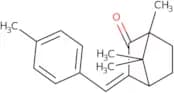
CAS:3-(4-Methylbenzylidene)camphor is a chemical compound that has two isomers, alpha and beta. It can be found in biological samples, such as human urine or wastewater, and can be used for the treatment of skin cancer. 3-(4-Methylbenzylidene)camphor is prepared by extraction from a dry sample with an organic solvent. The extraction process requires a hydroxyl group to react with the dry sample and create a liquid. The resulting liquid is then evaporated to leave behind the extract. The kinetic data of 3-(4-Methylbenzylidene)camphor was determined by measuring its rate of reaction with an analytical method. The rate of reaction increased as the concentration increased to a constant value at high concentrations, which suggests that it may have some occlusive properties in humans due to its tendency to bind to plasma proteins.
Formula:C18H22OPurezza:Min. 95%Colore e forma:White PowderPeso molecolare:254.37 g/molRef: 3D-FM25793
Prodotto fuori produzione(-)-Bis(pinanediolato)diboron
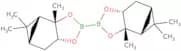
CAS:(-)-Bis(pinanediolato)diboron is a reactive component that can be used as a reagent. It reacts with alkenes to form pinacolboronates, which are useful for the synthesis of complex compounds. (-)-Bis(pinanediolato)diboron is also an intermediate in the synthesis of diboronic acid and pinacolborane. This compound has broad utility as a building block, scaffold, or intermediate in organic synthesis.
-Pinanediolato boron is also a versatile building block that can be used to synthesize many other chemical compounds. For example, it can be used as an intermediate to synthesize (-)-pinanediol and 3-hydroxy-1-methylpyridinium iodide (3HMPI), which are speciality chemicals.
-Pinanediolato boron is also an excellent building block for organic synthesis due to its abilityFormula:C20H32B2O4Purezza:Min. 95%Colore e forma:White SolidPeso molecolare:358.09 g/molRef: 3D-FB76423
Prodotto fuori produzione3,3'-Diaminobenzidine tetrahydrochloride
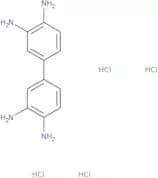
CAS:3,3'-Diaminobenzidine tetrahydrochloride or DAB hydrochloride is the hydrochloride salt of biphenyl tetra-aniline. DAB hydrochloride is a water-soluble formulation of DAB and is used in immunohistochemical staining of nucleic acids and proteins. DAB hydrochloride is used in Alzheimer's disease research, Aβ protein amyloid plaques are targeted by a primary antibody, and subsequently by a secondary antibody, which is conjugated with a peroxidase enzyme. This will bind DAB as a substrate and oxidize causing a colour change. 3,3’-Diaminobenzidine tetrahydrochloride is also available as the tetrahydrochloride hydrate and as the free base.
Formula:C12H14N4•4HClPurezza:Min. 95%Colore e forma:Off-White PowderPeso molecolare:360.12 g/mol1-(2-Chloro-4-fluorophenyl)-2-nitropropene
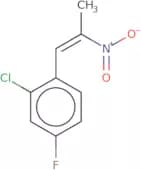
CAS:1-(2-Chloro-4-fluorophenyl)-2-nitropropene is a versatile building block that can be used to produce a variety of compounds with various properties. It is a high quality, reagent grade chemical that is useful for research and development purposes. This compound has been shown to be an effective intermediate in the synthesis of complex compounds, such as pharmaceuticals and pesticides.
Formula:C9H7ClFNO2Purezza:Min. 95%Peso molecolare:215.61 g/molRef: 3D-FC65821
Prodotto fuori produzione