Standard farmaceutici
Sottocategorie di "Standard farmaceutici"
- APIs per la ricerca e le impurità(277.208 prodotti)
- Attivatori e inibitori enzimatici(2.829 prodotti)
- Nitrosamine(2.649 prodotti)
- Composti e metaboliti farmaceutici e veterinari(2.894 prodotti)
- Tossicologia(13.378 prodotti)
Trovati 8108 prodotti di "Standard farmaceutici"
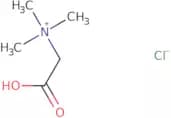
Betaine hydrochloride
CAS:Betaine hydrochloride is a betaine prodrug that is metabolized by the body to form glycine and choline. Betaine hydrochloride has been shown to have anti-inflammatory properties, which may be due to its ability to inhibit surfactant sodium dodecyl (SDS) from activating enzymes such as polymerase chain reaction (PCR). Betaine hydrochloride also has been shown to improve disease activity in bowel disease patients and can be used as a dietary supplement for individuals with low levels of choline.
Formula:C5H11NO2·HClPurezza:Min. 95%Colore e forma:PowderPeso molecolare:153.61 g/molRef: 3D-FB73779
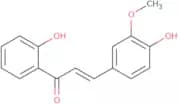
Prodotto fuori produzione2',4-Dihydroxy-3-methoxychalcone
CAS:2',4-Dihydroxy-3-methoxychalcone is a chalcone that has been shown to have reactive properties. The compound was found to be cytotoxic to cancer cells in the presence of neutrophils, and it has been shown to inhibit the growth of t47d cells in culture. There is also evidence that 2',4-Dihydroxy-3-methoxychalcone may help regulate the microflora in the gut, which may help prevent obesity and diabetes. In epidemiological studies, 2',4-Dihydroxy-3-methoxychalcone was found to be protective against cancer, but more research is required.
Formula:C16H14O4Purezza:Min. 95%Colore e forma:PowderPeso molecolare:270.28 g/molrec Neurotrophin-3 (human)
Please enquire for more information about rec Neurotrophin-3 (human) including the price, delivery time and more detailed product information at the technical inquiry form on this page
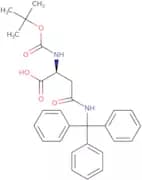
Purezza:Min. 95%N-a-t-Boc-N-g-trityl-L-asparagine
CAS:N-a-t-Boc-N-g-trityl-L-asparagine is a recombinant human protein that has been synthesized in E. coli. It is a peptide with 17β-estradiol at its C terminus, and it binds to the oestrogen receptor α (ERα) via hydrogen bonding interactions. The linker between the asparagine and estradiol is a Boc group that can be removed by protease activity, revealing the active form of 17β-estradiol. ERα ligates to N-a-t-Boc-N-g-trityl L asparagine with high affinity, and this interaction is reversible. The linker also contains a functional group for surface attachment, which may be used to attach this peptide to a solid support or tissue culture substrate for use in cell cultures.
br>Formula:C28H30N2O5Purezza:Min. 95%Colore e forma:White PowderPeso molecolare:474.55 g/molRef: 3D-FB39381
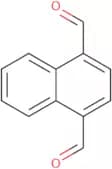
Prodotto fuori produzioneNaphthalene 1,4-dicarboxaldehyde
CAS:Naphthalene 1,4-dicarboxaldehyde is a low energy focusing molecule that is used in macrocyclic compounds. It can be oxidized to form naphthalene 1,4-diacid and naphthalene 1,4-diketone. This compound has been used to synthesize the triarylmethane dye viologen by Wittig reaction. Naphthalene 1,4-dicarboxaldehyde has also been shown to have fluorescence properties and can be useful for chemiluminescence. Naphthalene 1,4-dicarboxaldehyde reacts with sulfide or amine groups to form sulfides or amines respectively.
Formula:C12H8O2Purezza:Min. 95%Colore e forma:PowderPeso molecolare:184.19 g/molRef: 3D-FN67114
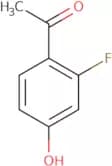
Prodotto fuori produzione2'-Fluoro-4'-hydroxyacetophenone
CAS:2'-Fluoro-4'-hydroxyacetophenone is a glycosylated molecule that is used in phase transfer catalysis. It is a glycoside that can undergo the glycosylation reaction and can be used as a phase transfer reagent. 2'-Fluoro-4'-hydroxyacetophenone has been studied for its potential use in the synthesis of xylosides and selenadiazoles. In addition, it has shown anti-inflammatory properties, which may be due to its inhibition of prostaglandin synthesis.
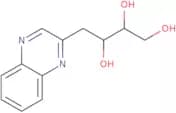
Formula:C8H7FO2Purezza:Min. 95%Peso molecolare:154.14 g/mol2-(2',3',4'-Trihydroxybutyl)quinoxaline
CAS:2-(2',3',4'-Trihydroxybutyl)quinoxaline is a model system for the glyoxal-glycolaldehyde reaction. This reaction is important in the formation of organic acids and hydroxycarbonyl compounds. The kinetic of this reaction has been studied using glyoxal, glycolaldehyde, and hydroxycarboxylic acid as substrates. Reaction intermediates were identified by multiresponse techniques. Kinetic parameters were determined by modelling and kinetic experiments at different temperatures and concentrations.
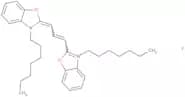
Formula:C12H14N2O3Purezza:Min. 95%Colore e forma:Off-White PowderPeso molecolare:234.25 g/mol3,3'-Diheptyloxacarbocyanine iodide
CAS:3,3'-Diheptyloxacarbocyanineiodide (DHCI) is a fluorescent probe that is used in the treatment of solid tumours. It is taken up by tumor cells and causes them to fluoresce, which can be seen under a microscope. DHCI has been shown to be effective against hypoxic tumours and tumors with low oxygen levels due to its ability to penetrate tumor cells and deliver oxygen. The uptake of DHCI by cancer cells is also dependent on the permeability of the blood vessels present in the tumor. This drug has been shown to have a large therapeutic window for treatment of solid tumours.
Formula:C31H41N2O2•IPurezza:Min. 95%Colore e forma:PowderPeso molecolare:600.57 g/molSodium N-lauroylsarcosinate
CAS:Sodium N-lauroylsarcosinate is a surfactant that is used in water treatment, wastewater treatment, and as a detergent. It is also used as an analytical tool for the titration calorimetry of sodium salts. Sodium N-lauroylsarcosinate is a sodium salt that belongs to the group of sodium salts. It has been shown to have biological properties such as permeability through human serum and biodegradability. The salt form of this compound has an electrochemical impedance spectrum which can be used to identify it.
Formula:C15H28NNaO3Purezza:Min. 94%Colore e forma:White Off-White PowderPeso molecolare:293.38 g/molSodium sarcosinate - ca. 40% in water
CAS:Sodium sarcosine is a salt of sarcosine with sodium. It has an average molecular weight of 255 and is soluble in water. Sodium sarcosine is used as a biological sample for non-steroidal anti-inflammatory drugs (NSAIDs) in the study of their inhibitory properties against mammalian DNA polymerase. NSAIDs are also used to treat inflammation, pain, and fever by inhibiting prostaglandin synthesis. The rate constant for the reaction between NSAIDs and DNA polymerase was found to be 1.6x10^-4 M^-1s^-1 at 25°C, which is close to the Km value for the reaction. This finding indicates that NSAIDs may be competitive inhibitors of the enzyme, although further experiments are needed to confirm this hypothesis. Using electrochemical impedance spectroscopy, it was found that NSAIDs have a higher affinity for divalent cations than monovalent cations, suggesting that they bind to a site on the
Formula:C3H6NNaO2Purezza:Min. 95%Colore e forma:Colorless Clear LiquidPeso molecolare:111.08 g/molRef: 3D-FS02729
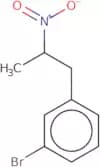
Prodotto fuori produzione1-(3-Bromophenyl)-2-nitropropane
CAS:1-(3-Bromophenyl)-2-nitropropane is a fine chemical that is used as a building block in the synthesis of complex organic compounds. It can be used as a reagent and speciality chemical with high quality. 1-(3-Bromophenyl)-2-nitropropane is versatile for use in reactions, such as coupling reactions, because it can be used as an intermediate or scaffold to create many different compounds. CAS No.: 155988-18-4
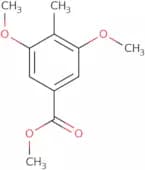
Formula:C9H10BrNO2Purezza:Min. 95%Peso molecolare:244.09 g/mol3,5-Dimethoxy-4-methylbenzoic acid methyl ester
CAS:3,5-Dimethoxy-4-methylbenzoic acid methyl ester (DMMBME) is a synthetic compound that is used as an immunogen to generate antibodies against fungal proteins. DMMBME is specifically used to identify the presence of bryoria and australian fungi in plants. The chemical structure of DMMBME can be oxidized by depsidones, which leads to the production of reactive oxygen species that are believed to be responsible for the oxidative coupling of target proteins. This reaction can be catalyzed by a number of enzymes such as nidulin, which is found in plant roots.
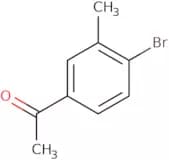
Formula:C11H14O4Purezza:Min. 95%Colore e forma:PowderPeso molecolare:210.23 g/mol4'-Bromo-3'-methylacetophenone, 75%
CAS:4'-Bromo-3'-methylacetophenone, 75% is a high quality reagent that is a useful intermediate for the synthesis of complex compounds. It has CAS No. 37074-40-1 and can be used as a fine chemical or speciality chemical in research. This product is also a versatile building block that can be used as an intermediate in reactions and as a reaction component.
Formula:C9H9BrOPurezza:Min. 95%Peso molecolare:213.07 g/molRef: 3D-FB106406
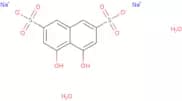
Prodotto fuori produzioneChromotropic acid disodium salt dihydrate - ACS reagent
CAS:Chromotropic acid is a reactive compound that has been shown to be adsorbed on the surface of activated carbon. The adsorption mechanism and the kinetic constants for this reaction have been studied in detail. Chromotropic acid decomposes at high temperatures, releasing hydrogen chloride gas and water vapor. This chemical is also used in pharmaceutical preparations as an additive to inhibit oxidation reactions. It may also serve as a photoreceptor, reacting with tyramine hydrochloride and other compounds to produce a color change.Formula:C10H6O8S2Na2·2H2OColore e forma:PowderPeso molecolare:400.29 g/mol(-)-Bis(pinanediolato)diboron
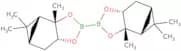
CAS:(-)-Bis(pinanediolato)diboron is a reactive component that can be used as a reagent. It reacts with alkenes to form pinacolboronates, which are useful for the synthesis of complex compounds. (-)-Bis(pinanediolato)diboron is also an intermediate in the synthesis of diboronic acid and pinacolborane. This compound has broad utility as a building block, scaffold, or intermediate in organic synthesis.
-Pinanediolato boron is also a versatile building block that can be used to synthesize many other chemical compounds. For example, it can be used as an intermediate to synthesize (-)-pinanediol and 3-hydroxy-1-methylpyridinium iodide (3HMPI), which are speciality chemicals.
-Pinanediolato boron is also an excellent building block for organic synthesis due to its abilityFormula:C20H32B2O4Purezza:Min. 95%Colore e forma:White SolidPeso molecolare:358.09 g/molRef: 3D-FB76423
Prodotto fuori produzione6-Methyl-4-hydroxycoumarin
CAS:6-Methyl-4-hydroxycoumarin is a coumarin derivative that has been shown to have potent inhibitory activity against both Gram-positive and Gram-negative bacteria. It also inhibits the growth of leukemia cells and shows anti-inflammatory properties. The photophysical studies of this molecule show that it has absorption bands in the visible region, which may be attributed to its hydroxyl group. 6-Methyl-4-hydroxycoumarin has also been shown to be an effective inhibitor of LPS (lipopolysaccharide)-stimulated RAW 264.7 cells, as well as benzofuran derivatives that have been shown to have inflammatory propertys.
Formula:C10H8O3Purezza:Min. 95%Colore e forma:PowderPeso molecolare:176.17 g/molRef: 3D-FM12567
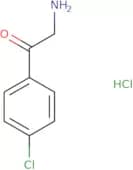
Prodotto fuori produzione2-Amino-4'-chloroacetophenone hydrochloride
CAS:Prodotto controllato2-Amino-4'-chloroacetophenone hydrochloride is a cytotoxic compound that inhibits the polymerization of tubulin. It has been shown to have cytotoxic effects and inhibit the growth of cancer cells in vitro at low micromolar concentrations. 2-Amino-4'-chloroacetophenone hydrochloride is a member of the cytotoxic class of compounds and can be used to slow or stop cell division by inhibiting the production of proteins vital for cell division, such as tubulin. This effect is due to its ability to bind to the beta subunit of tubulin, which disrupts its structure and prevents polymerization from occurring.
Formula:C8H8ClNO•HClPurezza:Min. 95%Colore e forma:PowderPeso molecolare:206.07 g/molRef: 3D-FA55395
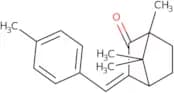
Prodotto fuori produzione3-(4-Methylbenzylidene)camphor
CAS:3-(4-Methylbenzylidene)camphor is a chemical compound that has two isomers, alpha and beta. It can be found in biological samples, such as human urine or wastewater, and can be used for the treatment of skin cancer. 3-(4-Methylbenzylidene)camphor is prepared by extraction from a dry sample with an organic solvent. The extraction process requires a hydroxyl group to react with the dry sample and create a liquid. The resulting liquid is then evaporated to leave behind the extract. The kinetic data of 3-(4-Methylbenzylidene)camphor was determined by measuring its rate of reaction with an analytical method. The rate of reaction increased as the concentration increased to a constant value at high concentrations, which suggests that it may have some occlusive properties in humans due to its tendency to bind to plasma proteins.
Formula:C18H22OPurezza:Min. 95%Colore e forma:White PowderPeso molecolare:254.37 g/molRef: 3D-FM25793
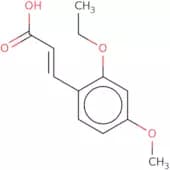
Prodotto fuori produzione2-Ethoxy-4-methoxycinnamic acid
CAS:2-Ethoxy-4-methoxycinnamic acid is a synthetic chemical with the CAS number 1372859-34-1. It is a versatile building block that can be used for the synthesis of many complex compounds. 2-Ethoxy-4-methoxycinnamic acid is one of a number of scaffolds that are useful for creating fine chemicals and research chemicals. This compound is also an intermediate in many reactions and can be used as a reagent to produce other substances.
Formula:C12H14O4Purezza:Min. 95%Peso molecolare:222.24 g/molRef: 3D-FE66333
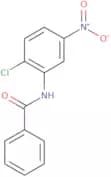
Prodotto fuori produzioneN-(2-Chloro-5-Nitrophenyl)Benzamide
CAS:Please enquire for more information about N-(2-Chloro-5-Nitrophenyl)Benzamide including the price, delivery time and more detailed product information at the technical inquiry form on this page
Formula:C13H9ClN2O3Purezza:Min. 95%Colore e forma:PowderPeso molecolare:276.67 g/mol