Standard farmaceutici
Sottocategorie di "Standard farmaceutici"
- APIs per la ricerca e le impurità(277.208 prodotti)
- Attivatori e inibitori enzimatici(2.829 prodotti)
- Nitrosamine(2.649 prodotti)
- Composti e metaboliti farmaceutici e veterinari(2.894 prodotti)
- Tossicologia(13.378 prodotti)
Trovati 8108 prodotti di "Standard farmaceutici"
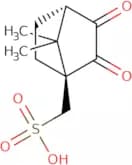
Camphorquinone-10-sulfonic acid hydrate
CAS:Camphorquinone-10-sulfonic acid hydrate is a soybean trypsin inhibitor that is used as a preparative agent in organic synthesis. It reacts with histidine, lysine residues, and other molecules to form a light-chain kinase that inhibits the action of the enzyme trypsin. Camphorquinone-10-sulfonic acid hydrate has been shown to be resistant to proteolysis by gastrointestinal enzymes. This agent also has diabetogenic properties by inhibiting the activity of membrane potential and chloride channels in pancreatic β cells. Camphorquinone-10-sulfonic acid hydrate forms an ion pair with choline, which can inhibit the enzyme acetylcholinesterase, leading to accumulation of acetylcholine at nerve endings.
Formula:C10H16O6SPurezza:Min. 95 Area-%Colore e forma:Yellow PowderPeso molecolare:264.3 g/molα-Ketobutyric Acid-d2 Sodium
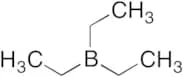
CAS:Prodotto controllatoFormula:C4D2H3O3·NaColore e forma:NeatPeso molecolare:126.083Triethylborane (1.0 M in THF)
CAS:Prodotto controllatoApplications Triethylborane reacted with 8-hydroxyquinoline to synthesize three 8--hydroxyquinolato (q) boron compounds B(C2H5)2q (1), BPh2q (2), and B(2-naph)2q (3).
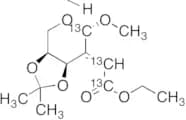
References Wu, Q., et al.: Chem. Mater., 12, 79 (2000).Formula:C6H15BColore e forma:Single SolutionPeso molecolare:97.99Methyl (2E)-2-Deoxy-2-(2-ethoxy-2-oxoethylidene)-3,4-O-isopropylidene-β-L-erythro-pentopyranoside-13C3
Prodotto controllatoFormula:C3C10H20O6Colore e forma:NeatPeso molecolare:275.272p-Cresol-(methyl-13C)
CAS:Prodotto controllatoApplications The formation of p-Cresol-(methyl-13C) via phenol methylation at higher temperature from the deactivation of basic catalyst.
Not a dangerous good if item is equal to or less than 1g/ml and there is less than 100g/ml in the package
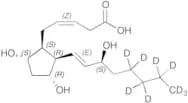
References Borodina, I. B., et al.: Russ. J. Phys. Chem., 80, 892-898 (2006)Formula:CC6H8OColore e forma:NeatPeso molecolare:109.132,3-Dinor iPF2α-III-d9
CAS:Prodotto controllatoFormula:C18D9H21O5Colore e forma:NeatPeso molecolare:335.483(-)-γ-Cadinene
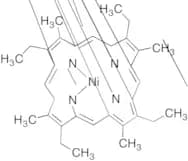
CAS:Prodotto controllatoFormula:C15H24Colore e forma:ColourlessPeso molecolare:204.351Etioporphyrin I Nickel
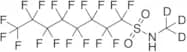
CAS:Prodotto controllatoFormula:C32H36N4NiColore e forma:NeatPeso molecolare:535.348N-Methylperfluorooctanesulfonamide-d3 (50μg/mL in Methanol)
CAS:Prodotto controllatoFormula:C9HD3F17NO2SColore e forma:Single SolutionPeso molecolare:516.19Bromocresol purple sodium salt
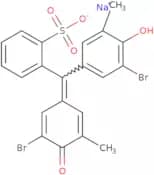
CAS:Bromocresol purple sodium salt is a dye that emits light when it is irradiated with light of a particular wavelength. It has been used to detect amniotic fluid contamination in the laboratory and as an absorber in polymer films. Bromocresol purple sodium salt absorbs ultraviolet and visible light, which causes it to emit red light. The molecules of bromocresol purple sodium salt are long-chain triazoles, which absorb water vapor and emit infrared radiation. This property can be used to detect the presence of alkali metals. The luminescent property of bromocresol purple sodium salt can be enhanced by adding an alkali metal, such as potassium or lithium chloride, to the solution where it is dissolved.
Formula:C21H15Br2O5S·NaPurezza:Min. 95%Peso molecolare:562.2 g/mol2'-Acetylacteoside
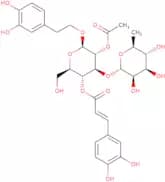
CAS:2'-Acetylacteoside is a naturally occurring phenylethanoid glycoside, which is derived from various plant sources. It exhibits antioxidant properties by scavenging reactive oxygen species and inhibiting oxidative stress. This mode of action supports cellular health by protecting cells from oxidative damage and maintaining redox balance.
Purezza:Min. 95%Ref: 3D-FA74397
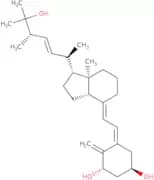
Prodotto fuori produzione1a,25-Dihydroxy vitamin D2
CAS:1a,25-Dihydroxy vitamin D2 is a compound that exhibits various characteristics and applications. It is known for its bioavailability and water-soluble properties, making it easily absorbed by the body. This compound has been extensively studied in the field of research chemicals. One of the notable features of 1a,25-Dihydroxy vitamin D2 is its potential therapeutic effects on ganglioside GM2-related disorders. It has been shown to interact with GM2 activator proteins and fatty acids, which are involved in the metabolism of GM2 gangliosides. This interaction may have implications for the treatment of certain neurological conditions. Additionally, 1a,25-Dihydroxy vitamin D2 has been investigated for its role in modulating immune responses and inflammatory processes. Studies have suggested that this compound can inhibit the production of pro-inflammatory substances like prostaglandins, offering potential anti-inflammatory benefits. Moreover, 1a,25-Dihydroxy vitamin D
Formula:C28H44O3Purezza:Min. 95%Colore e forma:White PowderPeso molecolare:428.65 g/molRef: 3D-FD22066
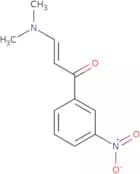
Prodotto fuori produzione(2E)-3-(Dimethylamino)-1-(3-nitrophenyl)prop-2-en-1-one
CAS:Please enquire for more information about (2E)-3-(Dimethylamino)-1-(3-nitrophenyl)prop-2-en-1-one including the price, delivery time and more detailed product information at the technical inquiry form on this page
Formula:C11H12N2O3Purezza:Min. 95%Peso molecolare:220.22 g/molRef: 3D-FD137190
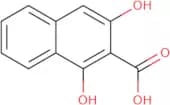
Prodotto fuori produzione1,3-Dihydroxy-2-naphthoic acid
CAS:1,3-Dihydroxy-2-naphthoic acid is an organic compound that belongs to the binaphthyls. It is a white solid that can be obtained by reacting naphthalene with inorganic phosphite in the presence of acidic potassium carbonate. This reaction system produces 1,3-dihydroxy-2-naphthoic acid and potassium biphosphite as byproducts. The reaction time depends on the concentration of reactants. 1,3-Dihydroxy-2-naphthoic acid has acidic properties and can be used as a catalyst for chemical reactions involving carboxylic compounds. This compound has been shown to be effective at treating abdominal pain caused by intestinal inflammation or infection with a carbon source such as carbohydrates (e.g., glucose) or fats (e.g., oleic acid).
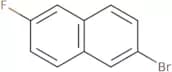
Formula:C11H8O4Purezza:Min. 95%Peso molecolare:204.18 g/mol2-bromo-6-fluoronaphthalene
CAS:2-bromo-6-fluoronaphthalene is a molecule that has been shown to be a good electron donor in organic solar cells. It is also an analgesic and antinociceptive agent. 2-Bromo-6-fluoronaphthalene has shown to have antiinflammatory effects and inhibit the production of prostaglandins, which are chemical messengers that induce inflammation. The molecular structure of 2-bromo-6-fluoronaphthalene consists of two bromine atoms attached to two naphthalene rings. The bromine atoms provide strong electron donating properties and the naphthalene rings provide stability for the molecule.
Formula:C10H6BrFPurezza:Min. 95%Peso molecolare:225.06 g/molRef: 3D-FB105673
Prodotto fuori produzioneDiacetato[(R)-(+)-2,2'-bis(diphenylphosphino)-1,1'-binaphthyl]ruthenium(II)
CAS:Please enquire for more information about Diacetato[(R)-(+)-2,2'-bis(diphenylphosphino)-1,1'-binaphthyl]ruthenium(II) including the price, delivery time and more detailed product information at the technical inquiry form on this page
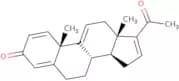
Formula:C48H38O4P2RuPurezza:Min. 95%Peso molecolare:841.83 g/molPregna-1,4,9(11),16-tetraene-3,20-dione
CAS:Prodotto controllatoPregna-1,4,9(11),16-tetraene-3,20-dione is a controlled product that is widely used in the industrial sector. It is a phosphoric compound that has various applications. This chemical compound acts as a chemokine and contains active agents such as tryptamine and aldehyde monophosphate. Pregna-1,4,9(11),16-tetraene-3,20-dione is also known to be a mouse metabolite and has been found to have properties similar to naphthalene and phenylethylamine. With its acidic nature and oxygen-containing structure, this compound can be easily purified through recrystallization. It exists in different tautomeric forms, making it highly versatile for various applications in different industries.
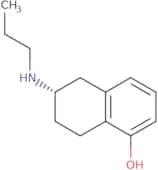
Formula:C21H24O2Purezza:Min. 95%Peso molecolare:308.41 g/mol(6S)-5,6,7,8-Tetrahydro-6-(propylamino)-1-naphthalenol
CAS:Prodotto controllatoRotigotine is a drug that is used to treat Parkinson's disease. It is a dopamine agonist that stimulates the release of dopamine in the brain. Rotigotine has been shown to be effective in controlling symptoms of Parkinson's disease, such as tremors and stiffness, and improving motor skills. This drug has also been shown to have a good tolerability profile, with few side effects reported. Rotigotine is rapidly absorbed from the gastrointestinal tract and metabolized by CYP2D6 into desalkyl rotigotine, which are pharmacologically inactive compounds. The mean terminal half-life for rotigotine is about 2 hours.
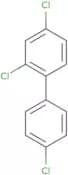
Formula:C13H19NOPurezza:Min. 95%Peso molecolare:205.3 g/mol2,4,4’-Trichlorobiphenyl
CAS:Prodotto controllato2,4,4’-Trichlorobiphenyl is a polychlorinated biphenyl congener. It has been shown to have an adverse effect on the central nervous system, causing neurotoxicity. 2,4,4’-Trichlorobiphenyl has been used as a model system for the study of the effects of environmental toxins on mitochondrial membrane potential and lipid peroxidation. 2,4,4’-Trichlorobiphenyl binds to fatty acids in mitochondria and inhibits fatty acid β-oxidation. The inhibition of fatty acid oxidation leads to increased levels of protocatechuic acid in the serum and liver tissue. 2,4,4’-Trichlorobiphenyl has also been found to be toxic to aquatic organisms such as fish and shrimp at low concentrations.
Formula:C12H7Cl3Purezza:Min. 95%Peso molecolare:257.54 g/mol




![Diacetato[(R)-(+)-2,2'-bis(diphenylphosphino)-1,1'-binaphthyl]ruthenium(II)](/_next/image/?url=https%3A%2Fstatic.cymitquimica.com%2Fproducts%2F3D%2Fthumb-webp%2FFD162446.webp&w=3840&q=75)