Glicoscienza
La glicosienza è lo studio dei carboidrati e dei loro derivati, nonché delle interazioni e delle funzioni biologiche a cui partecipano. Questo campo di ricerca è cruciale per comprendere una vasta gamma di processi biologici, tra cui il riconoscimento cellulare, la segnalazione, la risposta immunitaria e lo sviluppo delle malattie. La glicosienza ha importanti applicazioni nella biotecnologia, nella medicina e nello sviluppo di nuovi farmaci e terapie. Presso CymitQuimica, offriamo un'ampia selezione di prodotti di alta qualità e purezza per la ricerca in glicosienza. Il nostro catalogo comprende monosaccaridi, oligosaccaridi, polisaccaridi, glicoconiugati e reagenti specifici, progettati per supportare i ricercatori nei loro studi sulla struttura, funzione e applicazioni dei carboidrati nei sistemi biologici. Queste risorse sono destinate a facilitare scoperte scientifiche e applicazioni pratiche in vari ambiti delle bioscienze e della medicina.
Sottocategorie di "Glicoscienza"
- Amminozucchero(108 prodotti)
- Glico-anticorpi(282 prodotti)
- Glicolipidi(46 prodotti)
- Glicosaminoglicani (GAGs)(55 prodotti)
- Glicosidi(419 prodotti)
- Monosaccaridi(6.624 prodotti)
- Oligosaccaridi(3.682 prodotti)
- Polisaccaridi(503 prodotti)
Trovati 11046 prodotti di "Glicoscienza"
Ordinare per
Purezza (%)
0
100
|
0
|
50
|
90
|
95
|
100
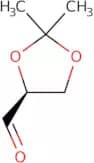
2,3-O-Isopropylidene-L-glyceraldehyde - 50% DCM solution
CAS:2,3-O-Isopropylidene-L-glyceraldehyde (2,3-OIPA) is a synthetic compound that was developed as an alternative to paraformaldehyde for the synthesis of enantiopure compounds. It has been used in metathesis reactions and catalysed the conversion of β-unsaturated ketones to enantiopure products. 2,3-OIPA also has significant cytotoxic activity against a range of human cancer cell lines. This compound can be used in asymmetric syntheses to produce chiral molecules with a high degree of optical purity.Formula:C6H10O3Purezza:Min. 95%Colore e forma:Colorless PowderPeso molecolare:130.14 g/mol6-Chloro-6-deoxy-D-mannose
CAS:6-Chloro-6-deoxy-D-mannose is a naturally occurring sugar that is found in the spermatozoa of many animals. It is a mannose derivative that has been shown to be an inhibitor of the enzyme glyceraldehyde 3-phosphate dehydrogenase, which plays an important role in energy metabolism and isomerization of 6-phosphate to glucose-1 phosphate. This property may be responsible for its contraceptive effects. The drug also inhibits phosphoglucomutase and enhances the transfer of glucose from the liver to other tissues, increasing blood glucose concentrations. 6-Chloro-6 deoxy mannose also has antifertility effects in rats by inhibiting transfer of spermatozoa through the female reproductive tract.Formula:C6H11ClO5Purezza:Min. 95%Colore e forma:White Off-White PowderPeso molecolare:198.6 g/molOctanoyl b-D-glucosylamine
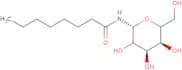
CAS:<p>Octanoyl b-D-glucosylamine is a synthetic compound that has been designed for use in the synthesis of complex carbohydrates. It is an octanoyl derivative of D-glucosamine, which is a sugar. This compound can be used for the modification of saccharides and polysaccharides, as well as sugars. It has been shown to be resistant to glycosylation and fluorination reactions.</p>Formula:C14H27NO6Purezza:Min. 95%Peso molecolare:305.37 g/mola-Galactosylceramide
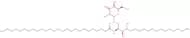
CAS:Ligand for human and mouse NKT cellsFormula:C50H99NO9Purezza:Min. 95 Area-%Colore e forma:White Slightly Yellow PowderPeso molecolare:858.32 g/mol6'-Sialyllactose-BSA
<p>Sialyllactose-BSA is a complex carbohydrate that is used in the synthesis of saccharides. It has been modified with fluorination to create a 6'-sialyllactose-BSA, which is a monosaccharide. This product can be custom synthesized and it's purity is high. The product can be methylated or glycosylated, and it has been click-modified for fluorescence labeling.</p>Purezza:Min. 95%Colore e forma:PowderPeso molecolare:72,318 g/molGT3-Oligosaccharide
<p>GT3 oligosaccharide (free acid) is a disaccharide (Galβ1,4Glc) with three sialic acid residues (NeuAc) linked α2,8/α2,8/α2,3 to the galactose residue (Ledeen, 2009). The GT3 ganglioside is the carbohydrate moiety in the GT3 ganglioside, which is implicated in type 1 diabetes. GT3 ganglioside is expressed on pancreatic cells and is the target antigen of anti-GM3-antibodies, which contribute to the autoimmune destruction of pancreatic beta cells (Misasi, 1997). GT3 ganglioside is also abundant in lung tissues and the nervous system.</p>Formula:C45H70N3O35Na3Purezza:Min. 90%Colore e forma:PowderPeso molecolare:1,282.01 g/molD-Arabinose-5-phosphate
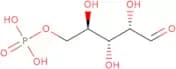
CAS:D-Arabinose-5-phosphate is an intermediate in the pentose phosphate pathway. It is synthesized from D-xylulose-5-phosphate by xylitol dehydrogenase. D-Arabinose-5-phosphate inhibits the enzyme xylitol dehydrogenase, which converts xylulose to d-xylulose, and thus prevents the formation of 5-hydroxyisoxazole phosphate, a precursor to the synthesis of NADPH. In this way, it blocks the synthesis of NADPH, which is essential for aerobic metabolism. This inhibition leads to a decrease in ATP production and consequently cell death.Formula:C5H11O8PPurezza:Min. 95%Peso molecolare:230.11 g/molGlyco-diosgenin
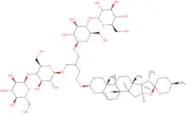
CAS:<p>Glyco-diosgenin is an amphipathic molecule that has been found to stabilize proteins. It has the potential to be developed as a drug target for stabilizing proteins in cells. Glyco-diosgenin was synthesized by chemical modification of diosgenin, which is a steroidal saponin found in plants. The chemical modification that occurred at the 3-hydroxyl position of glyco-diosgenin produced a more effective molecule due to increased solubility and decreased toxicity. The protein stabilization properties of glyco-diosgenin have been shown by cryo-electron microscopy on plant cells, titration calorimetry, and functional studies on various proteins.</p>Formula:C56H92O25Purezza:Min. 97 Area-%Colore e forma:PowderPeso molecolare:1,165.31 g/molPolysorbate 60
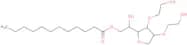
CAS:<p>Polysorbate 60 is a polyoxyethylene-polyoxypropylene block copolymer that is composed of two different saturated fatty acid chains. It has been used as a surfactant and stabilizer in the manufacture of pharmaceuticals, foods, cosmetics, and other products. Polysorbate 60 has been shown to inhibit the growth of epidermal cells by binding to epidermal growth factor (EGF) receptors on the cell surface. The effects of polysorbate 60 are also mediated through hydrogen bonding with the EGF receptor. The pharmacokinetic properties of polysorbate 60 have been studied in vitro using human serum. This polymer is used as an excipient in solid dispersions for oral administration and can be administered intravenously or subcutaneously. Polysorbate 60 is chemically stable at acidic pH levels and hydrochloric acid does not affect its structure. Polysorbate 60 also has protease activity against trypsin at high temperatures,</p>Formula:C64H126O26Purezza:Min. 95%Colore e forma:Light (Or Pale) Yellow To Yellow Solid Or Liquid (May Vary)Peso molecolare:1,311.67 g/mol1,2,3,4-Tetra-O-benzyl-6-O-trityl-a-D-mannopyranose
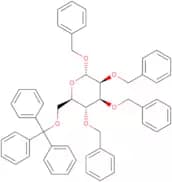
CAS:1,2,3,4-Tetra-O-benzyl-6-O-trityl-a-D-mannopyranose is a methylated form of mannopyranose. It can be custom synthesized and modified with various functional groups to produce a wide range of saccharide derivatives and oligosaccharides. The 1,2,3,4-tetra-O-benzyl group is commonly used for glycosylation reactions because it can be easily removed by acid hydrolysis. The methylation of the sugar molecule also increases its stability and prevents further reactions from occurring. This product is available in high purity and has been fluorinated on one or more hydroxyl groups to make it resistant to hydrolysis.Formula:C53H50O6Purezza:Min. 95%Colore e forma:White PowderPeso molecolare:782.96 g/molN-5-Carboxypentyl-1-deoxygalactonojirimycin
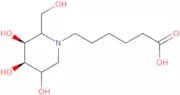
CAS:<p>N-5-Carboxypentyl-1-deoxygalactonojirimycin is an inhibitor of glycolipid hydrolase and a potential drug for the treatment of lysosomal storage disorders. N-5-Carboxypentyl-1-deoxygalactonojirimycin is derived from the natural product galactonojirimycin, which has been shown to inhibit glycolipid hydrolase in vitro. The compound was developed by modifying the peptide sequence to increase its affinity for the enzyme. N-5-Carboxypentyl-1-deoxygalactonojirimycin displays a higher affinity for glycolipid hydrolase than galactonojirimycin, and it also has a greater inhibitory effect on this enzyme.<br>N-5-Carboxypentyl-1-deoxygalactonojirimycin is</p>Formula:C12H23NO6Purezza:Min. 95%Colore e forma:White PowderPeso molecolare:277.31 g/molLacto-N-neodifucohexaose
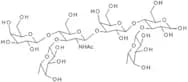
Neutral difucosylated hexasasaccharide naturally present in human breast milkFormula:C38H65NO29Purezza:Min. 75%Colore e forma:PowderPeso molecolare:999.93 g/mol1,2,3,4-Tetra-O-acetyl-β-D-glucuronide methyl ester
CAS:<p>Building block for chemical modification of GlcU, including glucuronylation</p>Formula:C15H20O11Purezza:Min. 97 Area-%Colore e forma:PowderPeso molecolare:376.31 g/molD-Glucose-6-phosphate dipotassium salt hydrate
CAS:<p>Glucose 6-phosphatase substrate</p>Formula:C6H11O9PK2·H2OPurezza:Min. 95%Peso molecolare:354.33 g/molPhenyl 3,4,6-tri-O-acetyl-2-deoxy-2-phthalimido-b-D-glucopyranoside
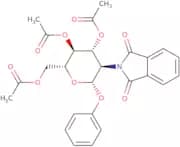
CAS:Phenyl 3,4,6-tri-O-acetyl-2-deoxy-2-phthalimido-b-D-glucopyranoside is a fluorinated synthetic monosaccharide that has been synthesized to serve as a glycosylation and polysaccharide modification agent. Phenyl 3,4,6-tri-O-acetyl-2-deoxy-2--phthalimido--b--D--glucopyranoside is an effective methylation agent for the synthesis of complex carbohydrates. It can be used for click modifications on the sugar moiety of oligosaccharides and polysaccharides. Phenyl 3,4,6 -tri -O -acetyl -2 -deoxy -2 -phthalimido -b -D--glucopyranoside is soluble in water as well as many organic solvents. The CAS No. 120498 97 7 is assigned toFormula:C26H25NO10Purezza:Min. 95%Peso molecolare:511.48 g/molDiosmetin-7-O-b-D-glucopyranoside
CAS:Diosmetin-7-O-b-D-glucopyranoside is a coumarin derivative that is found in the root of the Chinese herb Dioscorea tinctoria. It has been shown to have anti-inflammatory effects by inhibiting the expression of inflammatory genes, and it also has antioxidant properties. The chemical structure of diosmetin has been shown to be similar to protocatechuic acid, an important phenolic acid that can be found in wine and vinegar. Diosmetin has also been shown to inhibit mitochondrial apoptosis, which may contribute to its anti-cancer effects. Diosmetin has been shown to increase postprandial blood glucose levels in rats fed a high fat diet, and this effect may be due to its ability to inhibit peroxisome proliferator-activated receptor gamma (PPARγ) activity.Formula:C22H22O11Purezza:Min. 95%Colore e forma:PowderPeso molecolare:462.4 g/molSodium alginate, viscosity 300 - 600 mPa.s
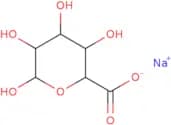
CAS:<p>Sodium alginate is the sodium salt of a polysaccharide obtained from brown seaweeds. The main use for alginate is in textile printing as a thickener in the printing of cottons with reactive dyes. In the food industry it is used as a thickener and gelling agent. The chemical structure consists of blocks of (1,4) linked-β-D-polymannuronic acid (poly M), (1,4) linked-α-L-polyguluronic acid (poly G) and alternating blocks of the two uronic acids (poly MG).</p>Colore e forma:Powderb-D-Glucopyranosyl nitromethane
CAS:b-D-Glucopyranosyl nitromethane is a precursor for the synthesis of glyco-peptidesFormula:C7H13NO7Purezza:Min. 95%Colore e forma:PowderPeso molecolare:223.18 g/molPhenethyl glucosinolate potassium salt
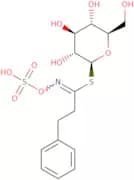
CAS:Phenethyl glucosinolate potassium salt is a compound found in plants belonging to the Brassicaceae family. It has been shown to be highly toxic to larvae of the cabbage butterfly and other insects that feed on brassica plants. Phenethyl glucosinolate potassium salt has been shown to inhibit the development of these insects, probably by inhibiting protein synthesis in the insect's gut. The major sulfur-containing compound in this product is gluconasturtiin, which has been shown to inhibit growth of pekinensis at high temperatures. This compound also inhibits radiation-induced DNA damage and does not show significant effects on nonsignificant organisms such as yeast and mold.Formula:C15H20NO9S2KPurezza:Min. 95%Colore e forma:PowderPeso molecolare:461.55 g/mola-D-Glucose
CAS:<p>Glucose is a monosaccharide that is an important source of energy for the human body. It is a simple sugar found in many carbohydrates and is the main form of fuel used by the brain. Glucose is also used as a chemical building block for polysaccharides such as glycogen, cellulose, and chitin. The hypoglycemic effect of glucose can be observed when blood glucose levels are below 70 mg/dL. This effect can be due to its ability to increase the production of insulin or decrease the rate of gluconeogenesis in liver cells. It also has been shown to have an inhibitory effect on some viruses and bacteria, which may be due to its ability to inhibit transcription activators or polymerase chain reactions.</p>Formula:C6H12O6Purezza:Min. 96 Area-%Colore e forma:White PowderPeso molecolare:180.16 g/mol