Glicoscienza
Sottocategorie di "Glicoscienza"
- Amminozucchero(108 prodotti)
- Glico-anticorpi(282 prodotti)
- Glicolipidi(46 prodotti)
- Glicosaminoglicani (GAGs)(55 prodotti)
- Glicosidi(419 prodotti)
- Monosaccaridi(6.616 prodotti)
- Oligosaccaridi(3.718 prodotti)
- Polisaccaridi(505 prodotti)
Trovati 11017 prodotti di "Glicoscienza"
3,4-Di-O-acetyl-D-fucal
CAS:3,4-Di-O-acetyl-D-fucal is a synthetic carbohydrate with two orientations. It is a synthon for the synthesis of carbohydrates and can be used as a ligand in biomolecular design. The synthetic carbohydrate has been shown to have chemotherapeutic effects, which may be due to its ability to inhibit glycan synthesis. This synthetic carbohydrate also has conformational parameters that are similar to those of natural fucose, which makes it an attractive candidate as a potential drug target.
Formula:C10H14O5Purezza:Min. 95%Colore e forma:PowderPeso molecolare:214.22 g/molRef: 3D-MD164873
Prodotto fuori produzione2-Deoxy-2-fluoro-D-galactose
CAS:Please enquire for more information about 2-Deoxy-2-fluoro-D-galactose including the price, delivery time and more detailed product information at the technical inquiry form on this page
Formula:C6H11FO5Purezza:Min. 97 Area-%Peso molecolare:182.15 g/molD-Galactosamine hydrochloride
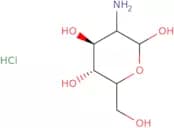
CAS:D-Galactosamine (GalN) is an aldohexose (2-amino-2-deoxygalactose) in which the hydroxyl group at position 2 is replaced by an amino group (Collins, 2006). Galactosamine (as the N-acetyl derivative) forms a key part of both N- and O-linked glycoproteins, glycolipids and glycosaminoglycans. Treatment of experimental animals with D-galactosamine / lipopolysaccharide causes lethal liver injury characterized by apoptosis of the hepatocyte and it is used as a laboratory model to study the effect of therapeutic agents (Hirono, 2001).
Formula:C6H13NO5·HClPurezza:Min. 98 Area-%Colore e forma:White Off-White PowderPeso molecolare:215.63 g/mol4,6-O-Benzylidene-D-glucose
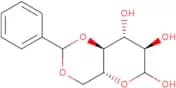
CAS:4,6-O-Benzylidene-D-glucose is a potent inhibitor of the enzyme dibutyltin oxide, which is involved in the synthesis of energy. It has been shown to have clinical activity in rat cardiomyocytes and has been tested in clinical studies. 4,6-O-Benzylidene-D-glucose inhibits enzymes by forming hydrogen bonds with their substrates. This compound also interacts with hydrochloric acid to form a stable complex that prevents it from interacting with other molecules. 4,6-O-Benzylidene-D-glucose is rapidly broken down into glucose and benzaldehyde when it reacts with carbonyl groups or amines. The asymmetric synthesis of this compound can be achieved using an intramolecular hydrogen transfer reaction.
4,6-O-Benzylidene glucose is derived from D-mannose derivatives and contains a hydroxyl group on the central carbonFormula:C13H16O6Purezza:Min. 98 Area-%Colore e forma:White PowderPeso molecolare:268.26 g/molRef: 3D-MB03806
Prodotto fuori produzioneD-Fructose 1-phosphate disodium
CAS:Please enquire for more information about D-Fructose 1-phosphate disodium including the price, delivery time and more detailed product information at the technical inquiry form on this page
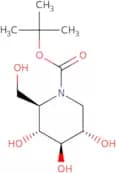
Formula:C6H11Na2O9PPurezza:90%Colore e forma:PowderPeso molecolare:304.1 g/molN-Boc-1,5-imino-1,5-dideoxy-D-glucitol
CAS:N-Boc-1,5-imino-1,5-dideoxy-D-glucitol is a custom synthesis product that is synthesized by methylation and click chemistry. The chemical name of N-Boc-1,5-imino-1,5-dideoxyglucitol is 1,5-(N′-(tertiary butyloxycarbonyl)-L-serine)-1,5-dideoxyglucitol. It has a CAS number of 1305391207 and molecular weight of 478.18 g/mol. It is a modified carbohydrate with the molecular formula C14H27NO8 and molecular weight of 478.18 g/mol. It has an Oligosaccharide with the molecular formula C14H27NO8 and molecular weight of 478.18 g/mol. It has a Polysaccharide with the molecular formula C14H27NO8 andFormula:C11H21NO6Purezza:Min. 95%Colore e forma:Beige solid.Peso molecolare:263.29 g/mol6-Chloro-6-deoxy-D-mannono-1,4-lactone
6-Chloro-6-deoxy-D-mannono-1,4-lactone is a saccharide that belongs to the group of polysaccharides. It can be custom synthesized and modified to meet your needs. 6CMDL is a synthetic carbohydrate product with high purity, which can be used in the synthesis of glycosylations or as a fluorinated mannose analogue.
6CMDL has been shown to have a methylation activity that can be used for the modification of carbohydrates or oligosaccharides.Formula:C6H9ClO5Purezza:Min. 95%Peso molecolare:196.59 g/molEthyl 3-O-benzyl-4,6-O-benzylidene-2-deoxy-2-N-phthalimido-b-D-thioglucopyranoside
CAS:Ethyl 3-O-benzyl-4,6-O-benzylidene-2-deoxy-2-N-phthalimido-b-D-thioglucopyranoside is a synthetically modified sugar. It is a monosaccharide that has been fluorinated and methylated. This modification has been shown to increase the stability of the sugar in the presence of water. The sugar also has an oligosaccharide and polysaccharide moiety attached to it. These saccharides are glycosylated and have a complex carbohydrate structure.
Formula:C30H29NO6SPurezza:Min. 95%Colore e forma:PowderPeso molecolare:531.62 g/molLactonamycin
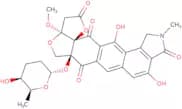
CAS:Lactonamycin is a linker that contains an oxygenated functional group. It can be found in some active natural products and has been synthesized in the laboratory. Lactonamycin is used as a model system for biosynthesis, where it was shown to efficiently produce glycosidic bonds when supplied with carbon sources such as glucose. The biological properties of Lactonamycin include its ability to inhibit microbial infection and inflammation, which may be due to its hydroxy group.
Formula:C28H27NO12Purezza:Min. 95%Peso molecolare:569.51 g/mol1,2-Isopropylidene-D,L-myo-inositol
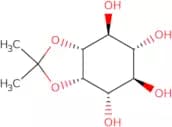
CAS:1,2-Isopropylidene-D,L-myo-inositol is a modification of the natural product myo-inositol. It is synthesized by methylation and glycosylation of inositol with methanol. This chemical compound has been modified to include fluorination and saccharide.
Formula:C9H16O6Purezza:Min. 95%Colore e forma:White PowderPeso molecolare:220.22 g/molRef: 3D-MI04760
Prodotto fuori produzioneGDP-L-galactose sodium salt
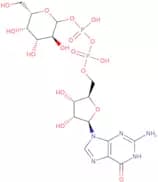
CAS:GDP-L-galactose is a sugar molecule that is an intermediate in the biosynthesis of ascorbate. GDP-L-galactose is synthesized from GDP-D-mannose and GDP-L-glucose by the enzyme GDP-mannose 4,6 dehydratase. The enzyme GDP-L-galactose dehydrogenase then converts GDP-L-galactose to ascorbic acid (vitamin C). Ascorbate is essential for many biological functions such as synthesis of collagen and neurotransmitters, regulation of gene expression, and protection against oxidative stress. The biosynthesis of ascorbate occurs in a light dependent reaction involving L -galactono 1,4 diphosphate synthase and UDP glucose 6 phosphate uridylyl transferase. This process is regulated by transcriptional factors such as MYB and NAC2/NAC4.
Formula:C16H23N5O16P2Na2Purezza:(Hplc-Ms) Min. 95 Area-%Colore e forma:White Off-White PowderPeso molecolare:649.3 g/molRef: 3D-MG01735
Prodotto fuori produzione(2R, 3R, 4R, 5S) -3, 4- Dihydroxy- 5- (hydroxymethyl) - N- methyl-2- pyrrolidinecarboxami de
CAS:Methylation of a saccharide with a methyl group is called methylation. The process is used in the synthesis of many important molecules, including biomedically-relevant compounds such as drugs and natural products. Methylation can be achieved by using various methods, such as by using an organometallic (e.g., Grignard reagent) or electrophilic reagent (e.g., dimethyl sulfate).
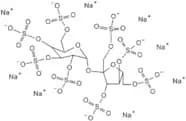
Purezza:Min. 95%Sucrose octasulfate sodium salt
CAS:This compound is generally known as sucralfates and are medications primarily taken to treat active duodenal ulcers. They are also used for the treatment of gastroesophageal reflux disease (GERD) and stress ulcers. Sucralfate is a sucrose sulfate-aluminium complex that binds to the ulcer, creating a physical barrier that protects the gastrointestinal tract from stomach acid and prevents the degradation of mucus. It also promotes bicarbonate production and acts like an acid buffer with cytoprotective properties.
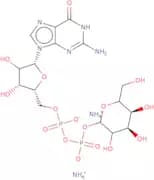
Formula:C12H14Na8O35S8Purezza:Min. 98 Area-%Colore e forma:White PowderPeso molecolare:1,158.66 g/molGDP-D-mannose diammonium salt
GDP-D-mannose diammonium salt is a custom synthesis. It has been modified with fluorination, methylation, and monosaccharide substitution. The structure of this compound consists of a glucose molecule bonded to a D-mannose molecule by an oxygen linkage at the 1-position. This product has been synthetically modified to include a click modification and oligosaccharides. GDP-D-mannose diammonium salt is used for the production of polysaccharides as well as glycosylation reactions.
Formula:C16H23N5O16P2·N2H8Purezza:Min. 95%Peso molecolare:639.4 g/mol2-Azido-2-deoxy-L-xylonic acid
2-Azido-2-deoxy-L-xylonic acid is a synthetic monosaccharide and a member of the xylonic acid family. It is used in the synthesis of glycosides and oligosaccharides, as well as being used to modify proteins. 2-Azido-2-deoxy-L-xylonic acid has been fluorinated and then glycosylated with a variety of saccharides including maltose, cellobiose, and sucrose. This compound is also methylated at the hydroxyl group to give an azidomethyl ester derivative. The chemical name for this compound is 2-[(2S)-2-(diethylamino)ethylamino]pentanedioic acid, 2-[1-(diethylamino)ethyl]azide].
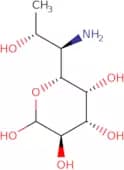
Purezza:Min. 95%Lincosamine
CAS:Lincosamine is a nitrogen nucleophile that reacts with the electrophilic carbon of an activated aromatic ring in a chemical reaction. Lincosamine has been shown to be effective against infectious diseases caused by bacteria, such as Staphylococcus and Streptococcus, but not against viruses. The glycosidic bond between lincosamine and glucose is stereoselective. Lincosamine binds to the hybridoma cell strain through its monoclonal antibody and can be used for pharmacokinetic properties studies. Lincosamine has been used as an antimicrobial agent in biological samples such as urine, blood, and sputum.
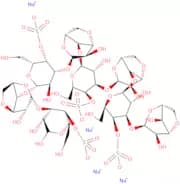
Formula:C8H17NO6Purezza:Min. 95%Peso molecolare:223.22 g/molNeocarraoctaose-4¹,4³,4⁵,4⁷-tetra-O-sulfate sodium
CAS:Neocarraoctaose-41,3,5,7-tetra-O-sulfate sodium salt is a synthetic carbohydrate compound that is used in the synthesis of oligosaccharides and polysaccharides. The chemical name of this product is Neocarraoctaose-41,3,5,7-tetra-O-sulfate sodium salt. It has a molecular weight of 598.34 g/mol and a CAS number of 133647-94-6. This product can be synthesized by methylation, custom synthesis, click modification and fluorination.
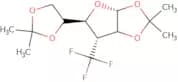
Formula:C48H74O49S4•Na4Purezza:Min. 95%Colore e forma:PowderPeso molecolare:1,655.3 g/mol3-Deoxy-1,2:5,6-di-O-isopropylidene-3-trifluoromethyl-a-D-glucofuranose
CAS:3-Deoxy-1,2:5,6-di-O-isopropylidene-3-trifluoromethyl-a-D-glucofuranose is a carbohydrate that has the following modifications: methylation at the 6 position of the 3rd carbon atom, glycosylation at the 2nd and 4th positions of the 5th carbon atom, fluorination at the 1st position of the 5th carbon atom. This carbohydrate has a CAS number 1426243-44-8 and can be found under Polysaccharide in CAS.
Formula:C13H19F3O5Purezza:Min. 95%Peso molecolare:312.28 g/molFucoidan, laminaria digitata
CAS:A fucan sulphate found in brown marine algae (Phaeophyta-typically Fucus serratus, Ascophyllum nodosum, Laminaria digitata (illustrated) and Macrocystis pyrifyra) and has been shown to have anticoagulant activity. The main constituents are α-1,4 and α-1,2 linked L-fucose sulphates although galactose also occurs and there are many variations of the basic structure found in different species of Phaeophyta.
The image was kindly provided by Prof Mike Guiry from Cork who runs ‘The Seaweed Site’.Colore e forma:PowderEthyl 2-acetamido-2-deoxy-b-D-galactopyranoside
Ethyl 2-acetamido-2-deoxy-b-D-galactopyranoside is a custom synthesis, fluorinated, modified with methyl and acetamido groups, monosaccharide with a CAS number. It is synthesized by the modification of galactose with an acetamido group and then reacting it with ethyl bromoacetate. It is a saccharide that can be used to modify glycoproteins. This compound has been used in the synthesis of oligosaccharides and polysaccharides. Ethyl 2-acetamido-2-deoxy-b-D-galactopyranoside is also known as a sugar or carbohydrate.
Formula:C10H19NO6Purezza:Min. 95%Colore e forma:SolidPeso molecolare:249.26 g/mol