Antimicrobici
Sottocategorie di "Antimicrobici"
- Antibiotici(4.131 prodotti)
- Antimicotici(912 prodotti)
- Antiparassitari(703 prodotti)
- Antivirali(767 prodotti)
Trovati 2425 prodotti di "Antimicrobici"
Gatifloxacin related compound E
CAS:Gatifloxacin related compound E is a chemical reference standard, which is often used in pharmaceutical and analytical chemistry research for the identification and quantification of impurities. It is generally synthesized or isolated as part of the quality control and validation process for the production of the antibiotic Gatifloxacin. The mode of action of this compound revolves around its structural similarity to Gatifloxacin, which allows it to serve as a benchmark to ensure the accuracy and reliability of high-performance liquid chromatography (HPLC) and other analytical techniques.
Formula:C19H22FN3O4·HClPurezza:Min. 95%Peso molecolare:411.86 g/molMesosulfuron
CAS:Mesosulfuron is a selective herbicide, which is a synthetic chemical compound with a specific mode of action designed to inhibit acetolactate synthase (ALS). This enzyme inhibition disrupts the biosynthesis of essential amino acids such as valine, leucine, and isoleucine, leading to the cessation of cell division and consequent plant growth arrest. The herbicide is primarily utilized in agricultural settings, particularly for post-emergence control of various grass weeds within cereal crops, including wheat and barley. Its application is crucial for managing weed competition that can significantly impact crop yield and quality. Mesosulfuron is absorbed through the foliage and roots of targeted species, providing systemic action that ensures effective control. Its usage is governed by stringent regulations to minimize environmental impact and to manage herbicide resistance through integrated weed management strategies.
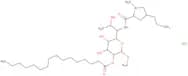
Formula:C16H19N5O9S2Purezza:Min. 95%Peso molecolare:489.5 g/molLincomycin 2-palmitate hydrochloride
CAS:Lincomycin 2-palmitate hydrochloride is a semi-synthetic antibiotic, derived from the natural antibiotic lincomycin through chemical modification. It is sourced from fermentative processes involving the bacterium *Streptomyces lincolnensis*. The compound exerts its action by inhibiting protein synthesis in susceptible bacteria. This occurs through its binding to the 50S subunit of the bacterial ribosome, thereby hindering peptide chain elongation and ultimately arresting bacterial growth.Formula:C34H65ClN2O7SPurezza:Min. 95%Peso molecolare:681.41 g/molDihydrostreptomycin sesquisulfate
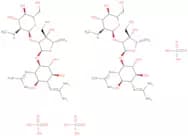
CAS:Dihydrostreptomycin sesquisulfate is an aminoglycoside antibiotic, which is derived from the bacterium Streptomyces griseus. Its mode of action involves binding to the 30S subunit of the bacterial ribosome, leading to the disruption of protein synthesis. This binding interferes with the initiation complex formation, causing misreading of mRNA and ultimately inhibiting bacterial growth.Formula:C21H41N7O12•(H2SO4)1Purezza:Min. 95%Peso molecolare:730.71 g/molMafoprazine
CAS:Mafoprazine is an experimental psychotropic drug, which is an organic compound synthetically derived from the azapirone family. It functions primarily as a serotonin receptor agonist, specifically targeting the 5-HT1A receptors, while also exhibiting moderate affinity for dopamine and adrenergic receptors. This dual action on neurotransmitter systems is thought to contribute to its therapeutic effects.Formula:C22H28FN3O3Purezza:Min. 95%Peso molecolare:401.5 g/mol(Z)-Azoxystrobin
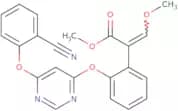
CAS:(Z)-Azoxystrobin is a strobilurin fungicide, which is a synthetic derivative of naturally occurring antifungal compounds produced by fungi such as *Strobilurus tenacellus*. Its mode of action involves the inhibition of mitochondrial respiration in target fungi, specifically by binding to the Qo site of the cytochrome bc1 complex. This disrupts electron transport in the mitochondria, leading to the cessation of ATP production and subsequent cell death.
Formula:C22H17N3O5Purezza:Min. 95%Peso molecolare:403.4 g/molDicloxacillin sodium salt monohydrate
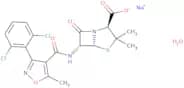
CAS:Dicloxacillin sodium salt monohydrate is a beta-lactam antibiotic with action on bacterial cell wall synthesis and is used for treating infections caused by penicillinase-producing bacteria.
Formula:C19H16Cl2N3NaO5S·H2OPurezza:Min. 95%Colore e forma:White PowderPeso molecolare:510.32 g/molAcepromazine hydrochloride
CAS:Acepromazine hydrochloride is a phenothiazine derivative tranquilizer, which is synthesized chemically. Its mode of action is primarily through antagonism of dopamine receptors in the central nervous system, leading to a sedative effect. Additionally, it exerts peripheral actions, including alpha-adrenergic blockade and diminished release of hypothalamic and hypophyseal hormones, contributing to vasodilation and other physiological effects.
Formula:C19H23ClN2OSPurezza:Min. 95%Peso molecolare:362.9 g/molEnrofloxacin HCl
CAS:Enrofloxacin HCl is a fluoroquinolone antibiotic, which is a synthetic compound derived from chemical synthesis. Its mode of action involves the inhibition of bacterial DNA gyrase and topoisomerase IV, critical enzymes in bacterial DNA replication and transcription processes. This action disrupts bacterial cellular division and transcription, leading to cell death.
Formula:C19H22FN3O3•HClPurezza:Min. 95%Peso molecolare:395.86 g/mol(2RS,4S)-2-[[(phenylacetyl)amino]methyl]-5,5-dimethylthiazolidine-4-carboxylic acid (penilloic acids of benzylpenicillin)
CAS:(2RS,4S)-2-[[(Phenylacetyl)amino]methyl]-5,5-dimethylthiazolidine-4-carboxylic acid, commonly referred to as penilloic acids, is a hydrolytic degradation product of benzylpenicillin. It is derived through the enzymatic or chemical cleavage of the β-lactam ring of benzylpenicillin, which is a classic β-lactam antibiotic.
Formula:C15H20N2O3SPurezza:Min. 95%Peso molecolare:308.4 g/molOligomycin
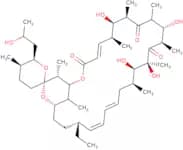
CAS:Oligomycin is a macrolide antibiotic, which is derived from species of the bacterium Streptomyces. It acts as a potent inhibitor of the mitochondrial ATP synthase complex, specifically targeting the F₀ portion of the enzyme. This interference results in the blockage of proton translocation across the mitochondrial membrane, thereby preventing ATP synthesis. Due to this mode of action, Oligomycin is primarily utilized in biochemical research to study cellular respiration and energy metabolism. It serves as a valuable tool in elucidating the mechanisms of oxidative phosphorylation and the role of ATP in various cellular processes. In addition, its application extends to investigations on mitochondrial dysfunctions and the screening of mitochondrial-targeted drugs.Formula:C45H74O11Purezza:Min. 95%Peso molecolare:791.06 g/molThiostrepton
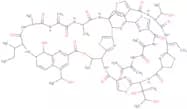
CAS:Thiostrepton is a thiopeptide antibiotic with action on bacterial protein synthesis by binding to the ribosome and is used for treating bacterial infections in veterinary medicine and research applications.Formula:C72H85N19O18S5Purezza:Min. 95%Colore e forma:White To Light (Or Pale) Yellow SolidPeso molecolare:1,664.89 g/molMethyl 6-(2,3-dichlorophenyl)-2-methyl-4-oxocyclohex-2-ene-1-carboxylate
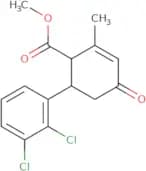
CAS:Methyl 6-(2,3-dichlorophenyl)-2-methyl-4-oxocyclohex-2-ene-1-carboxylate is a synthetic organic compound that can be classified as a specialized chemical reagent. It is primarily sourced from chemical synthesis, utilizing a series of controlled reactions involving halogenated aromatic compounds and cyclohexene derivatives.Formula:C15H14Cl2O3Purezza:Min. 95%Peso molecolare:313.2 g/molRifamycin pr-3
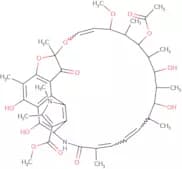
CAS:Rifamycin PR-3 is an antibiotic, which is derived from bacterial fermentation, specifically from the bacterium Amycolatopsis rifamycinica. It acts by inhibiting DNA-dependent RNA polymerase, thereby blocking RNA synthesis in susceptible bacteria. This inhibition disrupts protein synthesis, ultimately leading to bacterial cell death. Rifamycin PR-3 is primarily used for the treatment of various bacterial infections, particularly those caused by gram-positive bacteria and certain mycobacteria. Its application is crucial in managing diseases such as tuberculosis, where it targets the Mycobacterium tuberculosis. As a member of the rifamycin class of antibiotics, it is also explored for use in treating refractory cases and in combinations to prevent the development of resistance. This compound’s efficacy in penetrating phagocytic cells makes it an important player in addressing intracellular infections. Scientists continue to study its pharmacokinetics and potential for synergistic combinations, which may expand its utility in infectious disease therapy.Formula:C43H54N2O13Purezza:Min. 95%Peso molecolare:806.9 g/molCefmenoxime hydrochloride
CAS:Cefmenoxime hydrochloride is a third-generation cephalosporin antibiotic with action on bacterial cell wall synthesis and is used for treating gynecological and obstetric infections.Formula:C16H17N9O5S3HClPurezza:Min. 95%Colore e forma:White PowderPeso molecolare:529.79 g/molOteseconazole
CAS:Oteseconazole is an antifungal medication, which is a synthetic triazole-derived agent. It functions by inhibiting the activity of the fungal enzyme lanosterol 14α-demethylase. This inhibition disrupts the synthesis of ergosterol, a vital component of fungal cell membranes, thereby interfering with cell membrane integrity and function, ultimately leading to fungal cell death.
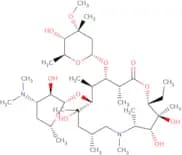
Formula:C23H16F7N5O2Purezza:Min. 95%Peso molecolare:527.4 g/molAzithromycin Dihydrate
CAS:Azithromycin Dihydrate is a macrolide antibiotic and is used for the treatment of various bacterial infections. It binds to the 23S rRNA of the 50S ribosomal subunit, inhibiting protein synthesisFormula:C38H72N2O12·2H2OPurezza:Min. 95 Area-%Colore e forma:PowderPeso molecolare:785.02 g/molParitaprevir
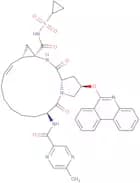
CAS:Paritaprevir is an antiviral medication, which is derived from chemical synthesis with its action targeting the hepatitis C virus (HCV). It operates primarily as a protease inhibitor, specifically targeting the NS3/4A protease, an essential enzyme for HCV replication. By inhibiting this protease, Paritaprevir effectively disrupts the viral life cycle, preventing the virus from maturing and proliferating within the host cells.Purezza:Min. 95%Quinupristin
CAS:Quinupristin is a semi-synthetic antibiotic, which is derived from the natural compound pristinamycin IIA produced by the bacterium Streptomyces pristinaespiralis. It operates by binding to the 50S ribosomal subunit in bacterial cells, inhibiting protein synthesis and thus exerting a bacteriostatic effect. This mechanism effectively disrupts the growth and proliferation of susceptible bacteria.Formula:C53H67N9O10SPurezza:Min. 95%Peso molecolare:1,022.22 g/molNatamycin
CAS:Natamycin is a polyene macrolide antifungal agent with action on fungal cell membranes by binding to sterols and is used for treating fungal infections and as a food preservative.
Formula:C33H47NO13Purezza:Min. 95 Area-%Colore e forma:PowderPeso molecolare:665.73 g/mol



![(2RS,4S)-2-[[(phenylacetyl)amino]methyl]-5,5-dimethylthiazolidine-4-carboxylic acid (penilloic aci…](/_next/image/?url=https%3A%2Fstatic.cymitquimica.com%2Fproducts%2F3D%2Fthumb-webp%2FAAA50134.webp&w=3840&q=75)