Antimicrobici
Sottocategorie di "Antimicrobici"
- Antibiotici(4.131 prodotti)
- Antimicotici(912 prodotti)
- Antiparassitari(706 prodotti)
- Antivirali(768 prodotti)
Trovati 2425 prodotti di "Antimicrobici"
Meldonium
CAS:Prodotto controllatoMeldonium is a cardiovascular drug, which is a synthetic compound originating from Latvia. It functions by modulating carnitine metabolism, leading to decreased fatty acid oxidation and augmented glucose oxidation. This shift in energy substrate helps to improve energy efficiency, particularly under conditions of ischemia, which can prevent ischemic damage by balancing oxygen supply and demand.Formula:C6H14N2O2Purezza:Min. 95 Area-%Peso molecolare:146.19 g/molRef: 3D-Q-201406
5gPrezzo su richiesta10gPrezzo su richiesta25gPrezzo su richiesta50gPrezzo su richiesta2500mgPrezzo su richiestaVicriviroc
CAS:Vicriviroc is an investigational pharmaceutical compound, specifically classified as an HIV entry inhibitor. It originates from a synthetic source, designed to target the CCR5 co-receptor on human immune cells. The mode of action involves blocking this co-receptor, thereby preventing the HIV virus from binding and fusing with the host cell membrane. This inhibition effectively obstructs the virus's ability to enter and infect the host cells, particularly those within the chemokine receptor family.
Formula:C28H38F3N5O2Purezza:Min. 95%Peso molecolare:533.63 g/molSitafloxacin
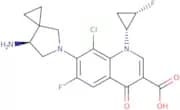
CAS:Sitafloxacin is an antibacterial agent belonging to the fluoroquinolone class of antibiotics, which is synthetically derived from chemical processes involving fluorinated quinolones. Its mode of action involves the inhibition of bacterial DNA gyrase and topoisomerase IV, enzymes crucial for bacterial DNA replication and transcription. By interfering with these enzymes, Sitafloxacin effectively hampers bacterial DNA synthesis, leading to the eventual demise of the bacterial cell.
Formula:C19H18ClF2N3O3Purezza:Min. 95%Colore e forma:SolidPeso molecolare:409.81 g/molAzaconazole
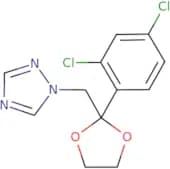
CAS:Azaconazole is a systemic fungicide, which is derived from synthetic chemical processes, specifically within the class of triazoles. This compound functions by interfering with the biosynthesis of ergosterol, a critical component of fungal cell membranes. By inhibiting the cytochrome P450 enzyme 14α-demethylase, azaconazole disrupts the production of ergosterol, thereby compromising membrane integrity and inhibiting fungal growth.
Formula:C12H11Cl2N3O2Purezza:Min. 95%Peso molecolare:300.14 g/molValidamycin E
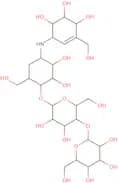
CAS:Validamycin E is an antifungal antibiotic, which is a secondary metabolite derived from the actinobacterium Streptomyces hygroscopicus. Its mode of action involves the inhibition of trehalase, an enzyme crucial for the hydrolysis of trehalose into glucose, disrupting essential energy pathways in fungi. By inhibiting trehalase, Validamycin E effectively interferes with the growth and development of fungal pathogens.Formula:C26H45NO18Purezza:Min. 95%Peso molecolare:659.6 g/molOligomycin A
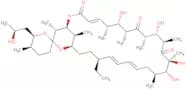
CAS:Oligomycin A is a macrolide antibiotic, which is isolated from the Streptomyces species of bacteria. Its mode of action involves inhibiting ATP synthase by binding to the F_O subunit of the enzyme complex in the mitochondrial membrane. This binding effectively stops the flow of protons across the membrane, which is critical for ATP generation through oxidative phosphorylation.
Formula:C45H74O11Purezza:Min. 95%Colore e forma:PowderPeso molecolare:791.06 g/molClindamycin 4-phosphate
CAS:Clindamycin 4-phosphate is a semi-synthetic antibiotic, which is a derivative of the natural antibiotic lincomycin. It is specifically synthesized from Streptomyces lincolnensis cultures. The mode of action of Clindamycin 4-phosphate involves inhibiting bacterial protein synthesis by binding to the 50S subunit of the bacterial ribosome, thus preventing peptide chain elongation and subsequent bacterial growth.Formula:C18H34ClN2O8PSPurezza:Min. 95%Peso molecolare:504.96 g/molSymetine
CAS:Symetine is a synthetic peptide-based compound, which is a highly selective agonist of the adenosine A2A receptor. This receptor is coupled to G-proteins mainly associated with activating adenylate cyclase, leading to an increase in cyclic adenosine monophosphate (cAMP) levels within the cell. Symetine binds with high affinity to these receptors, inducing a conformational change that facilitates the downstream signaling pathways associated with this receptor family.
Formula:C30H48N2O2Purezza:Min. 95%Peso molecolare:468.7 g/mol25-Desacetyl rifapentin
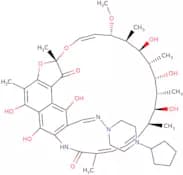
CAS:25-Desacetyl rifapentin is a derivative of rifapentin, an antibiotic belonging to the rifamycin class, sourced from the bacterial species *Amycolatopsis rifamycinica*. This compound functions by inhibiting bacterial DNA-dependent RNA polymerase, which is crucial for transcription in susceptible bacterial strains. By inhibiting this enzyme, 25-Desacetyl rifapentin effectively hampers RNA synthesis, ultimately leading to bacterial cell death.Formula:C45H62N4O11Purezza:Min. 95%Colore e forma:PowderPeso molecolare:834.99 g/mol9-(Tetrahydro-5-methyl-2-furyl)adenine
CAS:9-(Tetrahydro-5-methyl-2-furyl)adenine is a synthetic cytokinin, which is a type of plant growth regulator. This compound is derived from chemical synthesis, rather than extraction from natural sources. The mode of action involves promoting cell division and differentiation in plant tissues, primarily by enhancing the synthesis of proteins crucial for growth and development.
Formula:C10H13N5OPurezza:Min. 95%Peso molecolare:219.24 g/mol7-(3-Aminopyrrolidin-1-yl)-1-(2,4-difluorophenyl)-6-fluoro-4-oxo-1,8-naphthyridine-3-carboxylic acid,hydrate,hydrochloride
CAS:7-(3-Aminopyrrolidin-1-yl)-1-(2,4-difluorophenyl)-6-fluoro-4-oxo-1,8-naphthyridine-3-carboxylic acid, hydrate, hydrochloride is a fluoroquinolone antibiotic, which is a synthetic antimicrobial compound. It operates by inhibiting bacterial DNA gyrase and topoisomerase IV, enzymes critical for the replication, transcription, and repair processes of bacterial DNA. This disruption in DNA activity leads to cell death, providing its bactericidal effect.Formula:C19H16ClF3N4O3Purezza:Min. 95%Peso molecolare:440.8 g/molSofosbuvir impurity J
CAS:Sofosbuvir impurity J is a chemical impurity that arises during the synthesis of Sofosbuvir, an antiviral medication primarily used in the treatment of hepatitis C. This impurity is a byproduct produced during the manufacturing process of Sofosbuvir, originating from its chemical synthesis pathway.Formula:C22H30FN4O8PPurezza:Min. 95%Peso molecolare:528.5 g/mol1,4-Dihydro-2,3-benzodithiine
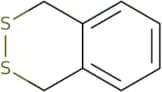
CAS:1,4-Dihydro-2,3-benzodithiine is a synthetic organic compound, which is often utilized in the field of material science and chemical research. It is derived from aromatic dithiins, characterized by a unique heterocyclic structure containing sulfur atoms within its ring system. The compound’s mode of action primarily involves its ability to partake in various cycloaddition reactions due to the electron-rich nature of the dithiine ring, which can facilitate interactions with electrophiles.
Formula:C8H8S2Purezza:Min. 95%Peso molecolare:168.3 g/molABT-072
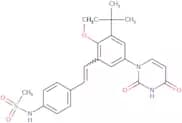
CAS:ABT-072 is a direct-acting antiviral (DAA) agent, specifically designed as an inhibitor of the hepatitis C virus (HCV) NS5B polymerase. This compound originates from advanced pharmaceutical research and development efforts aimed at targeting viral replication mechanisms. Being an NS5B polymerase inhibitor, ABT-072 functions by interfering with the viral RNA-dependent RNA polymerase. This enzyme plays a critical role in the replication cycle of the hepatitis C virus, facilitating the synthesis of new viral RNA strands. By inhibiting this enzyme, ABT-072 effectively halts viral replication.Formula:C24H27N3O5SPurezza:Min. 95%Peso molecolare:469.6 g/molFibracillin
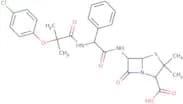
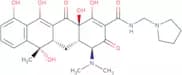
CAS:Fibracillin is a bioengineered peptide, which is derived from specifically modified bacterial strains with advanced genetic manipulation techniques. Its mode of action involves the stimulation of fibroblast activity through targeted binding to cellular receptors, promoting collagen synthesis and extracellular matrix formation. This action facilitates the regeneration of connective tissues and supports wound healing processes.Formula:C26H28ClN3O6SPurezza:Min. 95%Peso molecolare:546 g/molRolitetracycline
CAS:Rolitetracycline is a semi-synthetic tetracycline antibiotic, which is derived from the natural compound tetracycline. It functions primarily by inhibiting protein synthesis in susceptible bacteria. This is achieved through the binding to the 30S ribosomal subunit, effectively blocking the attachment of aminoacyl-tRNA to the mRNA-ribosome complex, thereby preventing the addition of new amino acids to the nascent peptide chain. As a result, bacterial cell growth is inhibited, leading to bacteriostatic effects.
Formula:C27H33N3O8Purezza:Min. 95%Colore e forma:PowderPeso molecolare:527.57 g/molMMV008138
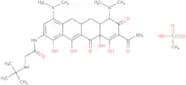
CAS:MMV008138 is an antimalarial compound, which is a synthetic chemical entity derived from medicinal chemistry efforts aimed at targeting malaria. The source of MMV008138 is the pharmaceutical research pipeline focused on identifying new antimalarial agents. It operates by inhibiting the Plasmodium falciparum enzyme PfNDH2, an essential component in the parasite’s respiratory chain, disrupting its energy production capabilities and ultimately leading to parasite death.Formula:C18H14Cl2N2O2Purezza:Min. 95%Peso molecolare:361.2 g/molTigecycline mesylate
CAS:Tigecycline mesylate is a novel glycylcycline antibiotic, which is a derivative of the tetracycline class of antibiotics. It is a semi-synthetic product derived from minocycline, exhibiting a broad spectrum of antibacterial activity. Tigecycline mesylate functions through the inhibition of bacterial protein synthesis. It achieves this by binding to the 30S ribosomal subunit, thereby preventing the incorporation of amino acid residues into elongating peptide chains, a crucial step in protein production.
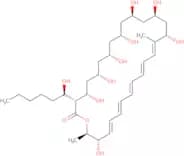
Formula:C30H43N5O11SPurezza:Min. 95%Peso molecolare:681.8 g/molFilipin III
CAS:Filipin III is a polyene macrolide antibiotic, which is extracted from Streptomyces filipinensis. Known for its unique mode of action, Filipin III interferes with cholesterol-rich membranes by binding to ergosterol and cholesterol. This interaction disrupts the membrane structure, altering membrane permeability and ultimately affecting cell viability.
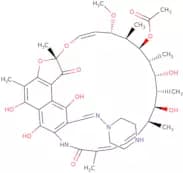
Purezza:Min. 95%N-Demethyl rifampin
CAS:N-Demethyl rifampin is a metabolite of rifampin, which is a natural product derivative. Rifampin itself is a well-known antibiotic derived from the bacterium *Amycolatopsis rifamycinica*. N-Demethyl rifampin is formed through the metabolic process where rifampin undergoes demethylation. This transformation occurs primarily in the liver, mediated by the cytochrome P450 enzyme system.Formula:C42H56N4O12Purezza:Min. 95%Peso molecolare:808.91 g/mol