Antimicrobici
Sottocategorie di "Antimicrobici"
- Antibiotici(4.131 prodotti)
- Antimicotici(912 prodotti)
- Antiparassitari(706 prodotti)
- Antivirali(768 prodotti)
Trovati 2425 prodotti di "Antimicrobici"
Puromycin-D3
CAS:Puromycin-D3 is a deuterium-labeled antibiotic, which is synthetically derived from the bacterium *Streptomyces alboniger*, with three hydrogen atoms replaced by deuterium. Its mode of action involves the inhibition of protein synthesis by mimicking the aminoacyl end of tRNA, causing premature chain termination during translation on ribosomes. This mechanism specifically targets growing peptides in cells, making it a valuable tool for studying protein synthesis.Formula:C22H26D3N7O5Purezza:Min. 95%Peso molecolare:474.53 g/mol2'-Deoxycoformycin
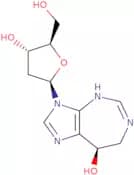
CAS:2'-Deoxycoformycin is a potent adenosine deaminase inhibitor, which is derived from the fermentation of Streptomyces antibioticus, a species of actinomycete bacteria. This compound acts by specifically inhibiting the enzyme adenosine deaminase, leading to an accumulation of toxic deoxyadenosine triphosphate in lymphocytes. This buildup hinders DNA synthesis, effectively suppressing the proliferation of lymphoid cells.Formula:C11H16N4O4Purezza:Min. 95%Peso molecolare:268.27 g/molOligomycin
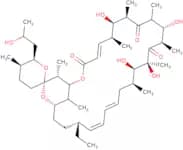
CAS:Oligomycin is a macrolide antibiotic, which is derived from species of the bacterium Streptomyces. It acts as a potent inhibitor of the mitochondrial ATP synthase complex, specifically targeting the F₀ portion of the enzyme. This interference results in the blockage of proton translocation across the mitochondrial membrane, thereby preventing ATP synthesis. Due to this mode of action, Oligomycin is primarily utilized in biochemical research to study cellular respiration and energy metabolism. It serves as a valuable tool in elucidating the mechanisms of oxidative phosphorylation and the role of ATP in various cellular processes. In addition, its application extends to investigations on mitochondrial dysfunctions and the screening of mitochondrial-targeted drugs.Formula:C45H74O11Purezza:Min. 95%Peso molecolare:791.06 g/molNaftoxate
CAS:Naftoxate is a synthetic ester, which is synthesized chemically from raw materials such as fatty alcohols and carboxylic acids. With its ability to reduce surface tension, Naftoxate operates as a surfactant, facilitating emulsification and dispersion of hydrophobic substances within various aqueous systems. The compound achieves this by altering the interface between liquids, enabling them to mix more effectively.Formula:C19H14N2OS2Purezza:Min. 95%Peso molecolare:350.5 g/molVancomycin CDP-1
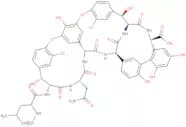
CAS:Vancomycin CDP-1 is a degradation product of vancomycin with no direct therapeutic action but used in research for analytical method development and validation.Formula:C66H74Cl2N8O25Purezza:Min. 95%Colore e forma:PowderPeso molecolare:1,450.24 g/molCeftizoxime alapivoxil
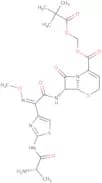
CAS:Ceftizoxime alapivoxil is a prodrug antibiotic, which is derived from ceftizoxime, a third-generation cephalosporin. This semi-synthetic source enables the compound to effectively combat a wide range of bacterial infections by improving oral bioavailability compared to its parent compound. Once administered, ceftizoxime alapivoxil is metabolized in the body to release ceftizoxime, which exerts its antibacterial activity by binding to penicillin-binding proteins (PBPs) on bacterial cell walls. This binding action inhibits the transpeptidation step critical for cell wall synthesis, leading to cell lysis and bacterial death.Purezza:Min. 95%6-[[(2R)-3,3-Dimethyl-2-oxiranyl]methyl]-7-methoxy-2H-1-benzopyran-2-one
CAS:6-[[(2R)-3,3-Dimethyl-2-oxiranyl]methyl]-7-methoxy-2H-1-benzopyran-2-one is a synthetic anticoagulant compound, which is a derivative of naturally occurring plant metabolites known as coumarins. Coumarins are prevalent in various plant species and are recognized for their diverse biological activities, including anticoagulant properties. Structurally modified to enhance efficacy and specificity, this compound acts by inhibiting vitamin K epoxide reductase, a critical enzyme in the blood coagulation pathway. This results in reduced synthesis of active clotting factors, ultimately decreasing the tendency for blood clot formation.Formula:C15H16O4Purezza:Min. 95%Peso molecolare:260.28 g/molSisunatovir hydrochloride
CAS:Sisunatovir hydrochloride is an antiviral agent, which is a synthetic compound with a mechanism of action specifically targeting the respiratory syncytial virus (RSV). As a potent inhibitor, Sisunatovir hydrochloride interferes with the viral replication process by binding to a specific protein essential for the virus's ability to replicate within host cells.Formula:C23H23ClF4N4OPurezza:Min. 95%Peso molecolare:482.9 g/molPivmecillinam hydrochloride
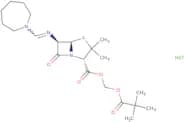
CAS:Pivmecillinam hydrochloride is an antibacterial prodrug, which is derived from the source compound mecillinam, a beta-lactam antibiotic. It functions by inhibiting bacterial cell wall synthesis, specifically targeting the penicillin-binding protein 2 (PBP2). This affinity leads to a weakening of the bacterial cell wall, causing cell lysis and death, particularly in gram-negative bacteria.Formula:C21H33N3O5S·HClPurezza:Min. 95%Peso molecolare:476.03 g/molTenatoprazole sodium
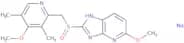
CAS:Tenatoprazole sodium is a proton pump inhibitor, which is a synthetic pharmaceutical compound designed to selectively inhibit the hydrogen-potassium ATPase enzyme in the gastric parietal cells. This enzyme is essential for the final step of gastric acid production. Originating from organic chemical synthesis processes, Tenatoprazole sodium features a unique imidazopyridine structure, distinguishing it from other members of the proton pump inhibitor class such as omeprazole, which belongs to the benzimidazole family.Formula:C16H18N4NaO3SPurezza:Min. 95%Peso molecolare:369.4 g/molArbekacin sulfate
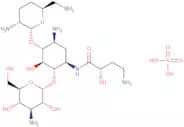
CAS:Inhibitor of DNA replication; aminoglycoside classFormula:C22H44N6O10·xH2SO4Purezza:Min. 95%Colore e forma:White PowderPeso molecolare:650.7 g/molVancomycin aglycon
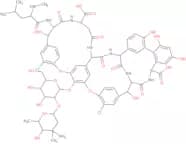
CAS:Vancomycin aglycon is a glycopeptide antibiotic, which is a derivative of vancomycin. It is sourced from the fermentation products of certain Amycolatopsis species, a genus of actinobacteria. The mode of action of vancomycin aglycon involves the inhibition of bacterial cell wall synthesis. It specifically binds to the D-Ala-D-Ala terminus of nascent peptidoglycan chains, thereby preventing the cross-linking that is crucial for maintaining cell wall integrity.
Formula:C53H52Cl2N8O17Purezza:Min. 95%Peso molecolare:1,143.93 g/molIkarugamycin
CAS:Ikarugamycin is a polycyclic nitrogenous antibiotic, which is derived from the fermentation of Streptomyces species, a genus of gram-positive bacteria. It acts primarily by inhibiting clathrin-mediated endocytosis, a cellular process involving the internalization of various macromolecules. This inhibition disrupts cellular uptake mechanisms, which has significant implications for its utility in biological research and therapeutic applications.
Formula:C29H38N2O4Purezza:Min. 95%Peso molecolare:478.62 g/molMecillinam, Antibiotic for Culture Media Use Only
CAS:Mecillinam is a beta-lactam antibiotic specifically designed for use in culture media. It is derived from the amidinopenicillin family, featuring a unique ability to interfere with bacterial cell wall synthesis. Its mode of action involves inhibiting penicillin-binding protein 2 (PBP2), an essential enzyme for cell wall elongation and maintenance in Gram-negative bacteria. This targeted inhibition results in the formation of spherical cells and subsequent cell lysis.
Formula:C15H23N3O3SPurezza:Min. 95 Area-%Peso molecolare:325.43 g/molRef: 3D-Q-201343
5gPrezzo su richiesta10gPrezzo su richiesta25gPrezzo su richiesta50gPrezzo su richiesta2500mgPrezzo su richiesta-Unit-ggPrezzo su richiestaChlortetracycline
CAS:Chlortetracycline is a tetracycline antibiotic, which is derived from the bacterium *Streptomyces aureofaciens*. It functions by inhibiting protein synthesis through binding to the 30S ribosomal subunit, thereby preventing the attachment of aminoacyl-tRNA to the mRNA-ribosome complex. This mechanism effectively impedes the growth and replication of both gram-positive and gram-negative bacteria.
Formula:C22H23ClN2O8Purezza:Min. 95%Peso molecolare:478.88 g/molSecorapamycin B
CAS:Secorapamycin B is a secondary metabolite, which is a macrolide lactam produced by the actinobacterium species Amycolatopsis. This compound is characterized by its unique structural features, including a polyketide backbone, which is biosynthesized via modular polyketide synthases. The mode of action for Secorapamycin B involves binding to FK-binding proteins (FKBP), inhibiting calcineurin function, and subsequently suppressing T-cell activation.
Formula:C51H81NO14Purezza:Min. 95%Peso molecolare:932.20 g/molN-Hexylsilane
CAS:N-Hexylsilane is a silane compound, which is an organosilicon chemical with a hexyl group attached to silicon. This type of product is synthesized through hydroalkoxysilanes in the presence of catalysts. Its mode of action involves acting as a hydrophobic agent, reacting with hydroxyl groups on surfaces to create a silicon-oxygen-silicon link that confers water-resistance properties.Formula:C6H13SiPurezza:Min. 95%Peso molecolare:113.25 g/molSpiramycin hexanedioate
CAS:Spiramycin hexanedioate is a macrolide antibiotic, which is derived from the bacterium *Streptomyces ambofaciens*. Its mode of action involves binding to the 50S ribosomal subunit of susceptible bacteria, thereby inhibiting protein synthesis. This interaction results in the interruption of bacterial growth and reproduction, particularly effective against Gram-positive organisms.
Formula:C49H84N2O18Purezza:Min. 95%Peso molecolare:989.2 g/mol1-Naphthol-o-sulfate potassium
CAS:1-Naphthol-o-sulfate potassium is a sulfate ester, which is a derivative of naphthol. It is synthesized from 1-naphthol, a phenolic compound, through sulfation, typically using chlorosulfonic acid or oleum, followed by neutralization with potassium hydroxide to produce the potassium salt form. This particular compound is involved in various biochemical pathways, especially as a conjugated metabolite in phase II metabolism.
Formula:C10H8KO4SPurezza:Min. 95%Peso molecolare:263.33 g/molSordarin sodium salt
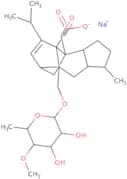
CAS:Sordarin sodium salt is an antifungal agent, characterized as a semisynthetic derivative produced from the fermentation products of filamentous fungi, specifically belonging to the phylum Ascomycota. This compound exerts its effects by selectively inhibiting fungal protein synthesis. It achieves this by obstructing the function of elongation factor 2 (EF-2), an essential component of fungal ribosomal activity, thereby disrupting the translational elongation step of protein synthesis.
Formula:C27H39NaO8Purezza:Min. 95%Peso molecolare:514.58 g/mol


![6-[[(2R)-3,3-Dimethyl-2-oxiranyl]methyl]-7-methoxy-2H-1-benzopyran-2-one](/_next/image/?url=https%3A%2Fstatic.cymitquimica.com%2Fproducts%2F3D%2Fthumb-webp%2FFDA36868.webp&w=3840&q=75)