Antimicrobici
Sottocategorie di "Antimicrobici"
- Antibiotici(4.131 prodotti)
- Antimicotici(912 prodotti)
- Antiparassitari(706 prodotti)
- Antivirali(768 prodotti)
Trovati 2425 prodotti di "Antimicrobici"
Methyl N-[2-[[[1-(4-chlorophenyl)-1H-pyrazol-3-yl]oxy]methyl]phenyl]carbamate
CAS:Methyl N-[2-[[[1-(4-chlorophenyl)-1H-pyrazol-3-yl]oxy]methyl]phenyl]carbamate is a selective insecticide, which is primarily pyrazole-based in nature. It is synthetically derived, allowing for precise structural control over its active components. The compound functions through a specific mode of action targeting the skeletal muscle function of insects by interfering with calcium ion channels. This disruption leads to impaired muscle contractions and eventual paralysis of the target pests.Formula:C18H16ClN3O3Purezza:Min. 95%Peso molecolare:357.8 g/molHexazinone metabolite C
CAS:Hexazinone Metabolite C is a chemical compound that serves as a marker for the metabolic degradation of hexazinone, a systemic herbicide. This metabolite is derived from the biological and chemical transformation processes that hexazinone undergoes when applied to plants and soil environments.Formula:C11H18N4O3Purezza:Min. 95%Peso molecolare:254.29 g/molAureothin
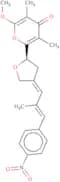
CAS:Aureothin is a bioactive compound, classified as a polyketide antibiotic, which is derived from the culture of the bacterium Streptomyces thioluteus. This compound operates primarily through the inhibition of protein synthesis by interfering with the aminoacylation of tRNA with specific amino acids. Its mode of action disrupts cellular protein synthesis, which is essential for cell growth and function, leading to its potent antibacterial and antifungal activities.Formula:C22H23NO6Purezza:Min. 95%Colore e forma:PowderPeso molecolare:397.42 g/mol28-Epirapamycin
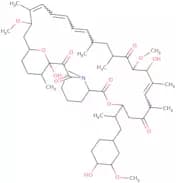
CAS:28-Epirapamycin is a semisynthetic derivative of the macrolide antibiotic rapamycin, which is derived from the bacterium *Streptomyces hygroscopicus*. This compound functions primarily as an mTOR (mechanistic target of rapamycin) inhibitor. The mTOR pathway is crucial for regulating cell growth, proliferation, and survival by integrating signals from nutrients, growth factors, and cellular energy status.Formula:C51H79NO13Purezza:Min. 95%Peso molecolare:914.2 g/molThienamycin p-nitrobenzyl ester, N-methylpyrrolidinone hydrochloride
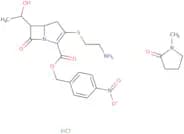
CAS:Thienamycin p-nitrobenzyl ester, N-methylpyrrolidinone hydrochloride is a synthetic compound commonly utilized in biochemical research, particularly in the study of beta-lactam antibiotics. It is derived through synthetic pathways involving the modification of thienamycin, a naturally occurring beta-lactam antibiotic, to enhance its stability and facilitate its study in various experimental settings. This modification allows for investigation into the structure-activity relationships and potential enhancements of antibiotic function.Formula:C23H31ClN4O7SPurezza:Min. 95%Peso molecolare:543 g/molGramicidin
CAS:Gramicidin is an antibiotic, which is derived from soil bacteria of the genus Bacillus, specifically Bacillus brevis. This polypeptide antibiotic exerts its antibacterial effects by disrupting the cell membranes of susceptible bacteria. Gramicidin forms channels in the phospholipid bilayers of bacterial cell membranes, leading to uncontrolled cation fluxes, which ultimately results in cell death. This mechanism is particularly effective against Gram-positive bacteria due to their specific cell wall structure.
Formula:C99H140N20O17Purezza:A1.A2.B1.C1 And C2) 95%Colore e forma:PowderPeso molecolare:1,882.3 g/mol1,3,5-Triazine-2,4-diamine
CAS:1,3,5-Triazine-2,4-diamine is a selective herbicide, which is synthesized from chemical feedstocks via a process involving triazine ring formation and chlorination. This compound operates by inhibiting photosynthesis in susceptible plants, specifically targeting the photosystem II complex. When absorbed through the roots and leaves, it disrupts the electron transport chain, leading to chlorophyll loss and subsequent plant death.
Formula:C5H6F3N5OPurezza:Min. 95%Peso molecolare:209.13 g/molPanipenem
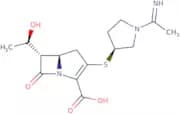
CAS:Panipenem is a carbapenem antibiotic, which is a type of beta-lactam antibiotic derived from thienamycin. It functions by inhibiting penicillin-binding proteins (PBPs), which are essential for bacterial cell wall synthesis. This inhibition disrupts the cell wall construction, leading to cell lysis and death, thereby demonstrating strong bactericidal activity.Formula:C15H21N3O4SPurezza:Min. 95%Peso molecolare:339.41 g/molMacrosphelide A
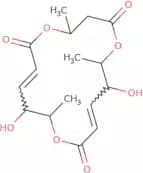
CAS:Macrosphelide A is a bioactive macrocyclic lactone, which is a secondary metabolite derived from the culture of certain fungal species. It functions primarily through the disruption of cell adhesion processes, which is facilitated by its ability to interfere with the function of specific cell surface receptors. This mode of action underlies its potential as an immunosuppressive agent, where it can inhibit the activities of immune cells by altering cellular communication and adhesion.
Formula:C16H22O8Purezza:Min. 95%Peso molecolare:342.34 g/molFenaminostrobin
CAS:Fenaminostrobin is a broad-spectrum fungicide, which is synthesized chemically. It operates primarily through inhibition of mitochondrial respiration in fungal cells, targeting the bc1 complex, which disrupts ATP production and leads to the inhibition of spore germination and fungal growth. This mode of action makes Fenaminostrobin effective against a wide range of pathogenic fungi that affect various crops.
Formula:C21H21Cl2N3O3Purezza:Min. 95%Peso molecolare:434.3 g/molLevomecol
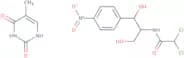
CAS:Levomekol is a topical antibiotic ointment, which is a synthesized pharmaceutical product with antibacterial and anti-inflammatory properties. It contains chloramphenicol, a broad-spectrum antibiotic, and methyluracil, which promotes tissue repair and regeneration. The mode of action involves the inhibition of bacterial protein synthesis by binding to the 50S ribosomal subunit of susceptible microorganisms, effectively curbing bacterial growth and proliferation. Concurrently, methyluracil stimulates leukocyte activity and enhances the healing process by promoting cellular regeneration and collagen production.
Formula:C16H18Cl2N4O7Purezza:Min. 95%Peso molecolare:449.2 g/molZelkovamycin
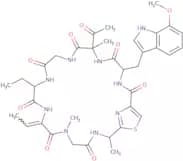
CAS:Zelkovamycin is a novel antibacterial compound isolated from endophytic microorganisms, specifically Streptomyces sp. Endophytes are bacteria or fungi that reside within plant tissues, forming symbiotic relationships and often producing bioactive metabolites. The mode of action of Zelkovamycin involves the inhibition of bacterial cell wall synthesis, interfering with the biosynthesis pathways essential for maintaining the structural integrity and function of bacterial cell walls, particularly in Gram-positive strains.Formula:C36H45N9O9SPurezza:Min. 95%Colore e forma:PowderPeso molecolare:779.86 g/molClindamycin
CAS:Inhibitor of protein synthesis; lincosamide classFormula:C18H33ClN2O5SPurezza:Min. 95%Peso molecolare:424.98 g/molPicoxystrobin metabolite M8
CAS:Picoxystrobin metabolite M8 is a chemical metabolite, which is a derivative specifically originating from the degradation of the fungicide Picoxystrobin. It is generated through the metabolic pathways that occur after the application of Picoxystrobin on crops. As a strobilurin derivative, its mode of action is primarily related to its ability to disrupt mitochondrial respiration in fungi by inhibiting the electron transport chain at the cytochrome bc1 complex. This interruption leads to energy depletion and subsequent cell death in pathogenic fungi.
Formula:C14H10F3NO3Purezza:Min. 95%Peso molecolare:297.23 g/molIonomycin
CAS:Ionomycin is an ionophore compound with a mode of action that facilitates calcium ion transport across cell membranes. It is used in research to study calcium signaling and T-cell activation.
Formula:C41H72O9Purezza:Min. 98 Area-%Colore e forma:PowderPeso molecolare:709.01 g/molTizoxanide - 98%
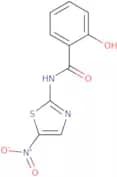
CAS:Anti-parasitic; pyruvate ferredoxin oxidoreductase inhibitorFormula:C10H7N3O4SPurezza:Min. 95%Peso molecolare:265.01573PNU 142300
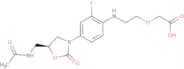
CAS:PNU 142300 is a non-peptidyl anticoagulant, which is a synthetically derived small molecule. This compound is sourced from advanced chemical synthesis techniques that focus on mimicking biological activity through non-biological materials. PNU 142300 acts by specifically inhibiting factor Xa, a crucial enzyme in the coagulation cascade responsible for the conversion of prothrombin to thrombin. By targeting this enzyme, it effectively prevents the formation of blood clots, thereby exhibiting potent anticoagulant properties.
Formula:C16H20FN3O6Purezza:Min. 95%Peso molecolare:369.35 g/molCyprazine-desisopropyl
CAS:Cyprazine-desisopropyl is a metabolite, which is a derivative form resulting from the biotransformation of cyromazine, an insect growth regulator. Cyromazine is originally sourced as a triazine-class pesticide, commonly used to control insect populations by disrupting their growth processes. Cyprazine-desisopropyl, similarly, impacts the development stages of target insect species.Formula:C6H8ClN5Purezza:Min. 95%Peso molecolare:185.61 g/molHeronapyrrole B
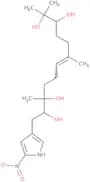
CAS:Heronapyrrole B is a naturally occurring marine-derived antibiotic, which is isolated from a species of marine-derived Streptomyces. This compound is a member of the pyrrole-2-aminoimidazole family, which is characterized by its unique structural framework that contributes to its biological activity. The mode of action of Heronapyrrole B involves disrupting bacterial cell membranes, thereby hindering cell growth and survival. This mechanism is particularly effective against a range of Gram-positive bacteria.Formula:C19H32N2O6Purezza:Min. 95%Peso molecolare:384.5 g/molSulfamoyldapsone
CAS:Sulfamoyldapsone is a synthetic antimicrobial compound, which is derived from the dapsone family. Its source is primarily synthetic, designed through chemical modifications of the parent compound dapsone, a well-known antibacterial agent. The mode of action of sulfamoyldapsone involves the inhibition of bacterial folic acid synthesis. By targeting dihydropteroate synthase, an enzyme essential for the production of folic acid in microorganisms, the compound effectively interferes with bacterial growth and replication.Formula:C12H13N3O4S2Purezza:Min. 95%Peso molecolare:327.4 g/mol
![Methyl N-[2-[[[1-(4-chlorophenyl)-1H-pyrazol-3-yl]oxy]methyl]phenyl]carbamate](/_next/image/?url=https%3A%2Fstatic.cymitquimica.com%2Fproducts%2F3D%2Fthumb-webp%2FMVA16596.webp&w=3840&q=75)