Antimicrobici
Gli antimicrobici sono agenti che distruggono o inibiscono la crescita di microrganismi, inclusi batteri, virus, funghi e parassiti. Questi composti sono essenziali nella prevenzione e nel trattamento delle infezioni, svolgendo un ruolo cruciale nella medicina, nell'agricoltura e nell'industria alimentare. Presso CymitQuimica offriamo un'ampia gamma di antimicrobici di alta qualità e purezza, adatti a varie applicazioni scientifiche e industriali. Il nostro catalogo comprende antibiotici, antifungini, antivirali e disinfettanti, tutti progettati per soddisfare le esigenze della ricerca e dello sviluppo, nonché per applicazioni cliniche e di produzione. Con i nostri prodotti, i professionisti possono garantire l'efficacia e la sicurezza nel controllo delle infezioni e nella protezione della salute pubblica.
Sottocategorie di "Antimicrobici"
- Antibiotici(4.131 prodotti)
- Antimicotici(909 prodotti)
- Antiparassitari(702 prodotti)
- Antivirali(765 prodotti)
Trovati 2424 prodotti di "Antimicrobici"
Ordinare per
Purezza (%)
0
100
|
0
|
50
|
90
|
95
|
100
HBV-IN-4
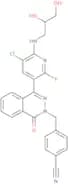
CAS:<p>HBV-IN-4 is an antiviral compound that serves as a potent and selective inhibitor of hepatitis B virus (HBV). It is derived from chemical synthesis with a focus on targeting the viral replication machinery. The mode of action involves interrupting the HBV lifecycle by inhibiting the functioning of viral polymerase, thereby preventing the synthesis of viral DNA and subsequent viral propagation.</p>Formula:C24H19ClFN5O3Purezza:Min. 95%Peso molecolare:479.9 g/molMagnamycin B
CAS:<p>Magnamycin B is an antifungal antibiotic, which is derived from natural sources through microbial fermentation. Its mode of action involves the inhibition of cell wall synthesis in pathogenic fungi, thereby disrupting essential processes required for their growth and proliferation. Magnamycin B is particularly effective against a range of fungal pathogens that affect agricultural and clinical settings.</p>Formula:C42H67NO15Purezza:Min. 95%Peso molecolare:826.00 g/molTriadimenol-tert-butylhydroxy
CAS:<p>Triadimenol-tert-butylhydroxy is a systemic fungicide, originating from synthetic chemical processes, characterized by its ability to inhibit fungal sterol biosynthesis. This sterol biosynthesis disruption occurs through the demethylation of lanosterol or 24-methylene dihydrolanosterol, which impedes the production of ergosterol, a crucial component in fungal cell membranes. The inhibition results in disrupted cell membrane integrity and impaired fungal growth, leading to effective control over a range of plant-pathogenic fungi.</p>Formula:C14H18ClN3O3Purezza:Min. 95%Peso molecolare:311.76 g/molImazamox-o-desmethyl
CAS:<p>Imazamox-o-desmethyl is a herbicide metabolite, which is derived from the biotransformation of the imazamox compound, typically occurring during degradation processes. Its mode of action involves targeting the acetohydroxyacid synthase (AHAS) enzyme—a critical component in the biosynthesis of branched-chain amino acids in plants. This inhibition disrupts plant growth, leading to effective weed control.</p>Formula:C14H17N3O4Purezza:Min. 95%Peso molecolare:291.3 g/molHerbimycin
CAS:<p>Herbimycin is an antibiotic, which is a natural product derived from Streptomyces bacteria. It functions primarily as a tyrosine kinase inhibitor, disrupting cellular signaling pathways by binding to the ATP-binding site of kinases and inhibiting phosphorylation events. This mode of action makes it an effective tool for scientists studying signal transduction processes and oncogenic transformation.</p>Formula:C30H42N2O9Purezza:Min. 95%Peso molecolare:574.66 g/molSofosbuvir impurity I
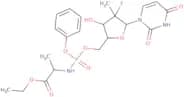
CAS:<p>Sofosbuvir impurity I is an organic chemical impurity often associated with the active pharmaceutical ingredient (API) Sofosbuvir, which is used in the treatment of hepatitis C. This impurity arises during the manufacturing process of Sofosbuvir as a byproduct. It is crucial to monitor and identify such impurities to ensure the safety, efficacy, and quality of the final pharmaceutical product.</p>Formula:C21H27FN3O9PPurezza:Min. 95%Peso molecolare:515.4 g/molBentaluron
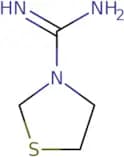
CAS:<p>Bentaluron is a synthetic fungicide, which is a chemical compound developed to combat fungal pathogens in agriculture. Its source originates from rigorous industrial chemical synthesis, ensuring efficacy and stability. The mode of action of Bentaluron involves disrupting essential biochemical pathways within fungal cells, specifically targeting and inhibiting enzymes critical for fungal growth and metabolism. This precise interference prevents the synthesis of vital cellular components, ultimately halting the proliferation of the fungus.</p>Formula:C11H13N3OSPurezza:Min. 95%Peso molecolare:235.31 g/molPirlimycin HCl
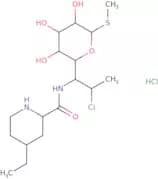
CAS:<p>Pirlimycin HCl is an antibacterial product, which is a semi-synthetic derivative of the natural antibiotic lincomycin produced by Streptomyces lincolnensis. Its mode of action involves the inhibition of bacterial protein synthesis by binding to the 50S ribosomal subunit, thereby preventing the elongation of peptide chains. This action is particularly effective against Gram-positive bacteria, including Staphylococcus and Streptococcus species.</p>Formula:C17H31ClN2O5S·HClPurezza:Min. 95%Colore e forma:White PowderPeso molecolare:447.42 g/molPenipurdin A
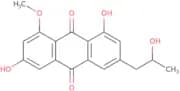
CAS:Please enquire for more information about Penipurdin A including the price, delivery time and more detailed product information at the technical inquiry form on this pageFormula:C18H16O6Purezza:Min. 95%Peso molecolare:328.3 g/molPseudomonic acid F
CAS:Pseudomonic acid F is a naturally occurring secondary metabolite, which is derived from the bacterium *Pseudomonas fluorescens*. Its mode of action involves the inhibition of bacterial protein synthesis by targeting the bacterial isoleucyl-tRNA synthetase enzyme. This inhibition disrupts the addition of isoleucine to the growing polypeptide chain, effectively impeding bacterial growth and proliferation.Formula:C24H40O9Purezza:Min. 95%Peso molecolare:472.60 g/molLexithromycin
CAS:<p>Please enquire for more information about Lexithromycin including the price, delivery time and more detailed product information at the technical inquiry form on this page</p>Formula:C38H70N2O13Purezza:Min. 95%Peso molecolare:762.97 g/molMoxifloxacin
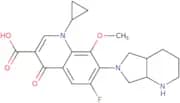
CAS:<p>Moxifloxacin is a synthetic broad-spectrum antibiotic, which is derived from the fluoroquinolones class. It functions by inhibiting bacterial topoisomerase II (DNA gyrase) and topoisomerase IV, enzymes critical for DNA replication, transcription, repair, and recombination. The inhibition of these enzymes results in DNA breakage, thereby leading to bacterial cell death.</p>Formula:C21H24FN3O4Purezza:Min. 95%Peso molecolare:401.4 g/molGeneticin Disulfate (G418), Antibiotic for Culture Media Use Only
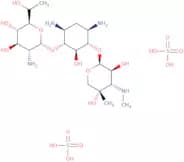
CAS:Geneticin is very efficient against gram-negative bacteria, however it is not applied for treating infections due to high renal toxicity. Geneticin and its resistance genes found application in the selection of transgenic cell lines including yeasts such as P. pastoris and S. serevisiae, other eukaryotic cell lines such as CHO or HEK293, but also plant cells and bacterial cells.Formula:C20H44N4O18S2Purezza:Min. 97.0 Area-%Peso molecolare:692.71 g/molRef: 3D-G-2400
10gPrezzo su richiesta25gPrezzo su richiesta50gPrezzo su richiesta100gPrezzo su richiesta250gPrezzo su richiesta-Unit-ggPrezzo su richiestaML303
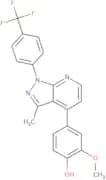
CAS:<p>Please enquire for more information about ML303 including the price, delivery time and more detailed product information at the technical inquiry form on this page</p>Formula:C21H16F3N3O2Purezza:Min. 95%Peso molecolare:399.4 g/molBoromycin
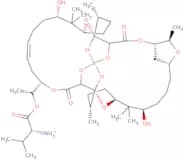
CAS:Boromycin is a macrolide antibiotic, which is derived from the fermentation of certain strains of Streptomyces bacteria. It operates as an ionophore with the ability to transport ions across lipid membranes, effectively disrupting ionic gradients. This mechanism of action compromises essential cellular processes in target organisms, thereby exerting its antimicrobial effects.Formula:C45H74BNO15Purezza:Min. 95%Peso molecolare:879.88 g/molBRL 42715
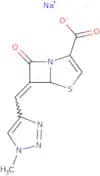
CAS:BRL 42715 is an antibacterial agent, which is a synthetic compound with a unique mechanism of action. This compound is derived from rational drug design aimed at targeting specific bacterial enzymes critical for cell wall synthesis. By irreversibly inhibiting these enzymes, BRL 42715 disrupts the bacterial cell wall formation, leading to cell lysis and death.Formula:C10H7N4NaO3SPurezza:Min. 95%Peso molecolare:286.24 g/molAnhydro erythromycin A
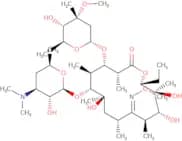
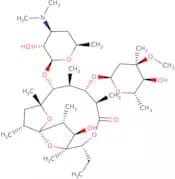
CAS:<p>Anhydro erythromycin A is a semi-synthetic derivative of erythromycin A, which has been shown to be an effective inhibitor of bacterial growth, showing higher selectivity for this inhibition. It is a prodrug that is activated by acid catalysis and can be used as a substitute against methicillin-resistant staphylococcus. Anhydro erythromycin A was developed with the goal of increasing its stability and its potency against methicillin-resistant Staphylococcus aureus, which has been shown to be resistant to erythromycin.</p>Formula:C37H65NO12Purezza:Min. 95%Colore e forma:White PowderPeso molecolare:715.91 g/molOmaciclovir
CAS:<p>Please enquire for more information about Omaciclovir including the price, delivery time and more detailed product information at the technical inquiry form on this page</p>Formula:C10H15N5O3Purezza:Min. 95%Peso molecolare:253.26 g/molM4284
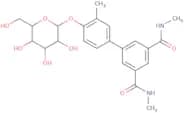
CAS:<p>M4284 is a potent biochemical inhibitor, derived from synthetic organic compounds, designed to target specific enzymes within cell signaling pathways. This product functions by competitively binding to the active site of a target enzyme, effectively blocking its catalytic activity. The competitive inhibition mechanism employed by M4284 enables it to modulate enzymatic activity with high specificity, allowing researchers to dissect complex biochemical processes with precision.</p>Formula:C23H28N2O8Purezza:Min. 95%Peso molecolare:460.5 g/mol(+)-Madindoline A
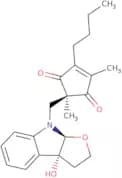
CAS:<p>(+)-Madindoline A is a chemical substance that inhibits the growth of cancer cells. It has been shown to inhibit colon cancer cell proliferation and induce apoptosis by inhibiting signal pathways and suppressing inflammatory responses. (+)-Madindoline A is an experimental model for the study of bowel disease and inflammatory diseases, as it can be used to treat both bowel disease and inflammatory diseases. It also has inhibitory effects on the production of proinflammatory cytokines in human protein cells and natural compounds in experimental models. (+)-Madindoline A is found in small amounts in food compositions such as apples, carrots, cauliflower, celery, cucumbers, garlic, leeks, lettuce, onions, peas, peppers, potatoes and tomatoes.</p>Formula:C22H27NO4Purezza:Min. 95%Peso molecolare:369.45 g/mol