Acidi grassi
Gli acidi grassi sono acidi carbossilici con lunghe catene di idrocarburi, che possono essere saturi o insaturi. Sono componenti essenziali dei lipidi, fungendo da building blocks fondamentali per lipidi complessi, fonti di energia e molecole di segnalazione. Gli acidi grassi sono coinvolti in vari processi biologici, tra cui il metabolismo, la struttura delle membrane cellulari e l'infiammazione. Presso CymitQuimica, offriamo una vasta gamma di acidi grassi di alta qualità per supportare la tua ricerca in biochimica lipidica, nutrizione e campi correlati.
Sottocategorie di "Acidi grassi"
- Acilgliceroli/Gliceridi(43 prodotti)
- Eicosanoidi(6 prodotti)
- Esteri di acidi grassi(946 prodotti)
- Acidi grassi alogenati(32 prodotti)
Trovati 2447 prodotti di "Acidi grassi"
Ordinare per
Purezza (%)
0
100
|
0
|
50
|
90
|
95
|
100
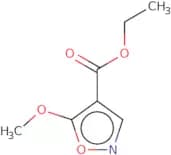
5-Methoxyisoxazole-4-carboxylic acid ethyl ester
CAS:<p>5-Methoxyisoxazole-4-carboxylic acid ethyl ester is a fine chemical that has been used as a reagent, speciality chemical, and complex building block. It is also useful as a versatile intermediate for the synthesis of other organic compounds. 5-Methoxyisoxazole-4-carboxylic acid ethyl ester has been shown to react with alcohols and amines to form ethers and amides respectively. The compound can be used in the synthesis of polymers and pharmaceutical intermediates. 5-Methoxyisoxazole-4-carboxylic acid ethyl ester has a molecular weight of 210.24 g/mol and CAS No. 1314983-30-6.</p>Formula:C7H9NO4Purezza:Min. 95%Peso molecolare:171.15 g/mol1-Hexadecanethiol
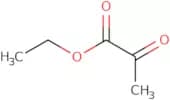
CAS:1-Hexadecanethiol (1-HDT) is a chemical substance that is used in the synthesis of polymers and as a reagent for surface modification. It has been shown to be an effective cationic surfactant with antimicrobial properties. 1-HDT has also been used to pattern surfaces and is found in water vapor, where it can react with oxygen to form 3-mercaptopropionic acid. 1-HDT reacts with thiols, alcohols, amines, and amino acids to form sulfides. In vitro assays have shown that 1-HDT can inhibit the growth of carboxy terminal protein polymer films. Chemical stability is dependent on the chemical species, which can be predicted by examining chemical structure and reactivity.Formula:C16H34SPurezza:Min. 95%Colore e forma:PowderPeso molecolare:258.5 g/molPyruvic acid ethyl ester
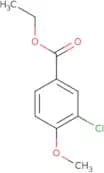
CAS:<p>Ethyl pyruvate, also known as 2-oxo-propionic acid ethyl ester, is a colourless transparent liquid at room temperature with a fresh, sweet, floral aroma. Ethyl pyruvate is a novel anti-inflammatory agent for the treatment of critical inflammatory conditions as it has potent anti-inflammatory properties and tissue protection activity, in multiple animal models of disease including: pancreatitis, ischemia-reperfusion injury, sepsis, renal injury, and endotoxemia.</p>Formula:C5H8O3Purezza:Min. 95%Colore e forma:Colorless Clear LiquidPeso molecolare:116.12 g/mol3-Chloro-4-methoxybenzoic acid ethyl ester
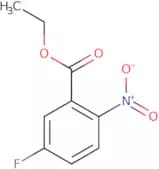
CAS:<p>3-Chloro-4-methoxybenzoic acid ethyl ester is a chemical compound that is used as a reactant in organic synthesis. It has shown high quality and can be used for research. 3-Chloro-4-methoxybenzoic acid ethyl ester can be used as a scaffold to make fine chemicals, pharmaceuticals, and other products. It has been shown to be useful in the synthesis of many complex compounds and as an intermediate or building block for chemical reactions.</p>Formula:C10H11ClO3Purezza:Min. 95%Colore e forma:PowderPeso molecolare:214.65 g/mol3-Fluoro-6-nitrobenzoic acid ethyl ester
CAS:<p>3-Fluoro-6-nitrobenzoic acid ethyl ester is a high quality chemical that is used as an intermediate in the synthesis of complex compounds. It is also a useful scaffold for the synthesis of other compounds and can be used as a building block in the production of speciality chemicals. 3-Fluoro-6-nitrobenzoic acid ethyl ester has many reactions that it participates in, such as being a reaction component for the synthesis of pharmaceuticals and agrochemicals. This compound is versatile enough to be used in research or for commercial purposes.</p>Formula:C9H8FNO4Purezza:Min. 95%Colore e forma:PowderPeso molecolare:213.16 g/mol4-Amino-2-methylbenzoic acid ethyl ester
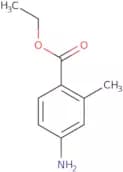
CAS:4-Amino-2-methylbenzoic acid ethyl ester is a versatile building block that can be used in the synthesis of complex compounds. It has been shown to have a number of useful applications, such as in the synthesis of pharmaceuticals, research chemicals, and speciality chemicals. 4-Amino-2-methylbenzoic acid ethyl ester is also an important reagent for the production of high quality pharmaceuticals and intermediates. This chemical is also a useful scaffold for organic reactions.Formula:C10H13NO2Purezza:Min. 95%Peso molecolare:179.22 g/mol4-Phenyl-2-pyrrolidone-3-carboxylic acid ethyl ester
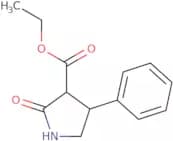
CAS:<p>4-Phenyl-2-pyrrolidone-3-carboxylic acid ethyl ester is an organic compound. It is an intermediate in the synthesis of 2,4,6-trichloroisonicotinic acid and 2,4,6-trichloropyrimidine. The compound has a variety of uses as a reagent and building block for organic synthesis. 4-Phenyl-2-pyrrolidone-3-carboxylic acid ethyl ester is soluble in many solvents such as acetone, ethers and chloroform. It has a CAS number of 5245032. This chemical can be used as a speciality chemical or fine chemical to produce drugs.</p>Formula:C13H15NO3Purezza:Min. 95%Colore e forma:PowderPeso molecolare:233.26 g/molPalmitoyldocosahexaenoyl phosphatidylcholine
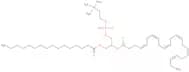
CAS:Palmitoyldocosahexaenoyl phosphatidylcholine (PC-S) is a fatty acid with six double bonds. It has been shown to induce osteogenic genes in human macrophages and can be used as a potential therapeutic agent for the treatment of bone diseases. PC-S also has anti-inflammatory properties, which is due to its ability to inhibit secretory phospholipase A2 (sPLA2). PC-S is structurally similar to the polyunsaturated fatty acid linoleic acid and has been found to have reactive properties. PC-S may be used as an adjuvant therapy for cancer and other diseases, such as Alzheimer's disease. Clinical studies are currently being conducted.Formula:C46H80NO8PPurezza:Min. 95%Colore e forma:PowderPeso molecolare:806.1 g/mol2-Palmitoylglycerol
CAS:<p>2-Palmitoylglycerol is a monoacylglycerol that is synthesized from the breakdown of dietary fats. It is also synthesized in tissues through the action of phospholipase A2 and diacylglycerol acyltransferase. 2-Palmitoylglycerol has been shown to bind to the cannabinoid receptor type 1 (CB1), which leads to activation of peroxisome proliferator-activated receptor α (PPARα). This activation induces gene expression changes that lead to increased fatty acid oxidation and decreased triglyceride synthesis in liver cells. 2-Palmitoylglycerol has been shown to reduce body weight gain and increase insulin sensitivity in mice models on high fat diets.<br>2-Palmitoylglycerol has also been shown to increase butyrate, a short chain fatty acid, levels in rats with metabolic disorders.</p>Formula:C19H38O4Purezza:Min. 95%Colore e forma:PowderPeso molecolare:330.5 g/molFmoc-Cys((R)-2,3-di(palmitoyloxy)-propyl)-OH
CAS:<p>Fmoc-Cys((R)-2,3-di(palmitoyloxy)-propyl)-OH is a versatile building block that is useful for the synthesis of complex compounds. This compound has been shown to be a useful intermediate in the synthesis of pharmaceuticals, organic dyes and research chemicals. Fmoc-Cys((R)-2,3-di(palmitoyloxy)-propyl)-OH is a fine chemical that is used as a reagent in organic synthesis. It has CAS No. 139573-77-6 and can be used as a speciality chemical or reaction component.</p>Formula:C53H83NO8SPurezza:Min. 95 Area-%Colore e forma:White PowderPeso molecolare:894.29 g/mol1,3-Dipalmitoyl-glycero-2-phosphoethanolamine
CAS:<p>Please enquire for more information about 1,3-Dipalmitoyl-glycero-2-phosphoethanolamine including the price, delivery time and more detailed product information at the technical inquiry form on this page</p>Formula:C37H74NO8PPurezza:ReportedColore e forma:White/Off-White SolidPeso molecolare:691.96 g/mol2-Fluoro-3-nitrobenzoic acid ethyl ester
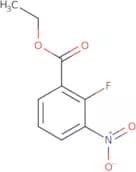
CAS:<p>2-Fluoro-3-nitrobenzoic acid ethyl ester is a versatile, high quality building block with a number of uses in research and industry. It is an intermediate in the synthesis of a range of compounds, including pharmaceuticals and other fine chemicals. 2-Fluoro-3-nitrobenzoic acid ethyl ester is also used as a reagent for the synthesis of complex compounds, such as pharmaceuticals. This compound can be synthesized from readily available starting materials and has been shown to be useful for the preparation of scaffolds for organic synthesis. 2-Fluoro-3-nitrobenzoic acid ethyl ester is not listed on the Chemical Abstract Service (CAS) registry, but it does have an IUPAC name (2-(2,6-difluorophenyl)-5-(1,1,2,2 tetrafluoropropoxy)-3H-[1]py</p>Formula:C9H8FNO4Purezza:Min. 95%Colore e forma:Off-White PowderPeso molecolare:213.16 g/molAscorbyl palmitate
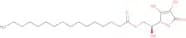
CAS:<p>Ascorbyl palmitate is an ester of ascorbic acid and palmitic acid. It is a water-soluble antioxidant that has been shown to be safe for oral ingestion at doses of up to 3 grams per day. Ascorbyl palmitate is used in topical formulations to provide protection against sun damage, and also has been shown to have anti-inflammatory properties, which may be due to its inhibitory effect on the mcl-1 protein. Ascorbyl palmitate has a phase transition temperature at about 41°C. This compound can be used in pharmaceuticals for the treatment of infectious diseases caused by bacteria such as tuberculosis or herpes simplex virus type 1 (HSV-1). This chemical also has been shown to have physiological effects on bowel disease and toxicity studies show that it does not cause any adverse reactions in rats or rabbits when given orally.</p>Formula:C22H38O7Purezza:Min 98%Colore e forma:White PowderPeso molecolare:414.53 g/molcis-4,7,10,13,16,19-Docosahexaenoic acid ethyl ester - 90%
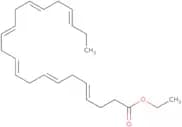
CAS:Cis-4,7,10,13,16,19-Docosahexaenoic acid ethyl ester (DHAEE) is a polyunsaturated fatty acid that belongs to the omega-3 family. It is used as an alternative feedstock for biodiesel production and has been shown to be a good candidate for hydrogenation reactions. The adsorption equilibrium of DHAEE has been studied using isotherms at different densities and pressures. At high pressures, the adsorption of DHAEE on silica gel was found to be reversible. This means that adsorbed DHAEE can be desorbed by heating the solid phase. This property could be useful in the recovery of this compound from spent catalysts or in other applications where it needs to be recovered from a solid phase.Formula:C24H36O2Purezza:Min. 95%Colore e forma:PowderPeso molecolare:356.54 g/mol3-Fluoro-4-hydroxybenzoic acid ethyl ester
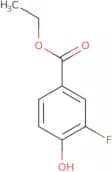
CAS:<p>3-Fluoro-4-hydroxybenzoic acid ethyl ester is a versatile building block that is used as a reagent in organic synthesis. It has the CAS number 56355-21-6. This compound has been shown to be useful for the synthesis of various pharmaceuticals and other complex compounds, such as 3-fluoro-4-(2,2,2-trifluoroethoxy)benzoic acid ethyl ester.</p>Formula:C9H9FO3Purezza:Min. 95%Colore e forma:PowderPeso molecolare:184.16 g/mol4-Hydroxy-3-nitrobenzoic acid ethyl ester
CAS:4-Hydroxy-3-nitrobenzoic acid ethyl ester is a small molecule that binds to DNA and RNA. It is cytotoxic, inhibiting cell growth in the presence of amides, nucleosides, or nucleotides. 4-Hydroxy-3-nitrobenzoic acid ethyl ester also inhibits the proliferation of cancer cells in culture. This drug has been shown to be effective against pancreatic cancer, ovarian cancer, and glioblastoma cells. The structure of this compound was elucidated by spectral analysis of its NMR and mass spectra data. It has yielded a 2780% increase in glioblastoma cell line growth rates when compared to control cells.Formula:C9H9NO5Purezza:Min. 95%Colore e forma:PowderPeso molecolare:211.17 g/molHexadecanamide
CAS:Hexadecanamide is a reactive amide that has an optimum concentration of 1.5-2.0 M in water and a pH range of 3.0-8.0. Hexadecanamide is oxidized by an oxidation catalyst to form hexadecane, which can be analyzed by gas chromatography or high performance liquid chromatography. The oxidation reaction can be monitored under constant pressure conditions using electrochemical impedance spectroscopy. Hexadecanamide reacts with hydroxyl groups and fatty acids to form hexadecanoic acid, which can be analyzed using gas chromatography or high performance liquid chromatography. Hexadecanamide also reacts with viral life to form hexadecanoic acid, which can be analyzed using gas chromatography or high performance liquid chromatography. Hexadecanamide has been shown to have anti-inflammatory properties, which may be due to its ability to inhibit the production of pro-inflammatory cytokines such as histamine and leukotrienesFormula:C16H33NOPurezza:Min. 95%Colore e forma:PowderPeso molecolare:255.44 g/mol1,1',1''-Tris(1H-1,2,3-triazol-4-yl-1-acetic acid ethyl ester) trimethylamine
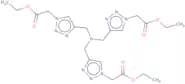
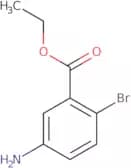
CAS:1,1',1''-Tris(1H-1,2,3-triazol-4-yl-1-acetic acid ethyl ester) trimethylamine is an organic solvent that has been used in the synthesis of azide–alkyne cycloaddition products. The solvent has shown to be soluble in water and is stable at high temperatures. It can also be used as a reagent or ligand for cycloaddition reactions with alkynes.Formula:C21H30N10O6Purezza:Min. 95%Colore e forma:White PowderPeso molecolare:518.53 g/mol5-Amino-2-bromobenzoic acid ethyl ester
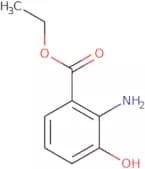
CAS:5-Amino-2-bromobenzoic acid ethyl ester is a chemical compound that can be used for the production of pharmaceuticals and research chemicals. It is a versatile building block that can be used in the synthesis of complex compounds with valuable applications. 5-Amino-2-bromobenzoic acid ethyl ester is a reagent, speciality chemical, and useful building block that can be used in the synthesis of high quality compounds. This compound has been identified as an intermediate in organic reactions and as a reaction component. CAS No. 208176-32-3Formula:C9H10BrNO2Purezza:Min. 95%Colore e forma:PowderPeso molecolare:244.09 g/mol2-Amino-3-hydroxybenzoic acid ethyl ester
CAS:<p>2-Amino-3-hydroxybenzoic acid ethyl ester is soluble in organic solvents and is a catalyst for the hydrolysis of phenoxazinones. It has been shown to be the most active among the amino acid esters at pH 7. The optimum temperature for this enzyme is 37 degrees Celsius. The substrate specificity of this enzyme, which was purified by fractionation, is 3-hydroxyanthranilic acid and 3-hydroxyanthranilic acid with metals such as copper or zinc ions. This enzyme also catalyses the hydrolysis of proteins and peptides containing hydrophobic amino acids.</p>Formula:C9H11NO3Purezza:Min. 95%Colore e forma:PowderPeso molecolare:181.19 g/mol