Flavonoidi
Sottocategorie di "Flavonoidi"
- Antocianidine(46 prodotti)
- Antocianina(46 prodotti)
- Catechina(88 prodotti)
- Chalcones(237 prodotti)
- Pterocarpani(28 prodotti)
Trovati 2408 prodotti di "Flavonoidi"
7,3',4'-Trimethoxyisoflavone
CAS:7,3',4'-Trimethoxyisoflavone is a natural isoflavone compound, which is typically derived from certain plants within the Leguminosae family. This compound is characterized by its three methoxy groups attached to the isoflavone backbone, distinguishing it from other isoflavone derivatives. The source of 7,3',4'-Trimethoxyisoflavone often includes various leguminous plants, where it functions as a secondary metabolite with potential protective roles.Formula:C18H16O5Purezza:Min. 95%Colore e forma:PowderPeso molecolare:312.32 g/mol5-Hydroxy-4'-methoxyflavone
CAS:5-Hydroxy-4'-methoxyflavone is a naturally occurring flavone, which is a type of polyphenolic compound found in various plants. It is derived from natural sources such as fruits, vegetables, and certain herbs. This compound is part of the larger class of flavonoids, which are known for their various biological activities and potential health benefits.Formula:C16H12O4Purezza:Min. 95%Peso molecolare:268.26 g/molGalangin
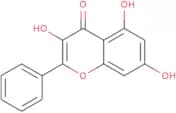
CAS:Galangin is a naturally occurring flavonoid, a type of polyphenolic compound, which is primarily sourced from Alpinia officinarum rhizomes, commonly known as galangal. This compound exhibits a range of biological activities, particularly attributed to its potent antioxidant and anti-inflammatory mechanisms. Galangin's mode of action predominantly involves the scavenging of free radicals and inhibition of oxidative stress pathways, effectively contributing to the mitigation of cellular damage and inflammation.Formula:C15H10O5Purezza:Min. 97 Area-%Colore e forma:PowderPeso molecolare:270.24 g/molIsoschaftoside
CAS:Isoschaftoside is a bioactive flavonoid glycoside, which is derived from various plant sources, particularly those within the Fabaceae and Poaceae families. This compound is a result of the glycosylation of apigenin, a well-known flavonoid. The mode of action of isoschaftoside involves its role as a potent antioxidant and anti-inflammatory agent. It achieves this by scavenging free radicals and modulating inflammatory pathways, thus contributing to cellular protection and immune response regulation.Formula:C26H28O14Purezza:Min. 97 Area-%Colore e forma:PowderPeso molecolare:564.49 g/mol5-Methoxyflavanone
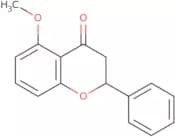
CAS:5-Methoxyflavanone is a synthetic flavonoid compound, which is derived from chemical modifications of naturally occurring flavonoids. These modifications often enhance bioavailability and activity compared to their natural counterparts. This compound functions primarily through its antioxidant activity, scavenging free radicals and reducing oxidative stress within biological systems. This mode of action is vital in cellular protection against damage caused by oxidative agents.Formula:C16H14O3Purezza:Min. 95%Colore e forma:White PowderPeso molecolare:254.28 g/molSinensetin
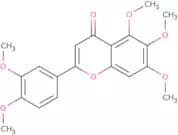
CAS:Sinensetin is a polymethoxyflavone, which is a type of flavonoid compound. It is predominantly sourced from citrus peels, particularly those of oranges. The compound exhibits multiple biological activities, primarily through its mode of action that involves modulating inflammatory pathways and oxidative stress responses. Sinensetin achieves this by inhibiting pro-inflammatory cytokines and enzymes such as cyclooxygenase, thereby reducing inflammation processes at the cellular level.
Formula:C20H20O7Purezza:Min. 95%Colore e forma:PowderPeso molecolare:372.37 g/mol8-Hydroxygenistein
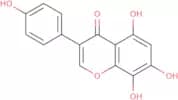
CAS:8-Hydroxygenistein is a naturally occurring isoflavone, which is a type of polyphenolic compound. It is derived primarily from plants, particularly soybeans and other legumes. This compound exhibits its mode of action through selective inhibition of tyrosine kinase enzymes, interference with the cell cycle, and modulation of signal transduction pathways. It also acts as a potent antioxidant, scavenging free radicals and reducing oxidative stress within cells.
Formula:C15H10O6Purezza:Min. 95%Colore e forma:Yellow PowderPeso molecolare:286.24 g/molKaempferol-3-(p-coumaryl)glucoside
CAS:Kaempferol-3-(p-coumaryl)glucoside is a bioactive phenolic compound found in the plant Tilia tomentosa. It has been shown to have hypoglycemic and anti-inflammatory effects, as well as an ability to inhibit the production of cytokines that are important for the development of inflammatory bowel disease. Kaempferol-3-(p-coumaryl)glucoside has also been shown to have an antiviral effect against infectious diseases such as HIV and herpes simplex virus type 2 (HSV2). This compound binds to the signal pathways that regulate apoptosis, which leads to cell death. Kaempferol-3-(p-coumaryl)glucoside can also cause DNA damage and genotoxic activity in bacteria.
Formula:C30H26O13Purezza:Min. 95%Colore e forma:PowderPeso molecolare:594.52 g/mol3',4'-Dihydroxyflavanone
3',4'-Dihydroxyflavanone is a type of flavonoid, which is a class of polyphenolic compounds known for diverse biological activities. This compound is primarily sourced from various plants, where it plays a role in plant defense mechanisms due to its antioxidant properties. The mode of action of 3',4'-Dihydroxyflavanone involves the scavenging of free radicals, thereby mitigating oxidative stress at the cellular level. This activity is facilitated by its dihydroxy structure, which allows it to donate hydrogen atoms to neutralize reactive oxygen species.
Formula:C15H10O4Purezza:Min. 95%Peso molecolare:254.24 g/molGlycitein-7-O-methyl ether
CAS:Glycitein-7-O-methyl ether is an isoflavone derivative, which is a type of flavonoid. It is primarily sourced from soybean and other leguminous plants, where it is present as a minor phytoestrogen. The mode of action of Glycitein-7-O-methyl ether involves mimicking estrogenic activity, binding to estrogen receptors, which could potentially affect various physiological processes. Additionally, it may exhibit antioxidant properties, scavenging free radicals and thereby influencing oxidative stress-related pathways.
Formula:C17H14O5Purezza:Min. 95%Peso molecolare:298.29 g/molPatuletin
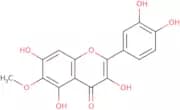
CAS:Patuletin is a naturally occurring flavonoid, which is derived primarily from various plants. It is a type of polyphenolic compound that is widely recognized for its potential therapeutic properties. The source of Patuletin is mostly plant-based, where it is usually extracted from species in the Asteraceae family. The mode of action of Patuletin involves multiple biochemical interactions, including its potential to modulate oxidative stress and inflammation pathways. It acts by scavenging free radicals and may inhibit key enzymes linked to inflammation.Formula:C16H12O8Purezza:80%Colore e forma:White PowderPeso molecolare:332.26 g/molTheaflavin-3'-gallate (TF-3'-G)
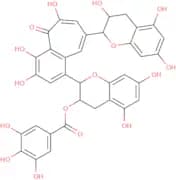
CAS:Induces cell death in human prostate cancer by disrupting mitochondria function
Formula:C36H28O16Purezza:Min. 95%Colore e forma:Red PowderPeso molecolare:716.6 g/mol3',4',5,7-Tetramethoxyflavone
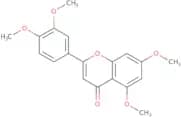
CAS:3',4',5,7-Tetramethoxyflavone is a polyphenolic compound, which is a specific type of flavonoid. It is derived from various plant sources, where it occurs naturally as part of the plant's defense mechanism against environmental stressors. This compound exerts its activity through various biochemical pathways, including modulation of enzyme activities and interference with cellular signaling pathways. Studies suggest it may inhibit certain enzymes involved in inflammation and oxidative stress, thereby playing a potential role in therapeutic applications.
Formula:C19H18O6Purezza:Min. 95%Colore e forma:White PowderPeso molecolare:342.34 g/molTheaflavin
CAS:Theaflavin is a polyphenolic compound, which is derived from the oxidation of catechins in black tea leaves. This compound acts as an antioxidant by scavenging free radicals and reducing oxidative stress. Theaflavin modulates various signaling pathways, influencing cellular processes such as apoptosis and inflammation. Its antioxidant capabilities are attributed to its ability to donate electrons and stabilize radical species, thus protecting cellular components from damage.Formula:C29H24O12Purezza:Min. 95%Colore e forma:Red PowderPeso molecolare:564.49 g/mol6-Hydroxy-5,7,4'-trimethoxyflavone
CAS:6-Hydroxy-5,7,4'-trimethoxyflavone is a methoxylated flavone, which is a type of polyphenolic compound. It is derived from various natural sources, including certain plant species where flavonoids are abundant. This compound features distinct methoxy and hydroxyl groups that contribute to its biochemical activity.
Formula:C18H16O6Purezza:Min. 95%Peso molecolare:328.32 g/molSigmoidin C
CAS:Sigmoidin C is a naturally occurring alkaloid, which is derived from the roots of certain species within the genus Alstonia. This compound is notable for its complex chemical structure and its potential therapeutic effects, which stem from its plant-based origin. Sigmoidin C operates primarily through modulating neurotransmitter systems, where it influences synaptic transmission and neuronal excitability.Formula:C20H18O6Purezza:Min. 95%Peso molecolare:354.35 g/molIsorhamnetin-5-O-methyl ether-3-glucoside
CAS:Isorhamnetin-5-O-methyl ether-3-glucoside is a flavonoid glycoside, which is a secondary metabolite typically found in various plant sources such as fruits, vegetables, and certain herbs. It is part of a larger class of compounds known as flavonoids, which are well-known for their diverse biological activities. The mode of action of Isorhamnetin-5-O-methyl ether-3-glucoside primarily involves its antioxidant properties, which allow it to neutralize free radicals and reduce oxidative stress.Formula:C22H22O13Purezza:Min. 95%Peso molecolare:494.4 g/mol3’,4’-Dimethoxyflavanone
CAS:3’,4’-Dimethoxyflavanone is a flavonoid compound, which is a type of natural phenolic product derived from various plant sources. Its structure is characterized by a flavanone backbone with methoxy groups at the 3' and 4' positions on the B-ring. These structural features contribute to its bioactivity, allowing it to interact with various biological targets through mechanisms such as free radical scavenging, modulation of signaling pathways, and enzyme inhibition.Formula:C17H16O4Purezza:Min. 95%Peso molecolare:284.31 g/molLinarin
CAS:Linarin is a naturally occurring flavonoid compound, which is primarily extracted from plant sources such as the leaves of *Buddleja davidii* and *Mentha aquatica*. This flavonoid is notable for its biological activity, which is characterized by its interaction with various enzymes and receptors involved in cellular processes.Formula:C28H33O14Purezza:Min. 95%Colore e forma:PowderPeso molecolare:593.55 g/mol2',7,8-Trihydroxyflavone
CAS:2',7,8-Trihydroxyflavone is a flavonoid compound, which is naturally sourced from various plant species. It functions by acting as an agonist for the tropomyosin receptor kinase B (TrkB), a receptor for brain-derived neurotrophic factor (BDNF). This interaction modulates neurotrophic signaling pathways, promoting neuronal survival, differentiation, and synaptic plasticity.
Formula:C15H10O5Purezza:90%Colore e forma:PowderPeso molecolare:270.24 g/mol