Flavonoidi
I flavonoidi sono un gruppo di metaboliti vegetali con proprietà antiossidanti che contribuiscono al colore di frutti e fiori. Svolgono un ruolo significativo nella protezione delle piante dai raggi UV e dai patogeni. I flavonoidi sono studiati per i loro potenziali benefici per la salute, tra cui proprietà antinfiammatorie, antivirali e anticancro. Sono ampiamente studiati nei campi della farmacologia, della nutrizione e della biologia molecolare.
Sottocategorie di "Flavonoidi"
- Antocianidine(46 prodotti)
- Antocianina(46 prodotti)
- Catechina(88 prodotti)
- Chalcones(237 prodotti)
- Pterocarpani(28 prodotti)
Trovati 2408 prodotti di "Flavonoidi"
Ordinare per
Purezza (%)
0
100
|
0
|
50
|
90
|
95
|
100
Vitexin
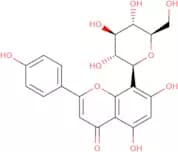
CAS:<p>Vitexin is a naturally occurring flavonoid, which is primarily extracted from plants such as the passionflower (Passiflora) and hawthorn (Crataegus). This bioactive compound is classified under the category of C-glycosyl flavones and is characterized by its unique structural features, including a glycosidic linkage that contributes to its stability and bioavailability.</p>Formula:C21H20O10Purezza:Min. 95%Colore e forma:PowderPeso molecolare:432.38 g/molKwakhurin
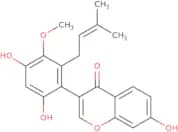
CAS:<p>Kwakhurin is a natural compound, characterized as an isoflavone, which is derived from the plant Pueraria mirifica. This plant is traditionally found in Southeast Asia and has been used in traditional medicine for various health benefits. Kwakhurin acts primarily as a phytoestrogen, meaning it can mimic the activity of estrogen in the body by binding to estrogen receptors. This behavior enables it to potentially modulate hormonal balances and exert estrogenic effects.</p>Formula:C21H20O6Purezza:(%) Min. 95%Colore e forma:White/Off-White SolidPeso molecolare:368.38 g/mol7,3',4',5'-Tetra methoxyflavone
CAS:7,3',4',5'-Tetra methoxyflavone is a polymethoxyflavone, which is a type of flavonoid compound. This compound is typically derived from various plant sources, particularly those in the Citrus genus. It possesses structural complexity due to its four methoxy groups, which contribute to its biological activity.Formula:C19H18O6Purezza:Min. 95%Peso molecolare:342.34 g/mol5,7,8,2'-Tetramethoxyflavone
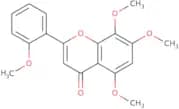
CAS:5,7,8,2'-Tetramethoxyflavone is a naturally occurring flavone compound, which is classified as a polyphenolic molecule commonly found in certain plant species. As a flavonoid, it is derived from plant sources, often extracted from species within the Rutaceae family, among others. These compounds are known for their complex biosynthetic pathways, which involve modified phenylpropanoid and acetate pathways.Formula:C19H18O6Purezza:Min. 95%Peso molecolare:342.34 g/molChrysoeriol-7-diglucoside
CAS:<p>Chrysoeriol-7-diglucoside is a flavonoid glycoside, which is commonly found in various plants. As a naturally occurring compound, it is typically derived from botanical sources such as flowers, leaves, or seeds of specific plant species. Its structure consists of a chrysoeriol molecule bonded to two glucose units. The mode of action of Chrysoeriol-7-diglucoside involves its interaction with biological pathways associated with oxidative stress and inflammation. It exhibits antioxidant properties by scavenging free radicals and potentially modulating enzymatic activity related to these processes.</p>Formula:C28H32O16Purezza:Min. 95%Peso molecolare:624.54 g/molApigenin-7-diglucuronide
CAS:<p>Apigenin-7-diglucuronide is a naturally occurring flavonoid derivative compound, which is primarily derived from various plant sources such as parsley, chamomile, and celery. It represents a glucuronidation product of apigenin, a process involving enzymatic attachment of glucuronic acid to the molecule, enhancing its water solubility and bioavailability.</p>Formula:C27H26O17Purezza:Min. 95 Area-%Colore e forma:PowderPeso molecolare:622.49 g/molQuercetin-3-arabinofuranoside
CAS:<p>Quercetin-3-arabinofuranoside is a flavonoid, a type of plant-derived polyphenolic compound. It is sourced from various plant species, particularly fruits, vegetables, and grains, where it functions as a secondary metabolite. This compound acts primarily through antioxidant mechanisms, neutralizing free radicals and reducing oxidative stress in biological systems. Additionally, it may interact with various cellular signaling pathways, modulating enzyme activities and gene expression.</p>Formula:C20H20O11Purezza:Min. 95%Peso molecolare:436.37 g/molTectochrysin
CAS:<p>Tectochrysin is a naturally occurring flavonoid, which is derived from the heartwood of certain trees, such as those from the genus Albizzia. This compound exhibits its effects primarily through antioxidant and anti-inflammatory activities, mediated by the modulation of various signaling pathways. Specifically, Tectochrysin has been shown to inhibit the activity of nuclear factor-kappa B (NF-κB) and other pro-inflammatory mediators, while also enhancing the expression of antioxidative enzymes.</p>Formula:C16H12O4Purezza:Min. 95%Colore e forma:PowderPeso molecolare:268.26 g/mol6-Hydroxydesmethylangolensin
CAS:<p>6-Hydroxydesmethylangolensin is a metabolite, which is derived from the fermentation of dietary isoflavones by intestinal microbiota. This compound originates specifically from the bacterial metabolism of daidzein, a principal soybean isoflavone. The mode of action of 6-Hydroxydesmethylangolensin involves its interaction with various biological pathways, potentially influencing estrogenic activity due to its structural similarity to estrogen, as well as possible antioxidant effects.</p>Formula:C15H14O5Purezza:Min. 95%Colore e forma:PowderPeso molecolare:274.27 g/molLiquiritin apioside
CAS:<p>Liquiritin apioside is a flavonoid glycoside, which is predominantly derived from the root of Glycyrrhiza uralensis, commonly known as licorice. This compound acts primarily through its anti-inflammatory and antioxidant properties, which involve the modulation of various cellular pathways. Specifically, it influences the activity of inflammatory cytokines and oxidative stress markers, potentially inhibiting pathways such as nuclear factor-kappa B (NF-κB).</p>Formula:C26H30O13Purezza:Min. 95%Colore e forma:White PowderPeso molecolare:550.51 g/mol6-Hydroxyluteolin
CAS:<p>6-Hydroxyluteolin is a flavonoid, which is a type of polyphenolic compound found in various plants. It is primarily sourced from plant species such as the Asteraceae family, including herbs like sage and parsley. The mode of action of 6-Hydroxyluteolin involves its capacity to scavenge free radicals, thereby exerting antioxidant effects. This activity is mediated through the donation of electrons or hydrogen atoms to reactive oxygen species, neutralizing them and preventing cellular damage.</p>Formula:C15H10O7Purezza:Min. 95%Peso molecolare:302.24 g/mol3,7,3',4',5'-Pentamethoxyflavone
CAS:3,7,3',4',5'-Pentamethoxyflavone is a polymethoxyflavone, which is a class of flavonoids characterized by multiple methoxy groups. It is predominantly found in certain citrus fruits, particularly in the peels. The compound is isolated through extraction and purification processes that leverage the natural abundance in these sources.Formula:C20H20O7Purezza:Min. 95%Peso molecolare:372.37 g/molDihydrorobinetin
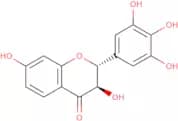
CAS:<p>Dihydrorobinetin is a flavonoid derivative, which is a naturally occurring compound found in certain plant sources. It belongs to the larger group of polyphenolic compounds known for their diverse biological activities. Dihydrorobinetin is primarily extracted from plants such as locust trees, where it occurs as a secondary metabolite.</p>Formula:C15H12O7Purezza:Min. 95%Colore e forma:PowderPeso molecolare:304.25 g/mol3,7,8,4'-Tetramethoxyflavone
CAS:<p>3,7,8,4'-Tetramethoxyflavone is a naturally occurring flavonoid, which is derived from various plant sources, including certain traditional medicinal herbs. Flavonoids like this one are noted for their diverse biological activities and potential therapeutic applications.</p>Formula:C19H18O6Purezza:Min. 95%Peso molecolare:342.34 g/molCalycosin-7-O-β-D-glucoside
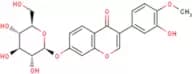
CAS:<p>Calycosin-7-O-β-D-glucoside (calycosin-7-O-beta-D-glucopyranoside) possesses a protective effect on rat hepatocytes, an inhibitory effect on COX-2 activity.</p>Formula:C22H22O10Purezza:98% - 99.981%Colore e forma:SolidPeso molecolare:446.45-Hydroxyflavanone
CAS:5-Hydroxyflavanone is a naturally occurring flavonoid compound, which is predominantly sourced from various plant species, including fruits, vegetables, and certain herbs. These plants synthesize flavonoids as part of their secondary metabolism, aiding in defense mechanisms against pathogens and contributing to their pigmentation.Formula:C15H12O3Purezza:Min. 95%Colore e forma:Off-White PowderPeso molecolare:240.25 g/molIzalpinin
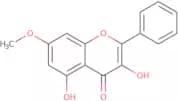
CAS:<p>Izalpinin is a specialized phytochemical compound, specifically a flavonoid, which is derived from various plant sources. It exhibits a range of bioactive properties due to its complex chemical structure. The primary mode of action of Izalpinin involves modulation of cellular signaling pathways and inhibition of specific enzymatic activities, which underpins its diverse pharmacological effects.</p>Formula:C16H12O5Purezza:Min. 95%Peso molecolare:284.26 g/molDeguelin
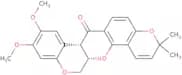
CAS:<p>Deguelin is a rotenoid, which is a naturally occurring compound derived primarily from the roots of plants in the Leguminosae family, such as Mundulea sericea and Derris species. It functions as a potent inhibitor of mitochondrial complex I, interfering with cellular respiration by blocking electron transport within the mitochondrial electron transport chain. This action leads to the inhibition of ATP production, which is essential for cellular energy.</p>Formula:C23H22O6Purezza:Min. 95%Peso molecolare:394.42 g/molGlycitin
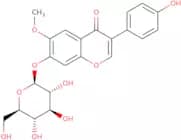
CAS:<p>Glycitin is an isoflavone glycoside, which is a bioactive compound primarily derived from soybeans. This natural compound is sourced from the soy plant, Glycine max, where it serves as one of the predominant isoflavones. Isoflavones like glycitin function as phytoestrogens, plant-derived compounds that can mimic or modulate the action of estrogen in the body. Glycitin undergoes hydrolysis in the digestive system to produce its aglycone form, glycitein, which can interact with estrogen receptors and exert estrogenic effects.</p>Formula:C22H22O10Purezza:Min. 98 Area-%Colore e forma:White PowderPeso molecolare:446.4 g/mol5-Hydroxy-7-methoxyisoflavone
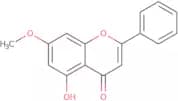
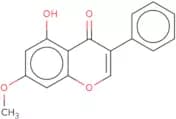
CAS:5-Hydroxy-7-methoxyisoflavone is an isoflavone compound, a type of naturally occurring organic substance usually derived from plant sources such as soybeans and other legumes. These compounds are known for their significant role in the plant kingdom, often contributing to the plant's resistance against pathogens and environmental stresses. The mode of action of 5-Hydroxy-7-methoxyisoflavone involves its potential antioxidant properties, where it may neutralize free radicals, thereby reducing oxidative stress and cellular damage. This activity arises primarily from its chemical structure, enabling it to donate electrons to unstable molecules.Formula:C16H12O4Purezza:Min. 95%Peso molecolare:268.26 g/mol