Flavonoidi
I flavonoidi sono un gruppo di metaboliti vegetali con proprietà antiossidanti che contribuiscono al colore di frutti e fiori. Svolgono un ruolo significativo nella protezione delle piante dai raggi UV e dai patogeni. I flavonoidi sono studiati per i loro potenziali benefici per la salute, tra cui proprietà antinfiammatorie, antivirali e anticancro. Sono ampiamente studiati nei campi della farmacologia, della nutrizione e della biologia molecolare.
Sottocategorie di "Flavonoidi"
- Antocianidine(46 prodotti)
- Antocianina(46 prodotti)
- Catechina(88 prodotti)
- Chalcones(237 prodotti)
- Pterocarpani(28 prodotti)
Trovati 2408 prodotti di "Flavonoidi"
Ordinare per
Purezza (%)
0
100
|
0
|
50
|
90
|
95
|
100
Neoisoastilbin
CAS:<p>Neoisoastilbin is a chemical compound, specifically a flavonoid derivative, derived primarily from natural botanical sources such as certain species of plants. It is characterized by its unique structural configuration which distinguishes it from its closely related isomers. As a flavonoid, Neoisoastilbin acts through multiple biochemical pathways, notably by scavenging free radicals and modulating oxidative stress responses, which can have significant implications in biological systems.Neoisoastilbin's notable applications lie in its potential antioxidant properties, which are of particular interest in the fields of pharmacology and biochemistry. Researchers study its effects on cellular models to understand its role in protecting cells from oxidative damage. It also has potential applications in the development of therapeutic agents aiming to mitigate conditions associated with oxidative stress, such as neurodegenerative diseases or cardiovascular disorders. Investigations into its pharmacodynamics and pharmacokinetics are essential to elucidate its full potential and mechanisms within complex biological systems.</p>Formula:C21H22O11Purezza:Min. 95%Peso molecolare:450.39 g/molScutellarein 7-methyl ether
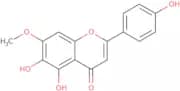
CAS:<p>Scutellarein 7-methyl ether is a naturally occurring flavone derivative, which is primarily sourced from various plant species within the genus Scutellaria. These plants are rich in flavonoids and have been studied extensively for their diverse biochemical properties. The mode of action of Scutellarein 7-methyl ether involves its ability to act as an antioxidant, neutralizing free radicals and reducing oxidative stress at the cellular level. This compound has been observed to interfere with various enzymatic pathways, contributing to its potential therapeutic effects.</p>Formula:C16H12O6Purezza:Min. 95%Colore e forma:PowderPeso molecolare:300.26 g/molIsoastilbin
CAS:<p>Isoastilbin is a bioactive flavonoid, which is a naturally occurring compound found primarily in certain plant species, such as the Chinese herb Smilax glabra and Engelhardtia roxburghiana Wall leaf. As a derivative of astilbin, it possesses a unique mechanism that involves the modulation of cellular redox states. Isoastilbin's mode of action is primarily through its antioxidant properties, where it scavenges free radicals and thus, mitigates oxidative stress at a cellular level. Additionally, it exhibits anti-inflammatory effects by inhibiting the production of pro-inflammatory cytokines.The applications of Isoastilbin are diverse and promising in scientific research. It is extensively studied for its potential therapeutic benefits in combating diseases associated with oxidative stress and inflammation, such as cardiovascular diseases, neurodegenerative disorders, and certain metabolic syndromes. Furthermore, its role in cell signaling and apoptosis makes it a candidate for cancer research, offering insights into the molecular pathways that can be targeted for therapeutic intervention. Isoastilbin’s multifunctional properties make it a compelling subject for ongoing pharmacological and biomedical research.</p>Formula:C21H22O11Purezza:Min. 95%Colore e forma:PowderPeso molecolare:450.39 g/mol7,8,4'-Trimethoxyisoflavone
CAS:7,8,4'-Trimethoxyisoflavone is a naturally occurring isoflavone, which is a type of flavonoid commonly found in various plants. It is derived from natural botanical sources, where it functions as a secondary metabolite. Isoflavones are known for their complex chemical structures and ability to interact with various biological pathways.Formula:C18H16O5Purezza:Min. 95%Colore e forma:PowderPeso molecolare:312.32 g/molOrobol 7,3',4'-trimethyl ether
CAS:<p>Orobol 7,3',4'-trimethyl ether is a synthetic flavonoid compound, which is derived from the chemical modification of natural flavonoids. These modifications involve methylation, specifically at the 7, 3', and 4' positions of the flavone structure. This chemical derivation allows for enhanced stability and solubility compared to its natural counterparts.</p>Formula:C18H16O6Purezza:Min. 95%Peso molecolare:328.32 g/molRothindin
CAS:<p>Please enquire for more information about Rothindin including the price, delivery time and more detailed product information at the technical inquiry form on this page</p>Formula:C22H20O10Purezza:Min. 95%Colore e forma:PowderPeso molecolare:444.39 g/molNaringin dihydrate
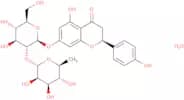
CAS:<p>Naringin dihydrate is a flavonoid glycoside, which is a bioactive compound found primarily in citrus fruits, especially grapefruits and oranges. It acts as a potent antioxidant and anti-inflammatory agent, which functions by scavenging free radicals and modulating signaling pathways involved in oxidative stress and inflammation.</p>Formula:C27H32O14·2H2OPurezza:Min. 95%Peso molecolare:616.57 g/mol4'-Hydroxy-7-methoxyisoflavan
CAS:4'-Hydroxy-7-methoxyisoflavan is a naturally occurring isoflavan, which is a subclass of flavonoids typically found in legumes and various plant sources. This compound is derived from the phenylpropanoid pathway, a critical biosynthetic route in plants responsible for producing a variety of phenolic compounds. Its mode of action is largely attributed to its ability to interact with cellular signaling pathways, exhibiting antioxidant, anti-inflammatory, and potentially estrogenic activities. These properties allow 4'-Hydroxy-7-methoxyisoflavan to modulate oxidative stress by scavenging free radicals and influencing gene expression related to detoxification enzymes.Formula:C16H16O3Purezza:Min. 95%Peso molecolare:256.3 g/molFlavanomarein
CAS:Flavanomarein is a flavonoid compound, which is derived from the tea plant, Camellia sinensis. This compound is part of the broader family of polyphenolic flavonoids, which are secondary metabolites commonly found in various plants. Flavanomarein exerts its effects primarily through its antioxidant properties. The flavonoid can scavenge free radicals and inhibit oxidative stress, which are critical functions in preventing cellular damage and maintaining homeostasis. Additionally, flavanomarein may modulate various signaling pathways that are involved in inflammation and apoptosis, offering potential therapeutic benefits.Formula:C21H22O11Purezza:Min. 95%Colore e forma:PowderPeso molecolare:450.39 g/molRhodiosin
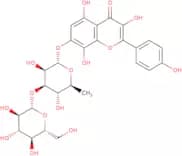
CAS:<p>Rhodiosin is a bioactive compound, which is a polyphenolic glycoside derived from the plant Rhodiola rosea. This compound is primarily sourced through extraction processes that isolate active constituents from the roots of Rhodiola, a perennial plant native to cold regions and known for its traditional medicinal uses. Rhodiosin exhibits its mode of action through various molecular pathways, particularly influencing the central nervous system and enhancing cellular resistance to stress. It acts as an adaptogen, a class of metabolic regulators that promote homeostasis and increase the body's resilience to environmental and physical stressors.</p>Formula:C27H30O16Purezza:Min. 95%Colore e forma:PowderPeso molecolare:610.52 g/mol7-O-Methyl-liquiritigenin
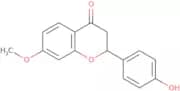
CAS:<p>7-O-Methyl-liquiritigenin is a flavonoid that has been shown to have anticarcinogenic properties. It has been studied in human studies and shown to be safe for use in cancer patients. 7-O-Methyl-liquiritigenin inhibits the growth of cancer cells by inhibiting cell proliferation, inducing apoptosis, and arresting the cell cycle at G2/M phase. 7-O-Methyl-liquiritigenin also inhibits the production of cyclooxygenase 2 (COX2) and prostaglandin E2 (PGE2), which have been linked to tumor promotion. 7-O-Methyl-liquiritigenin has been shown to inhibit the growth of human colon cancer cells in vitro, as well as in vivo when injected into mice. This compound also inhibits PIM1, an oncogene that regulates cellular proliferation, differentiation, tumor progression, angiogenesis, and metast</p>Formula:C16H14O4Purezza:Min. 95%Peso molecolare:270.28 g/mol3',4',7-Trimethoxyflavone
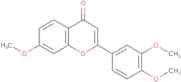
CAS:<p>3',4',7-Trimethoxyflavone is a bioactive flavonoid compound, which is predominantly sourced from certain plant species, including those within the genus Kaempferia. This compound is part of the larger class of flavonoids known for their diverse biological activities. Its mode of action primarily involves modulating various cellular pathways, including signaling pathways related to inflammation, angiogenesis, and apoptosis. Recent studies suggest its potential as an inhibitor of specific enzymes and receptors, enabling its role in reducing oxidative stress and modulating immune responses.</p>Formula:C18H16O5Purezza:Min. 95%Peso molecolare:312.32 g/mol4'-Methoxyflavonol
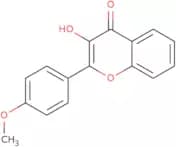
CAS:<p>4'-Methoxyflavonol is a flavonoid compound, which is a naturally occurring secondary metabolite primarily found in various plant species. It is characterized by the presence of a methoxy group attached to the flavonol backbone, contributing to its unique chemical properties. Through its antioxidant activity, 4'-Methoxyflavonol plays a crucial role in neutralizing free radicals and reducing oxidative stress within cells.</p>Formula:C16H12O4Purezza:Min. 95%Peso molecolare:268.26 g/mol8-Hydroxygenistein-5,7,8,4'-tetramethyl ether
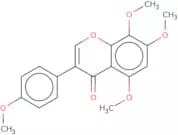
CAS:<p>8-Hydroxygenistein-5,7,8,4'-tetramethyl ether is a natural product with bioactive properties. It is an 8-hydroxy derivative of genistein that is found in soybeans and other legumes. The purity of this compound is confirmed by HPLC standards and it has been isolated from the plant source. This compound can be used as a reference material for analytical purposes or for quality control testing.</p>Formula:C19H18O6Purezza:Min. 95%Peso molecolare:342.34 g/mol3',5'-Diprenylliquiritigenin
CAS:<p>3',5'-Diprenylliquiritigenin is a prenylated flavonoid, which is a type of naturally occurring compound found in certain plants. This specific compound is isolated primarily from licorice root, where it is synthesized as part of the plant's secondary metabolites. Its mode of action involves modulating various signaling pathways within biological systems, demonstrating potential antioxidant, anti-inflammatory, and anti-cancer properties.</p>Formula:C25H28O4Purezza:Min. 95%Peso molecolare:392.49 g/molHesperidin (natural)
CAS:<p>Hesperidin is a bioflavonoid compound, which is naturally sourced from citrus fruits, primarily found in the peels of oranges and lemons. Its mode of action involves acting as a potent antioxidant by scavenging free radicals and reducing oxidative stress. Hesperidin also exhibits anti-inflammatory effects by modulating various signaling pathways and inhibiting the release of pro-inflammatory cytokines.In scientific applications, hesperidin is extensively studied for its potential therapeutic benefits. Its antioxidant properties make it a candidate for mitigating oxidative damage in various tissues, while its anti-inflammatory effects are explored in the context of chronic inflammatory conditions. Research has shown potential cardiovascular benefits, including the improvement of endothelial function and lipid profiles. Additionally, hesperidin is investigated for its neuroprotective effects and potential in managing metabolic disorders. These diverse applications highlight the significance of hesperidin in pharmacological research, aiming to leverage its natural properties for health benefits.</p>Formula:C28H34O15Purezza:Min. 90 Area-%Colore e forma:Off-White PowderPeso molecolare:610.56 g/molTectorigenin
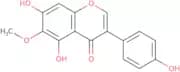
CAS:<p>Tectorigenin is a naturally occurring isoflavone, which is derived from plants such as Belamcanda chinensis and the Pueraria genus. It functions primarily as an antioxidant and has demonstrated various biological activities. Tectorigenin acts by inhibiting certain enzymes and signaling pathways, which contributes to its anti-inflammatory, anti-cancer, and neuroprotective effects.</p>Formula:C16H12O6Purezza:Min. 95%Colore e forma:White PowderPeso molecolare:300.26 g/mol2',6-Dihydroxyflavone
CAS:<p>2',6-Dihydroxyflavone is a natural flavonoid compound, which is derived from various plant sources. This compound is known for its interaction with cellular pathways and has been studied extensively for its potential neuroprotective effects. 2',6-Dihydroxyflavone acts as an agonist for the TrkB receptor, which is the high-affinity catalytic receptor for the brain-derived neurotrophic factor (BDNF). By activating this receptor, it plays a crucial role in neuronal survival, development, and plasticity.</p>Formula:C15H10O4Purezza:Min. 95%Peso molecolare:254.24 g/mol5,8-Dihydroxy-3,3',4',7-tetramethoxyflavone
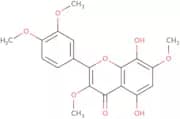
CAS:<p>5,8-Dihydroxy-3,3',4',7-tetramethoxyflavone is a secondary metabolite of plants that belongs to the group of phytochemicals. It is one of the most potent natural antioxidants and has been shown to have antioxidant activity in a number of different assays. 5,8-Dihydroxy-3,3',4',7-tetramethoxyflavone can be used for analytical purposes as an HPLC standard or reference material. This compound has also been shown to inhibit tumor cell proliferation in vitro and may be useful for research and development purposes.</p>Formula:C19H18O8Purezza:Min. 95%Peso molecolare:374.34 g/mol5-Hydroxy-7,4'-dimethoxy-6,8-dimethylflavone
CAS:5-Hydroxy-7,4'-dimethoxy-6,8-dimethylflavone is a bioactive flavonoid compound, which is naturally derived from certain plant sources. As a type of flavone, this compound is notable for its polyphenolic skeleton that contributes to notable biological properties. Its mode of action primarily involves modulating various enzymatic pathways and cellular signaling processes due to its structural ability to interact with biomolecules like enzymes and receptors. This interaction can lead to a range of biological effects, including antioxidant and anti-inflammatory activities.Formula:C19H18O5Purezza:Min. 95%Peso molecolare:326.34 g/mol