Flavonoidi
I flavonoidi sono un gruppo di metaboliti vegetali con proprietà antiossidanti che contribuiscono al colore di frutti e fiori. Svolgono un ruolo significativo nella protezione delle piante dai raggi UV e dai patogeni. I flavonoidi sono studiati per i loro potenziali benefici per la salute, tra cui proprietà antinfiammatorie, antivirali e anticancro. Sono ampiamente studiati nei campi della farmacologia, della nutrizione e della biologia molecolare.
Sottocategorie di "Flavonoidi"
- Antocianidine(46 prodotti)
- Antocianina(46 prodotti)
- Catechina(88 prodotti)
- Chalcones(237 prodotti)
- Pterocarpani(28 prodotti)
Trovati 2408 prodotti di "Flavonoidi"
Ordinare per
Purezza (%)
0
100
|
0
|
50
|
90
|
95
|
100
2,3-Dihydrohinokiflavone
CAS:<p>2,3-Dihydrohinokiflavone is a natural bioflavonoid compound, which is typically derived from various plant sources, particularly those native to East Asia. This compound belongs to the broader flavonoid family, known for their antioxidant properties. Its mode of action involves modulating various signaling pathways, which can lead to anti-inflammatory and antioxidant effects. It achieves this by inhibiting the production of pro-inflammatory cytokines and scavenging free radicals, thus reducing oxidative stress in biological systems.</p>Formula:C30H20O10Purezza:Min. 95%Peso molecolare:540.47 g/molBavachin
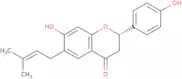
CAS:Phytoestrogen; estrogen receptor agonist; PPARγ ligandFormula:C20H20O4Purezza:Min. 95%Colore e forma:SolidPeso molecolare:324.37 g/mol3',5,5',7-Tetrahydroxyflavanone
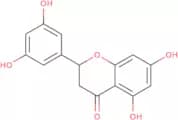
CAS:<p>3',5,5',7-Tetrahydroxyflavanone is a flavonoid compound, which is a type of naturally occurring polyphenolic. It is primarily derived from certain plants, often found in those with known medicinal properties. Flavonoids are secondary metabolites in plants and play crucial roles in various biological activities.</p>Formula:C15H12O6Purezza:Min. 95%Peso molecolare:288.25 g/molEuchrestaflavanone B
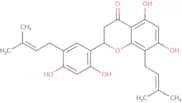
CAS:Euchrestaflavanone B is a naturally occurring flavonoid, which is a type of polyphenolic compound. It is primarily sourced from various plant species, particularly those found in the Leguminosae family. The mode of action of Euchrestaflavanone B involves its interaction with cellular signaling pathways, where it exhibits a broad spectrum of bioactive effects. These include anti-inflammatory, antioxidant, and anticancer properties, potentially through modulation of enzyme activities and gene expression.Formula:C25H28O6Purezza:Min. 95%Peso molecolare:424.5 g/molBavachinin A
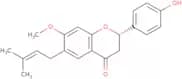
CAS:<p>Bavachinin A is a prenylated flavanone, which is a type of natural compound. It is sourced from the seeds of Psoralea corylifolia, a plant commonly found in traditional Chinese and Indian medicine. The compound exhibits its mode of action primarily through the modulation of specific cellular pathways, including the inhibition of certain enzymes and interaction with receptor sites that play a crucial role in inflammatory and oxidative stress responses.</p>Formula:C21H22O4Purezza:Min. 95%Colore e forma:SolidPeso molecolare:338.4 g/molVitexin 4'-glucoside
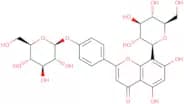
CAS:<p>Vitexin 4'-glucoside is a natural flavonoid glycoside, which is a type of secondary metabolite found in plants. It is derived from various plant sources, particularly in the leaves, stems, and seeds of certain medicinal plants, where it plays roles in plant defense mechanisms and stress responses. As a flavonoid, its mode of action primarily involves antioxidant activity, scavenging free radicals, and modulating oxidative stress. This is significant in the interaction with cellular signaling pathways and enzyme inhibition.</p>Purezza:Min. 95%Homoferreirin
CAS:<p>Homoferreirin is a biochemical siderophore, which is a low-molecular-weight iron-chelating compound derived from plant sources. Its mechanism of action involves binding ferric iron (Fe^3+) ions with high affinity, forming a stable complex. This complex aids in the solubilization and transport of iron across cellular membranes, which is crucial in environments where iron availability is limited, such as in soil and certain biological niches.</p>Formula:C17H16O6Purezza:Min. 95%Peso molecolare:316.31 g/mol5,7,3'-Trihydroxy-4'-methoxy-8-prenylflavanone
CAS:5,7,3'-Trihydroxy-4'-methoxy-8-prenylflavanone is a prenylated flavanone, which is often isolated from various plant sources, particularly those in the Fabaceae family. The compound belongs to a class of naturally occurring polyphenolic compounds that have drawn interest for their diverse biological activities. It is characterized by the presence of a prenyl group and multiple hydroxy and methoxy functional groups, contributing to its unique chemical properties.Formula:C21H22O6Purezza:Min. 95%Peso molecolare:370.4 g/mol7-O-Ethyldaidzein
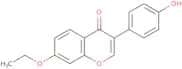
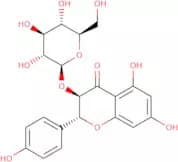
CAS:<p>7-O-Ethyldaidzein is a synthetic flavonoid derivative, which is primarily sourced from modifications of the naturally occurring isoflavone daidzein. Daidzein itself is found in soy products and other legumes. Through a chemical process, 7-O-ethyl groups are introduced to enhance its biological activity.</p>Formula:C17H14O4Purezza:Min. 95%Colore e forma:PowderPeso molecolare:282.29 g/molDihydrokaempferol-3-O-glucoside
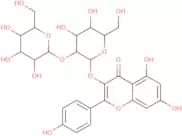
CAS:Dihydrokaempferol-3-O-glucoside is a flavonoid glucoside, which is derived from plant sources, notably found in various fruits and vegetables. This compound is part of the flavonoid family, characterized by its polyphenolic structure and pivotal role in plant physiology and human health. The mode of action of dihydrokaempferol-3-O-glucoside predominantly involves its antioxidant properties. It neutralizes free radicals, thereby reducing oxidative stress and potentially mitigating damage at the cellular level.Formula:C21H22O11Purezza:Min. 95%Colore e forma:PowderPeso molecolare:450.39 g/molKaempferol-3-rhamnoglucoside-7-glucoside
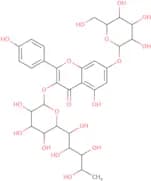
CAS:<p>Kaempferol-3-rhamnoglucoside-7-glucoside is a flavonoid glycoside, which is a type of bioactive compound. It is commonly derived from plant sources such as certain fruits, vegetables, and herbs, where it occurs naturally as part of the plant’s secondary metabolites. This compound is structurally characterized by its glycosidic linkages, where sugar moieties such as rhamnose and glucose are attached to the kaempferol backbone.</p>Formula:C33H40O20Purezza:Min. 95%Peso molecolare:756.66 g/mol6,3'-Diprenylgenistein
CAS:6,3'-Diprenylgenistein is a prenylated isoflavonoid compound, which is derived from certain plants, notably those within the legume family. This phytochemical is characterized as an isoflavone, a class of naturally occurring organic compounds related to flavonoids, distinguished by the inclusion of prenyl groups that potentially enhance its biological activity and bioavailability.Formula:C25H26O5Purezza:Min. 95%Peso molecolare:406.47 g/molDihydrokaempferol-3-glucoside
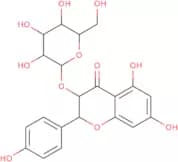
CAS:<p>Dihydrokaempferol-3-glucoside is a flavonoid glucoside, which is primarily derived from various plant sources including fruits, vegetables, and certain medicinal herbs. Its molecular structure consists of a kaempferol core attached to a glucose moiety, enhancing its solubility and stability in biological systems. This compound exhibits antioxidant activity, acting to scavenge free radicals and reduce oxidative stress within cells. By neutralizing reactive oxygen species, dihydrokaempferol-3-glucoside helps to protect cellular components such as DNA, proteins, and lipids from oxidative damage.</p>Formula:C21H22O11Purezza:Min. 95%Colore e forma:White PowderPeso molecolare:450.39 g/molSteppogenin
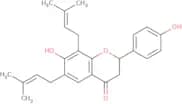
CAS:Steppogenin is a metabolic modulator, which is derived from natural plant sources known for their enzymatic properties. Its mode of action involves the induction of cytochrome P450 enzymes, facilitating various oxidative reactions within biological systems. As an enzyme inducer, Steppogenin modulates metabolic pathways, making it invaluable for the study of drug metabolism and pharmacokinetics.Formula:C15H12O6Purezza:Min. 95%Peso molecolare:288.25 g/mol7,4'-Dihydroxy-6,8-diprenylflavanone
CAS:7,4'-Dihydroxy-6,8-diprenylflavanone is a prenylated flavonoid, which is a type of naturally occurring compound found in various plants. This compound is often derived from specific plant species known for their rich flavonoid content. The prenylation of flavonoids, such as 7,4'-Dihydroxy-6,8-diprenylflavanone, often enhances their biological activity.Formula:C25H28O4Purezza:Min. 95%Peso molecolare:392.5 g/molPanasenoside
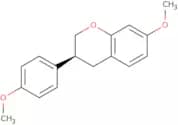
CAS:<p>Please enquire for more information about Panasenoside including the price, delivery time and more detailed product information at the technical inquiry form on this page</p>Formula:C27H30O16Purezza:Min. 95%Peso molecolare:610.5 g/mol(S)-4',7-Dimethyl equol
CAS:<p>(S)-4',7-Dimethyl equol is an isoflavandiol, which is a metabolite of the soy isoflavone daidzein. It is produced in the human gut by bacterial metabolism, provided the individual has the appropriate intestinal microbiota capable of this transformation. The compound exhibits estrogenic activity, primarily due to its structural similarity to the endogenous hormone 17β-estradiol, allowing it to bind to estrogen receptors.</p>Formula:C17H18O3Purezza:Min. 95%Peso molecolare:270.32 g/mol5-Methoxyflavanone
CAS:5-Methoxyflavanone is an organic compound, which is a flavonoid derivative obtained primarily through synthetic procedures involving the modification of flavanones. This compound is synthesized through specific chemical reactions that introduce a methoxy group into the flavanone structure, thereby altering its chemical and biological properties.Formula:C16H14O3Purezza:Min. 95%Peso molecolare:254.28 g/mol5,7-Dimethoxyflavanone
CAS:5,7-Dimethoxyflavanone is a flavonoid derivative, which is a type of polyphenolic compound predominantly found in plants. This compound is often isolated from various botanical sources, where it contributes to the plant's adaptive defense mechanisms against environmental stressors. The mode of action of 5,7-Dimethoxyflavanone involves interaction with cellular signaling pathways, potentially influencing antioxidant, anti-inflammatory, and enzyme inhibition activities through modulation of molecular targets.Formula:C17H16O4Purezza:Min. 95%Peso molecolare:284.31 g/molLicoisoflavanone
CAS:<p>Licoisoflavanone is a naturally occurring flavonoid compound, which is derived from the roots of plants such as Glycyrrhiza glabra, commonly known as licorice. This phytochemical is primarily obtained through extraction and isolation from licorice roots, where it is present as part of a complex mixture of bioactive compounds. The mode of action of licoisoflavanone involves its ability to interact with various biological pathways, including inhibitory effects on bacterial cell wall synthesis and disruption of microbial cellular functions, as well as scavenging free radicals to exert antioxidant effects.</p>Formula:C20H18O6Purezza:Min. 95%Peso molecolare:354.4 g/mol