Flavonoidi
I flavonoidi sono un gruppo di metaboliti vegetali con proprietà antiossidanti che contribuiscono al colore di frutti e fiori. Svolgono un ruolo significativo nella protezione delle piante dai raggi UV e dai patogeni. I flavonoidi sono studiati per i loro potenziali benefici per la salute, tra cui proprietà antinfiammatorie, antivirali e anticancro. Sono ampiamente studiati nei campi della farmacologia, della nutrizione e della biologia molecolare.
Sottocategorie di "Flavonoidi"
- Antocianidine(46 prodotti)
- Antocianina(46 prodotti)
- Catechina(88 prodotti)
- Chalcones(237 prodotti)
- Pterocarpani(28 prodotti)
Trovati 2408 prodotti di "Flavonoidi"
Ordinare per
Purezza (%)
0
100
|
0
|
50
|
90
|
95
|
100
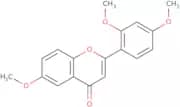
6,2',4'-Trimethoxyflavone
CAS:<p>6,2',4'-Trimethoxyflavone is a flavonoid compound, which is a type of phytochemical found in various plant species. It is derived from natural sources, including certain medicinal herbs and plants known for their bioactive properties. This specific flavone is characterized by its three methoxy groups attached at distinct positions on the flavonoid backbone, which confer unique chemical properties and biological activities.</p>Formula:C18H16O5Purezza:Min. 95%Peso molecolare:312.32 g/molMorin dihydrate
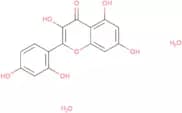
CAS:<p>Morin dihydrate is a flavonoid compound, which is a type of polyphenolic molecule. It is primarily sourced from the Moraceae family of plants, including mulberry leaves and certain fruits. As a flavonoid, Morin exerts its biochemical effects mainly through its capacity to scavenge free radicals, thus exhibiting significant antioxidant activity. This mode of action is attributed to its structure, which allows it to donate electrons and neutralize reactive oxygen species, consequently reducing oxidative stress at the cellular level.</p>Purezza:Min. 95%3,7,4'-Trihydroxy-5-methoxy-8-prenylflavanone, (2R,3S)-
<p>3,7,4'-Trihydroxy-5-methoxy-8-prenylflavanone, (2R,3S)- is a naturally occurring prenylated flavanone, which is primarily sourced from various plant species. This compound is part of the larger flavonoid family and is often found in certain medicinal plants known for their wide range of therapeutic properties. Its structure comprises a flavanone backbone, modified by hydroxyl, methoxy, and prenyl groups that contribute to its distinctive chemical profile.</p>Purezza:Min. 95%Gardenin B
CAS:<p>Gardenin B is a microbial biocontrol agent that originates from Streptomyces bacteria. It functions as a secondary metabolite deriving from its microbial source. The mode of action involves inhibiting the growth of plant-pathogenic fungi by disrupting their cellular processes and interfering with spore germination or hyphal proliferation. Gardenin B is primarily utilized in agricultural settings to control fungal diseases in crops, reducing reliance on synthetic chemical fungicides. Its application is integrated into plant protection programs to enhance agricultural sustainability and improve crop yields while minimizing the environmental impact. Scientists are investigating its mechanisms and potential for broader applications.</p>Formula:C19H18O7Purezza:Min. 95%Peso molecolare:358.34 g/molOmbuin
CAS:Ombuin is a flavonoid compound, which is a naturally occurring substance found in a variety of plants. It functions primarily as an antioxidant by scavenging free radicals and inhibiting oxidative stress within biological systems. This mode of action is pivotal in mitigating cellular damage, thereby contributing to anti-inflammatory processes.Formula:C17H14O7Purezza:Min. 95%Colore e forma:SolidPeso molecolare:330.29 g/molLicoflavonol
CAS:Licoflavonol is a bioactive compound that serves as an antioxidant, which is derived from plant sources, particularly flavonoid-rich species. Its mode of action involves scavenging free radicals and modulating pathways involved in oxidative stress and inflammation. By reducing oxidative damage, Licoflavonol can stabilize cellular environments and protect macromolecules such as DNA, proteins, and lipids from degenerative changes.Formula:C20H18O6Purezza:Min. 95%Peso molecolare:354.35 g/mol2'-Methoxybiochanin A
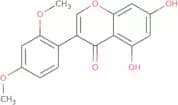
CAS:<p>2'-Methoxybiochanin A is a naturally occurring isoflavone, which is predominantly derived from the plant Trifolium pratense, commonly known as red clover. This compound is characterized by its unique chemical structure that includes a methoxy group, which differentiates it from other isoflavones. The mode of action of 2'-Methoxybiochanin A involves its interaction with estrogen receptors, as well as its ability to modulate various biological pathways linked to inflammation and oxidative stress.</p>Formula:C17H14O6Purezza:Min. 95%Colore e forma:PowderPeso molecolare:314.29 g/mol8-Hydroxygenistein-7,8,4'-trimethyl ether
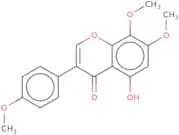
CAS:<p>8-Hydroxygenistein-7,8,4'-trimethyl ether is a phytochemical derivative, which is sourced from plant metabolites, specifically isoflavonoids. This compound is modified through methylation processes to enhance its stability and lipophilicity, making it a subject of interest in various biochemical studies. Its mode of action primarily involves interaction with cellular signaling pathways, influencing antioxidant mechanisms and potentially affecting gene expression related to oxidative stress.</p>Formula:C18H16O6Purezza:Min. 95 Area-%Colore e forma:Yellow PowderPeso molecolare:328.32 g/mol7-Benzyloxy-3',4'-dimethoxyisoflavone
CAS:<p>7-Benzyloxy-3',4'-dimethoxyisoflavone is a synthetic isoflavone derivative, which is a specialized compound designed for research and potential pharmacological applications. Isoflavones are naturally occurring compounds found predominantly in plants like soybeans and are studied for their biological activities. This particular compound is synthetically modified with methoxy groups, enhancing its stability and bioavailability.</p>Formula:C24H20O5Purezza:Min. 95%Peso molecolare:388.41 g/molIcarisid I
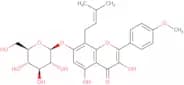
CAS:<p>Icarisid I is a sophisticated protease inhibitor, which is derived from a natural source. This compound exhibits a high affinity for specific proteases, making it an invaluable tool in research and biotechnological applications. The compound's mode of action involves the selective and competitive inhibition of protease enzymes, effectively blocking their activity within biological systems. This can be particularly useful in studies aiming to elucidate the role of proteases in various biochemical pathways and disease processes.</p>Purezza:Min. 95%Quercetin 3-O-rutinoside-7-O-glucoside
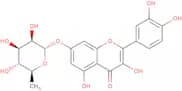
CAS:<p>Quercetin 3-O-rutinoside-7-O-glucoside is a flavonoid derivative, which is a specialized plant metabolite known for its diverse bioactive properties. Extracted primarily from plant sources, this compound is a glycoside derivative of quercetin, a well-known flavonoid found abundantly in fruits and vegetables. The specific glycosylation at the 3-O-rutinoside and 7-O-glucoside positions enhances its solubility and bioavailability compared to its aglycone form.</p>Formula:C33H40O21Purezza:Min. 95%Peso molecolare:772.66 g/molHydroxygenkwanin
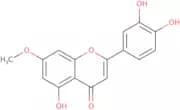
CAS:<p>Hydroxygenkwanin is a type of flavonoid, which is a natural compound extracted from various plant sources, particularly those within the Asteraceae family. It functions predominantly through its ability to modulate multiple signaling pathways, including antioxidant, anti-inflammatory, and apoptosis-inducing activities. Hydroxygenkwanin acts by influencing cellular signaling cascades, enhancing or inhibiting the expression of specific proteins and genes related to cell cycle regulation and immune response.</p>Formula:C16H12O6Purezza:Min. 95%Peso molecolare:300.26 g/molBilobetin
CAS:<p>Bilobetin is a flavonoid compound, which is sourced from the leaves of the Ginkgo biloba tree. This compound primarily functions through its antioxidative properties, influencing a variety of neural pathways. Its mode of action involves the scavenging of reactive oxygen species and modulation of cellular signaling pathways that impact synaptic transmission and neuroplasticity.</p>Purezza:Min. 95%Licoisoflavone A
CAS:<p>Licoisoflavone A is a naturally occurring isoflavone, which is extracted from plants of the Glycyrrhiza genus, notably known for their medicinal applications. This compound exhibits a unique mode of action, primarily through its anti-inflammatory and antioxidant activities, which involve modulation of various signaling pathways and inhibition of pro-inflammatory cytokines. By influencing these pathways, Licoisoflavone A can mitigate oxidative stress and reduce inflammation, showcasing its potential in therapeutic applications.</p>Purezza:Min. 95%8-Prenylpinocembrin
CAS:<p>8-Prenylpinocembrin is a specialized flavonoid compound, which is a part of the prenylflavonoid class. It is derived from natural sources, primarily plants within the Fabaceae family and propolis from honeybees. The compound is characterized by its prenyl group attached to the flavonoid pinocembrin, enhancing its biological activity through increased lipophilicity and membrane permeability.</p>Formula:C20H20O4Purezza:Min. 95%Peso molecolare:324.37 g/molVincetoxicoside B
CAS:<p>Vincetoxicoside B is a natural compound, specifically a glycoside, which is derived from plant sources, notably within the genus Vincetoxicum. This compound, isolated from certain medicinal plants, represents a significant interest in phytochemistry due to its complex molecular structure and potential biological activities.</p>Purezza:Min. 95%2',5,7-Trihydroxy-8-methoxyflavanone
CAS:<p>2',5,7-Trihydroxy-8-methoxyflavanone is a polyphenolic flavanone compound, which is a type of flavonoid. It is sourced primarily from plant materials, particularly those rich in flavonoid content, such as specific fruits, vegetables, and herbs. This compound exerts its effects primarily through its antioxidant properties, where it functions by scavenging free radicals and inhibiting oxidative stress within biological systems.</p>Formula:C16H14O6Purezza:Min. 95%Peso molecolare:302.28 g/mol6,7,4'-Trihydroxyflavanone
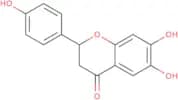
CAS:<p>6,7,4'-Trihydroxyflavanone is a naturally occurring flavonoid, which is found in various plant sources, particularly in citrus fruits and certain medicinal herbs. This compound is characterized by its presence of hydroxyl groups, enhancing its reactivity and interaction with biological systems. The mode of action of 6,7,4'-Trihydroxyflavanone primarily involves its antioxidant activity. It can scavenge free radicals and chelate metal ions, thereby reducing oxidative stress within cellular environments. This property is critical in maintaining cellular integrity and preventing damage caused by reactive oxygen species.</p>Formula:C15H12O5Purezza:Min. 95%Peso molecolare:272.25 g/molWarangalone
CAS:<p>Warangalone is a type of flavonoid compound, which is derived from the roots of the medicinal plant Abrus precatorius. This compound is characterized by its polyphenolic structure, making it an excellent candidate for various biochemical interactions. Warangalone exhibits its mode of action primarily through the disruption of microbial cell walls, leading to effective antimicrobial activity. Its interactions with microbial membranes result in altered permeability, ultimately inhibiting the growth and replication of various bacterial and fungal species.</p>Formula:C25H24O5Purezza:Min. 95%Peso molecolare:404.46 g/molTricetin 7-O-glucoside
CAS:<p>Tricetin 7-O-glucoside is a flavonoid glycoside compound, which is a derivative of the naturally occurring flavonoid tricetin. This compound is sourced primarily from certain plant species, including various herbs and foods, where it is present as a minor constituent. The mode of action of Tricetin 7-O-glucoside involves its ability to scavenge free radicals and modulate inflammatory pathways, showcasing both antioxidant and anti-inflammatory properties.</p>Formula:C21H20O12Purezza:Min. 95%Peso molecolare:464.38 g/mol