Flavonoidi
I flavonoidi sono un gruppo di metaboliti vegetali con proprietà antiossidanti che contribuiscono al colore di frutti e fiori. Svolgono un ruolo significativo nella protezione delle piante dai raggi UV e dai patogeni. I flavonoidi sono studiati per i loro potenziali benefici per la salute, tra cui proprietà antinfiammatorie, antivirali e anticancro. Sono ampiamente studiati nei campi della farmacologia, della nutrizione e della biologia molecolare.
Sottocategorie di "Flavonoidi"
- Antocianidine(46 prodotti)
- Antocianina(46 prodotti)
- Catechina(88 prodotti)
- Chalcones(237 prodotti)
- Pterocarpani(28 prodotti)
Trovati 2408 prodotti di "Flavonoidi"
Ordinare per
Purezza (%)
0
100
|
0
|
50
|
90
|
95
|
100
Podocarpus flavanone
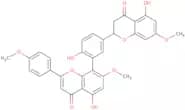
CAS:Podocarpus flavanone is a naturally occurring flavonoid derivative, which is sourced from the Podocarpus genus, a group of coniferous trees native to the Southern Hemisphere. The compound is characterized by its polyphenolic structure, contributing to its ability to engage in a range of biochemical interactions. Its mode of action primarily involves the inhibition of microbial growth through disruption of microbial cell membranes and interference with key enzymatic pathways necessary for cell survival.Formula:C33H26O10Purezza:Min. 95%Peso molecolare:582.6 g/molVaccarin
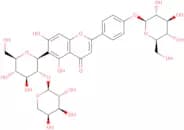
CAS:<p>Vaccarin is a bioactive flavonoid, which is derived from the plant Vaccaria segetalis. It is a naturally occurring compound, primarily sourced from the seeds of this plant. The mode of action of Vaccarin involves its ability to interact with various biological pathways, particularly those related to anti-inflammatory and antioxidant processes. It acts by modulating enzyme activity and gene expression associated with these pathways, potentially influencing cellular behavior and physiological responses.</p>Formula:C32H38O19Purezza:Min. 95%Peso molecolare:726.63 g/molIsomucronulatol
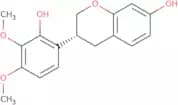
CAS:<p>Isomucronulatol is a naturally occurring flavonoid compound, which is a secondary metabolite sourced primarily from various plant species. It exhibits significant antioxidant activity by scavenging free radicals and reducing oxidative stress, which can damage cellular components such as lipids, proteins, and DNA. Additionally, Isomucronulatol demonstrates anti-inflammatory effects by modulating signaling pathways involved in the inflammatory response, thereby reducing the production of pro-inflammatory cytokines.</p>Formula:C17H18O5Purezza:Min. 95%Colore e forma:PowderPeso molecolare:302.32 g/molSotetsuflavone
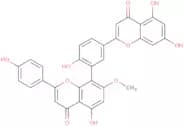
CAS:<p>Sotetsuflavone is a flavonoid-based compound, which is a type of product derived from natural plant sources, specifically certain species in the Cycad family. It is characterized by its complex chemical structure, which enables it to interact with various biological systems. The mode of action of Sotetsuflavone involves modulation of signaling pathways and interaction with specific cellular receptors, which can influence enzymatic activity and gene expression. These interactions suggest its potential in influencing oxidative stress and inflammatory responses.</p>Formula:C31H20O10Purezza:Min. 95%Peso molecolare:552.48 g/molScutellarein tetramethyl ether
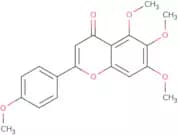
CAS:<p>Scutellarein tetramethyl ether is a methylated flavonoid compound, which is a result of structural modifications to scutellarein, itself a naturally occurring flavone. This compound is derived from various plant sources, particularly those within the Scutellaria genus, known for their bioactive flavonoid content. The modification involves methylation of hydroxyl groups, which can augment its bioavailability and stability.</p>Formula:C19H18O6Purezza:Min. 95 Area-%Colore e forma:PowderPeso molecolare:342.34 g/molR,S equol 4'-sulfate sodium salt
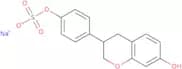
CAS:<p>R,S equol 4'-sulfate sodium salt is a synthetic derivative of equol, which is a type of flavonoid metabolite. This compound is primarily sourced from the biotransformation of the isoflavone daidzein through gut microbiota activity. As a sulfate salt, it is more soluble in aqueous environments, which may facilitate its use in various biological contexts.</p>Formula:C15H13NaO6SPurezza:Min. 95%Peso molecolare:344.32 g/molPrunetin-4'-glucoside
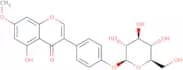
CAS:<p>Prunetin-4'-glucoside is a specialized flavonoid compound, categorized as a glucoside, which is derived from natural plant sources. This glycosylated form of prunetin is found in various plants and serves as part of the plant's defense mechanism. Its mode of action involves antioxidative properties that neutralize free radicals, thus protecting cellular structures from oxidative damage. This mechanism is crucial as oxidative stress is implicated in numerous diseases.</p>Formula:C22H22O10Purezza:Min. 95%Peso molecolare:446.4 g/molPlantanone B
CAS:Plantanone B is a naturally-derived compound, which is an anti-inflammatory agent sourced from the Plantago species. It is known for its distinct bioactive properties attributed to its unique phytochemical structure. The compound primarily functions by modulating inflammatory pathways, specifically targeting the downregulation of pro-inflammatory cytokines and inhibiting the production of reactive oxygen species. This mode of action underscores its potential in addressing inflammation-associated cellular processes.Formula:C33H40O20Purezza:Min. 95%Peso molecolare:756.66 g/mol8-Prenylquercetin
CAS:8-Prenylquercetin is a prenylated flavonoid, a compound that belongs to the larger class of polyphenols. It is typically derived from various plant sources, often synthesized from quercetin, which is abundant in fruits and vegetables. The addition of a prenyl group is believed to enhance its biological activity and lipophilicity compared to non-prenylated flavonoids.Formula:C27H30O11Purezza:Min. 95%Peso molecolare:530.52 g/mol2-Hydroxynaringenin
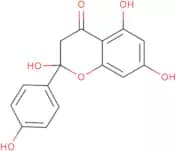
CAS:2-Hydroxynaringenin is a flavonoid compound, which is derived from the extraction and purification of various citrus fruits, particularly from the peel and pulp. It belongs to a class of secondary metabolites found predominantly in these plants, functioning as part of their natural defense mechanism.Formula:C15H12O6Purezza:Min. 95%Peso molecolare:288.25 g/molR-Equol
CAS:<p>R-Equol is a chiral compound classified as an isoflavandiol, which is a type of non-steroidal estrogen. It is derived from the metabolic conversion of daidzein, an isoflavone predominantly found in soy products, by intestinal microbiota in some individuals. The presence of equol-producing bacteria is necessary for this biotransformation process.</p>Purezza:Min. 95%6-Chloroflavone
CAS:<p>6-Chloroflavone is a synthetic flavonoid derivative, which is a modified chemical compound originating from naturally occurring flavonoids found in various plants. Structurally, it is characterized by the substitution of a chlorine atom at the 6th position on the flavone backbone. This chemical modification is designed to alter its physicochemical properties and enhance its biological activity.</p>Formula:C15H9ClO2Purezza:Min. 95%Peso molecolare:256.68 g/molCudraflavanone B
CAS:<p>Cudraflavanone B is a bioactive flavonoid, which is a type of polyphenolic compound. It is derived from natural sources, prominently found in the roots of Cudrania tricuspidata, a plant known for its traditional use in herbal medicine. The mode of action of Cudraflavanone B involves various biochemical pathways, including the modulation of enzyme activity and signaling pathways. It exhibits antioxidant, anti-inflammatory, and antimicrobial properties by interacting with cellular mechanisms that regulate oxidative stress and inflammatory responses.</p>Formula:C20H20O6Purezza:Min. 95%Peso molecolare:356.40 g/molCirsimarin
CAS:<p>Cirsimarin is a natural flavonoid compound, which is extracted from certain plant species, primarily in the Asteraceae family. It functions by modulating various biochemical pathways through its potent anti-inflammatory, antioxidant, and hepatoprotective activities. Cirsimarin exerts its effects by scavenging free radicals, inhibiting inflammatory mediators, and supporting liver function through upregulation of detoxifying enzymes.</p>Formula:C23H24O11Purezza:Min. 95%Colore e forma:PowderPeso molecolare:476.43 g/molPratensein 7-O-glucoside
CAS:<p>Pratensein 7-O-glucoside is a naturally occurring flavonoid glucoside, which is extracted from various plant sources such as red clover, Trifolium pratense. This compound is formed when the flavonoid pratensein is glycosylated at the 7th position with glucose. As a member of the isoflavone group, Pratensein 7-O-glucoside may exert its effects primarily through antioxidant mechanisms, neutralizing reactive oxygen species and reducing oxidative stress.</p>Formula:C22H22O11Purezza:Min. 95%Peso molecolare:462.4 g/molIsomedicarpin
CAS:<p>Isomedicarpin is a flavonoid compound, which is naturally derived from plant sources. It is isolated predominantly from certain species within the Leguminosae family, where these compounds often play a role in the plant's defense mechanisms. The mode of action of isomedicarpin involves disrupting microbial cell membranes and interfering with essential biochemical pathways, which contributes to its antimicrobial efficacy.</p>Formula:C16H14O4Purezza:Min. 95%Peso molecolare:270.28 g/molIsomucronulatol 7-O-glucoside
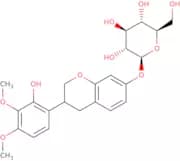
CAS:Isomucronulatol 7-O-glucoside is a flavonoid glucoside compound, which is isolated predominantly from various plant species. This compound is known for its comprehensive role as a secondary metabolite that participates in the plant's defense mechanism. The primary mode of action involves its ability to interact with biological targets at the molecular level, potentially exhibiting antioxidant, anti-inflammatory, or other bioactive properties. Isomucronulatol 7-O-glucoside may influence signaling pathways, which can alter physiological responses within organisms.Purezza:Min. 95%Alpinumisoflavone-4'-methyl ether
CAS:<p>Alpinumisoflavone-4'-methyl ether is a methoxyisoflavone, which is a type of naturally occurring phenolic compound. It is derived from specific plant sources, including certain species within the Fabaceae family, known for their rich isoflavonoid content. These compounds are synthesized in plants as part of their defense mechanisms against environmental stresses and pathogens.</p>Formula:C21H18O5Purezza:Min. 95%Colore e forma:PowderPeso molecolare:350.36 g/mol5,7,2',4'-Tetrahydroxy-8,3'-di(gamma,gamma-dimethylallyl)-isoflavanone
CAS:<p>5,7,2',4'-Tetrahydroxy-8,3'-di(gamma,gamma-dimethylallyl)-isoflavanone is a prenylated isoflavanone, which is a type of flavonoid compound extensively studied in natural product chemistry. It is primarily sourced from specific plant species known for their rich secondary metabolite profiles, often within the Fabaceae family. The mode of action of this compound involves its interaction at the molecular level with various biological targets, potentially leading to antioxidant, anti-inflammatory, or antimicrobial effects. These actions are mediated through the compound’s ability to modulate enzyme activities, interact with cellular membranes, and influence signaling pathways.</p>Formula:C25H28O6Purezza:Min. 95%Peso molecolare:424.50 g/molIso-Osajin
CAS:<p>Iso-Osajin is a naturally occurring compound that falls under the category of prenylated flavonoids. It is isolated from the seeds of Psoralea corylifolia, a plant traditionally used in various medicinal systems. The compound exhibits its mode of action primarily through antimicrobial activities, potentially disrupting microbial cell membranes or inhibiting essential enzymes. Iso-Osajin has been of considerable interest due to its promising pharmacological effects, including antibacterial, antifungal, and possibly antiviral properties.</p>Formula:C25H24O5Purezza:Min. 95%Colore e forma:PowderPeso molecolare:404.46 g/mol