Flavonoidi
Sottocategorie di "Flavonoidi"
- Antocianidine(46 prodotti)
- Antocianina(46 prodotti)
- Catechina(88 prodotti)
- Chalcones(237 prodotti)
- Pterocarpani(28 prodotti)
Trovati 2408 prodotti di "Flavonoidi"
2',3',6-Trihydroxyflavone
CAS:2',3',6-Trihydroxyflavone is a flavonoid compound, which is naturally derived from various plant sources such as fruits, vegetables, and certain herbs. It exists as a small molecule flavonoid within the polyphenolic family, known for its diverse biological activities. The compound acts primarily through antioxidant mechanisms, scavenging free radicals and reducing oxidative stress, which can mitigate cellular damage and inflammation.Formula:C15H10O5Purezza:Min. 95%Peso molecolare:312.32 g/molRobustigenin
CAS:Robustigenin is a naturally occurring compound, classified as a cardenolide, which is derived from plant sources, specifically from the Apocynaceae family. It is characterized by its distinct steroidal structure, which is integral to its biological activity. The mode of action of Robustigenin involves inhibition of the sodium-potassium ATPase enzyme, leading to increased intracellular sodium levels. This, in turn, affects calcium ion concentrations through sodium-calcium exchange mechanisms, impacting cellular processes, particularly in cardiac tissues.
Formula:C19H18O7Purezza:Min. 95%Peso molecolare:358.34 g/molHerbacetin-8-glucoside
CAS:Herbacetin-8-glucoside is a flavonoid compound, which is a naturally occurring glucoside derived from various plant sources, predominantly found in flaxseed and some other plant species. The glycosidic linkage occurs at the 8th position on the herbacetin structure, contributing to its unique biochemical profile. Herbacetin-8-glucoside functions primarily through its potent antioxidant and anti-inflammatory mechanisms, effectively scavenging free radicals and modulating inflammatory pathways.Formula:C21H20O12Purezza:Min. 95%Peso molecolare:464.38 g/mol6-Hydroxy-2'-methoxyflavone
CAS:6-Hydroxy-2'-methoxyflavone is a naturally-derived flavonoid compound, primarily sourced from various plants. Its structure, a modification of the flavone backbone, incorporates hydroxy and methoxy functional groups that contribute to its unique chemical properties. The mode of action of 6-Hydroxy-2'-methoxyflavone involves interactions with specific cellular pathways and receptors, potentially influencing antioxidant and anti-inflammatory responses. This compound may modulate enzyme activity and participate in scavenging free radicals, offering insights into its biochemical versatility.
Formula:C16H12O4Purezza:Min. 95%Peso molecolare:268.26 g/molIcariin
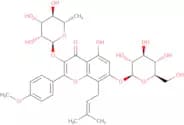
CAS:Icariin is a bioactive flavonoid compound, which is primarily derived from plants in the genus Epimedium, commonly known as Horny Goat Weed. This compound is a prenylated flavonol glycoside that is found in varying concentrations depending on the specific species of Epimedium used. Icariin exerts its effects through multiple biochemical pathways, most notably by inhibiting phosphodiesterase type 5 (PDE5), which leads to an increase in nitric oxide levels and the subsequent vasodilation of blood vessels.
Formula:C33H40O15Purezza:Min. 95%Colore e forma:Slightly Yellow PowderPeso molecolare:676.66 g/molTangeretin
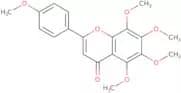
CAS:Tangeretin is a polymethoxylated flavonoid, which is derived primarily from the peels of citrus fruits, particularly oranges and tangerines. As a naturally occurring compound, it exerts its effects through several biochemical pathways. Tangeretin has been shown to modulate cellular signaling pathways, inhibit inflammatory mediators, and scavenge free radicals, highlighting its antioxidant and anti-inflammatory potential.Formula:C20H20O7Purezza:Min. 97 Area-%Colore e forma:PowderPeso molecolare:372.37 g/mol3,7,8,2'-Tetrahydroxyflavone
CAS:3,7,8,2'-Tetrahydroxyflavone is a polyphenolic compound, which is a type of flavonoid. These compounds are known for their presence in various plants as secondary metabolites. This particular flavone is naturally sourced from specific plant species, contributing to the plant's defense mechanisms against environmental stressors.Formula:C15H10O6Purezza:Min. 95%Peso molecolare:286.24 g/molTaxifolin 3-O-rhamnoside
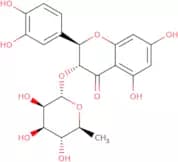
CAS:Taxifolin 3-O-rhamnoside is a natural flavonoid glycoside, which is primarily sourced from certain plant species, including members of the Pinaceae family. This compound is recognized for its unique chemical structure, comprising taxifolin attached to a rhamnose sugar moiety. Its mode of action predominantly involves the scavenging of free radicals, thanks to its potent antioxidant properties. Taxifolin 3-O-rhamnoside exhibits the ability to neutralize reactive oxygen species, thereby contributing to the protection of cellular components from oxidative stress.
Formula:C21H22O11Purezza:Min. 95%Colore e forma:PowderPeso molecolare:450.39 g/mol3,7,8,2',3'-Pentamethoxyflavone
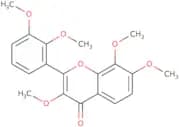
CAS:3,7,8,2',3'-Pentamethoxyflavone is a synthetic flavone derivative, which is primarily isolated from certain plant species known for their rich flavonoid content. This compound is notable for its potential biological and pharmaceutical applications, resulting from its molecular structure that allows it to interact with various cellular pathways.Formula:C20H20O7Purezza:Min. 95%Peso molecolare:372.37 g/molCirsimaritin
CAS:Cirsimaritin is a natural product that is classified as a flavonoid, which is derived from various plants, particularly those belonging to the Asteraceae family. As a plant metabolite, Cirsimaritin plays a significant role in the plant’s own defense mechanisms against microbial infections and environmental stressors.
Formula:C17H14O6Purezza:Min. 98 Area-%Colore e forma:Yellow PowderPeso molecolare:314.29 g/mol3-Hydroxy-7,2',4',5'-tetramethoxyflavone
CAS:3-Hydroxy-7,2',4',5'-tetramethoxyflavone is a naturally occurring flavonoid, which is derived from plant sources, particularly within the family of citrus fruits. Its chemical structure consists of a hydroxyl group and multiple methoxy groups, contributing to its biological activity. As a flavonoid, it is primarily involved in mediating anti-inflammatory, antioxidant, and potential anticancer effects by modulating various cellular pathways.
Formula:C19H18O7Purezza:Min. 95%Peso molecolare:358.34 g/molDihydrokaempferol
CAS:Dihydrokaempferol is a flavonoid compound, which is predominantly sourced from a variety of plant species including fruits, vegetables, and certain herbs. It is a dihydroflavonol, a type of flavonoid that plays a significant role in plant coloration and protection against environmental stressors.
Formula:C15H12O6Purezza:Min. 95%Colore e forma:PowderPeso molecolare:288.25 g/mol6-Hydroxydesmethylangolensin
CAS:6-Hydroxydesmethylangolensin is a metabolite, which is derived from the fermentation of dietary isoflavones by intestinal microbiota. This compound originates specifically from the bacterial metabolism of daidzein, a principal soybean isoflavone. The mode of action of 6-Hydroxydesmethylangolensin involves its interaction with various biological pathways, potentially influencing estrogenic activity due to its structural similarity to estrogen, as well as possible antioxidant effects.
Formula:C15H14O5Purezza:Min. 95%Colore e forma:PowderPeso molecolare:274.27 g/mol3,7-Dimethoxyflavone
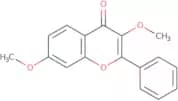
CAS:3,7-Dimethoxyflavone is a naturally occurring flavone, which is a type of polyphenolic compound. It is sourced from various plant species, notably those within the genus *Kaempferia*, and can also be synthesized in laboratory settings. The compound is characterized by its distinct chemical structure, featuring methoxy groups at the 3 and 7 positions on the flavone backbone.
Formula:C17H14O4Purezza:Min. 95%Colore e forma:PowderPeso molecolare:282.29 g/mol6,8-Diprenylnaringenin
CAS:6,8-Diprenylnaringenin is a prenylated flavonoid, which is an organic compound predominantly derived from the hops plant, Humulus lupulus. This compound exhibits a unique mode of action owing to its interaction with estrogen receptors, where it acts as a phytoestrogen. Its chemical structure, characterized by the presence of prenyl groups, enhances its bioavailability and affinity for these receptors, suggesting its potential role in modulating estrogenic activity in biological systems.Formula:C25H28O5Purezza:Min. 95%Peso molecolare:408.49 g/molJuglanin
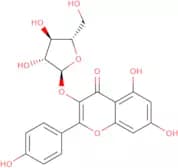
CAS:Juglanin is a flavonoid glycoside, which is a naturally occurring compound found in plants, specifically from the genus Juglans, commonly known as walnut. Its mode of action involves antioxidant and anti-inflammatory activities, wherein it scavenges free radicals and inhibits inflammatory pathways. Juglanin achieves this by modulating various cellular signaling pathways, including those related to oxidative stress and inflammation.Formula:C20H18O10Purezza:Min. 95%Colore e forma:PowderPeso molecolare:418.35 g/molKaranjin
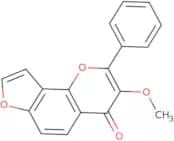
CAS:From seeds of Karanja tree; insecticidal, acaricidal & fungicidal propertiesFormula:C18H12O4Purezza:Min. 95%Colore e forma:White PowderPeso molecolare:292.29 g/molFisetin
CAS:Fisetin is a flavonoid compound, which is a type of polyphenol found in various fruits and vegetables. It is primarily sourced from strawberries, apples, persimmons, onions, and cucumbers. This flavonoid exhibits a range of biological activities due to its involvement in modulating cellular processes.
Formula:C15H10O6·xH2OPurezza:Min. 90 Area-%Colore e forma:Yellow PowderPeso molecolare:286.24 g/mol3,7,8,4'-Tetrahydroxyflavone
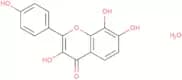
CAS:3,7,8,4'-Tetrahydroxyflavone is a naturally occurring flavonoid, which is a type of secondary metabolite commonly found in various plants. It is derived from botanical sources like fruits, vegetables, and certain herbs. This compound has gained attention due to its potential biological activities linked to its structural properties, specifically the presence of multiple hydroxyl groups that contribute to its antioxidant capacity.
Formula:C15H10O6Purezza:Min. 95%Colore e forma:PowderPeso molecolare:286.24 g/molAequinetin
CAS:Aequinetin is a cyclic peptide, which is derived from marine organisms, specifically sponges. It acts by targeting cellular processes in bacteria and cancer cells through disruption of cell membrane integrity and interference with specific signaling pathways. This mode of action makes it a promising candidate for antibiotic and anticancer applications.Formula:C21H20O9Purezza:Min. 95%Peso molecolare:416.38 g/mol