Anticorpi primari
Gli anticorpi primari sono immunoglobuline che si legano specificamente a un antigene di interesse, consentendo la rilevazione e quantificazione di proteine, peptidi o altre biomolecole. Questi anticorpi sono strumenti fondamentali in un'ampia gamma di applicazioni, tra cui Western blot, immunoistochimica ed ELISA. Presso CymitQuimica, offriamo una vasta selezione di anticorpi primari di alta qualità, che garantiscono specificità e sensibilità per vari bisogni di ricerca, tra cui studi su cancro, immunologia e biologia cellulare.
Sottocategorie di "Anticorpi primari "
- Ricerca sul cancro Anticorpi(3.620 prodotti)
- Anticorpi cardiovascolari(2 prodotti)
- Biologia dello sviluppo(751 prodotti)
- Anticorpi epigenetici(162 prodotti)
- Anticorpi per l’immunologia(2.764 prodotti)
- Anticorpi metabolici(279 prodotti)
- Anticorpi per la microbiologia(736 prodotti)
- Trasduzione del segnale(2.717 prodotti)
- Tag e marcatori cellulari(33 prodotti)
Mostrare 1 più sottocategorie
Trovati 75326 prodotti di "Anticorpi primari "
Ordinare per
Purezza (%)
0
100
|
0
|
50
|
90
|
95
|
100
Neu (phospho Tyr1221/Y1222) rabbit pAb
This gene encodes a member of the epidermal growth factor (EGF) receptor family of receptor tyrosine kinases. This protein has no ligand binding domain of its own and therefore cannot bind growth factors. However, it does bind tightly to other ligand-bound EGF receptor family members to form a heterodimer, stabilizing ligand binding and enhancing kinase-mediated activation of downstream signalling pathways, such as those involving mitogen-activated protein kinase and phosphatidylinositol-3 kinase. Allelic variations at amino acid positions 654 and 655 of isoform a (positions 624 and 625 of isoform b) have been reported, with the most common allele, Ile654/Ile655, shown here. Amplification and/or overexpression of this gene has been reported in numerous cancers, including breast and ovarian tumors. Alternative splicing results in several additional transcript variants, some encoding dTRAF2 rabbit pAb
TNF receptor associated factor 2(TRAF2) Homo sapiens The protein encoded by this gene is a member of the TNF receptor associated factor (TRAF) protein family. TRAF proteins associate with, and mediate the signal transduction from members of the TNF receptor superfamily. This protein directly interacts with TNF receptors, and forms a heterodimeric complex with TRAF1. This protein is required for TNF-alpha-mediated activation of MAPK8/JNK and NF-kappaB. The protein complex formed by this protein and TRAF1 interacts with the inhibitor-of-apoptosis proteins (IAPs), and functions as a mediator of the anti-apoptotic signals from TNF receptors. The interaction of this protein with TRADD, a TNF receptor associated apoptotic signal transducer, ensures the recruitment of IAPs for the direct inhibition of caspase activation. BIRC2/c-IAP1, an apoptosis inhibitor possessing ubiquitin ligase activity, can unbiquitinate and induce the degradation of this proSC6A9 rabbit pAb
The amino acid glycine acts as an inhibitory neurotransmitter in the central nervous system. The protein encoded by this gene is one of two transporters that stop glycine signaling by removing it from the synaptic cleft. [provided by RefSeq, Jun 2016],GFRA3 rabbit pAb
The protein encoded by this gene is a glycosylphosphatidylinositol(GPI)-linked cell surface receptor and a member of the GDNF receptor family. It forms a signaling receptor complex with RET tyrosine kinase receptor and binds the ligand, artemin. [provided by RefSeq, Jul 2008],Lyn (phospho Tyr508) rabbit pAb
This gene encodes a tyrosine protein kinase, which maybe involved in the regulation of mast cell degranulation, and erythroid differentiation. Alternatively spliced transcript variants encoding different isoforms have been found for this gene. [provided by RefSeq, Jul 2011],OR2M4 rabbit pAb
olfactory receptor family 2 subfamily M member 4(OR2M4) Homo sapiens Olfactory receptors interact with odorant molecules in the nose, to initiate a neuronal response that triggers the perception of a smell. The olfactory receptor proteins are members of a large family of G-protein-coupled receptors (GPCR) arising from single coding-exon genes. Olfactory receptors share a 7-transmembrane domain structure with many neurotransmitter and hormone receptors and are responsible for the recognition and G protein-mediated transduction of odorant signals. The olfactory receptor gene family is the largest in the genome. The nomenclature assigned to the olfactory receptor genes and proteins for this organism is independent of other organisms. [provided by RefSeq, Jul 2008],FIBP rabbit pAb
Acidic fibroblast growth factor is mitogenic for a variety of different cell types and acts by stimulating mitogenesis or inducing morphological changes and differentiation. The FIBP protein is an intracellular protein that binds selectively to acidic fibroblast growth factor (aFGF). It is postulated that FIBP may be involved in the mitogenic action of aFGF. Two transcript variants encoding different isoforms have been found for this gene. [provided by RefSeq, Jul 2008],PHB2 rabbit pAb
developmental stage:Levels of expression in fibroblasts decrease heterogeneously during cellular aging.,function:Acts as a mediator of transcriptional repression by nuclear hormone receptors via recruitment of histone deacetylases (By similarity). Functions as an estrogen receptor (ER)-selective coregulator that potentiates the inhibitory activities of antiestrogens and represses the activity of estrogens. Competes with NCOA1 for modulation of ER transcriptional activity. Probably involved in regulating mitochondrial respiration activity and in aging.,induction:Expression increases approximately 3-fold upon entry into G1 phase compared to other phases of the cell cycle. Also induced following inhibition of mitochondrial protein synthesis by thiamphenicol.,similarity:Belongs to the prohibitin family.,subcellular location:Also cytoplasmic and nuclear.,subunit:Interacts with PHB, ESR1, HDAC1 and HDAC5.,RHG24 rabbit pAb
This gene encodes a Rho-GTPase activating protein, which is specific for the small GTPase family member Rac. Binding of the encoded protein by filamin A targets it to sites of membrane protrusion, where it antognizes Rac. This results in suppression of lamellae formation and promotion of retraction to regulate cell polarity. Alternative splicing results in multiple transcript variants. [provided by RefSeq, Sep 2016],Hexim1 rabbit pAb
Expression of this gene is induced by hexamethylene-bis-acetamide in vascular smooth muscle cells. This gene has no introns. [provided by RefSeq, Jul 2008],CLK4 rabbit pAb
CDC like kinase 4(CLK4) Homo sapiens The protein encoded by this gene belongs to the CDC2-like protein kinase (CLK) family. This protein kinase can interact with and phosphorylate the serine- and arginine-rich (SR) proteins, which are known to play an important role in the formation of spliceosomes, and thus may be involved in the regulation of alternative splicing. Studies in the Israeli sand rat Psammomys obesus suggested that the ubiquitin-like 5 (UBL5/BEACON), a highly conserved ubiquitin-like protein, may interact with and regulate the activity of this kinase. Multiple alternatively spliced transcript variants have been observed, but the full-length natures of which have not yet been determined. [provided by RefSeq, Jul 2008],IDE/Insulin Degrading Enzyme Mouse mAb
Insulin Degrading Enzyme (IDE) is a large zinc-binding protease of the M16A metalloprotease subfamily known to cleave multiple short polypeptides that vary considerably in sequence. IDE was first identified by its ability to degrade the B chain of the hormone insulin. This activity was observed over fifty years ago, though the enzyme specifically responsible for B chain cleavage was identified more recently.RPAP1 rabbit pAb
This protein forms part of the RNA polymerase II (RNAPII) enzyme complex and may recruit RNAPII to chromatin through its interaction with acetylated histones. [provided by RefSeq, Jul 2012],EDG-5 rabbit pAb
This gene encodes a member of the G protein-coupled receptors, as well as the EDG family of proteins. The encoded protein is a receptor for sphingosine 1-phosphate, which participates in cell proliferation, survival, and transcriptional activation. Defects in this gene have been associated with congenital profound deafness. [provided by RefSeq, Mar 2016],SCNM1 rabbit pAb
SCNM1 is a zinc finger protein and putative splicing factor. In mice, Scnm1 modifies phenotypic expression of Scn8a (MIM 600702) mutations (Buchner et al., 2003 [PubMed 12920299]).[supplied by OMIM, Oct 2009],TECT2 rabbit pAb
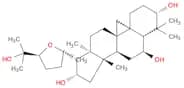
This gene encodes a type I membrane protein that belongs to the tectonic family. Studies in mice suggest that this protein may be involved in hedgehog signaling, and essential for ciliogenesis. Mutations in this gene are associated with Meckel syndrome type 8. Alternatively spliced transcript variants encoding different isoforms have been found for this gene. [provided by RefSeq, Oct 2011],9,19-Cyclolanostane-3,6,16,25-tetrol, 20,24-epoxy-,(3b,6a,16b,20R,24S)-
CAS:Formula:C30H50O5Purezza:98%Colore e forma:SolidPeso molecolare:490.7150