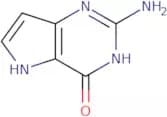
Zuccheri e nucleobasi della spina dorsale
Gli zuccheri dello scheletro e le basi azotate sono componenti essenziali degli acidi nucleici come DNA e RNA. Lo scheletro è composto da gruppi zuccheri e fosfati, mentre le basi azotate formano il codice genetico attraverso l'appaiamento delle basi. Questi composti sono fondamentali nello studio della genetica e della biologia molecolare. Presso CymitQuimica, è possibile trovare una varietà di zuccheri dello scheletro e basi azotate per la ricerca e l'uso in laboratorio.
Trovati 1001 prodotti di "Zuccheri e nucleobasi della spina dorsale"
Ordinare per
Purezza (%)
0
100
|
0
|
50
|
90
|
95
|
100
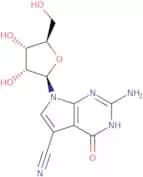
7-Cyano-7-deazaguanosine
CAS:<p>7-Cyano-7-deazaguanosine is a nucleoside that belongs to the category of 7-deazapurines. It is an optimized nucleic acid analogue that has been shown to act as a translational inhibitor in vitro and in vivo. This compound has been shown to have high yields in chemical synthesis, which makes it an attractive candidate for optimization and future research. 7-Cyano-7-deazaguanosine is a synthetic nucleotide with anticodon properties, which may be useful for the development of new drugs against bacterial infections.</p>Formula:C12H13N5O5Purezza:Min. 95%Colore e forma:PowderPeso molecolare:307.26 g/mol6-Thioguanine
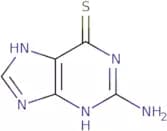
CAS:<p>Phosphoribosyltransferase inhibitor; photocytotoxic</p>Formula:C5H5N5SPurezza:Min. 95%Colore e forma:PowderPeso molecolare:167.19 g/mol3’-Deoxy-3’-fluoro-6-thioinosine
CAS:<p>Please enquire for more information about 3’-Deoxy-3’-fluoro-6-thioinosine including the price, delivery time and more detailed product information at the technical inquiry form on this page</p>Purezza:Min. 95%6-Chloro-7-deazaguanine
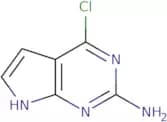
CAS:<p>6-Chloro-7-deazaguanine (6CDG) is a pyrimidine nucleoside that is used in the treatment of hepatoblastoma and hepatitis. 6CDG is an alkylating agent that binds to DNA and causes strand breakage by forming covalent bonds with the N-7 position of guanine. It can also be used as an antiviral agent against herpes simplex virus, as it inhibits viral replication by inhibiting the viral DNA polymerase. 6CDG does not inhibit human DNA polymerase. The drug has been shown to be cytotoxic to MRC5 cells, which are resistant to pyrimidine analogs.</p>Formula:C6H5ClN4Purezza:Min. 95%Colore e forma:PowderPeso molecolare:168.58 g/molN7-((2-Hydroxyethoxy)methyl)guanine
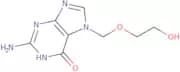
CAS:<p>N7-((2-Hydroxyethoxy)methyl)guanine is a reagent, a complex compound, and a useful intermediate that is used in the manufacture of speciality chemicals. N7-((2-Hydroxyethoxy)methyl)guanine is also a versatile building block that has been shown to be effective in reactions involving the synthesis of N-heterocyclic carbene ligands.</p>Formula:C8H11N5O3Purezza:(%) Min. 95%Colore e forma:Off-White PowderPeso molecolare:225.2 g/mol2’-Amino-2’-deoxy-β-D-arabinouridine
CAS:<p>2’-Amino-2’-deoxy-β-D-arabinouridine is a modified nucleoside based on uridine, in which the 2'-hydroxyl group of the sugar has been replaced with an amino group, and the sugar itself is arabinose (a stereoisomer of ribose). This compound is of possible interest in nucleic acid chemistry and antisense or RNA-interference research.</p>Formula:C9H13N3O5Purezza:Min. 95%Colore e forma:solid.Peso molecolare:243.22 g/mol6-Mercaptopurine
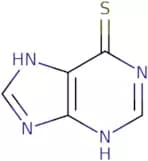
CAS:<p>6-Mercaptopurine is an antigen binding molecule that is biocompatible with the human body. It binds to 6-mercaptopurine and inhibits the oxidation of proteins. The inhibition of protein oxidation has been shown to decrease disease activity in patients with inflammatory bowel disease. 6-Mercaptopurine also inhibits the production of inhibitor molecules, which are responsible for the development of cardiac effects such as arrhythmias and cardiomyopathy. 6-Mercaptopurine has inhibitory properties against polymerase chain reactions, which may be due to its ability to bind with protein thiols at high rates.</p>Formula:C5H4N4SPurezza:Min. 98 Area-%Colore e forma:PowderPeso molecolare:152.18 g/molN4-Benzoylcytosine
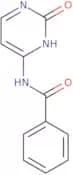
CAS:<p>Building block in the synthesis of nucleoside antiviral agents</p>Formula:C11H9N3O2Purezza:Min. 95%Colore e forma:White PowderPeso molecolare:215.21 g/mol9-Methylxanthine
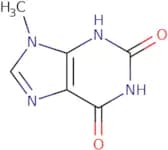
CAS:Prodotto controllato<p>9-Methylxanthine is a purine alkaloid that is structurally related to caffeine. It is used as a bronchodilator and to treat cardiac arrhythmias. 9-Methylxanthine has been shown to have an effect on the rate of DNA replication by binding to the enzyme xanthosine phosphorylase, which converts xanthosine monophosphate (XMP) to xanthosine diphosphate (XDP). The drug's effect on other nucleobases, such as adenosine monophosphate (AMP), cannot be ruled out. 9-Methylxanthine also has a strong affinity for macrochelates, which are compounds that contain chelating agents with a large number of ethylenediaminetetraacetic acid (EDTA) groups. This property is due to the high number of nitrogen atoms in the molecule and its ability to form hydrogen bonds between water molecules</p>Formula:C6H6N4O2Purezza:Min. 95%Colore e forma:PowderPeso molecolare:166.14 g/molN4-Acetylcytosine
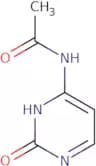
CAS:<p>N4-Acetylcytosine is an inhibitor of serine proteases, glycosidases and nucleosidases. It has been shown to inhibit the replication of a wide range of viruses including HIV, herpes simplex virus type 1, and adenovirus. N4-Acetylcytosine also inhibits the proliferation of cervical cancer cells.</p>Formula:C6H7N3O2Purezza:Min. 95%Colore e forma:White PowderPeso molecolare:153.14 g/molUracil
CAS:<p>Pyrimidine nucleobase; allosteric regulator and coenzyme for reactions</p>Formula:C4H4N2O2Purezza:Min. 98 Area-%Colore e forma:White Off-White PowderPeso molecolare:112.09 g/mol5-Propyl-2-thiouracil
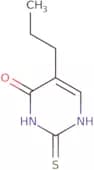
CAS:<p>5-Propyl-2-thiouracil (PTU) is a drug used in the treatment of various types of cancer. It is a chemical analogue of thiouracil, but has a different mechanism of action. PTU inhibits the production of tropomyosin, which leads to inhibition of transcriptional regulation and expression of protein genes. PTU also blocks the hydrogen bond between the amino acid glutamine and deoxyribose phosphate backbone, thereby inhibiting translation. Clinical studies have shown that PTU is effective in treating cardiac hypertrophy, renal proximal tubule cells and clinical nephropathy. The use of PTU as a chemotherapeutic agent for cancer treatment has been limited due to its toxicity to animals.</p>Formula:C7H10N2OSPurezza:Min. 95%Colore e forma:PowderPeso molecolare:170.23 g/mol3-Methyladenine
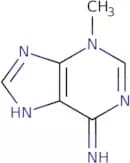
CAS:<p>3-Methyladenine is a glycosylase that cleaves the glycosidic bond between the 3rd and 4th carbon of the ribose ring of the nucleotide 3-methyladenine. It also has synergistic effects with other agents that induce autophagy, such as rapamycin, and increases the expression of a response element in mouse monoclonal antibody. 3-Methyladenine inhibits growth factor-β1 and neuronal death by inducing apoptosis in cells overexpressing nuclear DNA polymerase. This drug is also used to study apoptosis by using a model system.</p>Formula:C6H7N5Purezza:Min. 90 Area-%Colore e forma:PowderPeso molecolare:149.15 g/mol3’,5’-Bis-O-benzoyl-2’-deoxy-2’-fluoro-β-D-arabino-6-azidouridine
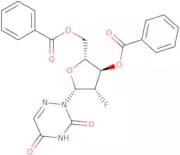
CAS:<p>Please enquire for more information about 3’,5’-Bis-O-benzoyl-2’-deoxy-2’-fluoro-beta-D-arabino-6-azidouridine including the price, delivery time and more detailed product information at the technical inquiry form on this page</p>Purezza:Min. 95%8-Bromoguanine
CAS:<p>8-Bromoguanine is a nucleoside analog drug that is used as an antileukemic agent. It is a synthetic derivative of guanine and has been shown to inhibit the growth of leukemic cells by interfering with the synthesis of DNA. 8-Bromoguanine has also been shown to be reactive with eosinophil peroxidase and other electron-rich substances, which may be due to its hydroxyl group. The analytical method for 8-bromoguanine includes fluorescence spectroscopy, high pressure liquid chromatography (HPLC), and thin layer chromatography (TLC). Chemical diversity studies have shown that 8-bromoguanine can react with glycosylase or hydroxy groups, forming reaction products.</p>Formula:C5H4BrN5OPurezza:Min. 97 Area-%Colore e forma:PowderPeso molecolare:230.02 g/molEniluracil
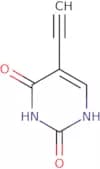
CAS:<p>Eniluracil is a prodrug of 5-fluorouracil, which is an anticancer drug. It is not active when taken orally and must be hydrolyzed by esterases in the stomach to produce 5-fluorouracil. The x-ray diffraction data for eniluracil was collected from untreated human serum samples. Eniluracil has been shown to have matrix effects on solid tumours in mice, leading to increased antitumor activity. This compound also inhibits the enzyme dihydropyrimidine dehydrogenase, which leads to decreased levels of diphosphate nucleotides and accumulation of dinucleotide phosphate. Enlargement of the tumor is also inhibited by this drug due to its ability to inhibit DNA replication and transcription.</p>Formula:C6H4N2O2Purezza:Min. 95%Colore e forma:White PowderPeso molecolare:136.1 g/mol8-Bromoadenine
CAS:<p>8-Bromoadenine is a nucleophile that reacts with electrophiles to form adducts. 8-Bromoadenine has been shown to induce DNA strand breaks and oxidative damage in vitro, which may be due to its ability to react with DNA bases and form intramolecular hydrogen bonds. 8-Bromoadenine has also been shown to cause inflammatory bowel disease in mice by increasing the production of proinflammatory cytokines. 8-Bromoadenine induces Toll-like receptor 4 (TLR4) signaling, which leads to enhancement of radiation response. This drug can also be used as the monosodium salt for treating cancer, although it only has a limited number of sequences that can be synthesized.</p>Formula:C5H4BrN5Purezza:Min. 95%Colore e forma:White PowderPeso molecolare:214.02 g/mol9-Deazaguanine
CAS:<p>9-Deazaguanine is an analog of guanine, which has inhibitory properties. It reacts with the hydrogen bond of the enzyme and prevents its reaction with a substrate. 9-Deazaguanine binds to the target enzymes trifluoroacetic acid (TFA) and hydrogen bond interactions with water molecules. The reaction mechanism is based on the competitive inhibition of TFA, which is an important enzyme in DNA synthesis. 9-Deazaguanine inhibits the growth of k562 cells by inhibiting protein synthesis at specific sites in the ribosome. 9-Deazaguanine also shows inhibitory properties against autoimmune diseases and infectious diseases because it inhibits immune system reactions that are mediated by antibodies and T cells.</p>Formula:C6H6N4OPurezza:Min. 95%Colore e forma:PowderPeso molecolare:150.14 g/mol5-(2-Fluorovinyl)-2'-Deoxyuridine
CAS:<p>5-(2-Fluorovinyl)-2'-Deoxyuridine is a hydrophobic analogue of acyclovir that has potent activity against herpes simplex virus type 1. It inhibits the synthesis of viral DNA, and thus prevents the formation of plaques in tissue culture. This drug also inhibits cell proliferation and viral production by l1210 cells as well as lung fibroblasts. 5-(2-Fluorovinyl)-2'-Deoxyuridine has shown inhibitory effects against uninfected cells, but not against cells infected with herpes simplex virus type 2.</p>Formula:C11H13FN2O5Purezza:Min. 95%Peso molecolare:272.23 g/mol6-Hydrazinopurine
CAS:<p>6-Hydrazinopurine is an anti-hepatitis drug that is a prodrug for 6-chloropurine. Its mechanism of action is not fully understood, but it has been shown to bind to the virus receptor and inhibit the replication of the virus. It also competitively inhibits amines in biochemical assays. This property may be due to its hydroxyl group, which can form a hydrogen bond with the amino group of amines. It has been shown to be active against prostate carcinoma cells. 6-Hydrazinopurine has been shown to inhibit the growth of cancer cells by inducing apoptosis and decreasing cell proliferation.</p>Formula:C5H6N6Purezza:Min. 95%Colore e forma:PowderPeso molecolare:150.14 g/mol